| Author |
 Replies: 11 / Views: 1,877 Replies: 11 / Views: 1,877 |
|
|
New Member
United States
1 Posts |
I'm a newbie to coin collecting and would like to know if the gold Libery Eagle coins minted at the San Francisco Mint (1,2.5,5,10 and 20 denominations) contain gold actually dug up in the state of California by prospectors during the "Great California Gold Rush", or were they made from gold found elsewhere and brought to the San Francisco Mint to be made into coins. I enjoy reading about the Old West and would love to have a coin which contains gold from this historic time in American history. Thank you in advance to any coin collectors who can help answer my question.
|
|
|
|
Pillar of the Community
United States
7390 Posts |
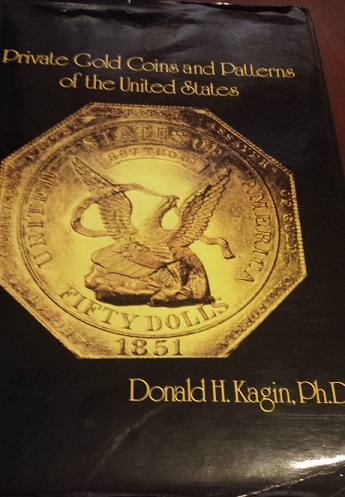
 ... If your looking for a gold coin to represent that era with gold made from the 49 rush my first choice would be a California fractional gold piece. They're small but boy so much history of that era is infused in them. |
|
CCF Sponsor
United States
702 Posts |
Backing up what Cascade said...
And you can find genuine jewelry pieces for under $100. Won't be nice, but that history is cool!
I would recommend buying certified as there are (of course) a lot of fakes until you're very comfortable with the coins and what to look for raw.
|
|
New Member
United States
41 Posts |
The $1 and $20 gold denominations came about in 1849 specifically because of the abundance of gold resulting from the Gold Rush. Prior to the discovery of gold out west these denominations would have been less feasible. Considering that these denominations owe their existence to the Gold Rush, they are inextricably linked to the romance of the era. And yes, they were made with CA gold. Lots of fun to collect, especially for someone with an interest in the history of the west.
|
|
Pillar of the Community
United States
1760 Posts |
"S" mint gold coins were also made from Nevada gold during the Comstock Lode years, as not all of the gold from Nevada was sent to Carson City. Even later "S" mint gold were coined from the gold of the Klondike rush. Carson City coins are much more certain in the origin of their metal than "S" mint coins. Carson City silver and gold coins are by a extremely VAST majority coined right from Comstock Lode silver and Nevada gold. That is one of the reasons why "CC" mint issues generally go for much larger premiums than "S" mint issues. When I think of an "Old Wild West" coin, I think of coins with the "CC" mint mark. If you want to greatly increase your chances of having a true CA gold rush "S" mint coin, you should aim for the years 1854-1859. The Comstock Lode had not been mined yet, so it is extremely likely to be CA gold in those coins. I own a 1856-S double eagle from the SS Central America ship wreck and my gut tells me that one is definitely CA gold. ..and Edited by DoubleEagle20
07/11/2015 9:12 pm
|
|
Pillar of the Community
United States
589 Posts |
|
|
Pillar of the Community
United States
3368 Posts |
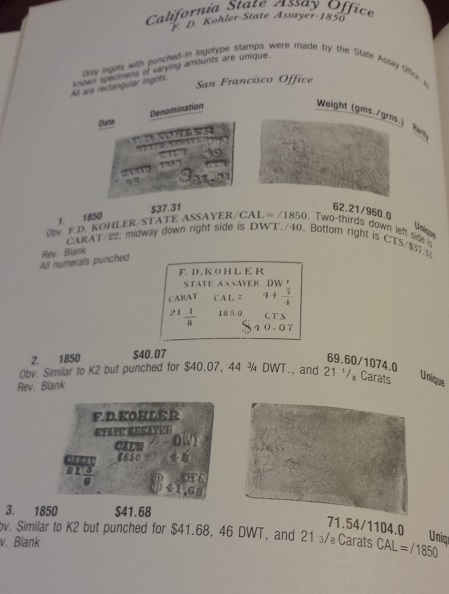
No doubt the territorial gold was made using native gold and locally made planchets. Personally I'd like an Oregon Beaver $10. US coins are another story. I don't think that they had the ability to make purity standards or to make controlled quality planchets. The dies were definitely made back east. Edit: The mints and assay offices had the capability to melt and refine bullion for coinage. The State of California had the ability to melt gold dust, refine and mint slugs by 1850. http://www.coinfacts.com/pioneer_go...ifornia.htmlSo the early San Francisco gold was almost certainly a product of the local mines. Silver is another story. Given the scarcity of early SF silver coins I'd guess the planchets were either shipped in or made from local scrap. "Two minutes ago I would have sold my chances for a tired dime." Fred Astaire
Edited by thq
07/11/2015 9:30 pm
|
|
Bedrock of the Community
United States
17884 Posts |
The mints could assay and refine for coinage for the most part the assay offices just assayed and created mixed bullion bars of known weight and value. The New York assay office was an exception to this, they did refine and produce fine gold bars for export or shipment to the mint.
The silver for the early San Francisco Mint silver coins probably mostly came from the silver parted from the local gold during refining.
|
|
Pillar of the Community
United States
3368 Posts |
I don't think the mint would have had the ability to recover silver from quicksilver gold refining @conder. The early Comstock miners had trouble processing silver too. There would have been plenty of Mexican silver in 1850's California.
"Two minutes ago I would have sold my chances for a tired dime." Fred Astaire
|
|
Valued Member
United States
309 Posts |
I have an 1854-S Eagle which is as close to the golden age of the California gold rush as they come. It had little premium over Philadelphia or New Orleans No Motto common dates. With moderate to heavy wear I feel sure it kicked around the old West back in the day. Half Eagles with this date are scarce. Perhaps a coin like that is what you seek?
|
|
Bedrock of the Community
United States
17884 Posts |
Recovering silver from mercury amalgam is not difficult and the mint would not have problems with that. Simple heating would drive off the mercury. The problems would come either from the fumes or trying to re-condense the mercury to use again. The real problem the early S mint faced with refining was a shortage of nitric acid needed for parting the gold and silver. (This was before the adoption of the sulfuric acid method of refining. Sulfuric acid was more available.)
|
|
Pillar of the Community
United States
3368 Posts |
Mercury treatment and metal recovery from amalgam was done in the field, sometimes even in the rocker boxes. Here's a description of early stamp milling and mercury treatment at Placerville. A pretty crude technique - making amalgam balls off of mercury coated copper plates - followed by retorting, followed by melting of the sponge gold alloy to make bars. Anything soluble in mercury ended up in the bars. https://salmonfishingqueen.wordpres...placerville/The CA and US assayers would have been presented with mercury-refined bars or unpurified dust, containing a variable silver (and other metals) content in alloy with gold. Before Comstock it's doubtful that the mints had much interest in extracting the silver from the gold they received. For CA placer gold it might have been necessary to add silver to increase the alloy to 10% for US coinage. The nasty residue from this is millions of pounds of mercury lost into the streams and mine tailings. "Two minutes ago I would have sold my chances for a tired dime." Fred Astaire
Edited by thq
07/13/2015 9:01 pm
|
| |
Replies: 11 / Views: 1,877 |
|







 Posted 07/11/2015 6:04 pm