| Author |
 Replies: 10 / Views: 2,024 Replies: 10 / Views: 2,024 |
|
|
Valued Member
United States
364 Posts |
Anyone ever seen this before? Look like a die scratch in the left wing, it is raised. Any known variety? Thanks for all your input. 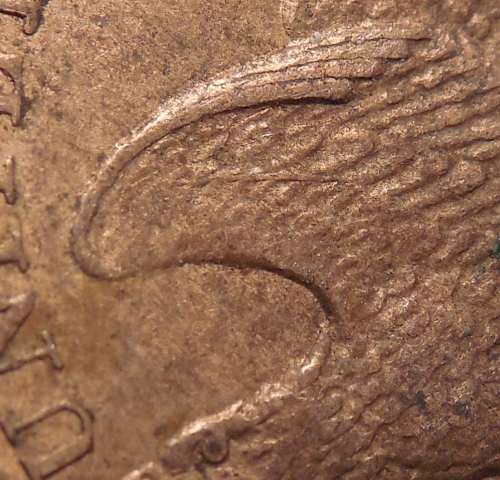 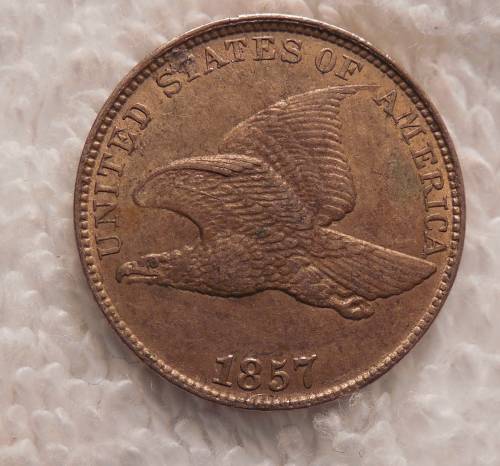 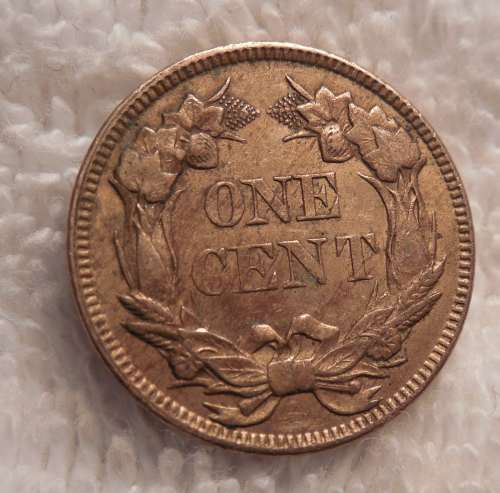 |
|
|
|
Pillar of the Community
United States
4409 Posts |
 interesting it doesn't match any of the clashes which was the first thing I thought of |
|
Pillar of the Community
United States
9810 Posts |
Looks more like a die crack than a die scratch to me. Interesting coin, the area in question seems to follow the curve of the lower part of the eagle's wing, hence my thought in the die crack, it also appears to have the crack running back upwards towards the edge of the wing. The area you are calling a scratch maybe just a widened area of the crack and allowing metal flow in from the strike, this could be a small Cud or pre-cud. "Buy the Book Before You Buy the Coin" - Aaron R. Feldman - "And read it" - Me 2013! ANA Life Member #3288 in good standing since 1981, ANS, Early American Coppers Member (EAC), Colonial Coin Collectors Club member (C4), Conder Token Collector Club member (CTCC), Civil War Token Society (CWTS) member, Liberty Seated Collectors Club (LSCC) & Numismatic Bibliomania Society member (NBS), USMex, Member in good standing, 2¢ variety collector. See my want page: http://goccf.com/t/140440 |
|
Pillar of the Community
United States
5196 Posts |
westcoin ,doesn't a Cud involve the rim ? |
|
Pillar of the Community
United States
9810 Posts |
Quote:westcoin ,doesn't a Cud involve the rim ? Usually, most always, but if a chunk of die were to come off inside the coin design, I consider that a Cud too, it may be more of a die chip, but to me a Cud would be anywhere a piece of metal has come off the die leaving a void where the metal flows into from striking pressure. I could also be wrong in my terminology. If so please enlighten me. "Buy the Book Before You Buy the Coin" - Aaron R. Feldman - "And read it" - Me 2013! ANA Life Member #3288 in good standing since 1981, ANS, Early American Coppers Member (EAC), Colonial Coin Collectors Club member (C4), Conder Token Collector Club member (CTCC), Civil War Token Society (CWTS) member, Liberty Seated Collectors Club (LSCC) & Numismatic Bibliomania Society member (NBS), USMex, Member in good standing, 2¢ variety collector. See my want page: http://goccf.com/t/140440Edited by westcoin
07/23/2015 03:52 am
|
|
Moderator
 United States
23522 Posts |
It's always been my thought that the term " Cud" requires rim involvement. I agree that this feature began life as a crack rather than a scratch. Given the odd - but not unknown, across multiple issues - location of the crack, it's not impossible that an impact caused it. However, more likely an imperfection in the die caused it to fail there. No good candidates for a clash impact appear on the reverse. Cracks widen. Their exposed edges become stress points and they wear quickly, being chipped away by strike impacts. Edges are forced apart, even in the middle of the die. The forces are titanic, and 100+ strikes per minute creates enormous heat, further stressing the die steel. It's no real wonder that we see some amazing die cracks; a progression from whole die to terminally-cracked wonder could take a grand total of five minutes and the operator wouldn't know until pieces started falling off. In the meantime, as much as hundreds of a given crack progression - maybe even more, as in the case of Morgans - are released into circulation. So we can talk about them here, 150 years later.  |
|
Valued Member
United States
51 Posts |
SSD it is really is amazing when you think about it like that. Back in the day who could have imagined the market for these coins and the prices. Not to mention the internet as a whole!
|
|
Pillar of the Community
United States
9810 Posts |
Quote:It's always been my thought that the term " Cud" requires rim involvement. I've been looking up various definitions of Cuds online and in my reference library - seems like 90% say it must involve the rim in fashion. A few sites don't specify the rim. Looking through my Sam Thurman book, and subsequent editions by my friend Frank Leone, I must concur the Cud needs to involve the rim, retained or not. If the area affected is not adjacent to to the rim (crack going from rim into design and back to rim), then it should be called a die chip. So I've been incorrect in my thinking of this previously, thanks for making me look further into it. I call this a die crack (unusually wide one) or just a die chip. I learned a lot from this site: http://cuds-on-coins.com/interior-die-breaks/Interior die break I like that description best! Also see "Free Standing" break, interesting as I never heard these terms before. Seems like you can teach an old dog new terms! Thanks.  "Buy the Book Before You Buy the Coin" - Aaron R. Feldman - "And read it" - Me 2013! ANA Life Member #3288 in good standing since 1981, ANS, Early American Coppers Member (EAC), Colonial Coin Collectors Club member (C4), Conder Token Collector Club member (CTCC), Civil War Token Society (CWTS) member, Liberty Seated Collectors Club (LSCC) & Numismatic Bibliomania Society member (NBS), USMex, Member in good standing, 2¢ variety collector. See my want page: http://goccf.com/t/140440Edited by westcoin
07/24/2015 12:45 am
|
|
Valued Member
 United States
364 Posts |
The reason I think it may be a scratch as opposed to a crack is that it is VERY straight, most die cracks I see are jagged, worm around etc. I see very few that are nice "straight" lines. At any rate---not a specific variety assigned to it apparently. Off to NGC it goes in the next batch. Thanks for all the insight folks!
|
|
Pillar of the Community
United States
2589 Posts |
From what I have seen large die breaks that don't involve the rim are usually marked by the grading companies as internal die breaks or sometimes just as major die break
|
|
Moderator
United States
23522 Posts |
This is a pretty common sight to me, specializing in Crown-size silver - Morgans and particularly Peace dollars are prone to interior die breaks. Roach, your point about how straight the feature is makes sense. I still feel it a break, especially with the curved tail on the right end, but if NGC thinks different with the coin in hand I won't be astonished. |
| |
Replies: 10 / Views: 2,024 |
|









 Posted 07/21/2015 4:45 pm


