| Author |
 Replies: 6 / Views: 1,602 Replies: 6 / Views: 1,602 |
|
|
Pillar of the Community
Hong Kong
1270 Posts |
By common sense, the twelve stars on the reverse side of this coin represent the twelve starting countries of the European Union (EU) today. But I truly not understand why the designer knew there are 12 starter countries of the EU so early. This coin is a commemoration of the Treaty of Rome which was signed in March of 1957. The subsequent Treaty of Maastricht was then signed in Feb. of 1992. My question is why at the time (1987) of the coin minted, there are already 12 stars here? Does this mean before the treaty of Maastricht, it was known there would be 12 country's representatives willing to open the meeting and started EU? Or I misunderstand the meaning of 12 stars on the coin or on the EU flag today? Any ideas or answers to my questions are welcome. 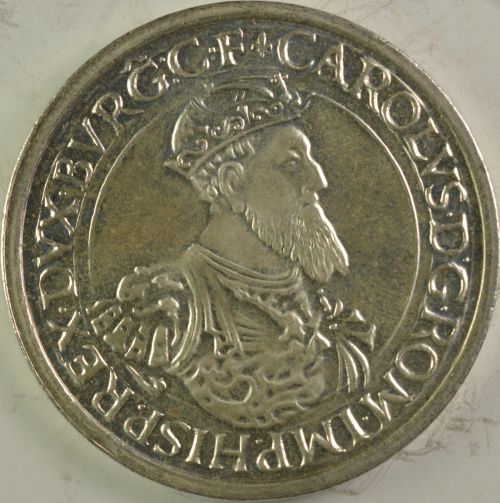 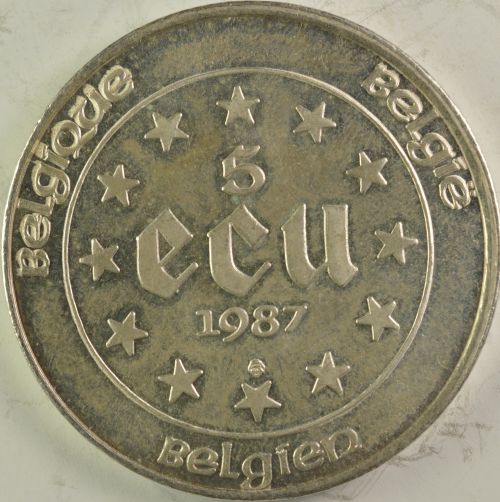 |
|
|
|
Moderator
 United States
14463 Posts |
I don't know, but on the Krause Catalog it says
Subject: 30th Anniversary - Treaties of Rome
|
|
Pillar of the Community
Belgium
1194 Posts |
each star represents a country The EU started ina different form in 1951 with Belgium,West-Germany,France,Italy,Luwembourg and The Netherlands (6) . In 1973 came in the EU : Denmark , Ireland and the United Kingdom , in 1981 : Greece , Spain and Portugal = 12 countries = 12 stars .albert
|
|
Moderator
Australia
16982 Posts |
Yes, in 1987, there were 12 member-states of the European Economic Community - the forerunner of the EU. Two of those countries, Spain and Portugal, only joined the EEC in 1986. These same 12 countries were the signatories of the Maastricht Treaty that formed the EU in 1992. The 12 stars = 12 original states is, however, a coincidence. The 12-star flag was invented for the Council of Europe in 1955, long before there were 12 members of the EEC. The Council of Europe had 10 founding-members and 15 members by 1955. From Wikipedia: Quote:
In 1953, the Council of Europe had 15 members; it was proposed that the future flag should have one star for each member, and would not change based on future members. West Germany objected to this as one of the members was the disputed area of Saarland, and to have its own star would imply sovereignty for the region. Twelve was eventually adopted as a number with no political connotations and as a symbol of unity. Don't say "infinitely" when you mean "very"; otherwise, you'll have no word left when you want to talk about something really infinite. - C. S. Lewis
|
|
Pillar of the Community
 Hong Kong
1270 Posts |
Thank you the input of my fellow members, your opinions and information really solve my problem.
For my brief research, Greece joined in 1981; Portugal and Spain in 1986...
From Wikipedia - Flag of Europe:
...the 12-stared flag was adopted by CoE on Dec 8 1955 and by EEC on June 29 1985...
The coin I shown is the year 1987 also has 12 stars here...
With no argument, the '12 stars' flag was the design in advance before the Treaty of Maastricht.
The adoption of 12 stars for EU should more likely be a design to show solidarity of Europe rather than the twelve signing countries.
I stand for the conclusion of what Sap had said: The 12 stars = 12 original states is, however, a coincidence.
To me now, the 12 stars forming a circle on a flag is purely a design or a presentation for something rather than telling any 12 designated countries for the Union.
|
|
Pillar of the Community
Germany
1238 Posts |
Right, the number of stars had and has nothing to do with the number of member states. Later this year, by the way, all euro countries will issue a joint €2 commem dedicated to the 30th anniversary of the European Flag as an EU symbol. The pieces will feature twelve stars on the common side (arranged in two quarter-circles so to say), the usual twelve stars on the ring of the country specific side, and the flag with the stars ... http://ec.europa.eu/economy_finance...on-large.pngNote that the stars on your 5 ECU coin are arranged the wrong way. :) On the piece from Belgium they have a "radial" orientation, much like the stars on US or Swiss coins. On the European Flag (thus also on the euro coins), each star has one point at the top and two points at the bottom. Christian Edited by chrisild
07/27/2015 07:06 am
|
|
Pillar of the Community
Hong Kong
1270 Posts |
Quote:
Note that the stars on your 5 ECU coin are arranged the wrong way. :) On the piece from Belgium they have a "radial" orientation, much like the stars on US or Swiss coins. On the European Flag (thus also on the euro coins), each star has one point at the top and two points at the bottom.
Good observation, thank you Christian. I will buy one for myself!  |
| |
Replies: 6 / Views: 1,602 |
|










 Posted 07/23/2015 2:43 pm


