| Author |
 Replies: 10 / Views: 3,191 Replies: 10 / Views: 3,191 |
|
|
New Member
United States
14 Posts |
Greetings! It's been more than a year since I posted. I have recently acquired a Confederate currency display from my uncle in Alabama. Unfortunately the individual bills were glued to a piece of cardboard before being framed under glass. I have no idea where it originated or how my uncle acquired it. It may have been handed down through the family--my great-great-grandfather was one of seven brothers who settled that county in Alabama. I'd like to know if anyone can suggest a reliable method for loosening the currency from its glue. I don't want to do any more damage than has already been done. Also, does anyone know how to ascertain that it is not counterfeit? I know that a lot of counterfeit Confederate currency was produced. I'm putting together a historical display of family members who served in the military from the Revolutionary War forward. At the very least I'd like to prevent further damage and make sure it survives in a condition that is at least as good as it is now. 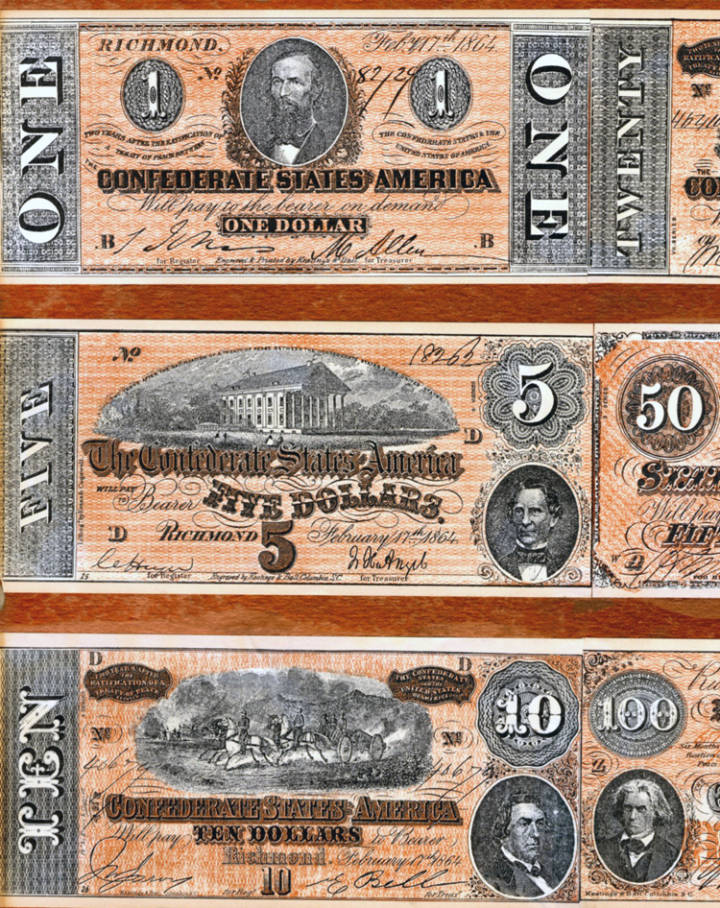 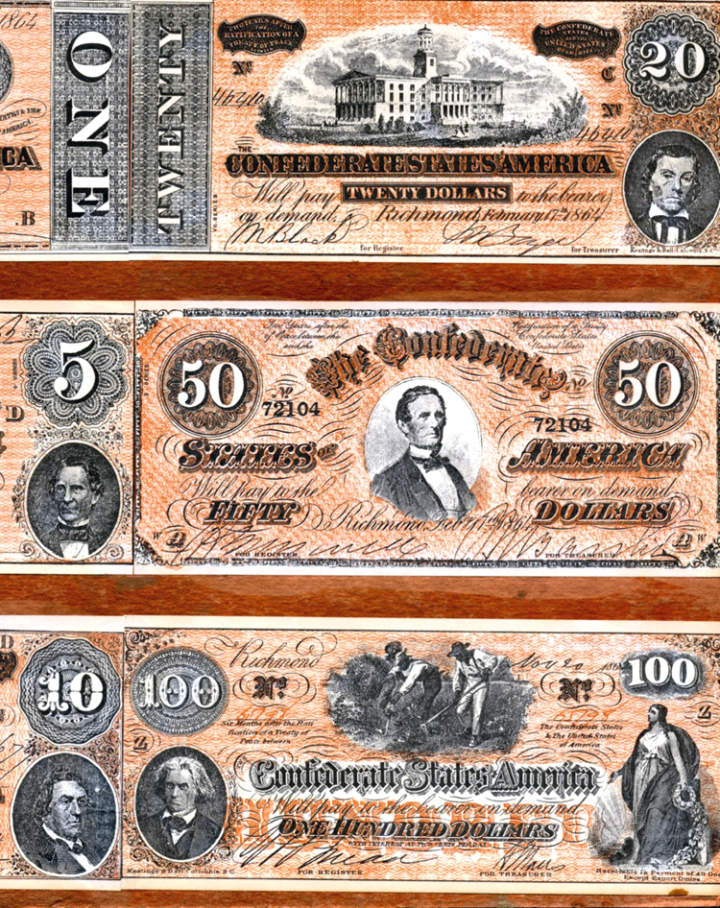 |
|
|
|
Pillar of the Community
United States
562 Posts |
Hate to tell you this, but all the notes are counterfeit. Their coloration is off, the signature ink is black and not brown as it should be on genuine notes, and the serial numbers match to known fakes or copies.
|
|
Pillar of the Community
United States
2130 Posts |
I agree...they are all fake. Along with everything that Atlas said the cuts on these notes look way too good to be genuine.
|
|
New Member
 United States
14 Posts |
Thanks for your help! I made adjustments to colors and contrast in Photoshop to make the images reproduce better onscreen. But the signatures are definitely in black and the background orange color is very uniform across the board, which seems unlikely with authentic old currency. But I'm not entirely sorry they are fake, after seeing how they'd been glued to the poster board. Would hate to see something valuable treated that way. Judging from the condition of the paper they are printed on--very brittle and dog-eared--I wouldn't be surprised if they were of the right time period. Even as counterfeits they will still make an interesting addition to my display. I appreciate the information.
Edited by SSS
08/03/2015 2:23 pm
|
|
Pillar of the Community
United States
562 Posts |
Given the look of the paper and the style of the coloring, I believe these are facsimile Confederate notes from the 1950's or 1960's. A number of companies at the time made reproductions to cash in on the 100th anniversary of the Civil War. I've seen several displays of similar notes, including one glued to a cardboard display not unlike what you described.
|
|
Bedrock of the Community
United States
37000 Posts |
All of these appear to be "facsimiles", reproductions. Being glued to a board is no loss, enjoy them as a display.
|
|
Bedrock of the Community
United States
94367 Posts |
Real shame, but at least you've learned something. Good Luck!  |
|
Pillar of the Community
United States
7730 Posts |
Back in the 60's you could buy packs of Confederate note reproductions at Five and Dime stores around the country for about 35 cents. I think they also showed up as premiums in cereal boxes, too. Most of them have the word "reproduction" or "facsimile" on the reverse, near the border. Most likely, this is where your notes originated.
|
|
Pillar of the Community
United States
3253 Posts |
The $50 serial # 72104 is a known reproduction.
|
|
New Member
United States
14 Posts |
Thank you for all of your help. I appreciate the information. I'll still have an interesting display.
|
|
Pillar of the Community
United States
1054 Posts |
If anything, it's certainly something you can use for education. Not just for your own use, but to teach others as well. CS note collecting is pretty popular right now with lots of new collectors entering the market.
|
| |
Replies: 10 / Views: 3,191 |
|







 Posted 08/03/2015 1:36 pm





