| Author |
 Replies: 33 / Views: 5,041 Replies: 33 / Views: 5,041 |
|
|
|
Pillar of the Community
United States
1276 Posts |
|
|
Bedrock of the Community
United States
12057 Posts |
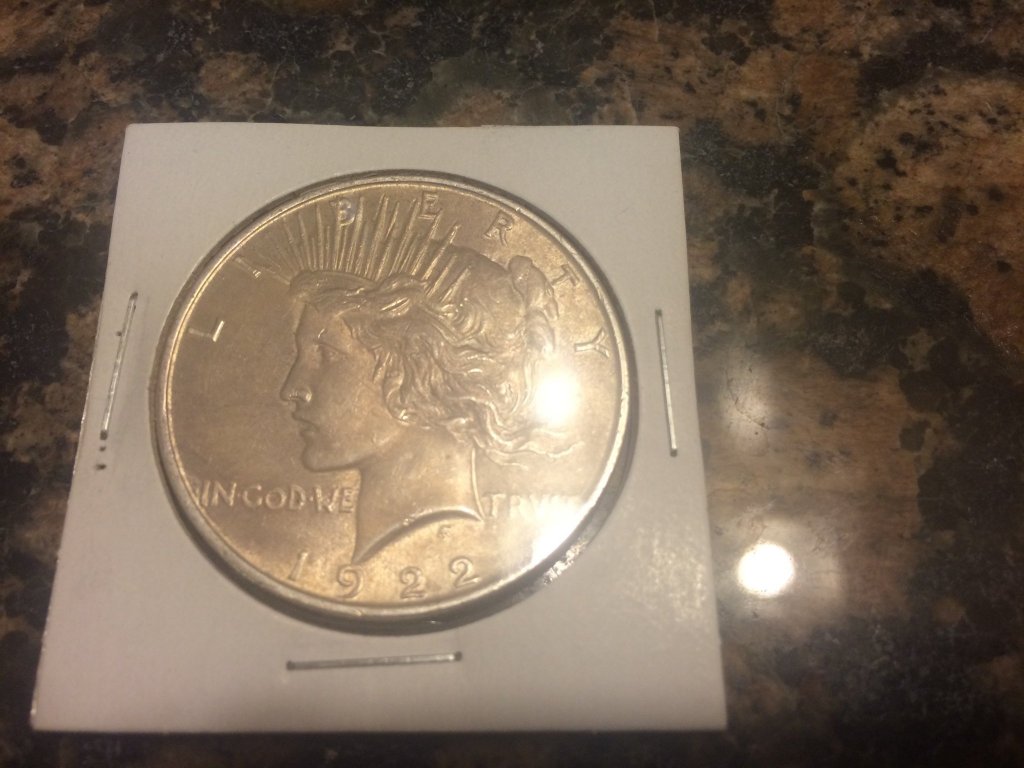
It certainly looks like a 1922 High Relief matte proof at a glance.
The thickness of the rim and the excessive amount of detailing makes me suspect that it is most likely not genuine. The hair, in particular, is overdone. Another strike is those same rims, which are flat-topped instead of "finned." If you were to somehow be rich enough to set two of them on top of each other, in a perfect alignment, they wouldn't sit flush, one would be raised off the other by the rim "fin."
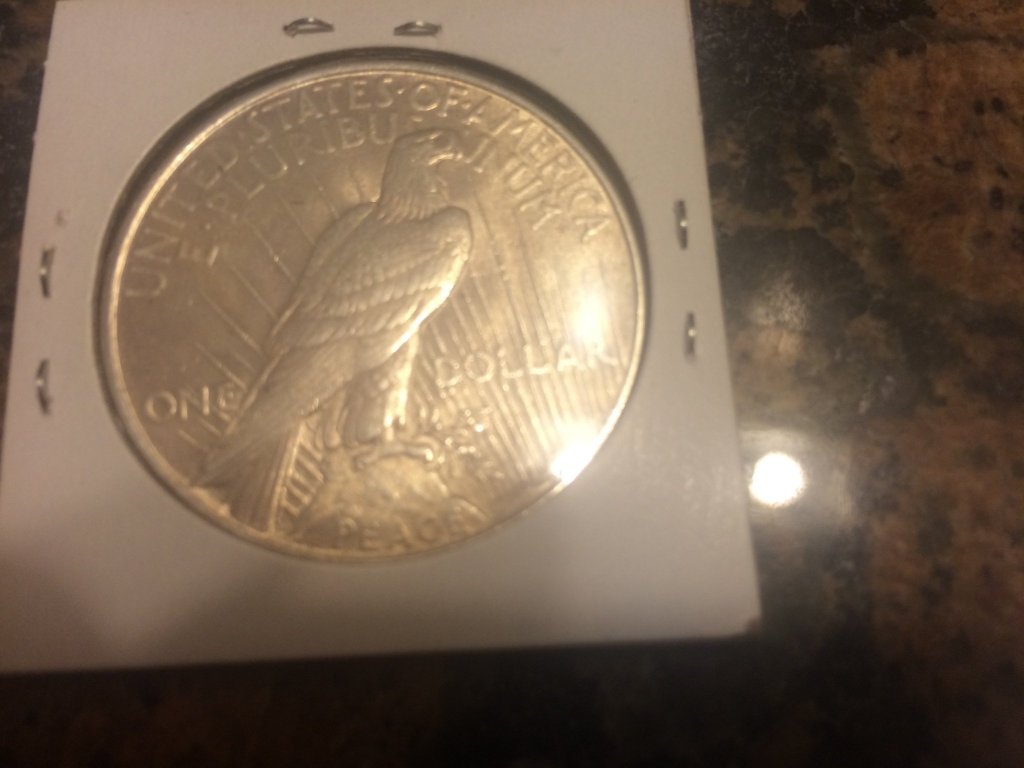
Notwithstanding the ultra low mintage, the clincher for me is the reverse detail, particularly the mountains. 1922 HR Proofs are "two peak" designs, this coin appears to be a three peak reverse.
Member ANA - EAC - TNA - SSDC - CCT #890 "Most of the things worth doing in the world had been declared impossible before they were done." -- Louis D. Brandeis |
|
Valued Member
 United States
165 Posts |
Quote:
My gut feeling after studying your coin is that it is fake. It just does not look right. Thank you for looking at it. I certainly hope that is not the case, but I will see what happens when I have the ability to weigh it. Quote:
It certainly looks like a 1922 High Relief matte proof at a glance.
The thickness of the rim and the excessive amount of detailing makes me suspect that it is most likely not genuine. The hair, in particular, is overdone. Another strike is those same rims, which are flat-topped instead of "finned." If you were to somehow be rich enough to set two of them on top of each other, in a perfect alignment, they wouldn't sit flush, one would be raised off the other by the rim "fin."
Notwithstanding the ultra low mintage, the clincher for me is the reverse detail, particularly the mountains. 1922 HR Proofs are "two peak" designs, this coin appears to be a three peak reverse. Thank you for examining it; I very much appreciate it. It has definitely become apparent that some further examination of this coin and its authenticity are warranted. However, I am unsure of how to proceed with that process outside of weighing it and checking for possible magnetism. Would you happen to have any suggestions? I will be in the area of the store I purchased the coin at for another week, so I would need to find some definitive way of confirming this coin as genuine or non-genuine. Edited by Earendil
08/18/2015 10:26 pm
|
|
Rest in Peace
United States
10625 Posts |
As paralsye noted, the high relief proofs are the B1 reverse and the op coin is a B2 reverse. The B2 reverse business strike is not unheard of with a sharp strike.
|
|
Valued Member
United States
165 Posts |
Quote: Oddly enough, I recently got a 1922 that looks very similar to yours. Tons of detail in the hair and the "side wing" right above the leg is present. A PCGS MS64 Peace dollar I have doesn't even have the side wing part so it's shocking this 1922 does. The only difference is yours has slightly better detail on the eagles leg. I'm sure my pics won't do this justice but I figure I'd try. I actually thought mine might have been cleaned it looks so good but I don't see any scratches. Maybe 1922's were just struck well. That it does! With regard to mine, I, too, was surprised to find a Peace dollar with such great detail. Usually, the strikes for many of the date/ mintmark combinations are rather "mushy," and tend to lack definition. Provided mine turns out to be genuine, perhaps they came from a shared die. :) Quote:
As paralsye noted, the high relief proofs are the B1 reverse and the op coin is a B2 reverse. The B2 reverse business strike is not unheard of with a sharp strike. All right, thank you. In light of the questions that have been raised about this silver dollar's authenticity, at this point I just hope that is what it is- a regular-issue dollar that was exceptionally well-struck. |
|
Valued Member
United States
156 Posts |
I lean towards real, for the simple fact that I can't imagine a counterfeiter going through the trouble for a common date Peace dollar. I would weigh it and use a set of calibers if you have one and if those measurements are good, consider it genuine and a well struck coin. But that's me. |
|
Valued Member
United States
177 Posts |
Three things: First, have you tried the "ring test?" That is, see if it sounds like silver? For most low-value coins, this is as easy as dropping it on a hard surface, like a table or countertop. Silver will have a high-pitched ring that isn't present with other metals. But if you still think this might be a proof, you would not want to risk damaging it. Balance it on a fingertip and give it a tap on the edge with something hard, like a pen. Second, the different reeding caught my attention. To have reeding on a coin different from the regular coins of a series, you would need a collar different from the regular collar. I do not know if the proofs were struck using a different collar than production pieces, but I guess it could be possible. Is there someone here who knows if the proof 1922 Peace dollars were struck using a special collar? Third, I just checked the diagnostics, and it is NOT a high-relief strike. It has the long rays by the "E" in LIBERTY, the short ray over the "N" in ONE, and the additional short ray between the first two long rays in Liberty's crown just to the right of the "I" in LIBERTY, all features of the normal relief strike. Edited by Aahz
08/18/2015 11:44 pm
|
|
Pillar of the Community
United States
8534 Posts |
Quote:I lean towards real, for the simple fact that I can't imagine a counterfeiter going through the trouble for a common date Peace dollar. As many fake 22's out there as you want to buy. I just looked at a ton of listings trying to match this one up. Oregon coin geek.....*** GO BEAVS ! ! ! ***
|
|
Valued Member
United States
165 Posts |
Quote: I lean towards real, for the simple fact that I can't imagine a counterfeiter going through the trouble for a common date Peace dollar. I would weigh it and use a set of calibers if you have one and if those measurements are good, consider it genuine and a well struck coin. But that's me. That's what I thought as well--since it's the most common silver dollar in existence--but then some people here have confirmed that it looks too different from a standard 1922 Peace dollar to be authentic. With regard to weighing it, I just purchased a second jewelry scale from Amazon. It should come in on Friday, and I will be able to provide some more information then. Quote: Three things: First, have you tried the "ring test?" That is, see if it sounds like silver? For most low-value coins, this is as easy as dropping it on a hard surface, like a table or countertop. Silver will have a high-pitched ring that isn't present with other metals. But if you still think this might be a proof, you would not want to risk damaging it. Balance it on a fingertip and give it a tap on the edge with something hard, like a pen. Second, the different reeding caught my attention. To have reeding on a coin different from the regular coins of a series, you would need a collar different from the regular collar. I do not know if the proofs were struck using a different collar than production pieces, but I guess it could be possible. Is there someone here who knows if the proof 1922 Peace dollars were struck using a special collar? Third, I just checked the diagnostics, and it is NOT a high-relief strike. It has the long rays by the "E" in LIBERTY, the short ray over the "N" in ONE, and the additional short ray between the first two long rays in Liberty's crown just to the right of the "I" in LIBERTY, all features of the normal relief strike. Indeed I have. I flipped/ twirled the coin around in my hand, and it does make a sound that appears to be identical to 3 other silver dollars I tested. It definitely has a kind of "ring" to it, rather than being dull or flat. Mine as well, which I why I posted a picture of that, too. The reeding on my other on-hand silver dollars is ever-so-slightly concave, whereas the reeding on this one is essentially squared-off. It's a characteristic I've seen on proof half-dollars--which have much thicker, more well-pronounced reeding than circulation strikes do--but at this point I am nevertheless getting rather nervous about this coin's authenticity. Thank you for looking. I determined that as well, since the coin is definitely one of the low-relief versions (albeit an exceptionally well-defined example). However, I did find out there were a small number of low-relief proofs made as well, which is what I was then trying to compare this specific coin to. Finally, is there any significance to the small lamination error present over the "O" in "One Dollar" with regard to diagnosing this coin? Edited by Earendil
08/19/2015 09:10 am
|
|
Pillar of the Community
United States
2815 Posts |
Quote:
As many fake 22's out there as you want to buy. I just looked at a ton of listings trying to match this one up. This is exactly correct. They can be had for close to a dollar each. . . in bulk. Still, I hope this coin is genuine, but the exceptional detail and raised rim concerns me a bit. But like dave700x said, 1922s with exceptional strikes do exist. I'm leaning towards the coin being authentic. However, fakes are getting better and better. |
|
Pillar of the Community
United States
8534 Posts |
...and you can buy them struck in silver.
Oregon coin geek.....*** GO BEAVS ! ! ! ***
|
|
Bedrock of the Community
United States
17884 Posts |
It is an unusually sharp strike for a 1922 Peace dollar. If it was a proof it would have to be one of the low relief proofs because it is NOT a high relief. (The high relief hub has differences in the design that do not match this coin. The proof the Slider posted is one of the low relief proofs.) The low relief proofs also have a diagnostic feature, which unfortunately the OP coin does not have. So this is NOT a low relief proof either. Just a very sharp strike business strike piece. Quote:
Second, the different reeding caught my attention. I don't think the reeding is different, but at first glance it does look so because the op coin is much better struck and the reeding is longer and fuller than on the other coin. Edited by Conder101
08/19/2015 1:21 pm
|
|
Valued Member
United States
165 Posts |
Quote:
Still, I hope this coin is genuine, but the exceptional detail and raised rim concerns me a bit. But like dave700x said, 1922s with exceptional strikes do exist. I'm leaning towards the coin being authentic. However, fakes are getting better and better. I, too, thought it warranted further discussion/ investigation, which is why I posted about the coin here. I've come across a lot of 1922 Peace dollars during my coin-buying excursions, and this one is by far the best-looking one I've encountered (if it proves to be authentic, that is). I ordered a scale on Amazon as a precautionary measure, and will post the weight of this coin when the order gets shipped to me (it should be here on Friday). Quote: It is an unusually sharp strike for a 1922 Peace dollar. If it was a proof it would have to be one of the low relief proofs because it is NOT a high relief. (The high relief hub has differences in the design that do not match this coin. The proof the Slider posted is one of the low relief proofs.) The low relief proofs also have a diagnostic feature, which unfortunately the OP coin does not have. So this is NOT a low relief proof either. Just a very sharp strike business strike piece. That it is. Part of the reason I purchased the coin was because of how much it stood out from the other 1922 Peace dollars the dealer had on-hand; it was quite eye-catching in the store. Thank you for the analysis; I appreciate it. I knew right away that it was not a high-relief coin--since its design level was identical to that of the other Peace dollars there--but I was unsure of how to fully check it against a 1922 low-relief proof, as information on them is rather scarce. Edited by Earendil
08/19/2015 9:38 pm
|
|
Valued Member
United States
165 Posts |
On a note somewhat related to the original subject of this thread, could someone please examine this 1934-P Peace dollar and let me know if it looks all right? I picked it up at the same coin dealer as the 1922 coin. I regret that I will not be able to weigh it until my scale comes in tomorrow. Please note the following, as it may help with diagnosis: - It does show signs of fairly heavy circulation in-hand (it is by no means a mint state coin). - It was definitely cleaned and/ or polished at some point in its history (which I assume is the reason for its odd luster) - Its reeding matches that of any other silver dollar I've come across. - Its overall "mushy" appearance seems to stem from handling/ circulation wear and their effects- rather than from an improper or uneven strike. - The coin does resonate when I flip it around in my hand. What I was slightly concerned about in this case was the date, and how much more pronounced it still is as compared to the coin's other, more worn-down devices. Is this something that was changed with the dies used to make the 1934/1935 issues (to make it more visible)? Or is the bust of Liberty of a higher relief than the date, which would thereby make it the first thing to "go" on that side of the coin? Thank you in advance for any assistance. 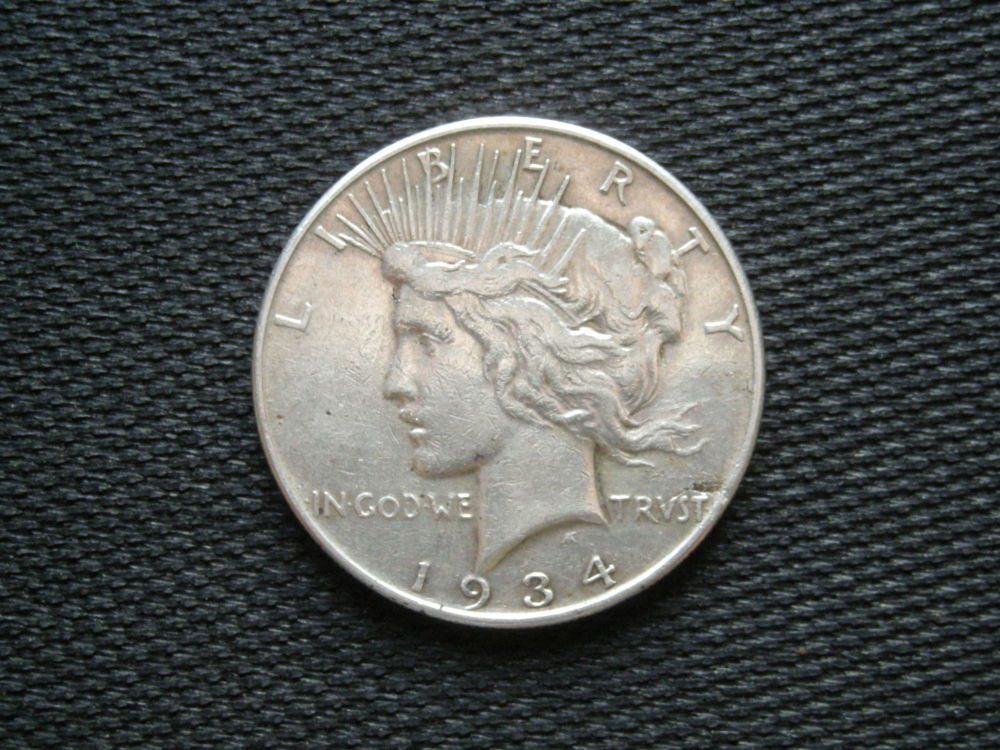  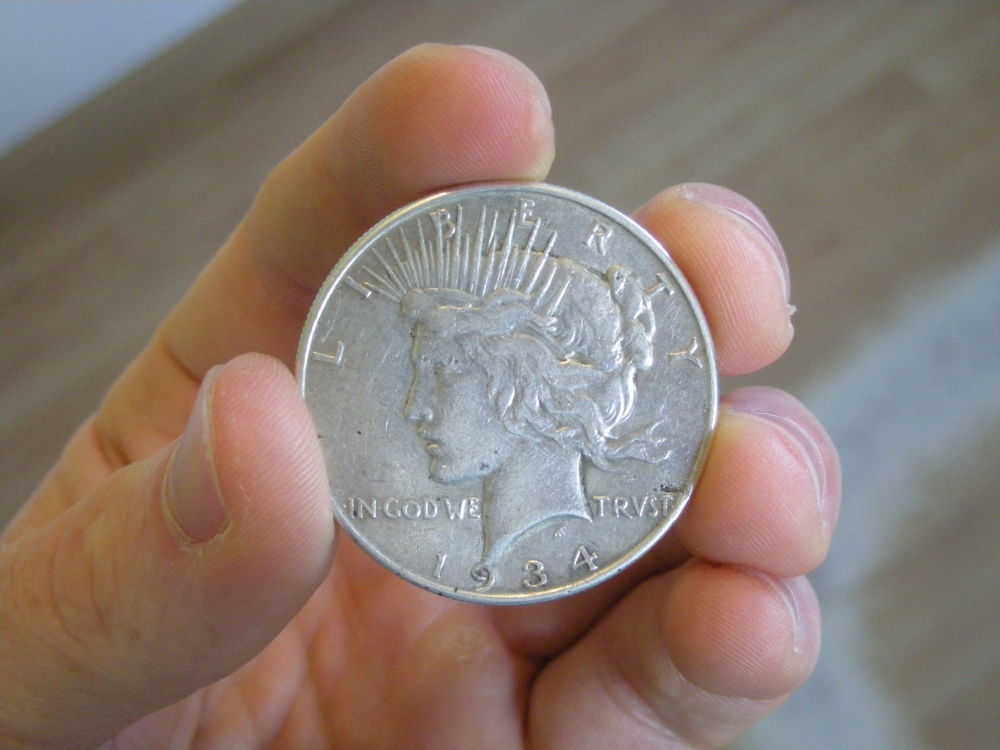 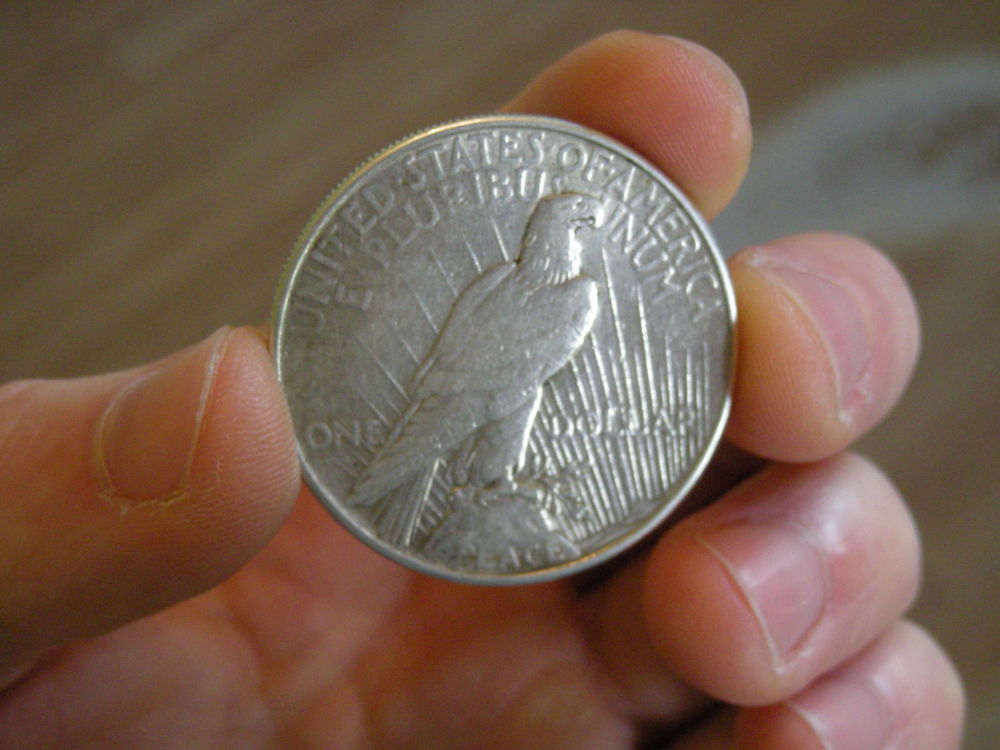 Edited by Earendil
08/20/2015 2:05 pm
|
|
Moderator
 United States
23522 Posts |
Aside your evaluation, which I agree with, nothing bothers me about the 1934's authenticity. Dates tend to be well-struck on Peace dollars, I'm guessing because of the relative lack of deep reverse features on the other side to monopolize metal flow during the strike. As far as the 1922, I wonder if maybe the die was improperly basined. The center is strongly struck, while the periphery still shows some of the characteristic Peace dollar weakness. |
| |
Replies: 33 / Views: 5,041 |








 First Page




 Posted 08/18/2015 10:15 pm


