| Author |
 Replies: 33 / Views: 5,028 Replies: 33 / Views: 5,028 |
|
Valued Member
United States
165 Posts |
Hi! I have a question concerning a generic Peace dollar I purchased at a local coin store today. Essentially, it "struck" me that it has the strongest strike I have ever seen on one of the Philadelphia-produced 1922 Peace dollars (especially in light of its appearance as a moderately circulated piece). Is there anything significant about this coin, or was its appearance simply imparted by a fresh set of dies? All devices and legends--including the eagle's feathers--are fully visible on the coin, and the only area of weakness appears to be the upper half of "United." In addition, the rim on both sides of the coin is fairly well-pronounced, much more so than on a few other Peace dollars I compared it to. I have attached what I hope are representative enough pictures, but please do let me know if anything additional is required. The last 2 pictures show the coin's high level of definition the best. Thank you in advance for anyone's assistance. 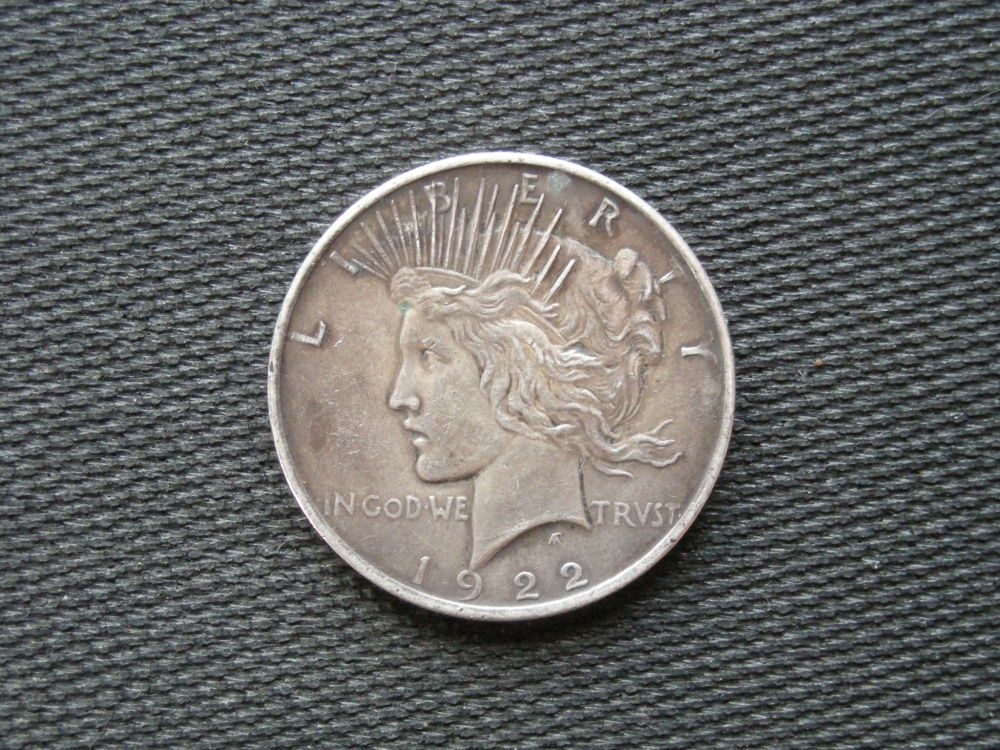 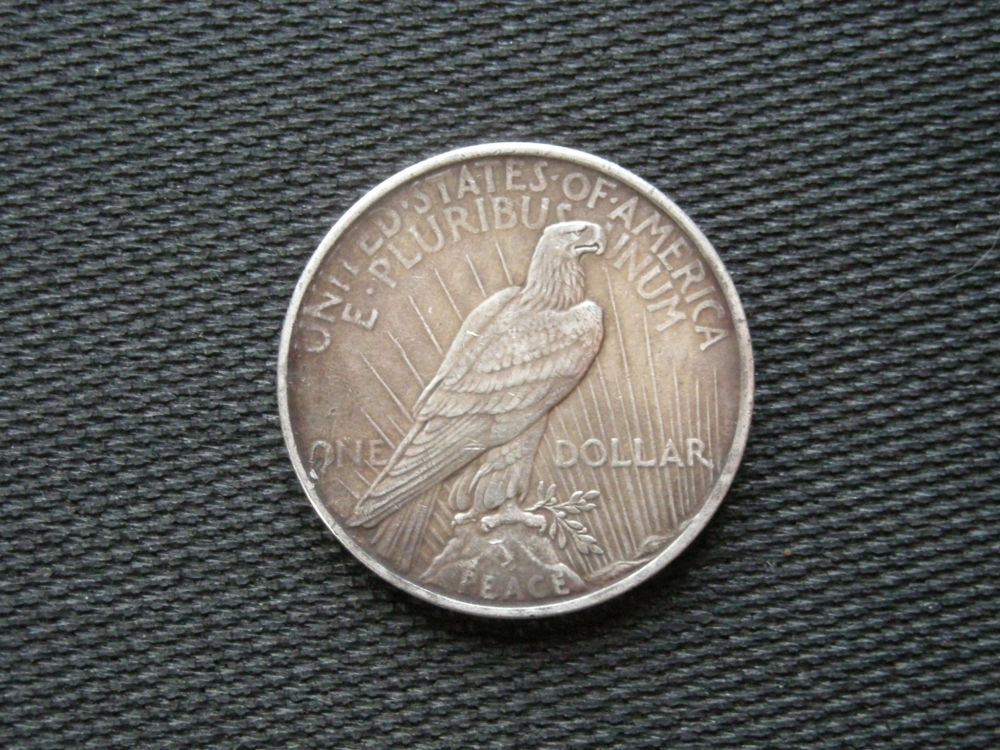 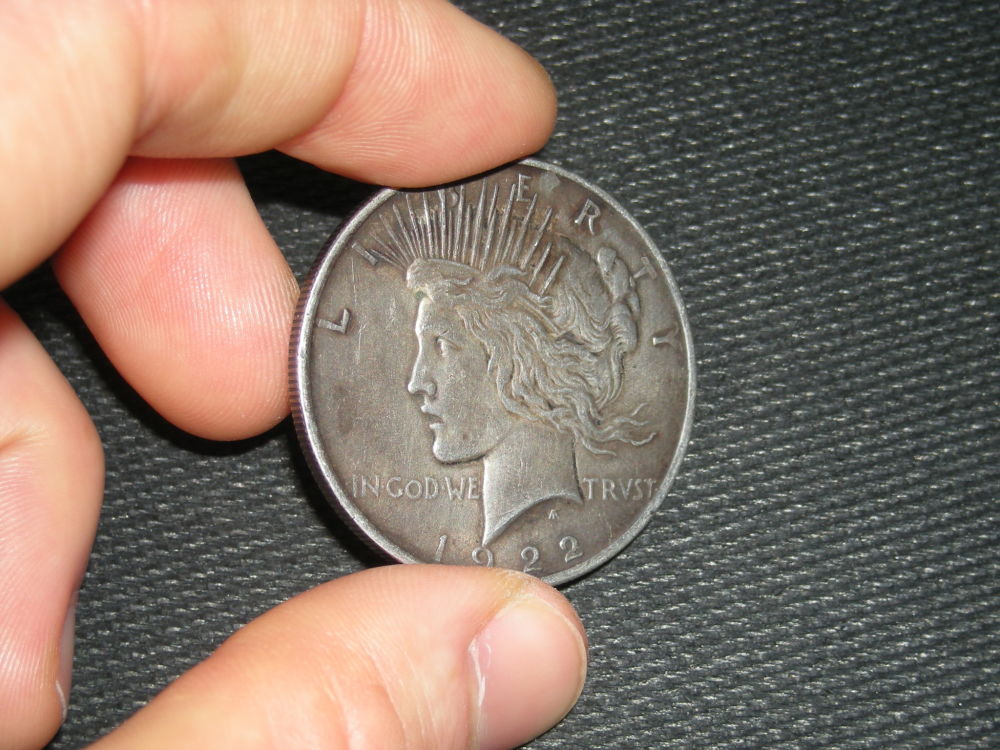 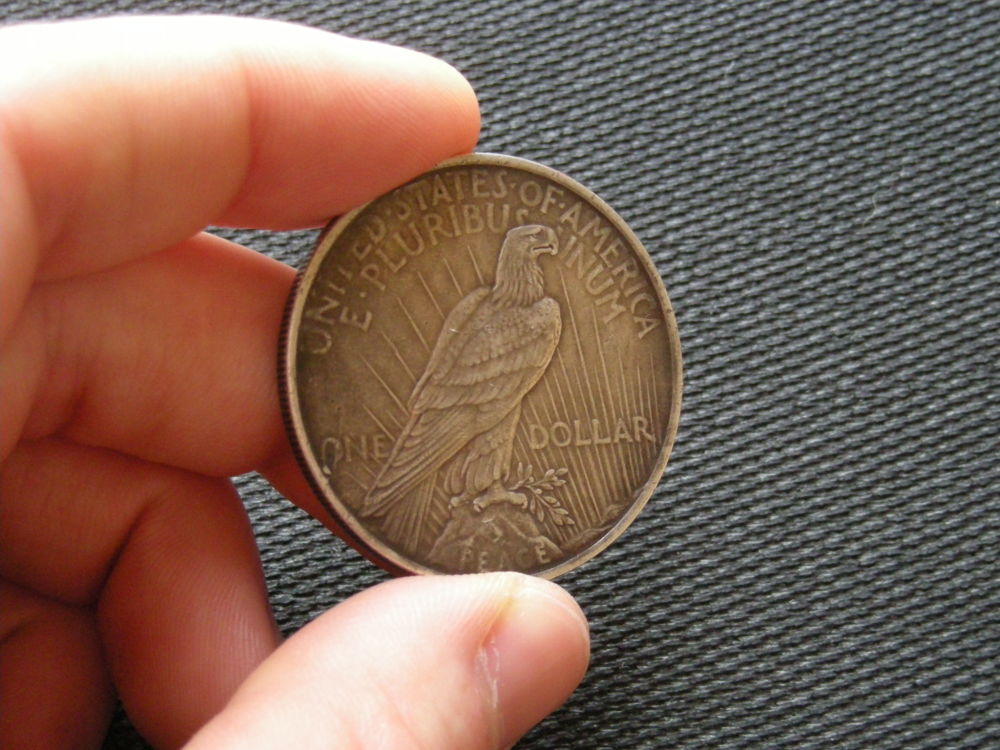 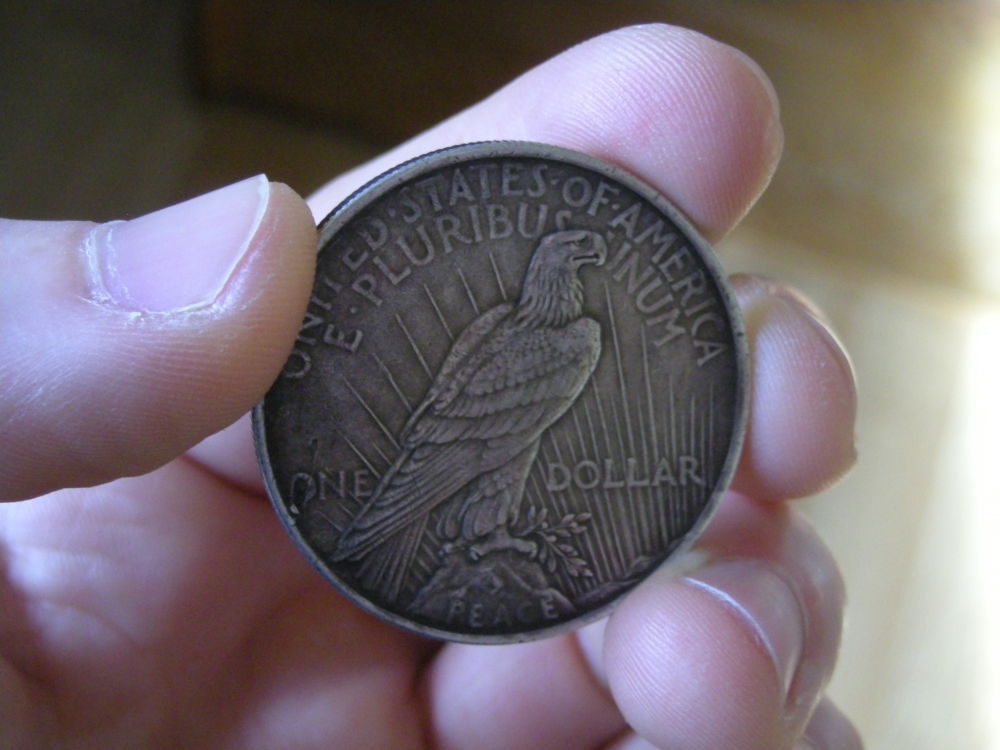 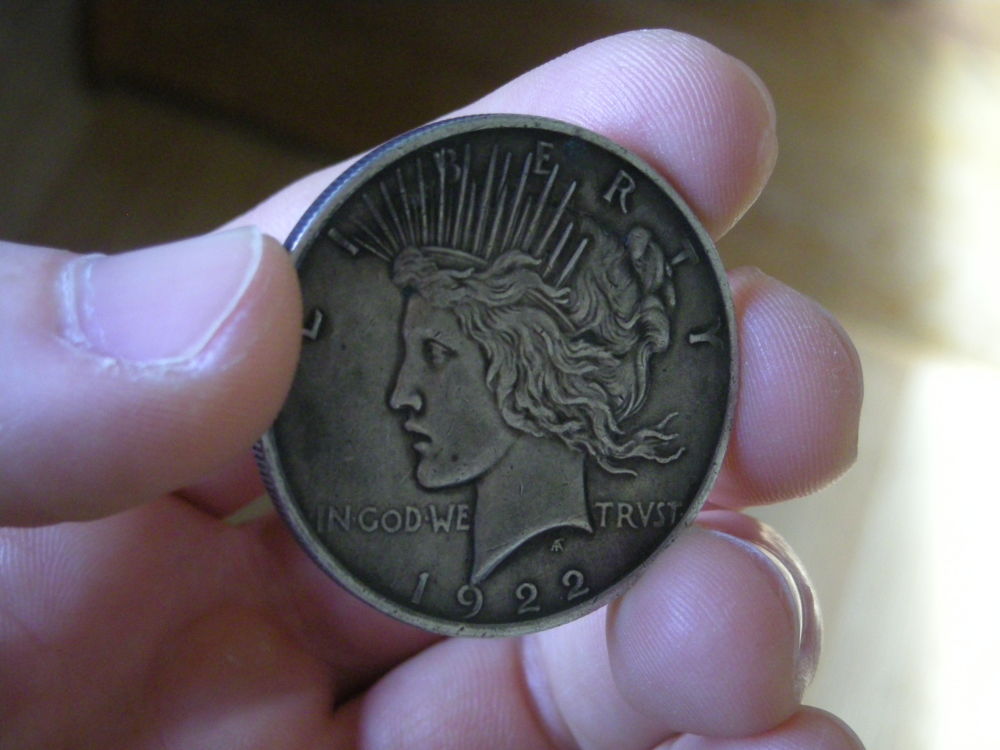 Edited by Earendil
08/18/2015 6:31 pm
|
|
|
|
Pillar of the Community
United States
1795 Posts |
I love Peace dollars and its a nice coin. Its in no way a MS coin but a good example of a Peace dollar. I hope you got it at a reasonable price. |
|
Moderator
 United States
56855 Posts |
 to CCF. Is it magnetic? John1  |
|
Pillar of the Community
United States
4509 Posts |
I believe the question you are asking is the coin a possible proof 1922. As I recall there are only about 15 known proof 1922 coins. All of the known proofs are in MS condition. The proof 1922 Peace dollar coins were given to special people and not put into circulation. The coin does appear to have a strike that resembles a proof coin, but it may be too good to be true and I would be concerned about the pronounced rim on the coin as some of the counterfeit coins can have what appears to be a strong strike. |
|
Valued Member
 United States
165 Posts |
Quote: I love Peace dollars and its a nice coin. Its in no way a MS coin but a good example of a Peace dollar. I hope you got it at a reasonable price. As do I! They have a great design, and the prices on most Peace dollars are quite affordable as compared to many other series. I actually picked it up out of a cull/ common date silver dollars box. The store's proprietor was only charging $18 each for them--the cheapest price I've seen anywhere--so I immediately picked up 3: this one, a 1934-P Peace dollar, and a heavily circulated, but problem-free, 1889-O Morgan dollar. Quote:
Welcome to CCF. Is it magnetic? Thank you! :) No, it is not- that is actually one of the first things I tested it for when I got home. Quote:I believe the question you are asking is the coin a possible proof 1922. As I recall there are only about 15 known proof 1922 coins. All of the known proofs are in MS condition. The proof 1922 Peace dollar coins were given to special people and not put into circulation. The coin does appear to have a strike that resembles a proof coin, but it may be too good to be true and I would be concerned about the pronounced rim on the coin as some of the counterfeit coins can have what appears to be a strong strike. Yes, that is essentially what I was inquiring about. I did not "come out" and ask exactly that in my original post because I thought it might be best to solicit other individuals' opinions first, and also because everything I know about the 1922 low-relief proof coins came from some research I conducted after I purchased the coin (I am fairly new to collecting Peace dollars). Thank you for the information; it is much appreciated. The possibility of it being a fake did cross my mind, but I decided to risk it just this once. My total outlay for the coin was only $18, so fortunately I do not have too much to lose if there is a "problem" in that respect. With regard to a proof--even one of this age--entering circulation, I do feel, however, that it could be somewhat possible, especially when the coin itself was still current. After all, all manner of modern proofs enter circulation on almost a daily basis, and we do have examples of coins like the 1894-S Barber dime being used and/or spent. In addition, the relative proximity of the Great Depression to 1922 could have meant that other period proofs, too, were spent- as was the case with many of the early commemmoratives we now see with anywhere from light to heavy circulation wear. Thank you for the appraisal. I will admit that I was a bit concerned about that as well, and also posted about this coin in the hopes of obtaining confirmation of its authenticity (or lack thereof). In the end, while I do believe finding a proof Peace dollar would be quite the accomplishment, please know that I nevertheless agree with you in that it is almost certainly impossible. :) Edited by Earendil
08/18/2015 9:45 pm
|
|
Pillar of the Community
United States
6130 Posts |
Welcome! You are correct; that is an unusually good strike for a Peace dollar. At a minimum, I would say that you have a high relief dollar with a fresh pair of dies. There is also an *extremely* small chance that yours might be a circulated proof. |
|
Valued Member
United States
165 Posts |
Quote:Welcome! You are correct; that is an unusually good strike for a Peace dollar. At a minimum, I would say that you have a high relief dollar with a fresh pair of dies. There is also an *extremely* small chance that yours might be a circulated proof. Thank you! Yes, I thought so as well; this was the main reason that I decided to add it to the other two silver dollars I purchased today. Provided the coin is actually authentic (there were some concerns in this regard), the strike itself is great for a Peace dollar of this year. It does appear that way. The coin definitely saw some moderate circulation, yet it still looks quite "good" for having been handled a lot. That's exactly what I researched after I purchased it. :) However, as another member mentioned, the odds are almost nonexistent, and I do not really know of any way to confirm the coin's status for certain. It is only my personal opinion, but I did think the coin's overall appearance--and its retention of a great deal of definition--is similar to that of proof half-dollars that have circulated to greater and lesser extents (which I, like many others, have found in excess during bouts of coin roll hunting). |
|
Valued Member
136 Posts |
Could it be a lead counterfeit? What does it weigh?
|
|
Pillar of the Community
United States
4509 Posts |
Here is a photo a sandblast proof 1922 Peace dollar one of three known with the sandblast finish. This coin sold in 2014 for just under $200,000. 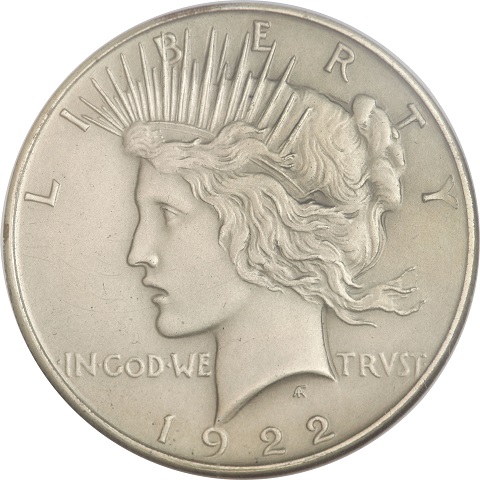 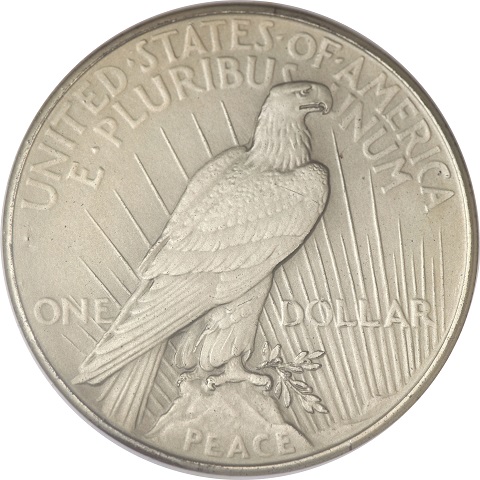 |
|
Pillar of the Community
United States
4509 Posts |
The way to confirm if the coin is a proof is to submit it for grading to NGC or PCGS as a proof coin. If the coin was a proof, it would have a value of about 100K and the coin dealer would be sick for selling it. You first need to confirm that the coin is genuine before wasting money trying to get it certified.
|
|
CCF Sponsor
United States
702 Posts |
Any way you cut it, it's a lovely coin for $18! I'd send it in and see. The reverse doesn't match the reverse Slider23 posted, but the obverse might be close...
If you don't want to send it in, maybe go by the local coin club or show.
Good luck!
|
|
Valued Member
United States
165 Posts |
Quote:
Could it be a lead counterfeit? What does it weigh? I actually haven't gotten to that stage yet. Unfortunately I am visiting a relative right now, and do not have access to my jewelry scale. The coin itself I picked up at a store I passed by today (one I have never been to in the past). I'll see if I can take it into town this week and have a jeweler weight it for me. Based only on feel, the coin does not appear to weigh measurably more or less than another silver dollar- although I definitely can't confirm this for certain until I have access to a scale. The one thing that does seem to be different/ unusual about this coin is the reeding. On the other 3 silver dollars I have with me, their reeding is somewhat rounded off on its top and bottom, as it meets up with the obverse and reverse of the given coin. On the silver dollar in this post, the reeding is a bit thicker, and more squared-off- almost like the obverse and reverse of the coin are sitting inside of it. Does that make sense? Quote:Here is a photo a sandblast proof 1922 Peace dollar one of three known with the sandblast finish. This coin sold in 2014 for just under $200,000. Thank you for the picture; it is much appreciated. While the two coins do exhibit some similarities, the major difference I can see is the weakness, in mine, of a portion of the "United" in "United States of America." This does not seem to be wore down--since it curves along with the rim of the coin--but rather, improperly struck. Do you know if this is something that could happen to a proof coin? Is is a trait I have seen on regular circulation-strikes. Quote:
The way to confirm if the coin is a proof is to submit it for grading to NGC or PCGS as a proof coin. If the coin was a proof, it would have a value of about 100K and the coin dealer would be sick for selling it. You first need to confirm that the coin is genuine before wasting money trying to get it certified. All right; thank you! I've actually never submitted anything before (I'm more of a "raw coins" person), but like you said, I'd rather take some steps towards confirming the legitimacy of this coin first before grading enters the picture. Quote:
Any way you cut it, it's a lovely coin for $18! I'd send it in and see. The reverse doesn't match the reverse Slider23 posted, but the obverse might be close...
If you don't want to send it in, maybe go by the local coin club or show.
Good luck! Thank you! The price was a big part of the reason why I decided to pick it up; it was really quite reasonable as far as a generic silver dollar goes. Yes, there are definitely some differences there. If it "were" a proof, I think the other thing that would be difficult to account for would be circulation wear. Proofs tend to look a lot different once they begin to be subjected to the rigors of circulation. However, they tend to maintain their characteristic sharpness- something I thought was rather unusual about this coin specifically, especially when I compared it to the many other 1922s that were in the box along with it. Thanks for the advice! I'll have to see how the authenticity checks pan out. :) Edited by Earendil
08/18/2015 9:26 pm
|
|
Valued Member
United States
165 Posts |
For anyone who might be able to ascertain something from this, here are two pictures of the reeding of the coin in question. The black edge is the coin in this post, while the white one is a 1926-S Peace dollar. The reeding of the coin mentioned in this post is rather unusual in that it is completely squared-off on both ends. On a regular Peace dollar, the reeding seems to gradually curve inward towards the obverse and reverse of the coin. 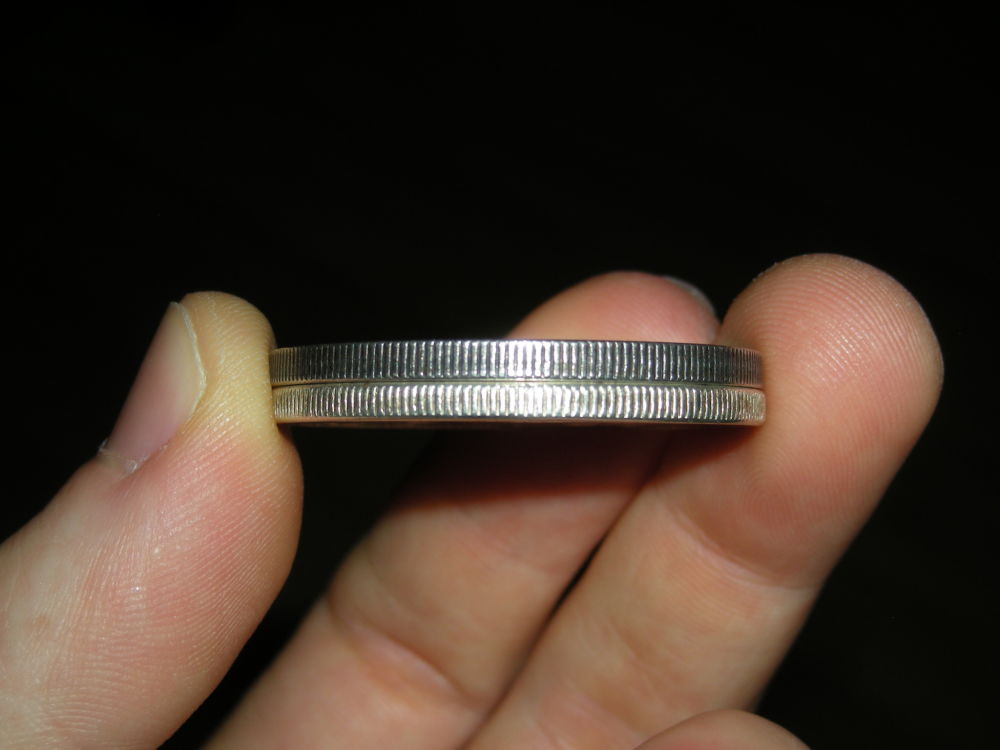 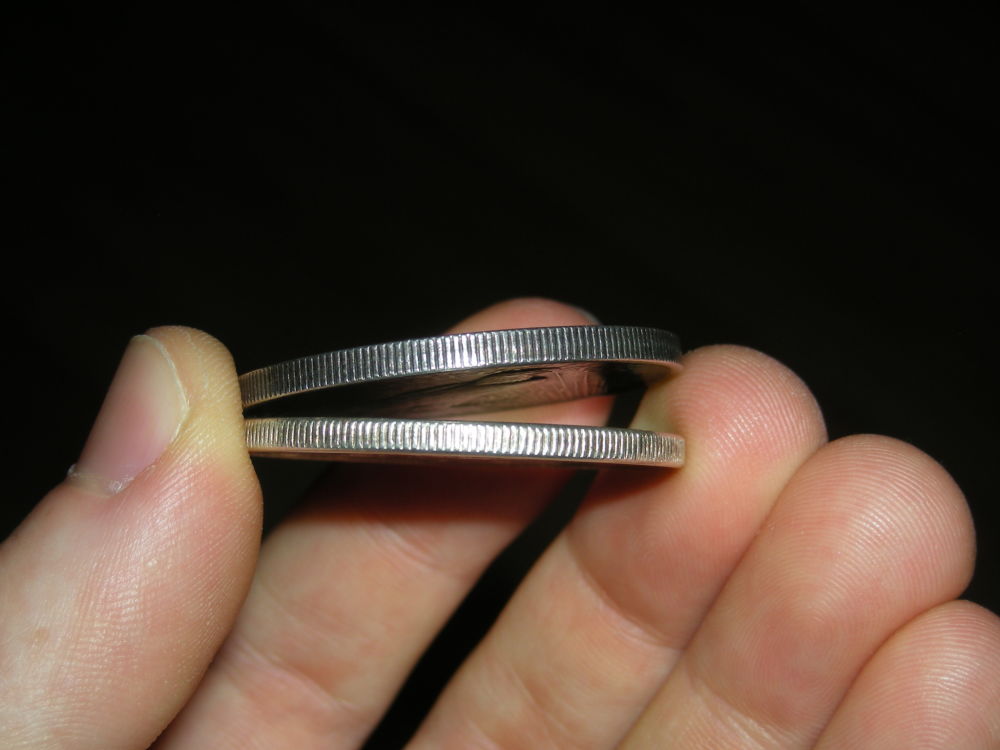 Edited by Earendil
08/18/2015 9:40 pm
|
|
Valued Member
United States
156 Posts |
It does not have the markers of a High relief coin as far as I can see.
I tried posting a link, but it got auto removed for some reason.
Edited by jay799
08/18/2015 9:56 pm
|
|
Valued Member
United States
165 Posts |
Quote:
It does not have the markers of a High relief coin as far as I can see. Thank you for looking at it. I came to that conclusion as well, but then I found out that there were an extremely limited number of low-relief proofs produced as well (I was trying to figure out if the coin was one of these). |
|
Pillar of the Community
United States
1554 Posts |
My gut feeling after studying your coin is that it is fake. It just does not look right.
|
| |
Replies: 33 / Views: 5,028 |







 Posted 08/18/2015 7:19 pm





