I upgraded my Ryedale to sort out the wheat pennies. Well sort of. I choose not to use the coin discriminator's solenoid, but I could have. This system is currently sorting about 2 pennies a second, continuously. One solenoid and 2 physical bins are set up. Yes it's missing wheats that come out heads up. I am planning to deal with this, but for now I am just happy it works as well as it does.
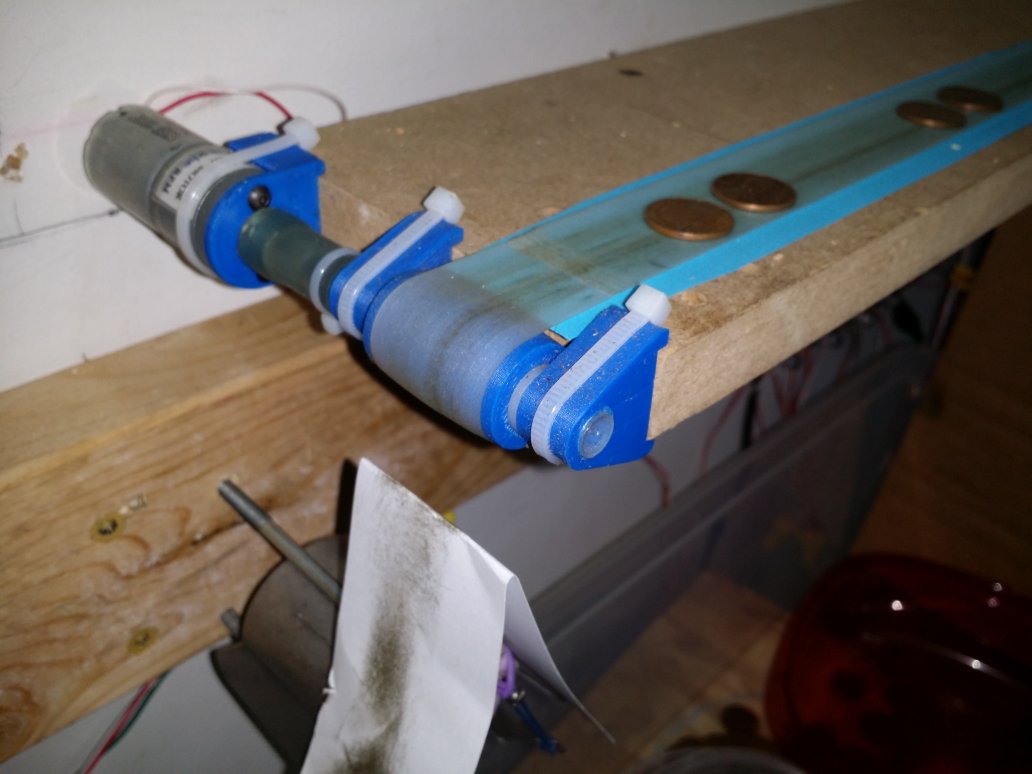
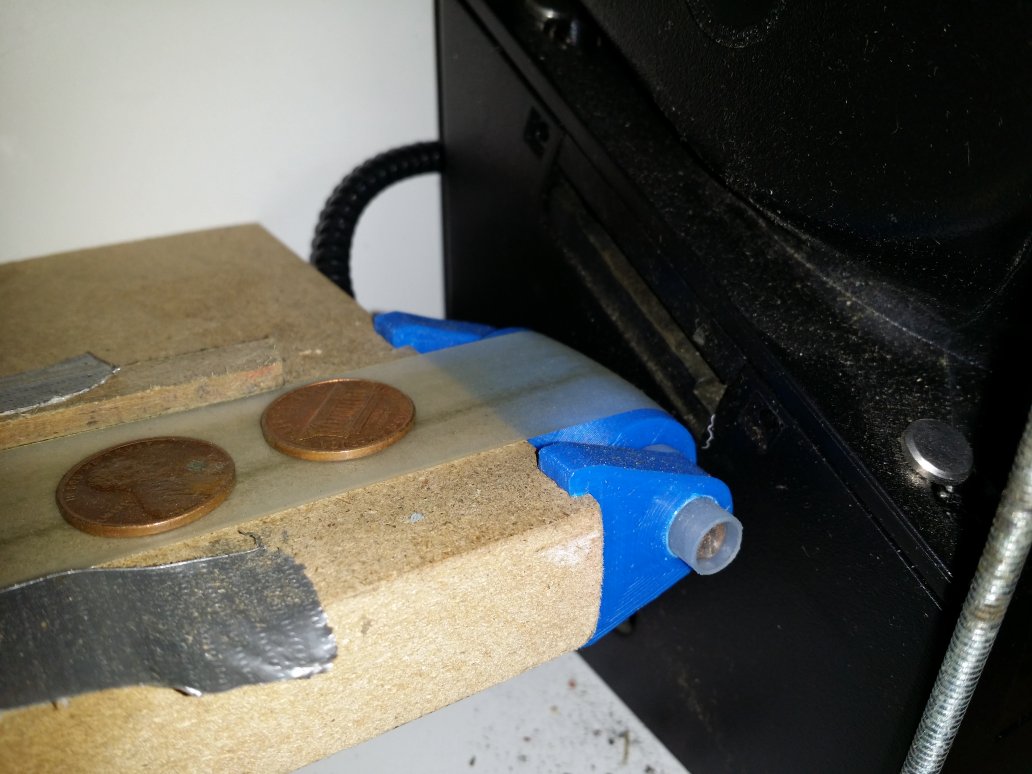
Why did I build it? I would like to design a low cost and easy to build DIY coin sorter. To help with this design process, I built this proof of concept you see in the video below. Let me know what you think of it...
It uses a Caffe deep learning framework out on AWS GPU instance to distinguish between designs of coins. For example you can train a convolutional neural network (CNN, what Caffe uses) to determine if a coin image is heads vs tails or say to recognize the state on a random US State Quarter image. Using the "copper" image set out on GemHunt.com, Caffe can tell heads vs tails between US copper pennies 99.9% of the time. I have been doing this using NVidia's DIGITS web interface to Caffe with the default setting of AlexNet.
That's pretty amazing, nice work! In the future I wonder if you could detect verdigris ones too? I still hand sort but I separate the verg pennies out so they won't spread to the good coins.
Great work! Now that coin design recognition is in the hands of the public, I wonder how long before someone will be able to grade them using a computer. The tech has been there for a long time - but only with expensive machines like those used in quality control departments of manufacturers.
Finding coins with vertigris should be pretty easy. Tone sorting is a piece of cake. General grading is easy, say something like good, better, best. When real grading is possible so is a machine that can hunt for error coins. Of course some errors/rare coins are easier than others. Wide/narrow AM transiton types are going to be pretty easy to sort out.
I also see this as a way to manually inspect coins quickly. One can set it up to always rotate the coin correctly on the computer screen, or even just look at a the same magnified area over and over for each coin that goes by. This is where a nicer camera is handy.
I'm currently using a Canon Rebel T5i, but a $5 web cam would do the same job for sorting like I am doing currently.
This is wonderful! I wish I had the time to try it out myself, I'm sure I would learn a lot on a project like this. Thank you for sharing.
If you wanted to image both sides of a coin, would it be easier to use a transparent belt and image through the underside for simultaneous 2-side imaging, or could you flip the coin and then image the other side easier; say by having it fall halfway off one belt onto a belt below going the opposite way?
Possibly also a way to find rotated die errors if both sides could be seen at one time. I had thought of rolling coins thorugh a very narrow (and transparent sided) incline with a webcam on each side to find rotated dies.
This was while working on another major projct though. I would have to do some homework to set up the equipment, programming etc. By today's standards I am a bit rusty. I currenlty have other projects I want to get done, so am not sure I will get to something like this. It would be fun though.
Disclaimer: While a tremendous amount of effort goes into ensuring the accuracy of the information contained in this site, Coin Community assumes no liability for errors. Copyright 2005 - 2026 Coin Community Family- all rights reserved worldwide. Use of any images or content on this website without prior written permission of Coin Community or the original lender is strictly prohibited. Contact Us | Advertise Here | Privacy Policy / Terms of Use







 Posted 08/26/2015 6:37 pm





