| Author |
 Replies: 26 / Views: 7,260 Replies: 26 / Views: 7,260 |
|
Pillar of the Community
Netherlands
1204 Posts |
An other greek coin arrived, very small and detailed. I just found out it is a scarce coin, probably a diobol (quarter drachm) 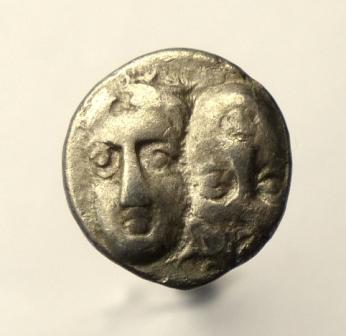 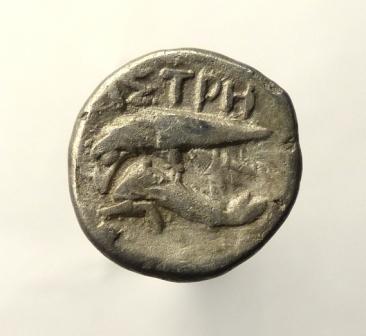 State, City: Thrace, Moesia, Istros Coin: silver Quarter Drachm/Diobol - Two facing male heads, the right inverted ISTRIH - sea-eagle left, grasping dolphin with talons, AP monogram below dolphin Mint: (400-350 BC) Wt./Size/Axis: 1.07g / 11mm / - Rarity: scarce References: BMC 14 SNG Cop 200 SNGBMC 250 |
|
|
|
New Member
United States
19 Posts |
Very cool Greek coin. I love the coins which feature dolphins. Do you own any other Greek coins?
|
|
Pillar of the Community
 Netherlands
1204 Posts |
Thanks, my greek collection is growing, it contains probably +/- 30 greek coins now.
|
|
Moderator
 United States
23731 Posts |
Very nice coin, lots of detail on such a small coin.
|
|
Pillar of the Community
United Kingdom
2624 Posts |
Everyone should own an Istros coin... to me it doesn't matter the denomination so much as just having an example of this type with the facing heads.
Cool coin grats ^^
|
|
Pillar of the Community
1121 Posts |
Hi, D.G. A lovely coin you have there and I agree with David when he says "everyone should own an Istros . . . ." Here is one of mine. ISTROS, THRACE, 400-350 B.C., AR Diobol, (Quarter Drachm), Obv: Two facing male heads, the right inverted, Rev: Sea-eagle left, grasping dolphin with talons, 'A' in 'Pi' monogram below dolphin. AMNG 419; BMC 12; Sear 1669 type. Scarce 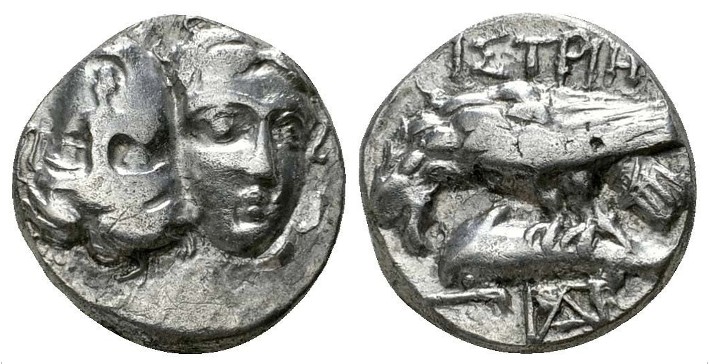 Edited by Topcat7
09/15/2015 8:55 pm
|
|
Pillar of the Community
United States
5010 Posts |
nice DG...man, you've been making some cool coin purchases lately!
i agree that everyone should have one...but I don't have one myself...on the list.
|
|
Pillar of the Community
United States
567 Posts |
I just recently picked up my own Istros! It's a fantastic type, glad to see all the love for them in this thread. 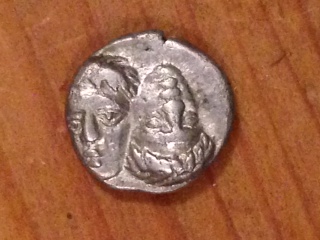 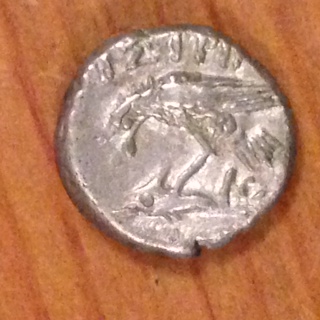 |
|
Pillar of the Community
Netherlands
1204 Posts |
thanks for the replies and uploaded istros coins!
|
|
Pillar of the Community
Belgium
1194 Posts |
your coin is a trihemiobol : 3 x 1/2 obol:a quarter drachm. a diobol = 2 x 1 obol = 1/3 obol here is mine : 1.09 gr , 11 mm , die axis 6 h on rev : monogram M I in ligature . albert 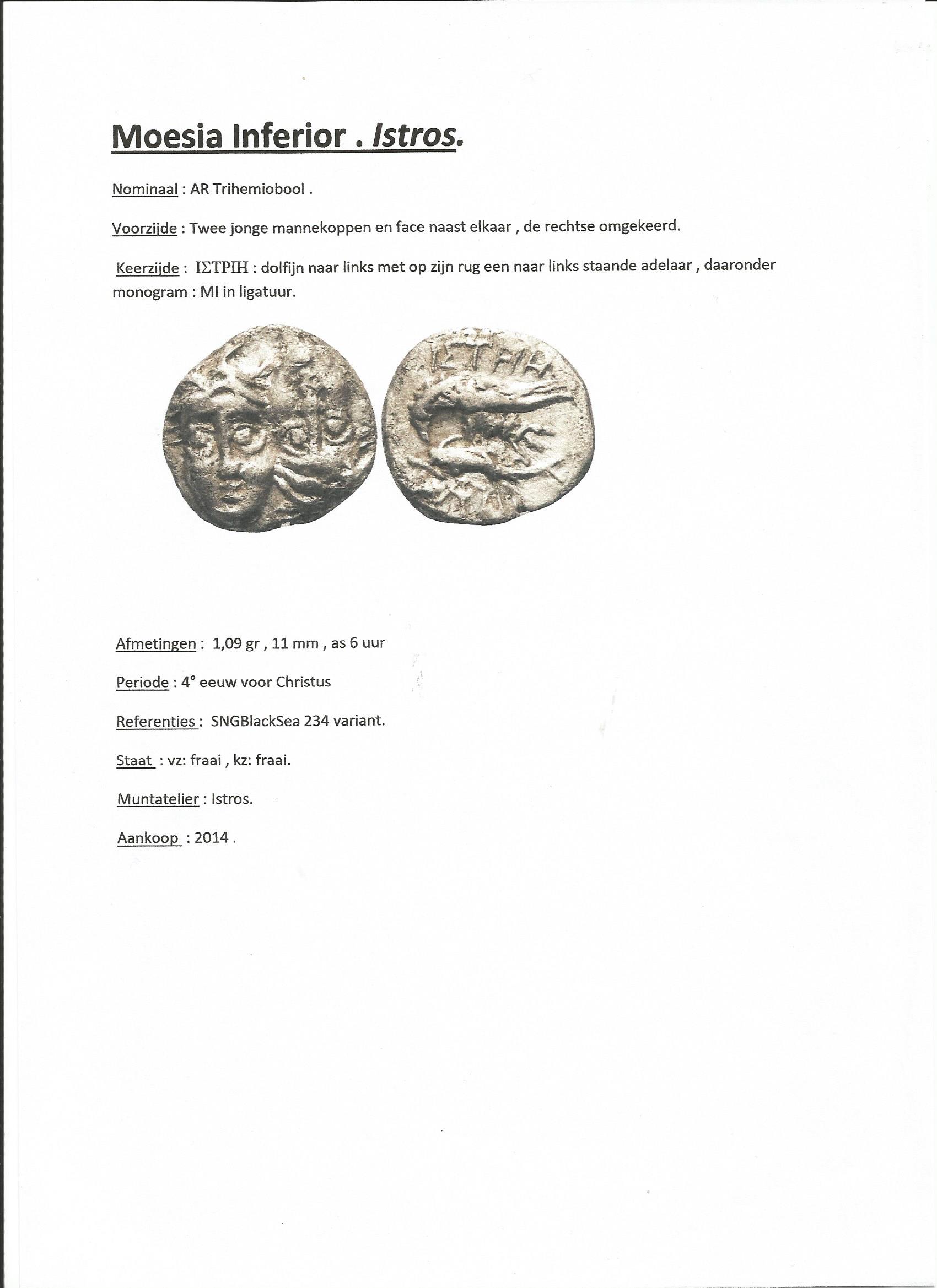 |
|
Pillar of the Community
United States
949 Posts |
Quote:
your coin is a trihemiobol : 3 x 1/2 obol:a quarter drachm. a diobol = 2 x 1 obol = 1/3 obol
here is mine : 1.09 gr , 11 mm , die axis 6 h As you noted, a diobol is two obols, not a third. I think you meant to say 1/3 drachm. I agree that the OP is a trihemiobol based on a weight of 1.07 gm. But this confusion with the diobol is common since the two differ only by a half obol. The weight of a diobol starts at 1.45 gm, but may have a flan size that is smaller than a trihemiobol. One has to consider the entire module, especially the weight. Edited by lrbguy
09/16/2015 11:07 am
|
|
Pillar of the Community
Belgium
1194 Posts |
Irbguy , you are right , it is 1/3 drachm , sorry .For the weight , you have always to check wich weight standard is used ,as a trihemiobel can go from 14 graines (Phoenician) over 16.9 graines (Attic) to 24 graines (Aeginetic) .The flan size is always a problem with ancient coins, as there are differences between the same value . albert
|
|
Pillar of the Community
Netherlands
1204 Posts |
thanks for the clarification and id
|
|
Pillar of the Community
United States
949 Posts |
Albert, It sounds like you are just the man I need to talk to. I am having a problem nailing down the proper weight standard for this issue. The large variances among the online dealers do not help matters. The Seaby catalog for Greek Coins (vol 1) identifies the base unit coin for this Thracian city as a "stater" with a weight of approx. 5.75g. Presumably it is because of the dominating influence of Athens over this region during the period of circulation for these pieces, c. 400-350 BC, that most sellers assume an Attic standard and call the stater a "drachm" irrespective of weight. That is very confusing, and leaves the door open for a lot of fake coins. The same catalog gives the following chart for the Attic weight standard during the Early and Classical periods. 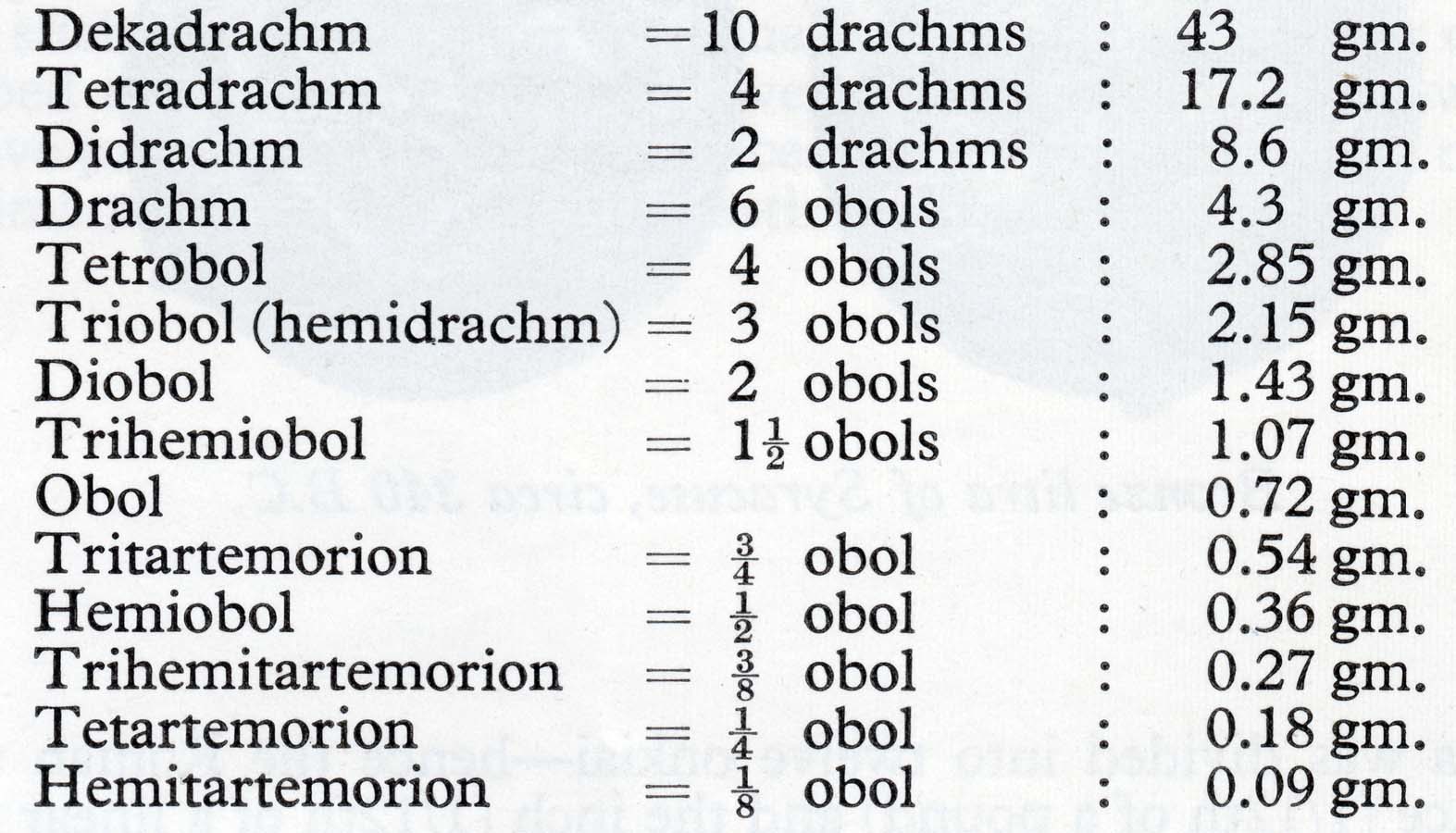 I have three pieces in which I am confident of their authenticity. Two are staters weighing 5.59g and 5.09g; and both measure 16x16 mm. The third is a fraction weighing 1.43g and measuring 11x12mm. Based on the Seaby chart I have identified my coin as a diobol by weight. Here is an image of that coin 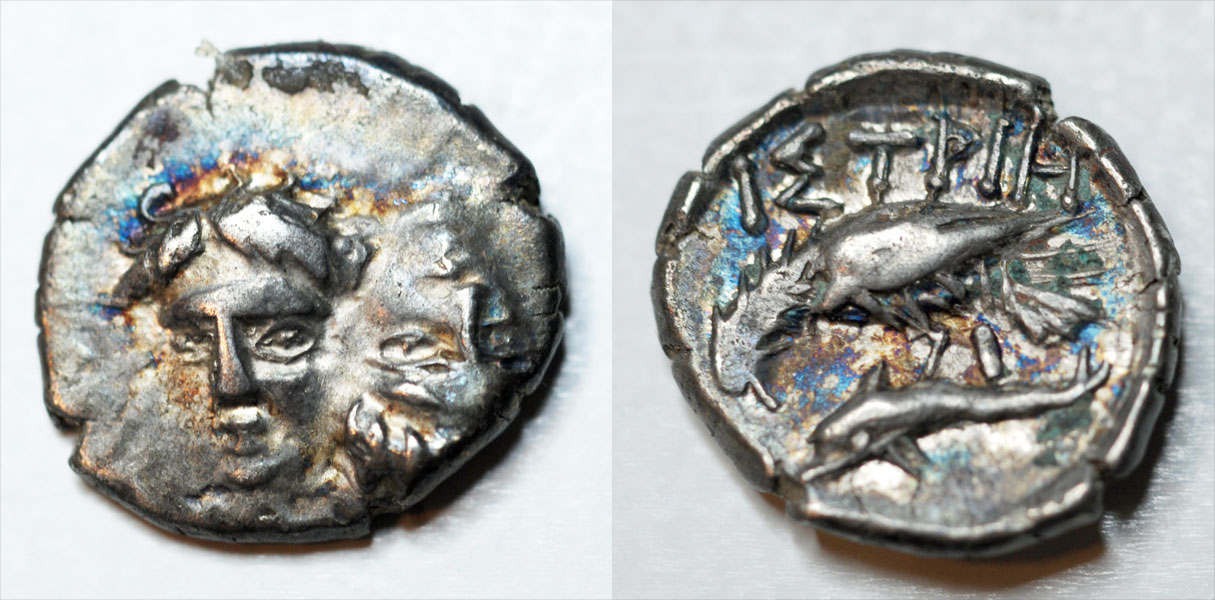 The problem is the weight relation between this fraction and either of the two larger coins. Do you have any further information on the actual weight standard used? How do the coins actually relate to the attic standard? What are the weights of the fractionals, whatever they may be called? The reason this is so troublesome is because sellers are calling coins a "drachm" over a range of weights from just over 6 grams down to about 3.5. Assuming it is genuine (big assumption) they cannot all be the same denomination. |
|
Pillar of the Community
Belgium
1194 Posts |
There is a problem with the weights of the coins from Istros . It is a colony from Milete and used the same weight standard as Sinope in Paphlagonia , an other colony from Milete . Sinope is using a Phoenician - possibly reduced- standard . The earliest issues are staters,ranging in the weigt from 100 grains (6.48 gr) to 80 grains (5.184 gr ).
I have checked this in the Catalogue of Greek coins in the British Museum (The Tauric Chersonnesos - free on internet ), where it is a Persian standard , but raised .The coins in the BM weights for the staters from 73,4 grains (about 4.729 gr) to 102.7 grains (about6.609 gr) and the two small ones : 21.9 and 21.3 grains : about 1.36 gr .The size is for the first from .65 to .8 inch :about 16.5mm to 20 mm , for the small one it is not clear on my copy , but it is .4 and another numeral ,so 11 to 12 mm is correct.
For your small coin of 1.43 gr , it has to be a trihemiobol : 1.43 x 4 = 5.72 gr .
For the name also , there is a problem of confusion , I think .As the BM stated a Persic weight standard but raised,then they have to mean the weight of the drachm : 88 grains = 5.702 gr .For most of the catalogues the big coin is a drachm , a diobol is 1/3 dr = about 1.9 gr ..The name is in accordance with the weight , but I don t know of all the different sizes were struck in this time in Istros .albert
|
|
Pillar of the Community
United States
949 Posts |
Thank you for your time and the BMC reference. I have bookmarked the site for the catalog, with gratitude.
Okay, so the table in Seaby is out since these coins are not based on the Attic standard.
(For simplicity I am going to stick with metric units even though the BMC is using avoirdupois apothecary units.)
Per the BMC (Head and Gardiner?) this coinage follows an "adjusted" Persian standard? What was the basis for claiming the amount of "adjustment?" They must have cited something.
At any rate, the adjusted "drachm" is the weight of the stater unit (~5.75g). From there we do the math? or follow the trail of attributed pieces?
One last question, Albert: what is the error tolerance for a given unit of measurement?
eg drachm = 5.75g +/- ?
diobol = 1.92 +/- ?
trihemiobol = 1.44 +/- ? etc
Is there a convention on when to attribute a weight to the next highest category of currency? Do the module dimensions figure into it?
Thanks again.
Edited by lrbguy
09/17/2015 3:32 pm
|
| |
Replies: 26 / Views: 7,260 |







 Posted 09/15/2015 4:18 pm





