| Author |
 Replies: 25 / Views: 6,200 Replies: 25 / Views: 6,200 |
|
Pillar of the Community
United States
513 Posts |
OK, I'm becoming increasingly aware of differences between grading US-style and grading UK-style. I am in the US buying UK coins. What "standard" do I use when buying a UK coin from a UK dealer/collector? What grading standard do they use? What standard do I use when buying a UK coin from a US dealer/collector? What grading standard do they use? What standard do *you* think I should use when internally cataloging my UK coins (with the same software as my US coins)? OK, now what about coins from Norway, Turkey, Egypt, South Africa, Japan, etc.? What grade do you think the following coins get--under US standards and under UK standards? Still in the neverending process of trying to learn . . . 1879 penny 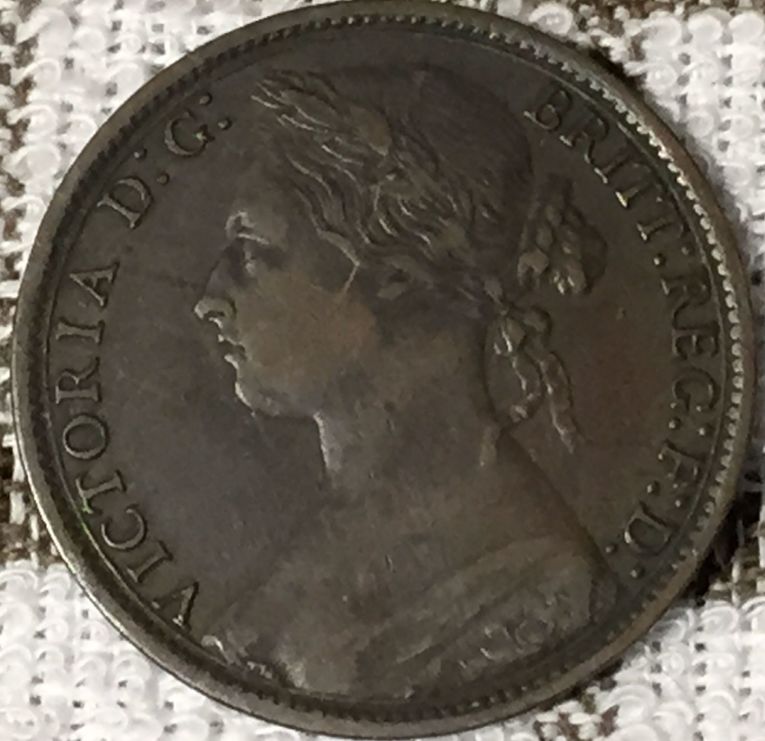 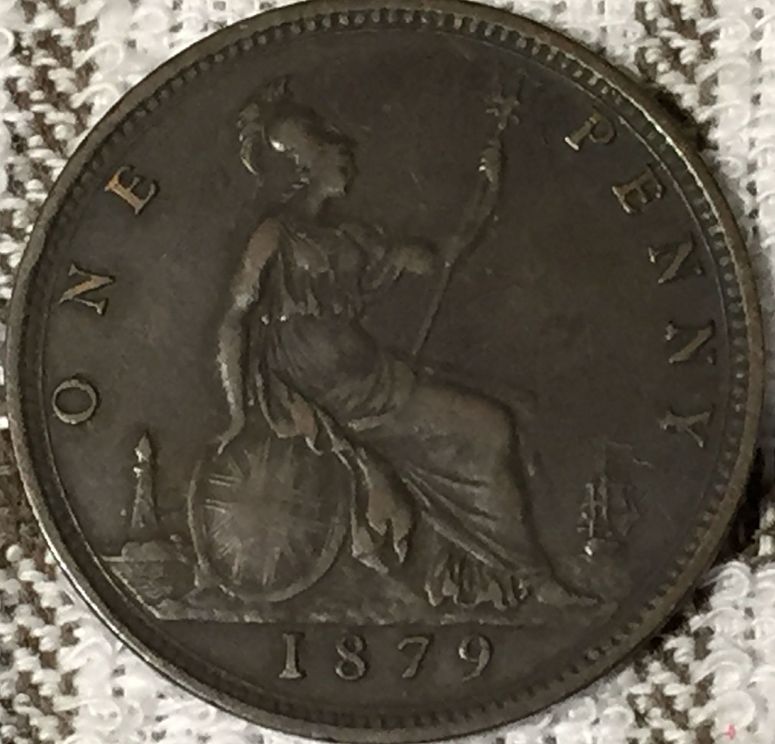 1951 penny 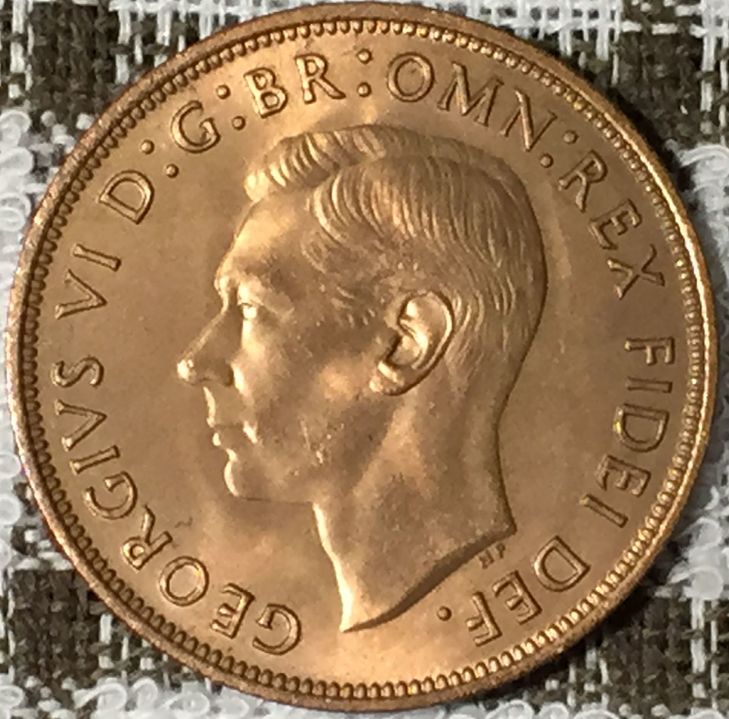 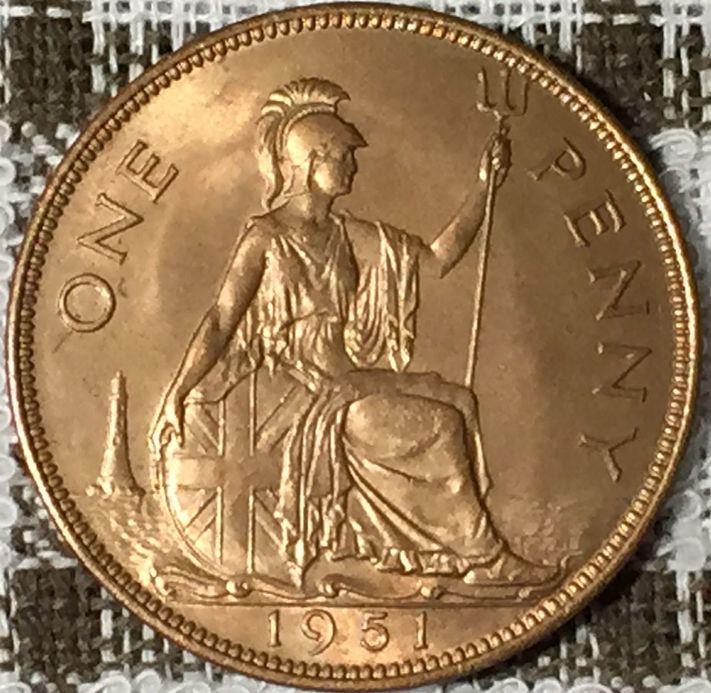 1970 penny 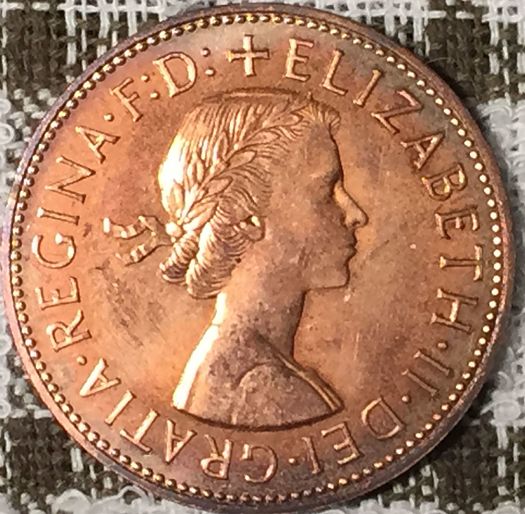 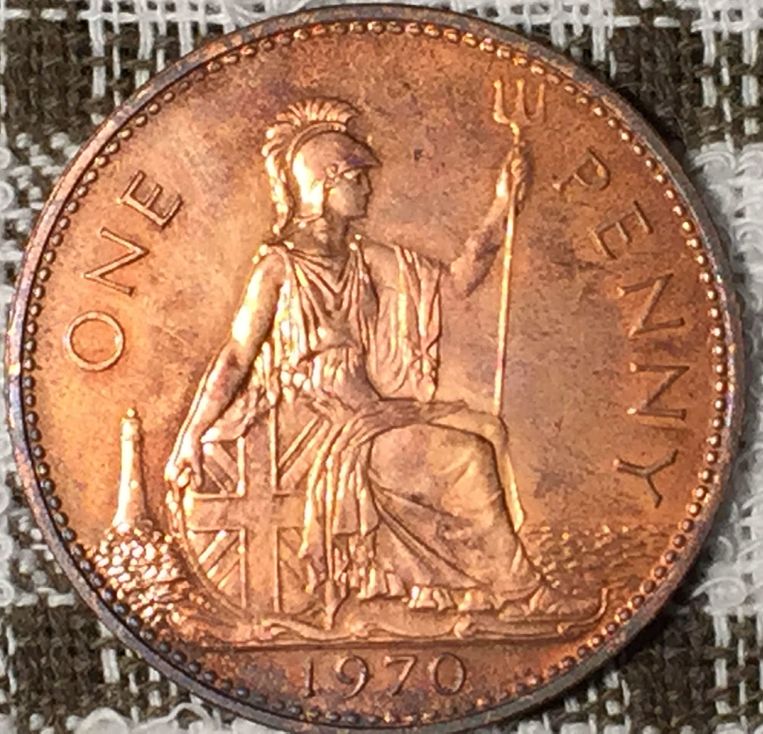 |
|
|
|
Pillar of the Community
United Kingdom
1351 Posts |
Easy
1879 nvf
1951 ef with obverse problems
1970 should be proof but crap
Horrid I may say but none of them are worth diddly.
|
|
Pillar of the Community
United States
1304 Posts |
You have to learn the UK standard and as a US collector it can be a challenge. The 1970 isn't worth having. The 1951 might be ok but I cant tell from the photos and the 1879 Penny while problem free is considered "low grade" by British standards. The key to the UK from a US perspective is buy UNC.
|
|
Pillar of the Community
United Kingdom
1351 Posts |
It is about buying the best.
All 3 coins are good but.........
It is possible to get some top coins but much easier to buy crap.
I have a US dealer who is tops.
|
|
Pillar of the Community
 Canada
5420 Posts |
Buy only quality coins with excellent eye appeal and no problems. A Google search will show you an approximate grade comparison. US TPG cannot grade GB coins to British Standards. |
|
Pillar of the Community
United Kingdom
856 Posts |
Yeah, it' a difficult thing to compare. Even US based TPGS don't always agree on the grade of a coin, so to try to compare to another country is tricky.
Here in the UK edge knocks or scratches may make a coin that in the US would grade well undesirable. When buying a modern (George V) half crown a while back a friend reminded me that there are millions of the things out there. So it's worth holding out for as close to perfection as you can find.
Personally there are a few UK dealer sites that I find grade conservatively. As Pacificoin says, it's worth a search when you find a coin you like to compare what UK dealers have for that date and how theirs compare.
Alternatively there's a UK coin forums whose members will be pleased to give their views. And can help identify conditional rarities; which years or varieties are difficult to find in top grades.
Finally, there's a handy book called "The Standard Guide to Grading British Coins: Modern Milled British Pre-Decimal Issues (1797 to 1970)" It's available both in print or electronically. While experience is the most important factor in grading, it might be a good start?
As for your collection ... personally I don't bother to grade my coins. I buy what I think are good examples with real 'eye appeal' and I know how much I paid. I find comparison with similar coins in an attempt to get as good as, or better than, average examples is what works for me.
But I guess if you want to be 'scientific' grading according to the standards of the country of issue would be the correct way to do it. A more pragmatic approach would be to grade according to where you might sell the coins, which I guess will be the US.
Edited by Tom Goodheart
09/30/2015 07:02 am
|
|
Pillar of the Community
 United States
513 Posts |
Thanks for the grading perspectives. I bought several low grade pre-decimal pennies and halfpennies to get a feel for the designs, wear patterns, monarchs/eras, etc., for copper/bronze issues. I've encountered wider grading, uh, interpretations with UK coins (often depending on source) than I have with US coins, and I'm trying to get a feel for grading UK stuff. Much of what I am doing is looking at coins online (various sources) to get "experience" (well, exposure anyway) with how folks grade UK coins (especially the copper/bronze) so I can get better at "buy the coin." And, as we all know, pricing is typically based on how the seller views the grade, and purchasing is typically based on how the buyer views the grade. I'm trying to tip those scales more in my favor for UK coins {grin}. My US collection is not limited to coins with excellent eye appeal and no problems and I do not anticipate any UK collection I start to be exclusive in that way. So I am looking to better understand the grades and the between grades. For example, I see from some sources that UK grading includes, poor, G, F, VF, EF, unc, and brilliant uncirc. But then there are "betweeners" sometimes used, that appear to be similar to F-15, VF-30 and the like in the US "system." For example, letters encountered using the British grading system are: 'G' for Good, 'N' for Near and 'A' For about. The range between VF and EF looks like this: VF, GVF, NEF, AEF, EF.... And from F to VF looks like this: F, GF, NVF, AVF, VF. Tom, thanks for the info about the grading book. I have US grading books and bookmarked some sites for US grading (pics), but I've identified fewer resources for learning about UK grading--hence my inquiries of our experts here. Speaking of experts, are there reputable third party grading services for UK coins? I see that CGS is using a 100 point scale, but I have no clue how CGS is received and how such 100 point scale is "catching on." Thanks for the help! edit: as an example of the US/UK differences, the CGS site equates a UK grade of VF with the US grade of AU-50 and the UK grade of EF with the US grade of MS-60. hmm. Edited by Garoyn
09/30/2015 08:44 am
|
|
Pillar of the Community
 United States
1950 Posts |
Quote:
Easy
1879 nvf
1951 ef with obverse problems
1970 should be proof but crap
Horrid I may say but none of them are worth diddly. I understand that the UK standard is quite different, but to call them 'horrid' is ridiculous U.S. grading: 1. 1879 solid XF 2. 1951 looks like an MS 63-64 red 3. 1970 does look like a details coin As a collector collecting in the U.S., I would keep my grading standard consistent throughout, but I would try and develop a working knowledge of the UK grading system for purchasing from dealers who do use this system |
|
Pillar of the Community
United States
1304 Posts |
Quote:
but I would try and develop a working knowledge of the UK grading system for purchasing from dealers who do use this system This is key. US dealers will use the US grading system and in my experience, grossly over value the coins. |
|
Valued Member
United Kingdom
190 Posts |
The 1879 is fine.
The 1951 looks cleaned.
The 1970 which is proof only is terrible.
|
|
Pillar of the Community
United Kingdom
2624 Posts |
I am with Tom in that I do not grade my own coins... what I do when buying coins is try to find as good value for money as possible... comparing coins looking to find one with good eye appeal in comparison to the others and at a reasonable price. I am in a way grading the coins but through gut instinct rather than putting a label on it. Anyway for the record this is the UK grade system: 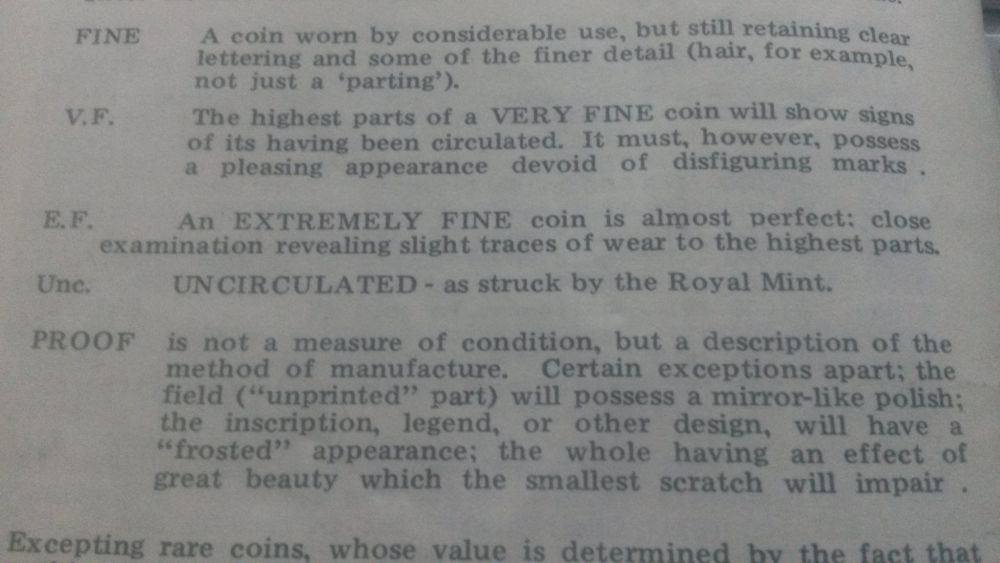 |
|
Pillar of the Community
United Kingdom
856 Posts |
Quote:
Speaking of experts, are there reputable third party grading services for UK coins? I see that CGS is using a 100 point scale, but I have no clue how CGS is received and how such 100 point scale is "catching on." I think you can say CGS is reputable. And being UK based, they are likely to identify varieties that US TPGS might not. But the problems identified on the UK forum are that firstly, CGS have done themselves no favours working to a scale that is completely different and unfamiliar to US collectors but also novel to UK ones. While CGS' associate London Coins might use CGS grades in their auctions, I haven't noticed the system catching on generally for say, unslabbed coins. Dealers almost universally use the F to EF to UNC scale you mentioned, unless the coin is already third party graded. Secondly there is much less acceptance of third party grading generally this side of the pond. While there are enthusiasts who slab/grade all of their coins it is much less common than in the US. I'd say 80-90% of coin sales are still raw here. Finally there are (possibly quite a few!) collectors who feel quite strongly that paying someone else to grade only discourages people from learning to assess coins for themselves and that the disadvantages of slabbing (difficulty in checking edges for damage, hard to photograph in a slab, can't weigh the coin) outweigh the protection it provides. My feeling is that learning to grade for oneself is still the recommended route in the UK, certainly at the moment and possibly for some years to come. Quote:
US dealers will use the US grading system and in my experience, grossly over value the coins. I think this sounds a little harsh perhaps?  My view is that dealers grade (as do we all) through experience and if you rarely see particular coins you'll consider them rare. And if you seldom see ones above gVF you will tend to up the price of anything noticeably better... I also get a feeling that some US dealers (perhaps in common with a few ebay sellers!) appear to associate age and value. Oddly an exception is ancients like Roman coins where US and UK prices are perhaps more comparable. The thing is that the market and range of prices in the US is quite different (and the range of prices usually larger) than the UK. In a world where $30,000 is nowhere near the top end, maybe £500 for a coin that here would achieve £200 seems reasonable? Another reason to buy British coins from Britain maybe? . Edited by Tom Goodheart
10/01/2015 4:26 pm
|
|
Pillar of the Community
United States
1304 Posts |
I am beginning to search out UK dealers for early milled copper pieces, but have yet to make a numismatic purchase from the UK. While I have found some nice pieces here in the States, I believe I will be unable to complete the type of set that I want to based on what is available on the US market alone. Quote:I also get a feeling that some US dealers (perhaps in common with a few ebay sellers!) appear to associate age and value. This is the problem here in the US, particularly when it comes to high grade early milled copper (I don't follow the gold or silver issues so much). I generally get MUCH better deals through auctions (not ebay) than through dealers for high grade UK copper. This might not hold true in the UK though. |
|
New Member
United Kingdom
24 Posts |
Having lived in both the US and UK (currently in the UK), I have some insight into this, particularly as I sometimes buy US coins in the UK to resell in the US, and vice versa. UK dealers will invariably use the UK grading standards when dealing with UK coins, although just like in the US some dealers will tend to overgrade. For world coins (including US coins) some will use UK standards, but others with a big auction presence or US customers will grade the US coins using US standards. US dealers will tend to use US grading for all coins, including UK coins. If they price using Krause this isn't so bad, but if they use Spinks (one of the main coin retail value books in the UK) it leads to vastly inflated prices. When buying UK coins in the US, I simply determine what I will pay based on the grade I see in UK terms, not what the dealer has listed on the holder, and buy accordingly. For the three coins, I suspect the following: 1879 - UK F/VF, US VF/EF 1951 - UK EF, US MS60 to MS62, possibly cleaned 1970 - Looks cleaned or damaged Personally, I like the 1879 the best - while not particularly valuable, it's still in a collectable grade and I have a weakness for Queen Victoria coins. For cataloguing one's own collection, well that can be difficult. I tend to grade them based on the standards used in the country of origin. Perhaps you could enter the letters UK before the grades for the UK coins? Some countries are closer to US grading - France, which I collect more than either the US or UK, tends to be just a slight bit tougher than US - so a UK VF would likely grade a French aEF and a US EF. Egypt and India, two other areas I collect, tend to pretty much match US grades (except when Indian coins are sold in the UK, when the dealers tend to use UK grading - so I have purchased rupees described as VF that still had traces of mint lustre). I think the book that Tom suggests is a good place to start - it's pretty highly recommended due to the good images. You can also look at coins offered by reputable UK dealers or auction houses, although the images often aren't good enough to be useful. -Bjorn Edited by bjorn
10/01/2015 4:35 pm
|
|
Valued Member
United Kingdom
190 Posts |
Sorry I am not sure how to attach a post as I am new to the forum.
jdmern mentions grades and I have to say your way off the mark.
The 1879 is Fine and not better .The 1951 has been cleaned of which is obvious and the 1970 proof needs to be thrown in the bin.
That is not ridiculous its a fact as someone who only buys english pennies I would be the first to acknowledge nice ones.
|
|
Pillar of the Community
Canada
5420 Posts |
Would say the first one is a decent Fine, second is not cleaned from my screen view but is a bit scuffed still UNC and the third is a junk box candidate. PWA is right. If you collected this series , you would look for far better pieces than shown.
One of the reasons I go on UK buying trips is the quality encountered along with a far better price than found in North America.
|
| |
Replies: 25 / Views: 6,200 |








 Posted 09/29/2015 9:08 pm


