| Author |
 Replies: 12 / Views: 1,086 Replies: 12 / Views: 1,086 |
|
|
Pillar of the Community
United States
827 Posts |
|
|
|
|
Bedrock of the Community
United States
62064 Posts |
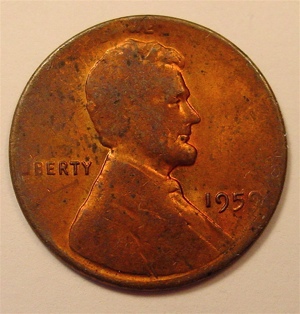
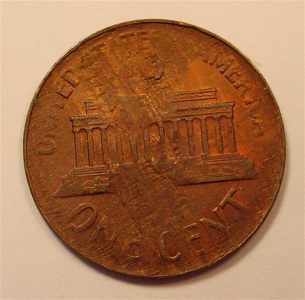
Looks damaged to me. The rims are missing on the obverse and reverse looks severely damaged. Definitely post strike from what I can see.
|
|
Pillar of the Community
United States
7629 Posts |
Nope, Coop...you're not correct. Sleaklight got it right, this is a split before strike coin.
|
|
Pillar of the Community
United States
2600 Posts |
Chuck, would you define "split before strike"? I checked the glossary and not there. The obverse on this coin looks like what was discussed on another thread, "Trial Strike. The high points are weak or missing and the rim is not fully struck. I have never seem one, only guessing what one would look like.
Thx, Jim
|
|
Pillar of the Community
 United States
827 Posts |
"This is the clad layer which has split from the planchet and was subsequently struck"
|
|
Pillar of the Community
United States
2600 Posts |
Thank you, Sleaklight.
Jim
|
|
Valued Member
United States
499 Posts |
sleaklight
the 59 cent wasn't a clad coin but this is similar. The planchet was defective and like a lamination error a section of copper peeled off. in this case the peel involved the entire reverse of the planchet making the planchet thinner and giving the strike the look of a weak strike. The rough lines going through the memorial are the result of the peel. Hope I got this right but that is how I understand it anyway
Richard
|
|
Pillar of the Community
United States
827 Posts |
You are correct. This is a result of a defective planchet splitting before it was struck. I posted the reply above in quotes bcause that's how I copied it off one of the sites, can't recall which  The coin weighs 1.7 grams according to this digital scale I obtained yesterday  IMO the coin is BU, I'll have to take better pics and add them once I get my camera back. |
|
Pillar of the Community
United States
2600 Posts |
That is really cool, Sleak. Thanks for sharing it. Did you find this in circulation?
Jim
Oh, and how is your back doing?
Edited by Jim1953
01/21/2008 11:39 am
|
|
Pillar of the Community
United States
827 Posts |
No, I did not find it in circulation. I'm the middle person is getting errors for someone else and I like error coins myself My back isn't all that great, hurts horribly some days and some days I feel like I might be able to run. I still need a walking stick and can't run or lift anything heavy. I have a checkup coming up in February though, we'll see if I need another surgery or not.  |
|
Pillar of the Community
United States
1571 Posts |
Again, my thought is in "the mix". Imporper mixing of the alloys will cause a multitude of thuings to occur. This is just one of them. BTW, it doesn't happen to cents, alone. The other denomunations also have this happen.
Dick
|
|
Valued Member
138 Posts |
It appears By the gash on the reverse that a piece of debris of some kind caused the coin to rock when struck causing less than a full strike to the obv
|
|
Pillar of the Community
United States
3507 Posts |
It is absolutely a planchet that split before the strike.
When the metal is rolled into strips from which the blanks are cut, there are sometimes impurities in the metal that can be the first step in this type of error happening.
Usually, the coin gets as far as the upsetting mill to have an edge added to the blank , thus creating a planchet. Now it is at this point in the process that something happens that causes the planchet to completely or partially split. It is the same idea as a lamination (delamination) error except that the planchet splits completely in half.
It gets into the coining press and the coin shown is the result. One side is usually struck very weakly because the entire thickness of the planchet is not there, and the other side has that striated look as that is what the inside of a planchet looks like when it splits.
I hope this helps...
Bill
|
| |
Replies: 12 / Views: 1,086 |
|









 Posted 01/21/2008 09:08 am





