Coin Community Family of Web Sites Join Thousands of Coin, Bullion, & Money Collectors
Vancouvers #1 Coin and Paper Money Dealer Specializing in Modern Numismatics 300,000 items to help build your collection! Royal Estate Auctions - $1 Coin AuctionsCoin, Banknote and Medal Collectors's Online Mall Join Thousands of Coin, Bullion, & Money Collectors Royal Canadian Mint products, Canadian, Polish, American, and world coins and banknotes.


Username:
Password:
Save Password
Forgot your Password?


This page may contain links that result in small commissions to keep this free site up and running.

Welcome Guest! Registering and/or logging in will remove the anchor (bottom) ads. It's Free!

Edge Ribbon Seam. A Doubt

To participate in the forum you must log in or register.
Author Previous TopicReplies: 34 / Views: 5,410Next Topic
Page: of 3
Pillar of the Community
colonialjohn's Avatar
United States
1757 Posts
 Posted 11/30/2015  6:01 pm  Show Profile   Bookmark this reply Add colonialjohn to your friends list Get a Link to this Reply
These Cap and Rays will be a little more difficult unless they are analyzed in a large sample size. I suspect the following:

1. The number of base core alloys will be less as you suggest than compared to the Bust Types: brass, bronze, copper and German silver. So far after a dozen examples I have recorded only low zinc (Zn:2-8%) brass and a high copper alloy (Cu:98%+). No bronze or German silver (Cu/Zn/Ni) or any TIN in any of these examples for that matter. Again a VERY small sample size.
2. You probably have a better idea if the Patio process was used on the silver to electroplate these pieces. Is the Hg found here over 1% the result of this process or something else like this Ag stripping operation. These super high levels suggest something else since the Hg was found in some copper looking areas and not on the Ag spots of the coin!
3. If you look in MEX literature a lot of the non-silver tokens and coins are classed as bronze yet I am NOT finding this alloy when looking into this arena. Consider - how much will low zinc brass look like bronze? It's the high zinc (>10% Zn) that really imparts the yellow color to the brass alloy - of course from previous investigations as in the Canadian Blacksmiths which I detail in my new book. If not yellow it must be bronze to the collector - WRONG! It could be low zinc brass - more likely? Still investigating. I am sure SOME MEX issues are strictly bronze as I investigate more issues.
4. Unless you are dealing with AU or UNC examples it may be difficult to achieve this near 99.9% Ag surface readings on these electroplated Cap and Rays. Also how much is due to silver enrichment ... however Ag enrichment as we discussed with the Bust CC8R's normally go up a couple of percentage points to the 92-96% range as we have seen and NEVER peg at 99%. Something to consider/agree moving forward.
5. With electroplated silver being a thin film I wonder what metal was introduced to bring the weight to NEAR regal on some issues. Lead? Not sure if you have assayed Au or UNC CC8R C&Rs for THIS answer - yet.

Just some thoughts off the top of my head ...

JPL
Edited by colonialjohn
11/30/2015 9:04 pm
Pillar of the Community
swamperbob's Avatar
United States
5362 Posts
 Posted 12/23/2015  6:13 pm  Show Profile   Bookmark this reply Add swamperbob to your friends list Get a Link to this Reply
Just lost track of this question. So this entry is to get it to show.

I have found a clear answer and a clear way to differentiate the edge ribbon from the effect which austrokiwi wrote about. I have taken some pictures of a 1781 MTT which has the effect and which resembles the edge ribbon - until you look at it closely.

I need to work up some schematic pictures but need to get this thread to page 1 before I could post anything.

Pillar of the Community
swamperbob's Avatar
United States
5362 Posts
 Posted 12/24/2015  12:37 am  Show Profile   Bookmark this reply Add swamperbob to your friends list Get a Link to this Reply
I will start with the schematics of both conditions first and follow with photos.

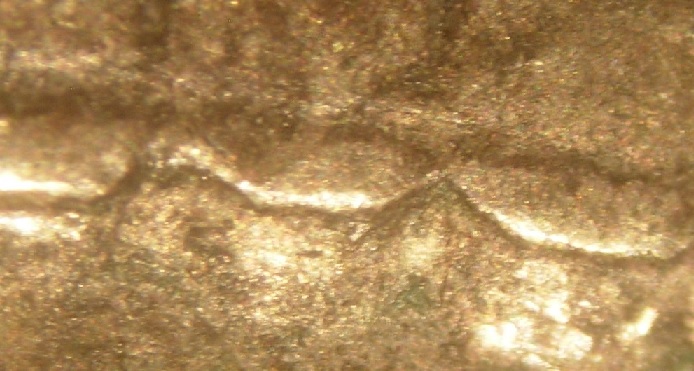
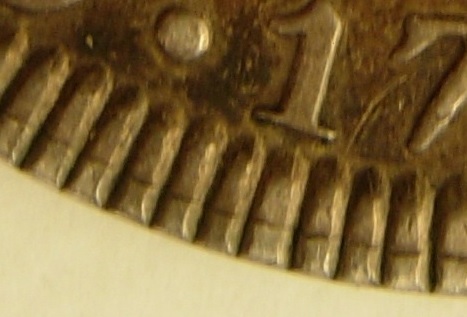
First of all I have examined several examples under high magnification (binocular) and there is a difference. The line seen on Sheffield coins with edge ribbons is a flat seam line. The dentils run through the seam at the same level. The same is not the case with the "apparent seam" that austrokiwi refers to. He is seeing a groove that runs through the dentils and is caused by a lack of metal to in-fill the die. The outer side of the groove (radially) is typically formed at a steeper angle than the inner side of the groove which is a lower angle.

After reviewing the pressures involved - there is a simple reason based on physics for the two different grooves.

First the austro-kiwi groove.

This appears on numerous screw press struck coins that are edged before the strike. It is often stronger on one side than the other and the depth of the groove is dependent on the way the edge design was centered. (More to follow on that point from the photos).

We start with a blank cut from the rolled silver.
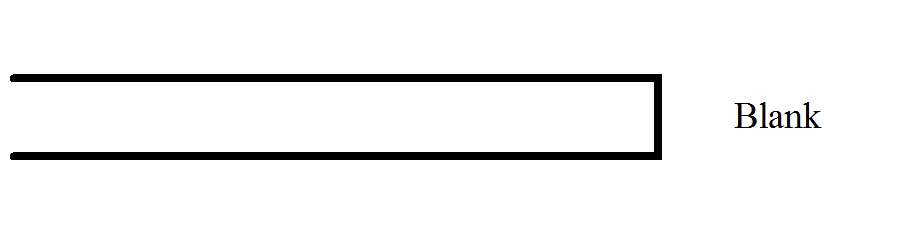
Edge-Ribbon-Seam.--A-Doubt

This blank is upset (raised edge created) during the edging step. Note the edge detail is recessed into the face of the edge die and the slot is thicker than the coin.
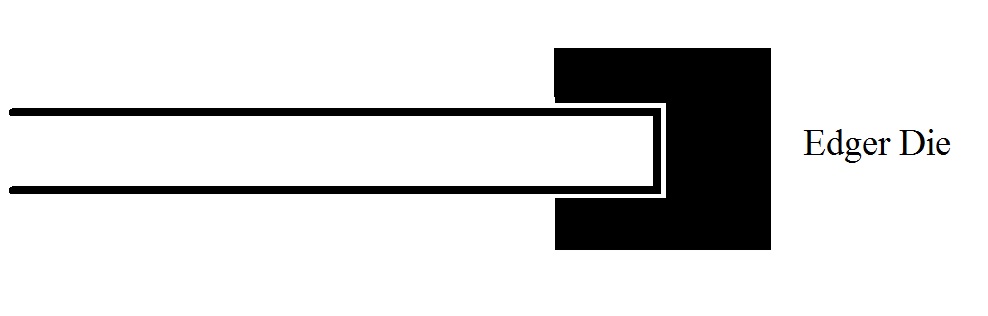
Edge-Ribbon-Seam.--A-Doubt

What this results in is a thickened edge which spreads to the width of the groove in the edge die.
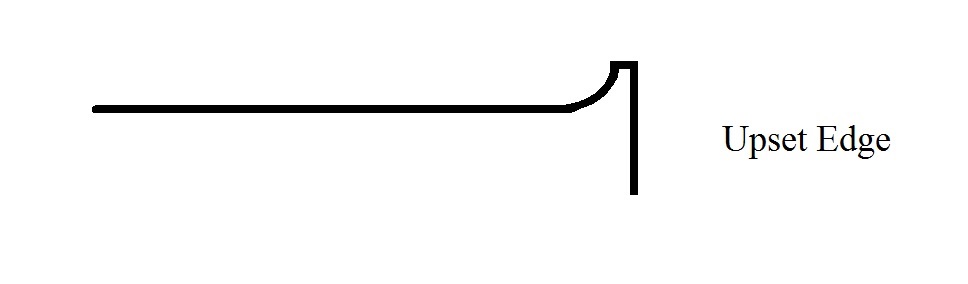
Edge-Ribbon-Seam.--A-Doubt

The edged blank - now called a planchet goes into the screw press. The dies mounted in the screw press are larger than the coin diameter and the dentils are cut into the die FLAT. They are not cut into the die on an angle.
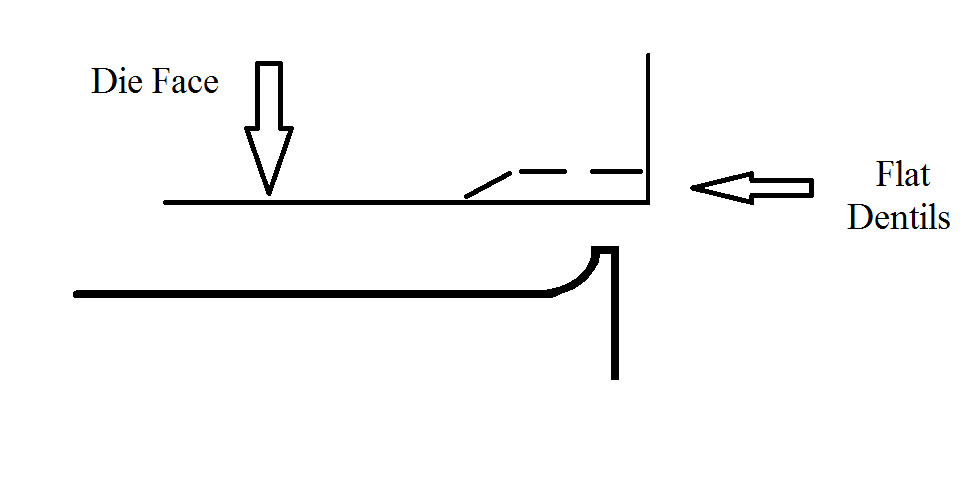
Edge-Ribbon-Seam.--A-Doubt

After the strike the raised rim has filled the outer part of the dentils and the flow from the field has filled the inner part of the dentils. When the upset is too high which occurs when the edge is applied eccentrically a groove is created between the two fills.
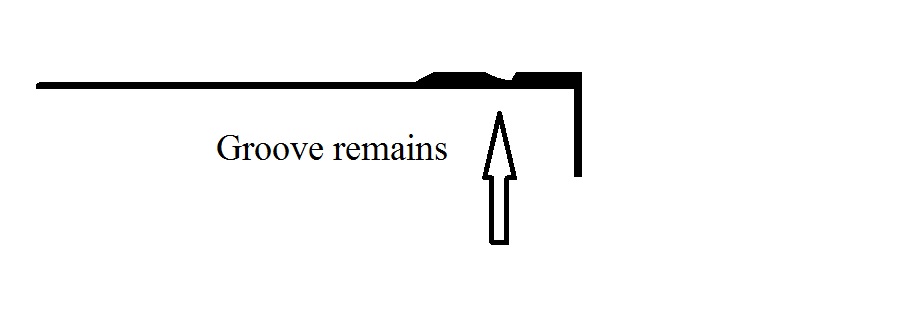
Edge-Ribbon-Seam.--A-Doubt

That is what I see on the screw press coins of Austria and Switzerland. I have also seen it on some 8Rs from both colonial Spain and other mints employing screw presses.

Next I will explain the ribbon edge.

Sheffield Plate is a welded composite section of metal that after it is welded acts as a unit. It bends and deforms as if it was homogeneous.

It looks like this. But remember that the outer silver layers are only 2 - 7 thousandths of an inch thick more like a thick foil layer. The edge ribbon is solid silver about the same thickness.
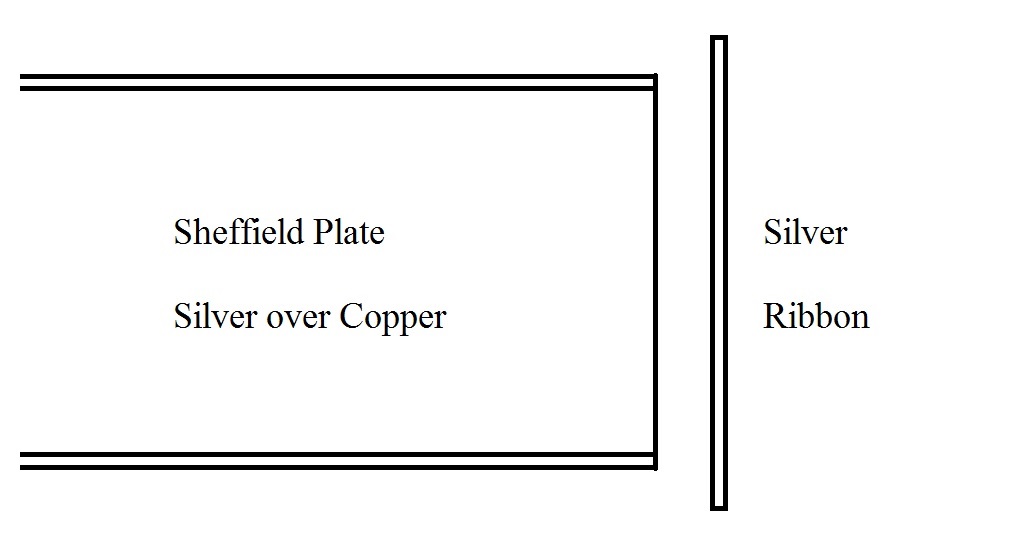
Edge-Ribbon-Seam.--A-Doubt

When the silver ribbon is applied to the raw Sheffield blank it extends slightly (1/8th inch or so) over the edge. It is also bent inward toward the faces of the coin - how far no one knows.
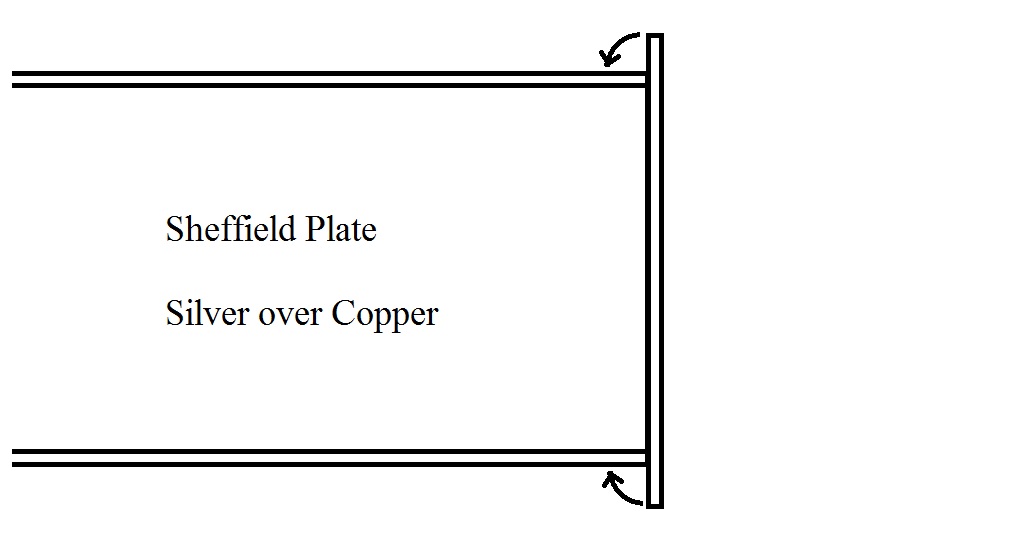
Edge-Ribbon-Seam.--A-Doubt

In the cases I have reviewed, I tend to believe the edge is folded over onto the face of the coin because there are no large folds present.
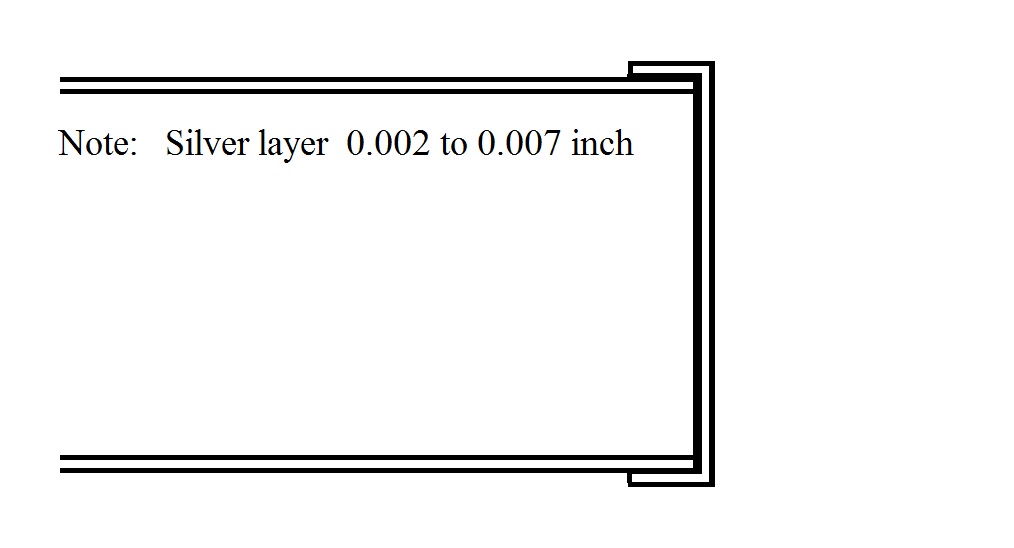
Edge-Ribbon-Seam.--A-Doubt

The final step is the strike. Remember two facts:
1) The silver layers are very thin.
2) Silver and copper bend, fold and are distorted in identically the same way by pressure.

The result is a cross section that must (based on the principles of physics) look about like this.
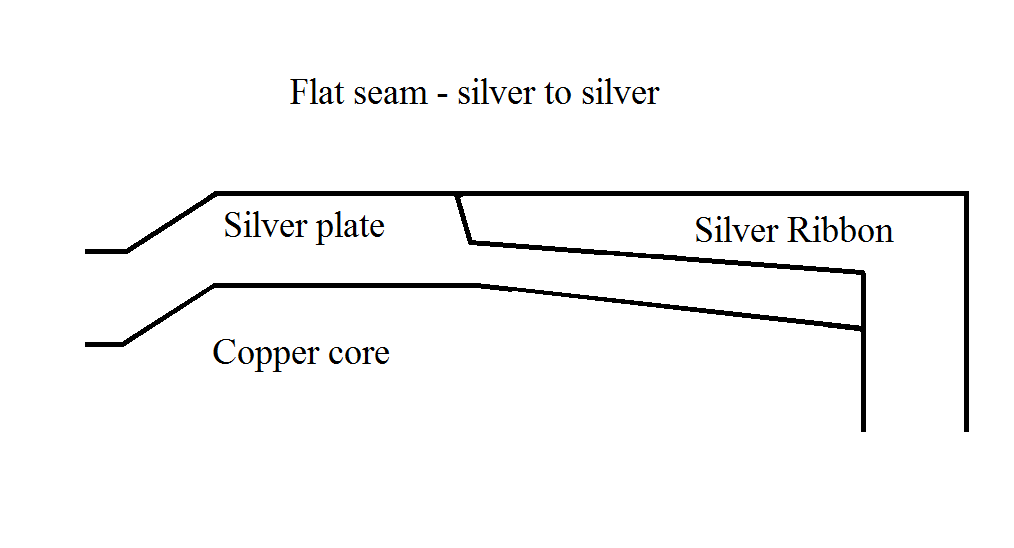
Edge-Ribbon-Seam.--A-Doubt

This is a schematic representation of what I see when looking at each type of coin under a binocular microscope.

The edge ribbon is seen with complete dentils where both inner and outer portions meet at a POINT. The only space observed comes with minor (0.001) chipping along the line.

The edge described by Austrokiwi is a far deeper groove that was created as a result of the upsetting of the rim in a normal edger.

I have to leave this until I transfer the photos because it is after midnight here.

Pillar of the Community
swamperbob's Avatar
United States
5362 Posts
 Posted 12/26/2015  12:12 am  Show Profile   Bookmark this reply Add swamperbob to your friends list Get a Link to this Reply
I hope everyone had a nice Christmas day.

I said I would post pictures to prove the Ribbon seam is different from the feature which began this thread as a "doubt" by Austrokiwi.

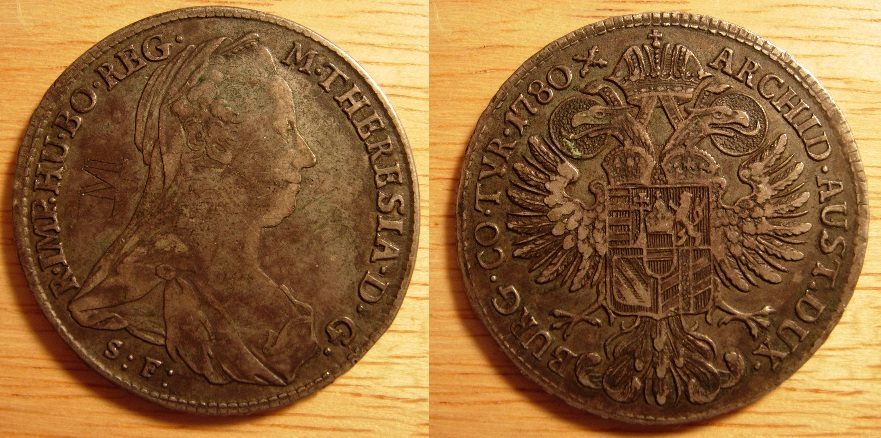
I dug out a Hafner 26 version of the MTT which was made in Austria during the 1780's (roughly). This coin has a line of the same type that Austrokiwi confused with the ribbon seam shown in my book. So I took some new pictures of that coin and the line.

Here is the coin:

Edge-Ribbon-Seam.--A-Doubt

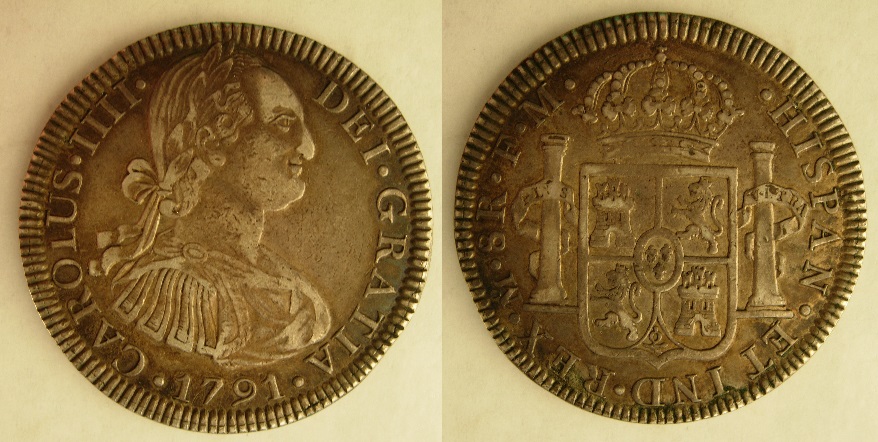
Here is the 1791 Counterfeit 8 Reales which has a Sheffield ribbon seam.

Edge-Ribbon-Seam.--A-Doubt

I will admit that viewed at the scale of these two pictures there is a superficial resemblance. Both coins have dark lines near the rim. But are these lines actually similar when examined under magnification?

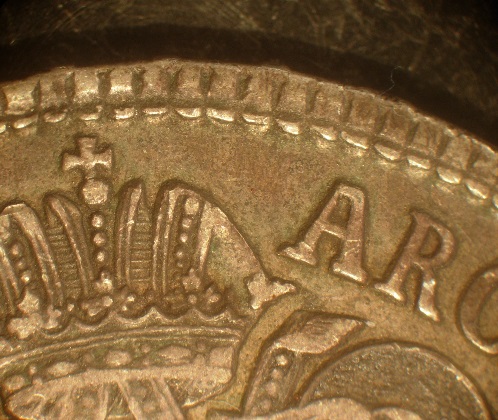
To my eye the area above the crown of the MTT is similar to much of the 1791 8R. I will focus on the area over the CHI in ARCHID. Here is an enlargement of that area:

Edge-Ribbon-Seam.--A-Doubt

Here is a bigger view above the HI:

Edge-Ribbon-Seam.--A-Doubt

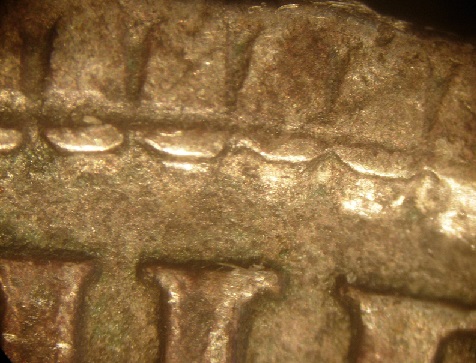
Here it is even larger:

Edge-Ribbon-Seam.--A-Doubt

What all of these pictures show is a GROOVE caused by the process I sketched above.

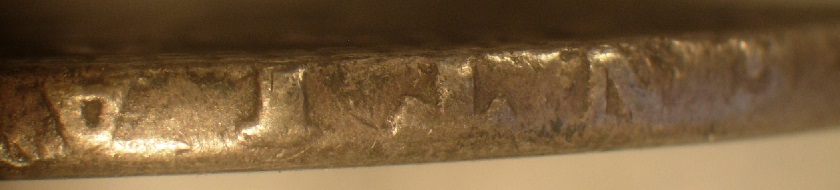
I also took a picture of the edge to show that an off center application of the edge design occurs where the groove is deepest.

Edge-Ribbon-Seam.--A-Doubt

Next is a enlarged section of the rim of the 1791 8 Reales from the original disc picture.

Edge-Ribbon-Seam.--A-Doubt

I had planned to take micro photos of this coin but I have to retrieve it. However, I think that even the untrained eye can see that these are NOT the same feature. I have of course had the opportunity to examine both coins under magnification and I will simple state they are not the same thing.
Edited by swamperbob
12/26/2015 12:14 am
  Previous TopicReplies: 34 / Views: 5,410Next Topic
Page: of 3

To participate in the forum you must log in or register.


Disclaimer: While a tremendous amount of effort goes into ensuring the accuracy of the information contained in this site, Coin Community assumes no liability for errors. Copyright 2005 - 2026 Coin Community Family- all rights reserved worldwide. Use of any images or content on this website without prior written permission of Coin Community or the original lender is strictly prohibited.
Contact Us  |  Advertise Here  |  Privacy Policy / Terms of Use

Coin Community Forum © 2005 - 2026 Coin Community Forums
It took 0.26 seconds to rattle this change. Forums