| Author |
 Replies: 16 / Views: 4,611 Replies: 16 / Views: 4,611 |
|
Valued Member
United States
243 Posts |
Found the information below in The Commemorative Trail, the Newsletter of the Society for U.S. Commemorative Coins, Winter, 1985.
I thought it was pretty interesting and wanted to share it here.   The Mint floor, showing stored coils of unpunched planchet strip. Courtesy The Commemorative Trail, the Newsletter of the Society for U.S. Commemorative Coins, Winter, 1985, p. 23. The Mint floor, showing stored coils of unpunched planchet strip. Courtesy The Commemorative Trail, the Newsletter of the Society for U.S. Commemorative Coins, Winter, 1985, p. 23.". . . Actually, the information presented here DOES have a great deal to do with Commemoratives, as the planchet making process, although no longer a mint function but contracted out to private companies, offers you an insight as to what CAN happen to a coin along the minting cycle before it becomes a coin. The photos were taken by the author (Bill Fivaz) during a special floor tour of the Philadelphia Mint in 1970. The tour was arranged by Arnie Margolis, owner and Editor of ERROR TRENDS COIN MAGAZINE, and we were both allowed to take as many photographs as we wanted throughout the tour. A slide series has been assembled from these photos for educational purposes in case any member wishes to borrow them for their local coin club program, etc. (There is no charge except for $3.00 to cover postage, etc.) When one first sets foot on the Mint floor in Philadelphia, he is immediately aware of the tremendous size of that facility. From the enormous blast furnaces to the seemingly endless finished coil storage areas to the huge Bliss presses that transform the nondescript metal blanks (planchets) into recognizable 'coins of the realm,' the magnitude is most impressive, I can assure you. Everything starts at the blast furnaces. Properly assayed metals are melted in these huge fire-belching contraptions and then poured into long, thick ingots. After the stored ingots are poured and cooled, they are picked up by a large gripper crane and moved onto the rolling mill. This machine, through many 'passes' of the ingot between the various series of rollers, transforms the thick ingot into a thin strip of metal the prescribed thickness of the coin to be struck from the planchets punched from this strip.  Blast Furnace. Courtesy The Commemorative Trail, the Newsletter of the Society for U.S. Commemorative Coins, Winter, 1985, p. 24. Blast Furnace. Courtesy The Commemorative Trail, the Newsletter of the Society for U.S. Commemorative Coins, Winter, 1985, p. 24.

Scrap, Ready To Go To Melt. Courtesy The Commemorative Trail, the Newsletter of the Society for U.S. Commemorative Coins, Winter, 1985, p. 24.
Hope you enjoyed this lesson up to this point. More to follow in a few days or so.
Enjoy!

|
|
|
|
Rest in Peace
United States
4078 Posts |
|
|
Pillar of the Community
Canada
5347 Posts |
There was a show on the US mint on the Discovery network if I remember right it was a cool show too on coin production.
|
|
Pillar of the Community
 United States
4623 Posts |
Thanks! Can't wait
-----Burton 50+ year / Life / Emeritus ANA member (joined 12/1/1973) Life member: Numismatics International, CONECA Member: TNA, FtWCC, NETCC, EveryCountry (online) coin club Owned by three cats and a wife of 40+ years (joined 1983) Author: 3rd Edition of the Sample Slabs book, https://www.sampleslabs.info/ |
|
Pillar of the Community
United States
4963 Posts |
Fascinating. It's always interesting to see this kind of thing.
|
|
Moderator
 United States
198004 Posts |
Very interesting. Thank you for sharing.  |
|
Valued Member
 United States
243 Posts |
Thanks All.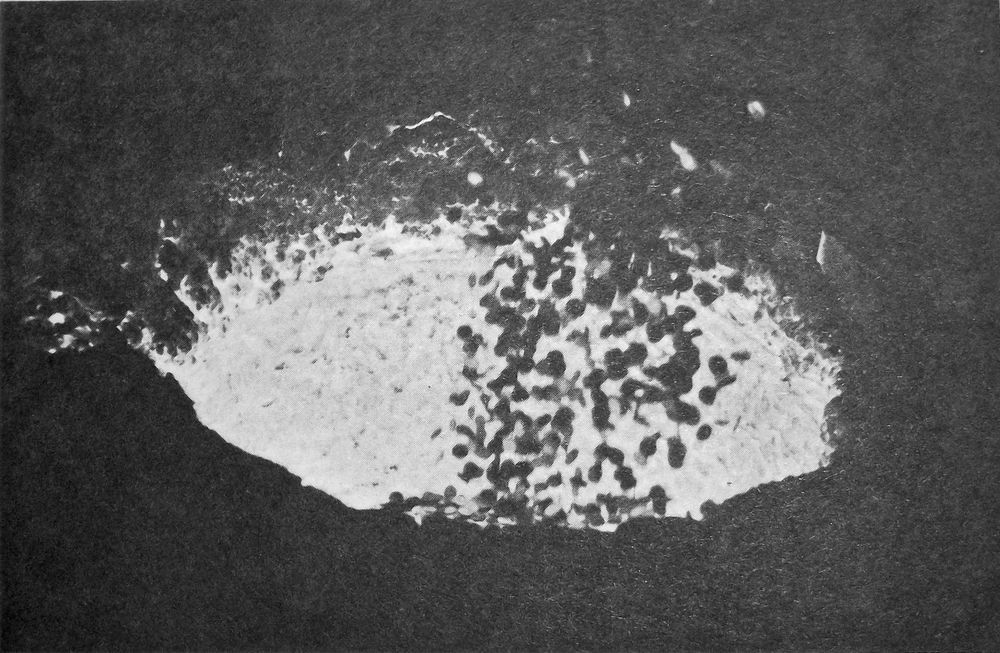 Some Rejected Planchets Being Added Into The Melt. Courtesy The Commemorative Trail, the Newsletter of the Society for U.S. Commemorative Coins, Winter, 1985, p. 24. Some Rejected Planchets Being Added Into The Melt. Courtesy The Commemorative Trail, the Newsletter of the Society for U.S. Commemorative Coins, Winter, 1985, p. 24. Blast furnaces In Background And Long Ingot Slabs Stacked In Front. Courtesy The Commemorative Trail, the Newsletter of the Society for U.S. Commemorative Coins, Winter, 1985, p. 25. Blast furnaces In Background And Long Ingot Slabs Stacked In Front. Courtesy The Commemorative Trail, the Newsletter of the Society for U.S. Commemorative Coins, Winter, 1985, p. 25. Gripper Crane Moving An Ingot Onto the Rolling Mill. Courtesy The Commemorative Trail, the Newsletter of the Society for U.S. Commemorative Coins, Winter, 1985, p. 27. Gripper Crane Moving An Ingot Onto the Rolling Mill. Courtesy The Commemorative Trail, the Newsletter of the Society for U.S. Commemorative Coins, Winter, 1985, p. 27.
 The photo above shows a hole in the end of the ingot where air became trapped during the cooling process. When rolling this ingot out to the proper planchet thickness, chances are good that this 'occluded gas' void will be stretched out within the strip and may eventually cause a lamination on the planchets punched from that particular area. If not inspected and caught, it could appear as a flake or peeling on the surface of the struck coin. The photo above shows a hole in the end of the ingot where air became trapped during the cooling process. When rolling this ingot out to the proper planchet thickness, chances are good that this 'occluded gas' void will be stretched out within the strip and may eventually cause a lamination on the planchets punched from that particular area. If not inspected and caught, it could appear as a flake or peeling on the surface of the struck coin.
Still more to follow.
|
|
Pillar of the Community
United States
4963 Posts |
Nice. I've never really thought about how laminations occur, but I guess that's it.
|
|
Moderator
United States
198004 Posts |
Very nice! Quote:
Still more to follow.  |
|
Pillar of the Community
Canada
1463 Posts |
That is a great post, I learned a great deal.
|
|
Valued Member
United States
243 Posts |
Here is the rest of the story: Planchet Strip Exiting From The Rolling Mill At The Prescribed Thickness, Ready To Be Coiled. Coils Of Planchet Strip, coiled and Waiting To Be Used. Coils Of Planchet Strip, coiled and Waiting To Be Used. More Coils Of Planchet Strip, Coiled and Waiting To Be Used. More Coils Of Planchet Strip, Coiled and Waiting To Be Used. The Bonding Mill That Bonds the copper-Nickel Outer Layers Of The Clad coinage to the Copper Core. The Bonding Mill That Bonds the copper-Nickel Outer Layers Of The Clad coinage to the Copper Core. Here You See The 'Webbing Or Planchet Strip With The Holes Punched Out, Exiting The Blanking Press. Here You See The 'Webbing Or Planchet Strip With The Holes Punched Out, Exiting The Blanking Press. Webbing' At The End Of Machine And Going Into A Tote Bin. This Will Be Chopped Up And Added Back Into The Melt (As Previously Seen). Webbing' At The End Of Machine And Going Into A Tote Bin. This Will Be Chopped Up And Added Back Into The Melt (As Previously Seen). The Upsetting Mill Which Form The Raised Edges On The Planchets. The Upsetting Mill Which Form The Raised Edges On The Planchets. Tote Bins For Blank Planchets. The blank planchets now pass through an 'upsetting mill' which forms the raised edge to protect the design of the coin as well as to aid in stacking. The planchets are fed through the turning grooved wheel they come out slightly smaller in diameter than when they entered. The 'Type 2' (raised edge) blank planchets are then stored in large tote bins (on wheel) until needed for the striking presses. As you can see in the above photo, the 5 cent and 25 cent bins are side by side and it would be easy to mistake one for the other if the worker wasn't careful. It is not uncommon for a blank planchet from one denomination to become lodged in a crevice of a tote bin used for several different denominations and get mixed in with other different sized blanks. This is a major reason why we sometimes find a quarter struck on a 5 cent planchet, a cent on a 10 cent planchet, etc. The blank planchets are fed down long chutes to the coining presses, ready to be struck by the dies. If planchets jam in these chutes, none are deposited in the collar prior to striking and the two dies (the reverse on the bottom and the obverse on the top) strike together, transferring their designs, or portions thereof, on each other. These are referred to as 'clash marks', and will appear on each coin struck by those dies until they are removed from the press and polished or retired from service completely. As you know, clash marks are frequently used in determining the authenticity of many commemoratives and play an important part in determining various die stages on coins.  Striking Chamber With Obverse (Hammer) Die In The Raised Position. Striking Chamber With Obverse (Hammer) Die In The Raised Position. Obverse Die Descending To Strike the Planchet. Obverse Die Descending To Strike the Planchet.The following two photos offer a seldom seen sight—the first is a box of 'raw' dies, before they have been hubbed or impressed by the appropriate design. Note that they are conical in shape in order to more readily accept the design from the hub. Several impressions are required by the (positive) hub in order to produce the desired depth and clarity in the (incuse) die. It is during this hubbing process that doubled dies occur, primarily due to improper hub-to-die alignment.  Unfinished Dies, Prior To Hubbing. Unfinished Dies, Prior To Hubbing. A Negative (Incuse) Impression, Ready For Coin Production. A Negative (Incuse) Impression, Ready For Coin Production.As the new coins leave the striking area, they are fed through large hoppers to a counting and bagging area. In the last two photos we see them coming down the trough to be counted and the (sic) bagged.   The bags are stored at the mint until shipped to the various Federal Reserve Banks upon request. The Minting Process - sketched briefly and basically for you in this article, is a valuable tool in helping you understand not only various abnormalities on coins, but many aspects of grading as well "11. The Commemorative Trail, the Newsletter of the Society for U.S. Commemorative Coins, From Ingot to Coin, or . 'So You Want to Start a Mint?', by Bill Fivaz, Winter, 1985, p. 23-31.THE END Hope this was a positive learning experience. 
|
|
Pillar of the Community
United States
4963 Posts |
Quote:
Hope this was a positive learning experience. Certainly. I especially liked the part about dies in the last installment. I just wish the article had better photos of the actual hubbing and striking processes. |
|
Pillar of the Community
United States
4623 Posts |
Lee-
I think this is really cool information and so I tried to ask privately, but you are not receiving email, so I have to ask publically...
Do you have permission from Mr. Fivaz or the society to reprint this material?
If not, with all the best intentions, you've opened CCF up to a DMCA takedown notice - should the copyright holder(s) choose to assert their rights.
Fair use does permit you to use portions (usually small) of a copyrighted article or book as part of a larger work. For example, were you to write a report about your recent trip to the mint and contrast your own photo with "here's how it looked in 1985".
But just referencing the source does not make it fair use to reprint somebody else's copyrighted material.
Bill Fivaz is a prolific author and researcher and I'll bet he would give permission in a heart beat. But you have to ask first. His contact information is available through PCGS' dealer locator (just Google Bill Fivaz - it's the 1st hit)
-----Burton 50+ year / Life / Emeritus ANA member (joined 12/1/1973) Life member: Numismatics International, CONECA Member: TNA, FtWCC, NETCC, EveryCountry (online) coin club Owned by three cats and a wife of 40+ years (joined 1983) Author: 3rd Edition of the Sample Slabs book, https://www.sampleslabs.info/ |
|
Valued Member
United States
243 Posts |
Hi BStrauss3,
Thank you for the information. I contacted Bill F. via email and have his permission to post this article.
How do I add my email so folks can contact me via email?
Lee
|
|
Pillar of the Community
United States
4963 Posts |
If you go into your account settings, you should be able to change that.
|
|
Pillar of the Community
United States
4623 Posts |
Lee - Sweet - U rock.
And I see you've already made the profile change Numista indicated!
-----Burton 50+ year / Life / Emeritus ANA member (joined 12/1/1973) Life member: Numismatics International, CONECA Member: TNA, FtWCC, NETCC, EveryCountry (online) coin club Owned by three cats and a wife of 40+ years (joined 1983) Author: 3rd Edition of the Sample Slabs book, https://www.sampleslabs.info/ |
| |
Replies: 16 / Views: 4,611 |




 Posted 11/20/2015 10:08 am





