| Author |
 Replies: 20 / Views: 4,425 Replies: 20 / Views: 4,425 |
|
Valued Member
United States
214 Posts |
Does anyone have opinions on whether this is an important (i.e. uncommon) new variety that is up for sale on ebay right now? http://www.ebay.com/itm/28192576317...RK:MEBIDX:ITI think I see the difference the seller is pointing out but it is very slight (much harder to see than the 1932 Far 2 variety). I looked at about 20 of my 1923 nickels and on a quick first glance I thought about 2/3 were Far 3 and 1/3 were Near 3 which if I'm right isn't a very interesting variety. That said, I'm not really sure I was classifying them right. Also, I would reverse the names the seller is suggesting to remain consistent with 1926 and 1932 varieties (i.e. let 'Far' indicate the distance from the right leaf and 'Far' is the uncommon variety for all three years). |
|
|
|
Moderator
 Canada
10473 Posts |
I have an opinion... If you cannot identify a variety without drawing lines all over the coin, then it is basically irrelevant. Imagine these collectors deciding to draw lines and tackle the 1859 large cents!!  "Discovery follows discovery, each both raising and answering questions, each ending a long search, and each providing the new instruments for a new search." -- J. Robert OppenheimerContent of this post is licensed under a Creative Commons Attribution-NonCommercial 3.0 Unported License. See: http://creativecommons.org/licenses...0/deed.en_USMy eBay store
|
|
Pillar of the Community
Canada
2845 Posts |
I notice the two lines seem to be positioned differently in relation to the two points where they meet the back loops of the "3". I think it's the varying slant of the lines that give the illusion of near and far.
|
|
Pillar of the Community
Canada
5419 Posts |
Date spacing varieties have little relevance in my opinion, with very few exceptions.
|
|
Pillar of the Community
Canada
5341 Posts |
|
|
Moderator
United States
54297 Posts |
I used Photoshop, and overlaid the bottom image on the top image, and the only difference is the angle of the line drawn.
Show your financial support of the Coin Community Family (click here)See my topic on Mexican Numismatic Medals (click here) |
|
Pillar of the Community
Canada
2632 Posts |
The sellers is very poor at making an accurate line in their pics I see no difference IMO.
Hows the KGV nickel hunt going Bill? I checked the few 23s I have but no difference there either.
|
|
Valued Member
Canada
306 Posts |
Quote:
TNSS-52 wrote
I used Photoshop, and overlaid the bottom image on the top image, and the only difference is the angle of the line drawn. TNSS-52 Hello I made the two superimposed pictures marked "PhotoScape" software and this is what I see. Is a near and far. For better see I put a picture without annotation and one other with annotations. 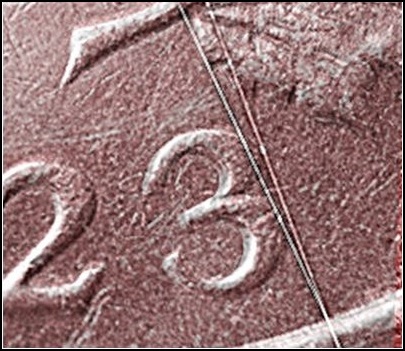 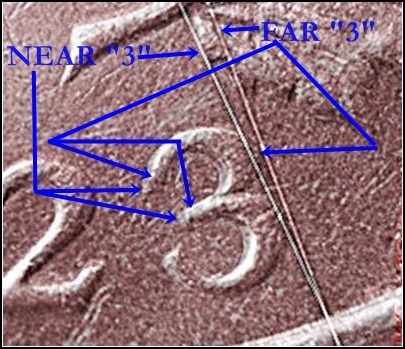 |
|
Pillar of the Community
Canada
2784 Posts |
wow so maybe a new variation do to a change of dies, or die wear.nice
|
|
Pillar of the Community
Canada
2845 Posts |
Quote:
Is a near and far.
Geometry 101, ever so slightly alter the angle of a line and then you can make it point in whatever direction you choose. |
|
Valued Member
 United States
214 Posts |
Thanks everyone for their opinions so far. Given that we have recognized different hubs used for 1926 and 1932, I think that it is totally possible that there are at least two different hubs used in 1923 (and maybe other years too - for example, I sometimes think I see a different looking 22s in 1922 but the difference is so slight that I usually give up and say what I'm seeing is Die Deterioration leading to smushy numbers. It's on my to do list to recheck this one day). As I mentioned in my initial post I think I see the difference with 6x magnification and Castor's overlay appears to confirm that a difference exists. But like the old men Statler and Waldorf said on the Muppet Show once, "The question is who cares?" At this point, I'm not excited about it. What I need 5centscanada or someone else to do is show us how uncommon this variety is and if possible have a story go with it. For me the 1932 Far meets this requirement. Personally, I came to the hunt for 1932 Far 2 late in the game as I didn't start collecting until 2014. I've read the historical posts for the 1932 Far 2 on this site and they are very interesting. I enjoy hunting for 1932 Far 2s. All the ones I've seen have the same die crack coming off the S of CENTS which suggests it is a single die (which originally was the specimen die for the year). I'm finding it hard to cherry pick them and I haven't cherry picked one since June of 2015 -- who's finding them all! My point here is that the 1932 Far 2 is an uncommon variety while the 1923 Far/Near 3 hasn't proved itself yet as being uncommon. And even if it did, I doubt it will excite many collectors because it is not very easy to see. Personally I'd rather have a big visible die crack than this hard to see hub difference. @pennyman007 - Not much to report on the KGV 5 cent front except I bought a nice raw 1934 with all 8 pearls showing which I'd like to say is MS64 but I might be seriously deceiving myself. More exciting for me was finding a 1953 SF FL mule in what I grade as AU50 in a mixed lot of KGV & KGVI 5 cents I bought a few weeks ago. It's the first one of these I ever found and I was really happy, for a day or two. In the same lot there were also a couple of 1936 in ICCS AU condition and a handful of 1937 in MS. Normally I get stuck with bulk lots of just VG/F coins. Thanks for asking :-) |
|
Pillar of the Community
Canada
2632 Posts |
Quote:
More exciting for me was finding a 1953 SF FL mule in what I grade as AU50 in a mixed lot of KGV & KGVI 5 cents Good for you Aswag..that's a nice find.  |
|
Moderator
Canada
10473 Posts |
The differences are so minor with this coin, it is hardly relevant.
"Discovery follows discovery, each both raising and answering questions, each ending a long search, and each providing the new instruments for a new search." -- J. Robert OppenheimerContent of this post is licensed under a Creative Commons Attribution-NonCommercial 3.0 Unported License. See: http://creativecommons.org/licenses...0/deed.en_USMy eBay store
|
|
Valued Member
Canada
219 Posts |
In Blais's book "Price Guide for Canadian coins" (I know some of you don't like him), he regroups them into near and far 3. I had done a study on the positioning of the 3 for 1923 nickel a while back and identified 4 different varieties. Here is a picture showing the different positions.  Is it worth collecting? Most british will call this a micro variety. If you are into this, like I am, the rarest position (a sample of 212 coins) is the "yellow" 3 and it is the easiest to detect! The bottom of the 3 is almost perfectly alligned with the bottom of the 2. Here is what it looks like. 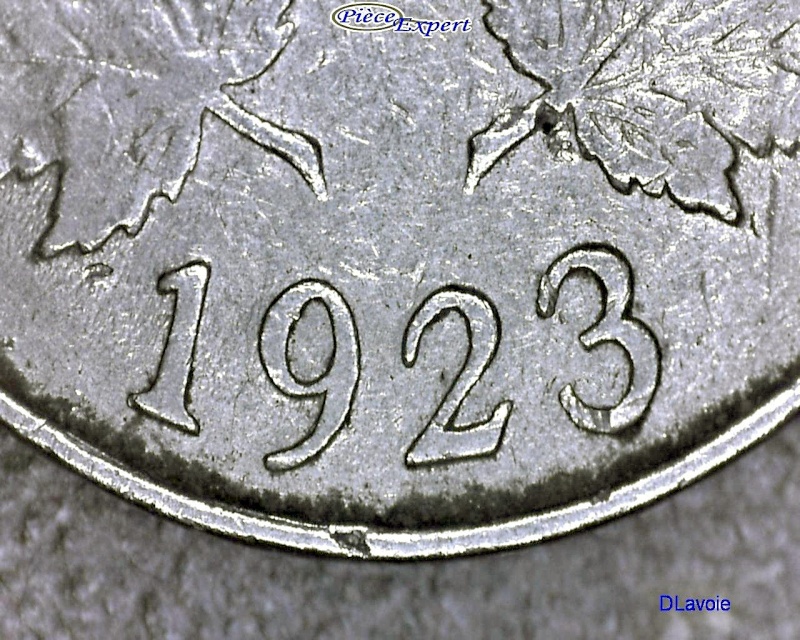 Happy hunting. |
|
Pillar of the Community
Canada
684 Posts |
I think it is interesting. My question is that with the 4 variations would there be a space difference from the S in cents to the rim also?
|
|
Valued Member
Canada
84 Posts |
I seached in my lots of 23 ies. And found 1 coin that we clearly see between far and near 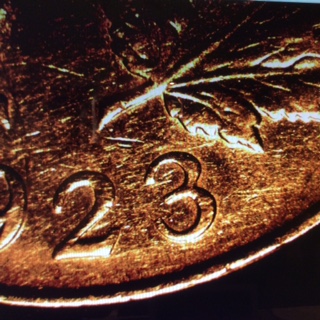 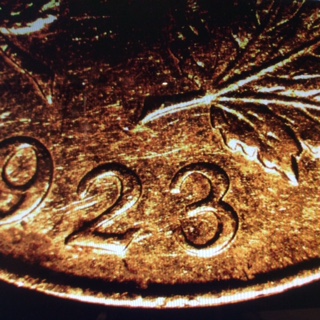 |
| |
Replies: 20 / Views: 4,425 |










 Posted 02/03/2016 10:28 am


