I can not say I am at all surprised by
Rhuarc's reaction, it is actually typical of sellers involved in illegal activity when they are caught red handed. Deny, deny, deny. He simply will not accept as fact that
ebay requires compliance with the Hobby Protection Act when coins or other numismatic items are shipped to the US.
What part of compliance with US law does he not accept? To ship numismatic items to the US everyone must comply with US law. There are no exceptions in the statute (with the exception of common carriers of the mail who don't even know what is in the packages they are transporting.)
Rhuarc says:
Quote:
"Replica coins aren't allowed. All other stamps, coins, and paper money must be accurately described."
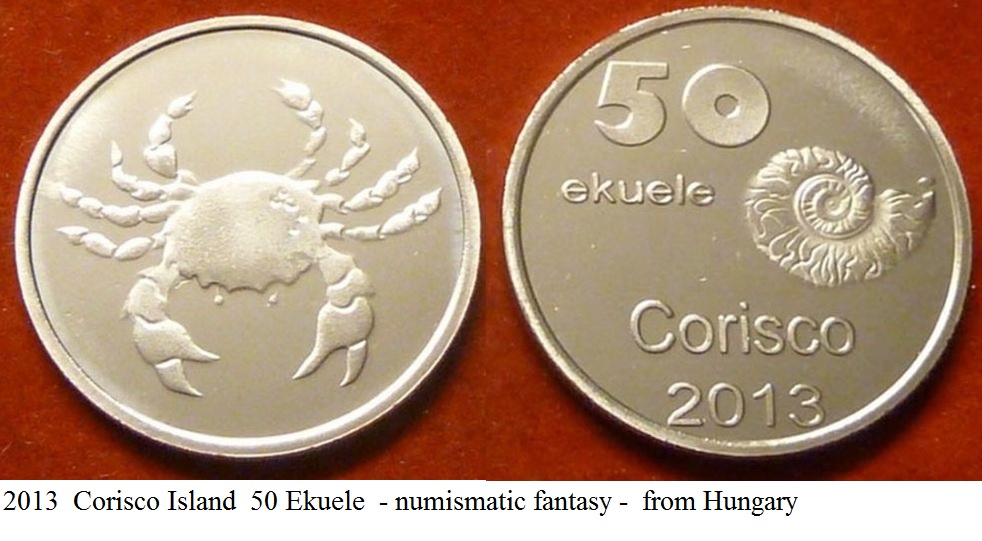
Fantasy coins are NOT replica.
Replica is a copy of an already existing coin.
The first line in quotes is part of the overview of
ebay rules and regulations but it is incomplete and must be read in connection with all other regulations and policy statements made by
ebay. Also it is extremely critical to note that the "accurate description" clause noted above only applies to actual "stamps, coins and paper money" which are items he is not actually selling. Only genuine numismatic items are covered by the accurate description standard. Fantasy coins are not genuine. He is trying to make an exception for Fantasy coins that does not exist in the law. He is engaged in a fallacy of logic.
Perhaps a legal interpretation can be made that way in Hungary - but it is NOT the case in the US.
The defense Rhuarc raises that "fantasy coins are not replicas" is the same defense used for the "Evasion" coins made in England in the late 1700s. Evasions are now illegal in England (since 1796) and are illegal in the US and have been so for almost as many years.
The actual text of the HPA defines what an
Imitation numismatic item is. The definition of that term is critical to our discussion because the HPA and other US laws (FTC) all use the same legally defined term. Other descriptive terms are included in one of the two general categories of imitation or genuine. There are under the US law only two ways to view a numismatic item. Original or Imitation.
Section 304.1 reads:
Quote:
(d) Imitation numismatic item means an item which purports to be, but in fact is not, an original numismatic item or which is a reproduction, copy, or counterfeit of an original numismatic item. Such term includes an original numismatic item which has been altered or modified in such a manner that it could reasonably purport to be an original numismatic item other than the one which was altered or modified. The term shall not include any re-issue or re-strike of any original numismatic item by the United States or any foreign government. (Emphasis added.)
The text is completely clear, at least to me. Put simply - things that appear to be genuine (or original) numismatic items but are not genuine (original) are by definition "Imitations". Properly authorized re-issues or restrike are considered genuine (original) and reproductions, copies and counterfeits are all classified as imitations.
The terms "reproduction, copy, or counterfeit" follow the word OR they are not definitions in and of themselves. They add to but do not alter the definition of Imitation. They are in simple fact imitations themselves. Also note that altered genuine items are included as imitations and that a re-issue or re-strike must be done officially by a government, so "private issues" are also included in imitation and are prohibited when the producing entity has no legal standing to issue genuine monetary items.
The requirement for marking such items is stated as follows:
Quote:
§304.2 General requirement.
Imitation political or numismatic items subject to the Act shall be marked in conformity with the requirements of the Act and the regulations promulgated thereunder. Any violation of these regulations shall constitute a violation of the Act and of the Federal Trade Commission Act. (Emphasis added)
On the
ebay site can be found several references to US law that governs all
ebay transactions and which must be complied with by all sellers who do business with buyers located in the US. When you post an item for sale on US
ebay you are agreeing to comply with all applicable US laws. If that is not acceptable - choose an
ebay venue where there are no such restrictions.
Here is a brief recital from an
ebay (US) link that pertains to this case.
Quote:
Section (a) omitted ....
(b)Coins and other numismatic items
The manufacture in the United States, or the importation into the United States, for introduction into or distribution in commerce, or the sale in commerce of any imitation numismatic item which is not plainly and permanently marked "copy", is unlawful and is an unfair or deceptive act or practice in commerce under the Federal Trade Commission Act [15 U.S.C. 41 et seq.].
(c)Rules and regulations
The Federal Trade Commission shall prescribe rules for determining the manner and form in which items described in subsection (a) or (b) shall be permanently marked.
(d)Provision of assistance or support
It shall be a violation of subsection (a) or (b) for a person to provide substantial assistance or support to any manufacturer, importer, or seller if that person knows or should have known that the manufacturer, importer, or seller is engaged in any act or practice that violates subsection (a) or (b).
(e)Exemption
Subsections (a) [1] (b), and (d), and regulations under subsection (c), shall not apply to any common carrier or contract carrier or freight forwarder with respect to an imitation political item or imitation numismatic item received, shipped, delivered, or handled by it for shipment in the ordinary course of its business.
(Pub. L. 93-167, § 2, Nov. 29, 1973, 87 Stat. 686; Pub. L. 113-288, § 2(1), Dec. 19, 2014, 128 Stat. 3281.)
Simply restated the greater part of
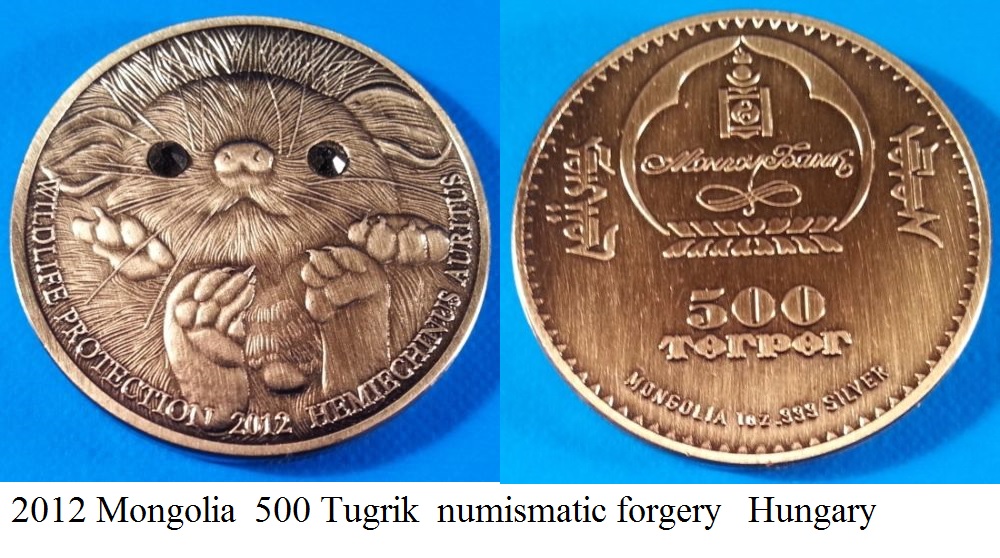
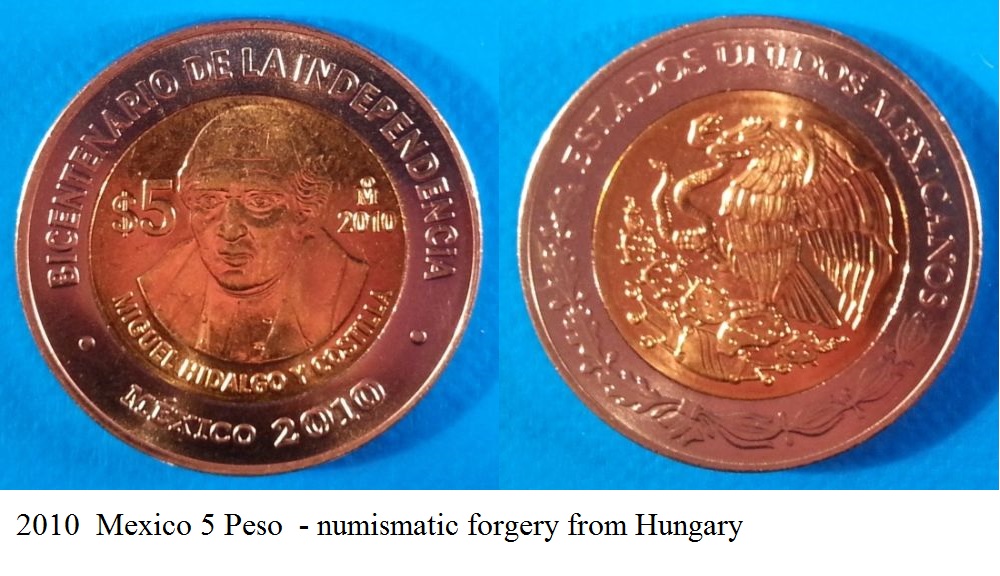
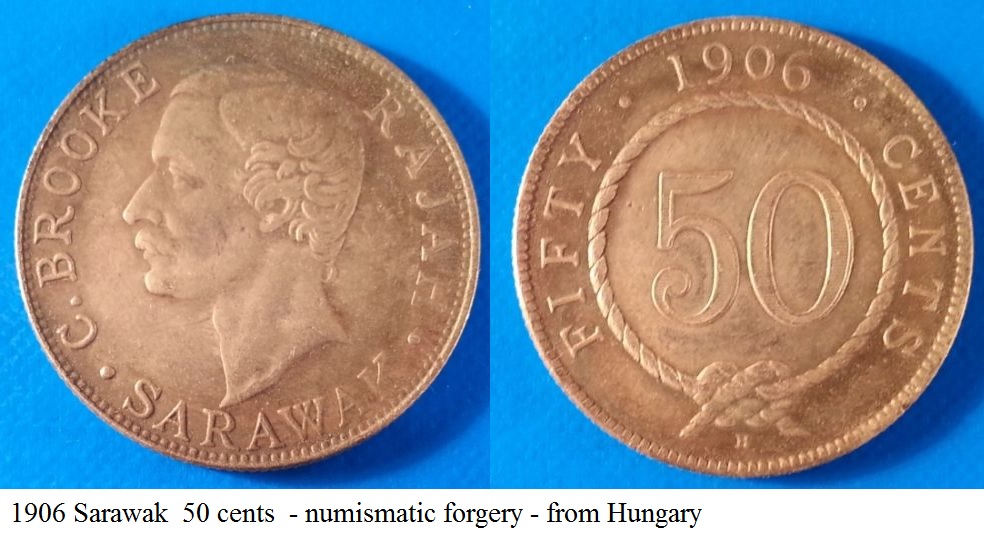
Rhuarc's items MUST be marked COPY to be shipped to the US. They are Imitation numismatic items by definition simply because they are not genuine numismatic items.
Rhuarc's last comment was:
Quote:
Please just forget about me.
I am not at all sure we should forget about him, if we actually believe in cutting down the supply of bad numismatic material by eliminating or penalizing the middlemen who ship bad material to the US. (See section d above "Provision of assistance or support".)
Rhuarc is exactly the type of seller that the Coin Watch Group was originally set up to identify and terminate. He is exactly the type of seller that the revised HPA targets. He should not be allowed to hide behind "descriptions" no matter how clear they are to him or anyone else. All Imitations must be
marked not simply described as to what they actually are.
The only parties that are now exempt under the terms of the law are the common carriers that provide shipping services. All other parties to the shipment of "imitation" numismatic items (the key definition under the statutes) are equally liable under the law.
That is why I own a punch - to comply with HPA.
I rest my case.
Any rebuttal?









 Posted 02/16/2016 6:43 pm




 from Cosco


