Coin Community Family of Web Sites Join Thousands of Coin, Bullion, & Money Collectors
Vancouvers #1 Coin and Paper Money Dealer Join Thousands of Coin, Bullion, & Money Collectors Shop for APMEX Bullion on eBay!Coin, Banknote and Medal Collectors's Online Mall Specializing in Modern Numismatics Royal Canadian Mint products, Canadian, Polish, American, and world coins and banknotes. 300,000 items to help build your collection!


Username:
Password:
Save Password
Forgot your Password?


This page may contain links that result in small commissions to keep this free site up and running.

Welcome Guest! Registering and/or logging in will remove the anchor (bottom) ads. It's Free!

8 Reales Carlous III 1775

To participate in the forum you must log in or register.
Author Previous TopicReplies: 6 / Views: 2,174Next Topic  
Pillar of the Community

Singapore
631 Posts
 Posted 02/18/2016  11:09 am Show Profile   Bookmark this topic Add Numister to your friends list Get a Link to this Message Number of Subscribers
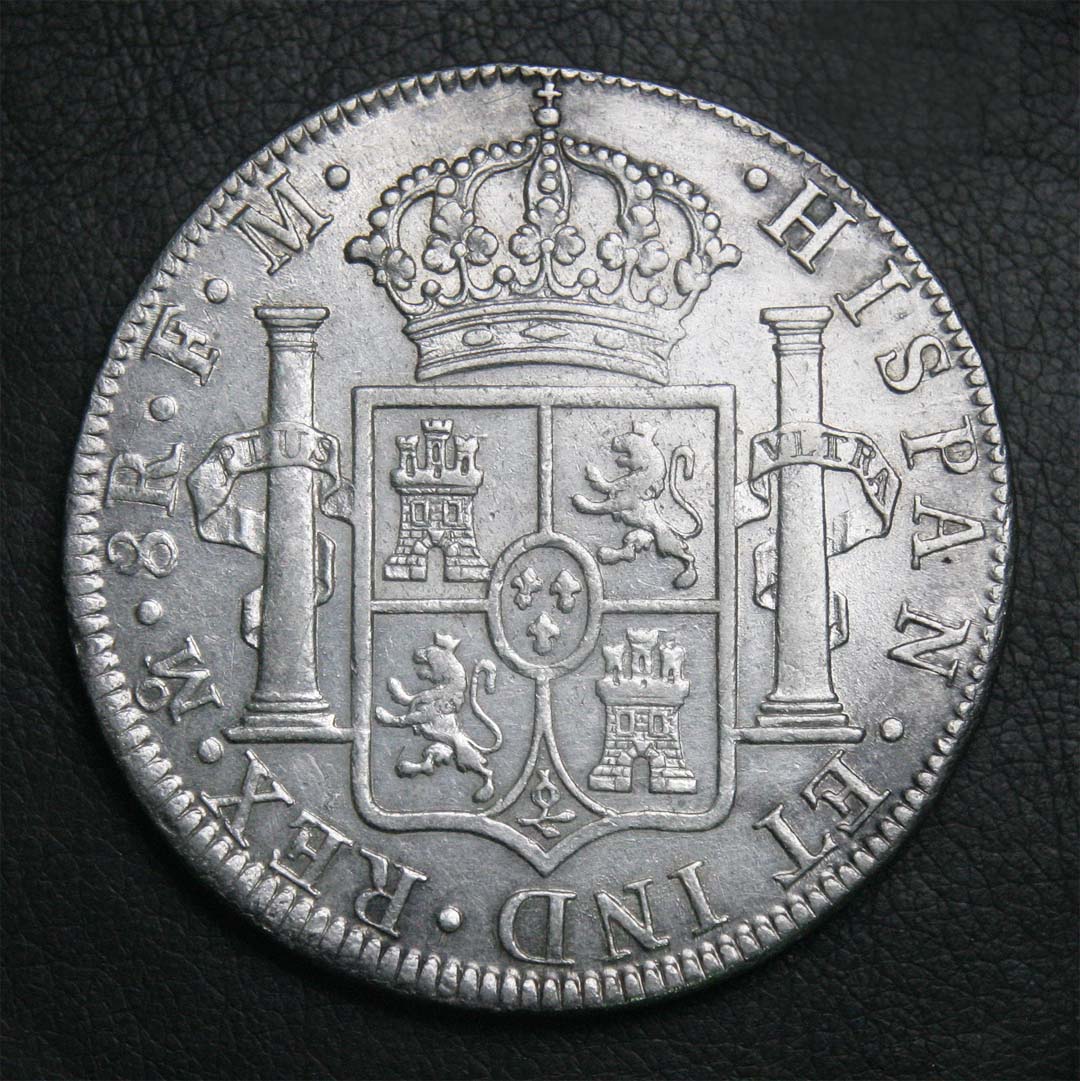
Hi Coin Community, any Silver Reale collectors out there can tell whether this one is Reale ? Probably never heard that one before.

Weight is 26.9g.

8-Reales-Carlous-III-1775

8-Reales-Carlous-III-1775

8-Reales-Carlous-III-1775
Edited by Numister
02/18/2016 11:17 am
Pillar of the Community
United States
684 Posts
 Posted 02/18/2016  4:34 pm  Show Profile   Bookmark this reply Add Westwood Arms to your friends list Get a Link to this Reply
Don't think it is real. Chas looks a little too happy, denticles, and edge. Swamper Bob will know.
Pillar of the Community
jgenn's Avatar
United States
1156 Posts
 Posted 02/18/2016  5:32 pm  Show Profile   Bookmark this reply Add jgenn to your friends list Get a Link to this Reply
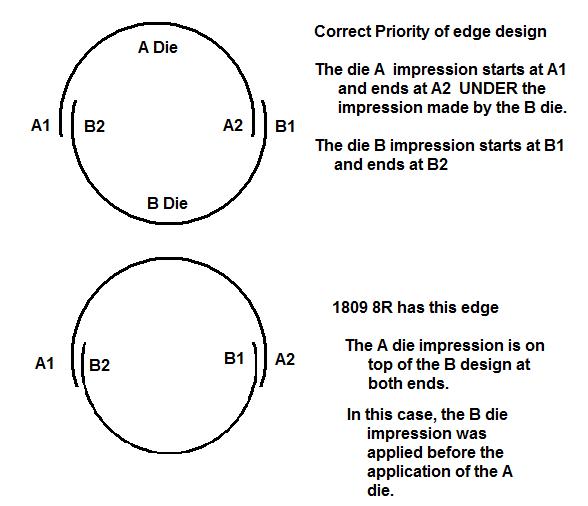
Check for two places on the edge where the design overlaps. Each place should be directly opposite the other.
Pillar of the Community
swamperbob's Avatar
United States
5362 Posts
 Posted 02/18/2016  7:35 pm  Show Profile   Bookmark this reply Add swamperbob to your friends list Get a Link to this Reply
Looks like good silver to me. Weight is perfect for wear. It is die struck in an open sided screw press. Edged with an edging mill not a collar. So to 99% of people the coin is real enough.

However, at this point there is no way to absolutely rule out a silver circulating contemporary counterfeit made in the UK (after 1844 and before 1850), US (1870-1930) or even in China anytime after 1844 and before 1930. There are suspicions of coins coming out of the Netherlands, Spain and even Mexico but there is little in the way of support so far.

The only visual clues that could point to a non-genuine issue is very limited. The odd looking edge with some evidence of diagonal cuts is often quite serious, but not conclusive without other support. If these cuts are limited to 1/2 of the edge design it would be a more serious suspect. Some coins with this feature have turned out to be post 1870 strikes using US silver. Most coins will lack definitive proof without XRF testing.

So far at least, most dealers and collectors do not seem to care if the coins were actually made during the year on the coin. As long as the silver content exceeds 85% they do not care to spend extra money testing common coins with minimal premium value. High grade coins warrant some testing in my opinion.

The coin looks very good to me - I see only the one edge issue and the lamination cracking (tension fissures in the surface). That is a 2 point coin. In my book there are 20 points. I usually avoid coins with fewer than 5 points as too difficult and costly to prove.

If you want to look further you can start with SG and then follow with XRF. A handheld XRF instrument is typically accurate to 0.1% and will positively identify a debased coin. The handheld XRF tester can also isolate gold to identify a Mexico City coin. Lima and Bolivian silver needs a higher level XRF because trace metals include arsenic for those mines (unlike Mexico) and most handheld XRF detectors miss arsenic (either because of basic settings or because of surface depletion of arsenic). A test by a lab level XRF can be as accurate as 1 part per million (0.0001%)and will read through heavy electroplates. It finds all trace elements except those lighter than carbon or heavier than uranium (which is a perfect range for coins made in the three primary Spanish American mints).

The choice of types of XRF depends on what is first discovered by Specific Gravity. SG readings under 10 are indicative of a simple fraud. The coins are either counterfeits or numismatic frauds. How the coins were made will distinguish the two usually without XRF. SG of 10.00 would be an alloy of 72% silver and 28% copper. Most counterfeits are a mixture of whatever was on hand so the SG numbers are a guide. They are not as precise as XRF or SEM. From 10.0 to 10.22 you will need XRF (handheld is usually enough). From 10.23 to 10.32, you are in the most probable range for regal silver (given stories of low silver alloys coming from some mints). It is not enough to simply say the mints were noted for low silver alloys because that does not match outside records from US and UK mint tests. So I use lab level XRF to identify trace contaminants. These trace contaminants are primarily gold, lead, arsenic, iron and mercury. Provided proper trace contaminants are present the coin was made from genuine silver that could have been made in the correct period. These will need lab level XRF to be absolutely sure.

The reason coins can be distinguished by trace contaminants is because the contaminating metals were found in the ore deposits. The best markers are those that were left behind by older processes of refining and parting. I have a working theory of the breakdown which is being tweaked by new and better lab results. Here is how I break them down now and how the data ties together.

Readings under 80% silver are clearly so debased that they are fraudulent issues of some kind. In this category fall coins likely made in China by merchants or schroffs (coin authenticators) who as early as 1790 were faking Charles III coins for profit. The particular coin we started with here is too well made (exact design type) to have been made in China in this early time period. Methods of image transfer were NOT good enough.

Readings between 80 and 85% using dies that are not exact matches to the genuine matrix are best ascribed to China or counterfeiters in England who operated between 1830 and 1835. In 1835 specific gravity testing was in place in China to stop coins under 85% silver from being accepted. Records indicate that alloys were corrected to 85% after that time.

Between 1830 and 1850 you could also have a UK copy made for trade. The earlier part of the interval 1830-1844 could have been created by punch copying (a theory advanced first by Riddell between 1839 and 1844).

A punched die using punches copied from genuine coins will create new die designs identifiable by positional variations and punch deterioration once ONE FAMILY MEMBER has been positively identified by lab level XRF.

The UK copies are always over 85% silver and will often contain lead because most European silver was found in argentiferous lead. Some may contain melted 8Rs so other traces from all three large Spanish American mines can be involved. The new world mines had very limited lead deposits with silver. That was why the "stubborn deposits found in the new world required the adaptation of mercury amalgamation methods for refining. The resulting silver contained primarily As (arsenic) and Au (gold) traces because of that refining method. Lima, Bolivia and Mexico have different proportions. Mexico data is already released and well known. As in Mexican deposits is extremely low (1-10 ppm) and gold very high (highest of the three at 0.2% minimum up to 3 full percent.)

The next step was final purification done by furnace cupellation. That was done with very high levels of gold contamination but costs and availability of fuel in Mexico limited how far the process of separating gold returned a profit to the mint. This establishes the lower threshold of 0.2%. That level could NOT be removed before 1870.

The production in the UK ceased for full weight silver copies about 1850. This was about the time that improved refining of silver bearing lead resulted in 99.99 fine silver being possible.

The US entered the copy market (China market) about 1870 using Nevada silver. The Comstock discovery also had the benefit of improved refining methods including the Wholwill process for refining so extremely little gold remains in the silver. Therefore a 90% silver coin with gold under 0.2% will usually classify as post 1870.

Modern silver after 1930 will have cadmium traces (but you need a lab level XRF to detect the trace). Silver recovered after 1980 contains heavy metal contamination especially if the silver was refined in China. Again lab XRF is needed.

I realize this is complex for anyone new to the theory I am advancing. It is an attempt to merge the history of refining and parting techniques along with the history of minting technologies used in actual mints as well as the history of counterfeiting technology, to establish a matrix of dates that give a NO EARLIER / NO LATER than series of dates for coins genuine and not based on the alloy used and how they were made.

As I have said it is still developing.

Any early first generation references and any recent mining core boring XRF results may be of interest to me for modifying the theory. So please help me out by letting me know whatever you happen to find out there.

Pillar of the Community
United States
1962 Posts
 Posted 02/18/2016  9:52 pm  Show Profile   Bookmark this reply Add realeswatcher to your friends list Get a Link to this Reply
Whether it could be one of Bob's restrikes, I'll defer, but aside from that, it looks legit. It HAS been rather harshly hairlined/whizzed (Westwood, I think this is why the denticles may look odd in spots... a lot of crud left in the recesses)... Looks like the edge overlaps would be at 1:00 and 7:00 (obv/face side), judging from the flattening on the rim.
Pillar of the Community
Singapore
631 Posts
 Posted 02/19/2016  01:39 am  Show Profile   Bookmark this reply Add Numister to your friends list Get a Link to this Reply
Thanks guys, you really know your stuff.

Swamperbob, that's a really detailed and almost thesis-like exposition on this topic,
kindly could you elaborate on what you meant by: "That is a 2 point coin. In my book there are 20 points. I usually avoid coins with fewer than 5 points as too difficult and costly to prove."

I'm kinda a newbie with Reales so go easy on me.
Pillar of the Community
swamperbob's Avatar
United States
5362 Posts
 Posted 02/19/2016  02:46 am  Show Profile   Bookmark this reply Add swamperbob to your friends list Get a Link to this Reply
Numister The points are covered in roughly 10 pages in my book. In all there are 20. They are clues that I have used to try to locate silver counterfeits ever since I discovered that XRF could be used to prove some were missing the gold trace that should be found in all Mexican coins made about 1800.

Some of the clues are found on the faces of the coins and others on the edges. The edges tend to be the most conclusive clues and involve how the edge was applied.

Original coins were edged in an apparatus called a mill (or casting machine). This mill applied the edge design to the coin BEFORE it was struck in an opens sided screw press.

So one clue would be to look for coins with evidence at the intersection of the edge design and the dentils proving the edge was applied AFTER the coin was struck (or cast). An edge applied after the faces already exist is very conclusive evidence.

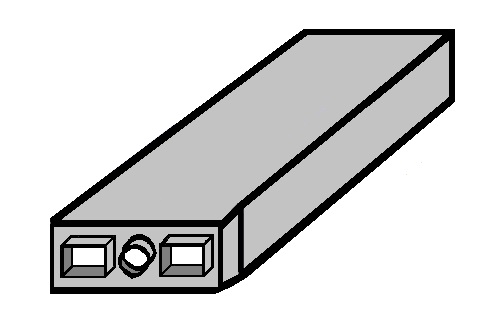
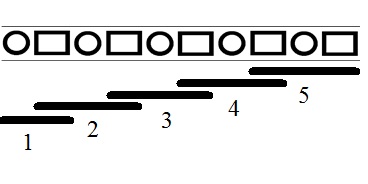
The edge mill consisted of two flat dies mounted parallel on a flat surface. One die could move the other was fixed. The coin blank was placed between the two dies and a wheel was turned to close the distance between the dies. Once the coin was firmly gripped the start of the design was pressed into the edge of the coin at two points exactly opposite one another. Then the movable die was cranked along parallel to the fixed die. This caused the coin to rotate and as it moved the design was cut into both sides of the coin (the contact points) at the same time. This configuration produces several different points. First the start and stop points will form short overlaps of equal length on both sides of the coin. Second these overlaps will be exactly 180 degrees apart. If the blank is irregular a raised spot at any point will result in a deeper edge design. A weaker design occurs where the blank diameter gets smaller. These changes will always be exactly opposite one another.

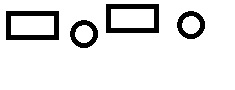
The overlaps will occur in reversed priority on the opposite sides of the coin. Because the edge dies are recessed to control the planchet and prevent pop-outs excessive wobble side to side is a bad clue. A coin with only one overlap or any odd number of overlaps is a point - a serious one pointing to a forgery. The edge dies were made with a punch that consisted of three segments a rectangle a circle and a second rectangle. The entire edge die (each side being one die) will have identical circles and almost identical rectangles. Each rectangle is actually over punched to position the die punch and to maintain uniform spacing.

So a coin that has been edged with a pattern that forms into pairs of elements (one circle and one rectangle) is a point in favor of forgery. A coin with circles that vary in diameter or wall thickness is a point. Any irregular pattern say flat sided circles or places wher the circle cuts into the edge of the rectangle are fakes.

Start to diugest that and I will continue. It took me years to isolate these clues so you need to understand why and how they occur.

8-Reales-Carlous-III-1775

8-Reales-Carlous-III-1775

8-Reales-Carlous-III-1775

8-Reales-Carlous-III-1775

8-Reales-Carlous-III-1775

8-Reales-Carlous-III-1775
Edited by swamperbob
02/19/2016 02:58 am

  Previous TopicReplies: 6 / Views: 2,174Next Topic  

To participate in the forum you must log in or register.


Disclaimer: While a tremendous amount of effort goes into ensuring the accuracy of the information contained in this site, Coin Community assumes no liability for errors. Copyright 2005 - 2026 Coin Community Family- all rights reserved worldwide. Use of any images or content on this website without prior written permission of Coin Community or the original lender is strictly prohibited.
Contact Us  |  Advertise Here  |  Privacy Policy / Terms of Use

Coin Community Forum © 2005 - 2026 Coin Community Forums
It took 0.33 seconds to rattle this change. Forums