| Author |
 Replies: 15 / Views: 3,192 Replies: 15 / Views: 3,192 |
|
|
New Member
Canada
47 Posts |
*** Moved by Staff to a more appropriate forum. ***
How do you tell the difference between cardboard 2x2swith Mylar and the ones with Polyvinyl chloride? Edited by SuperGyr
02/24/2016 01:34 am
|
|
|
|
Pillar of the Community
 Canada
9903 Posts |
There aren't any with PVC.
"Dipping" is not considered cleaning...
-from PCGS website
|
|
New Member
 Canada
47 Posts |
There aren't? I was under the impression that they were.
|
|
New Member
Canada
47 Posts |
I should have posted this in the numismatic forum.
|
|
Bedrock of the Community
Australia
21792 Posts |
AS far as I know, Mylar is the only clear window material, across all brands, that has ever been used with cardboard 2x2 flips.
Same material is used for stamp folds.
Larger versions of the individual or strip stamp fold would make excellent protection for a banknote collection. Put those in either polypropylene or Mylar banknote album pages.
|
|
Moderator
 Australia
17002 Posts |
Some 2x2s dating from the 70s used PVC. And some cheap'n'nasty Chinese imports might also use PVC, you never know these days. As for "How can you tell", well, unfortunately, the only way to be sure is to put some nice Unc coins in them and wait a while to see what happens. PVC isn't the only "nasty plastic", it's just the one that grabbed the headlines in the numismatic press back in the 1980s. ANy plastic has the potential to be "as bad as PVC", because it isn't actual PVC that causes the damage to coins: it's the acidic plasticizers they put into the PVC to make it less brittle and more transparent. All that being said, there are chemical tests you can run to test for chlorine in the plastic, which is usually a good sign of either PVC and/or acidic plasticizer. A simple, 19th century test you can perform for yourself is the "Beilstein test": take one of the suspect 2x2s and tear it apart to take out the film. Get a piece of copper wire and bend the end of the wire into a small loop. Wrap (or melt) a piece of the film around the loop. Get a bunsen burner, propane torch or similar flame, and hold the wire loop with the film attached to it in the flame. If the flame turns bright green, there's chlorine in that thar plastic. Here's a Youtube demonstration. Don't say "infinitely" when you mean "very"; otherwise, you'll have no word left when you want to talk about something really infinite. - C. S. Lewis
|
|
Pillar of the Community
Canada
4227 Posts |
At the RCNA Grading and Preservation course, Susan Maltby demonstrated the Beilstein test and it's pretty straight forward. If you're unsure, this is a good idea. |
|
Pillar of the Community
710 Posts |
I'd stick with buying 2x2s and supplies from your reputable LCS. There are some questionable products online that have been posted in this forum in the past.
|
|
Pillar of the Community
United States
711 Posts |
I'm a PVC chemist. Plasticizer is a PVC only thing as far as coin collectors need to be concerned. Most major commodity plastics use no plasticizer whatsoever. The only one I can think of off the top of my head is Polystyrene which uses white oil as a plasticizer. No worries using Mylar in the 2x2 coin flips. Bigger risk in the adhesive used to bond the film to the cardboard honestly. They do make soft PVC / vinyl clear flips still. My LCS sells them. They are really soft. I wouldn't use one of those or binder pages made from PVC. Simpler and more accurate test for PVC. 1. Cut a piece of the plastic in question. Make sure there is no other material stuck to it like adhesive or cardboard. 2. Submerge that piece of plastic in water. If it floats it 100% can not be PVC. Make sure it isn't an air bubble in or under the part floating it. Make sure you break the surface tension of the water by submerging it and shaking it around to shake off any air. Again if it floats, it can not be PVC / vinyl and you are done. 3. If it sinks, it may be PVC. We need to test it further. 4. Safety first 5. Light that sample on fire. PVC will not drip. PVC will produce a white smoke. PVC will char to black. PVC will give off hydrochloric acid which is an offensive smell. PVC will give off a green tint flame. The green is minimal though. The Bellstein video is poor science using copper wire as it will also burn green and blue. You wouldn't know where the green is coming from using that method. My ISO17025 lab suspends just the plastic in the flame and no other material as that is the proper ASTM procedure. I have personally burnt probably 10,000+ PVC samples and never ever had one go that green with the flame as shown in the video, then again I have never used a substance like copper that would burn green in my sample to foul the result either. Here is a handy flowchart on how to identify all major plastics using just a cup of water and some fire. Not my chart, but it is accurate and handy. http://www.consultekusa.com/pdf/Tec...chart%20.pdf |
|
Valued Member
United States
119 Posts |
Hello. Very good question. Seriously, does this really matter? It seems as though it might the way it is talked about. Again, very good question. J
|
|
Valued Member
Canada
320 Posts |
Buckeye, that was crazy informative!
Good to have you on the CCF!
|
|
Pillar of the Community
Canada
9903 Posts |
Don`t forget the first and simplest test of all. If it smells like a shower curtain it contains PVC.
It`s not the 2x2`s you should be concerned with, they are extremely unlikely to contain PVC.
Album pages, soft plastic coin folders, plastic flips, and even the outer layer of ICCS flips, usually do contain PVC.
"Dipping" is not considered cleaning...
-from PCGS website
Edited by DBM
02/24/2016 11:43 am
|
|
Pillar of the Community
Canada
2786 Posts |
Buckeye, can the same test be used for rubber compounds? I used this test chart on 3 brands of slabs, outer shells came back as polystyrene (Lighthouse)and PETE ( CoinWorld and PCCB). inner rubber holders showed polypropylene. 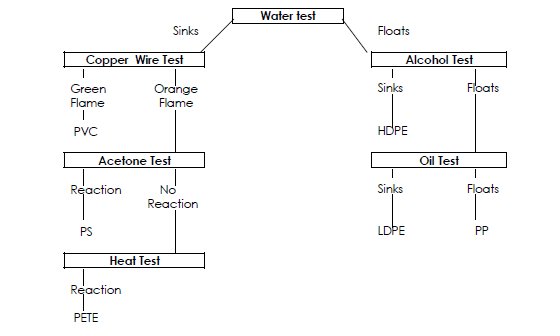 bottom line my first choice would be the PCCB brand but because it's made in China I am still nervous about long term storage & commercial testing is too cost prohibitive. your input appreciated 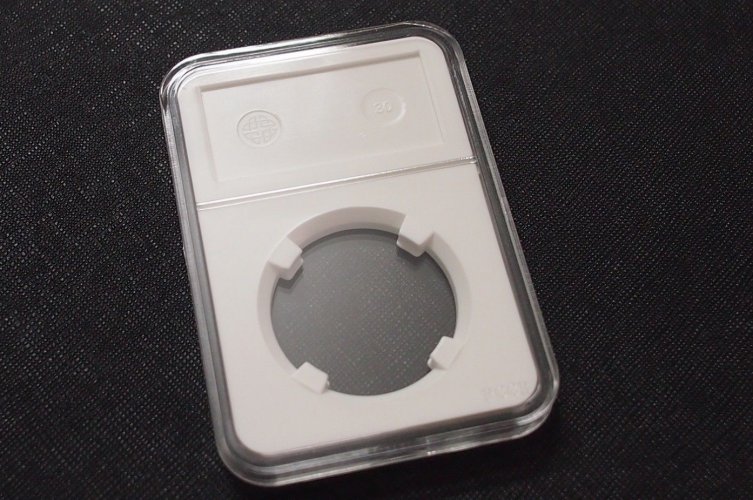 |
|
Pillar of the Community
United States
711 Posts |
As an aspirational Canadian when I retire, I am glad to help. Maybe someday we will be neighbors, though if we are I am sure I will be cranky by that point in time and just tell you to get off my lawn, kidding of course. . .
My chart will work for PS, PP, and PETE no problems. Almost all major plastics are on the chart. Only problem is probably finding PETE on the chart, it is just polyester, it is right beside the polystyrene on the bottom of the chart in the middle. PETE is basically the same as PET or aPET or cPET or PETg. Just a basic polyester.
I will say this, PVC is basically the only plastic problem I know of with coins and even if you didn't care about safety or product quality, it would never be contamination in another plastic part on purpose. I have been to a PETE recycling facility (curb side recycled pop bottles made into pellets for more pop bottles or green strapping for shipping departments). They have some PVC contamination issues due to the label and some PP contamination issues due to the bottle cap. If you do run it mixed with PVC, it shuts down the machine as it burns at a much lower temperature. Almost zero chance of having PVC contamination and a visually appealing part. It would have pepper like black marks in the clear plastic if it were contaminated and you wanted to check.
I don't see where you have rubber. I am not a rubber guy, just a plastic guy, but rubber is cured / vulcanized by sulfur and sulfur would tone coins. I wouldn't use rubber, but that is just gut feeling. I don't have the experience to say on rubber honestly. Never worked with it other than Nitrile Rubber as a PVC additive I used to make pellets that ended up in cars in the form of pull cords and hoses.
If I was making my purchase, I'd avoid the polystyrene as it is cheap and brittle relatively. Probably fine for a coin, but if I am using it, I want it cheaper as PS is generally cheaper unless benzene is doing its rocket fuel imitation on price like it does from time to time. It could also have a white oil plasticizer in it too, but I highly doubt it as it would be extra cost for no practical use. Only way I could see white oil getting in there on accident would be using recycled material (which is how China got a bunch of lead in kid's toys roughly 5 - 10 years ago). PET is very tough.
Short version.
My chart (not mine, but my link) will work no doubt.
I'd avoid the PS part and use the PET or PETE part as long as the clarity is good enough on the PET parts. No concerns with the PP on the inside of the slab. That's probably what I'd use too, that or PE. I never worked much with PP and only a little bit with PE though honestly.
|
|
Pillar of the Community
Canada
2786 Posts |
when I say rubber I am referring to the inner white sleeve that holds the coin. it is soft enough to bend without breaking. burn test showed no green.
|
|
Pillar of the Community
United States
711 Posts |
Assuming it isn't hollow, does the white piece float?
If it floats, it isn't PVC, that will prove it out 100%.
I'd guess it is PP or PE. They are generally moderately rigid when that thick though. Maybe a TPO or TPE (basically PE or PP but modified and the modifiers aren't issues with regard to coins either).
When burned did it drip? If it did, it isn't PVC.
When burned did it produce a white smoke that smelled awful? If it didn't, it isn't PVC.
When burned and you move the flame away did it self extinguish or continue burning. PVC will self extinguish.
Short version, if it floats without an air bubble, you have no concern as far as I can tell.
|
| |
Replies: 15 / Views: 3,192 |
|





 Posted 02/24/2016 01:56 am





