| Author |
 Replies: 8 / Views: 1,756 Replies: 8 / Views: 1,756 |
|
|
Valued Member
United States
403 Posts |
From my very limited collection of varieties collected decades ago when my eyes were better: an example of a late die state Wheat cent. Two partially filled numbers in the date and a break that travels from the rim to within the wheat stalk. 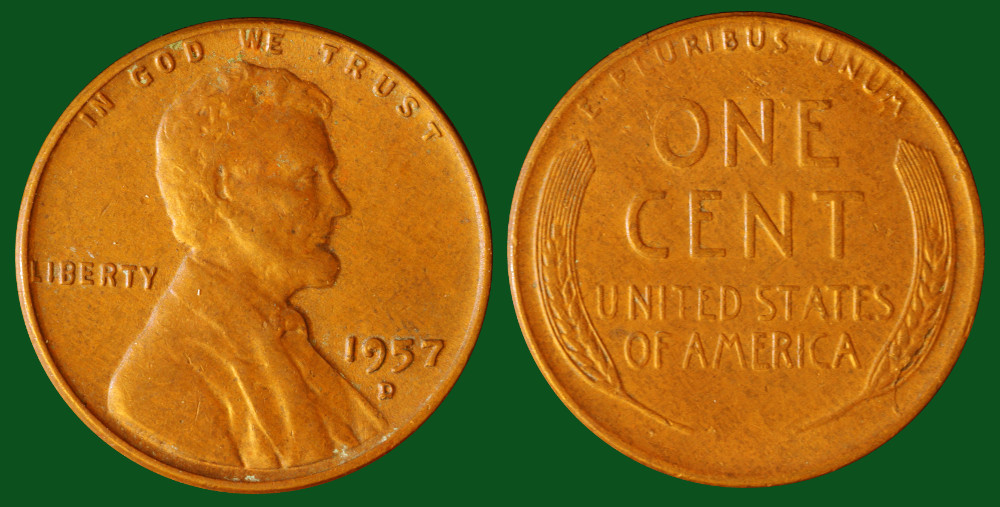 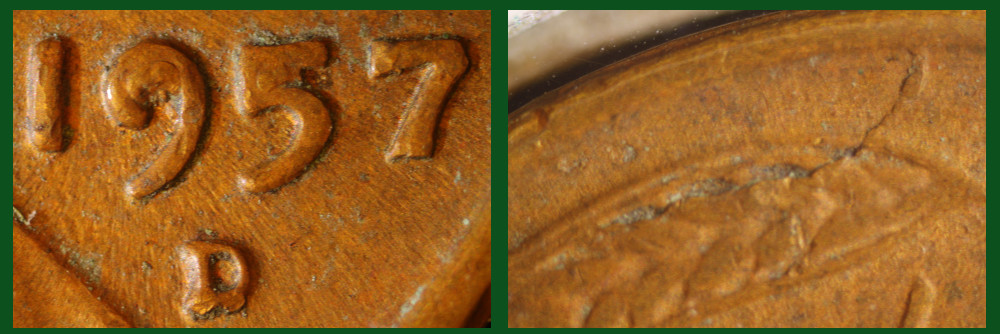 |
|
|
|
Bedrock of the Community
United States
62064 Posts |
Looks like it was also a RPM. (took a hit on the lower serif, but the upper serif is split also) The damage to the mint mark pretty well cancels out any value for this variety.
|
|
Valued Member
 United States
403 Posts |
Coop, your eyes (and experience) are better than mine. I have much to learn... had to look up RPM. Does an RPM trump a LDS?
Edited by NoPoMoCo
03/04/2016 7:48 pm
|
|
Bedrock of the Community
United States
62064 Posts |
RPMs are varieties. LDS is die state. A LDS coin is just worth what the coin is worth. A variety like a RPM could be a real prize on some years and mint marks. 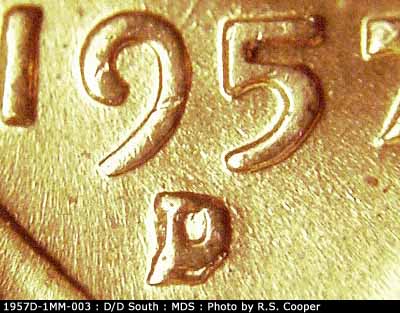 Your was not as collectable as this one, but they are collectable to coin-addicts like me and others. In its heyday it may have look like this before the accident that happened to it: 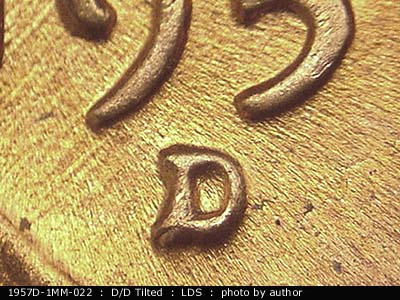 Note the left side of the mint mark. On the top and bottom you will see splits on the corners. There are called 'split serifs'. They happen when the punch that made the mint mark was not exactly in alignment on each strike. This is called a tilted RPM because the punch was slightly tilted when the mint mark was placed into the die. They can be miss punched in several directions: 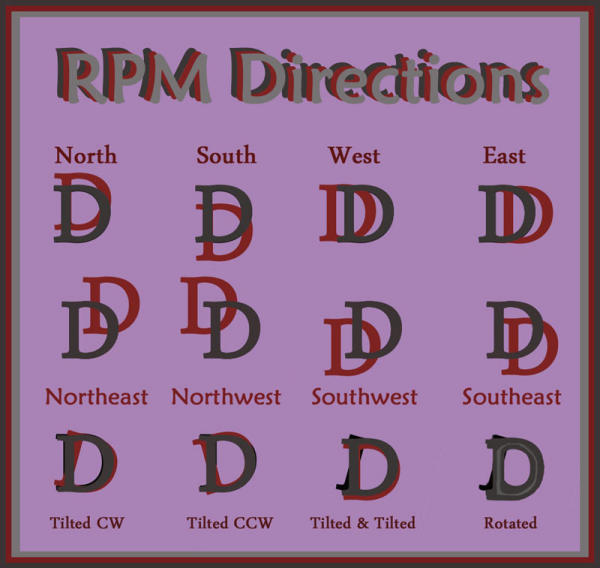 They may look like these: 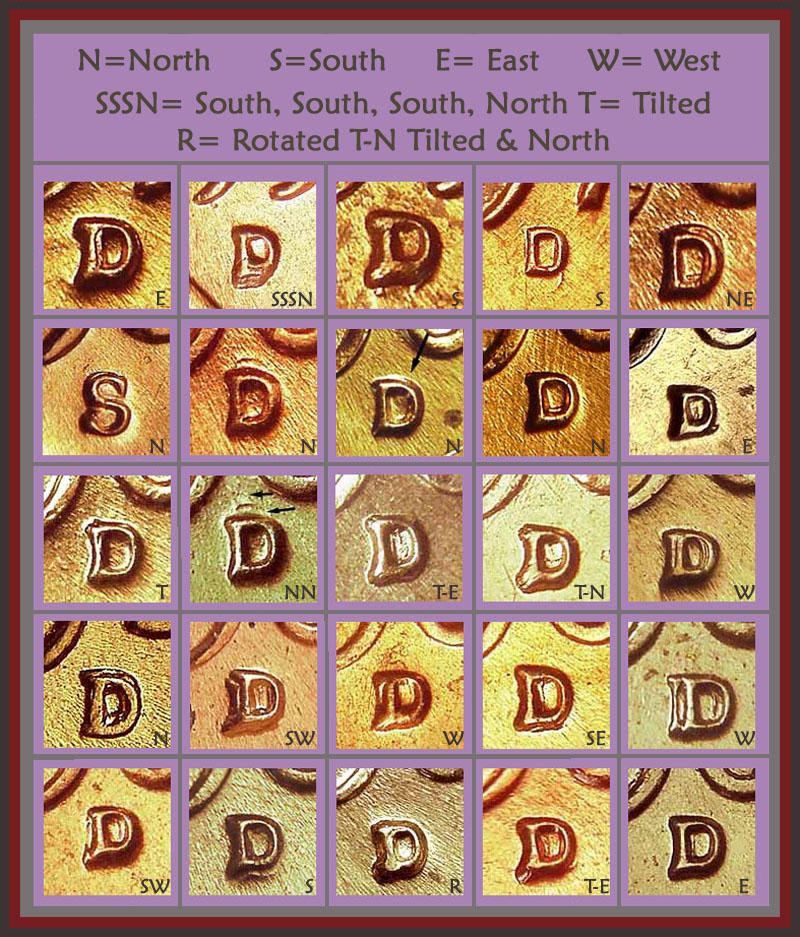 The directions of the miss punchings is noted on several of these. 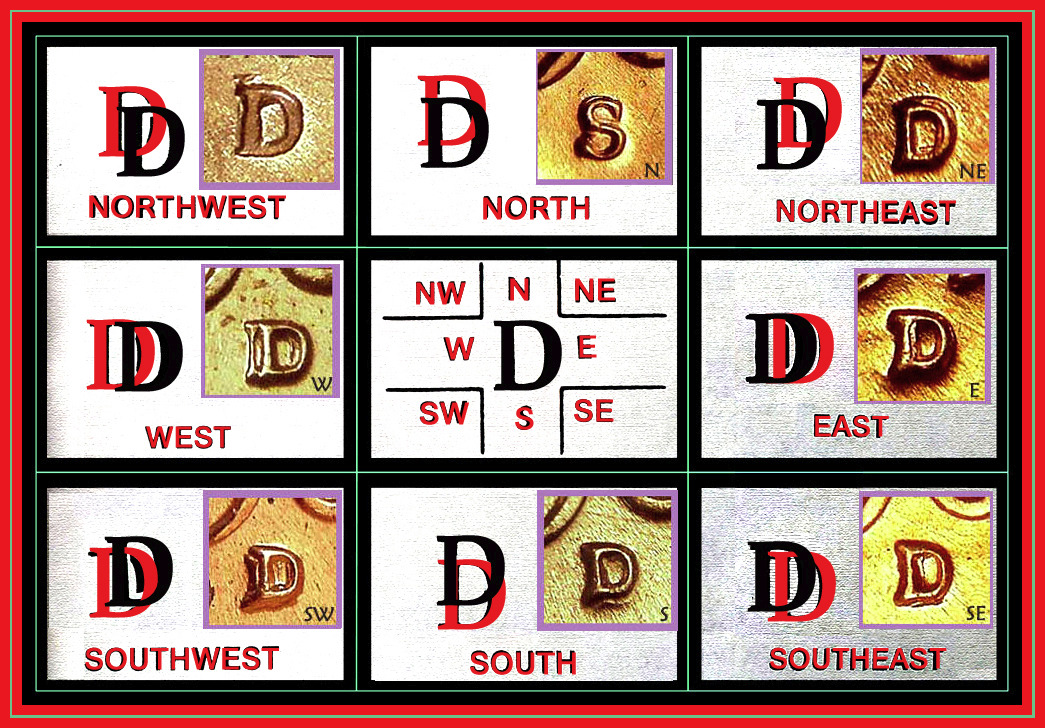 Hope this helps a bit. (We could go on for days about this subject. Just a crash course) Edited by coop
03/04/2016 9:29 pm
|
|
Valued Member
United States
403 Posts |
Coop, thanks for all this info... it's like drinking from a fire hose! I'm going to need to take a few steps back to research and understand the printing/striking/punching process better; then I'll revisit this. Your links to youtube are appreciated!
|
|
Valued Member
United States
403 Posts |
Okay, I's be educatd on this  My still poor understanding is that for any dated coin there is one master hub pair (obverse and reverse), perhaps only one master die pair, several working hubs, and multiple working dies all produced at the Philadelphia mint. When a mintmark was applied before 1987, it was manually punched (correct word?) into a working die, which was then sent to the branch mint. Sometimes the quality of the punch impression wasn't deemed good enough by the puncher and a second (or more) punch applied, sometimes resulting in shifted impressions of the mintmark on that working die. Likely, the branch mint probably had the authorization to repunch the date or mintmark on the working die as the quality of the struck coins demanded. RPMs (and RPDs) resulted, as illustrated above, which are die varieties within the population of that date and mintmark. What I don't understand is why they're relatively rare. How many strikes of a penny are expected from a die? Wouldn't all exhibit the same RPM variety?  |
|
Bedrock of the Community
United States
62064 Posts |
Quote from above answer underlined : My still poor understanding is that for any dated coin there is one master hub pair (obverse and reverse), perhaps only one master die pair, several working hubs, and multiple working dies all produced at the Philadelphia mint. When a mintmark was applied before 1987 1989, it was manually hand punched (correct word?) into a working die, which was then sent to the branch mint. Sometimes the quality of the punch impression wasn't deemed good enough by the puncher and a second (or more) punch applied, sometimes resulting in shifted impressions of the mintmark on that working die. Likely, the branch mint probably had the authorization to repunch the date or mintmark on the working die as the quality of the struck coins demanded. RPMs (and RPDs) RPDs are a 18th century issue resulted, as illustrated above, which are die varieties within the population of that date and mintmark. What I don't understand is why they're relatively rare. How many strikes of a penny are expected from a die? sometimes as many as one million. Wouldn't all exhibit the same RPM variety? Yes if the die was used to retirement. Sometimes they developed a problem and were retired or pull early if there was an issue with the die.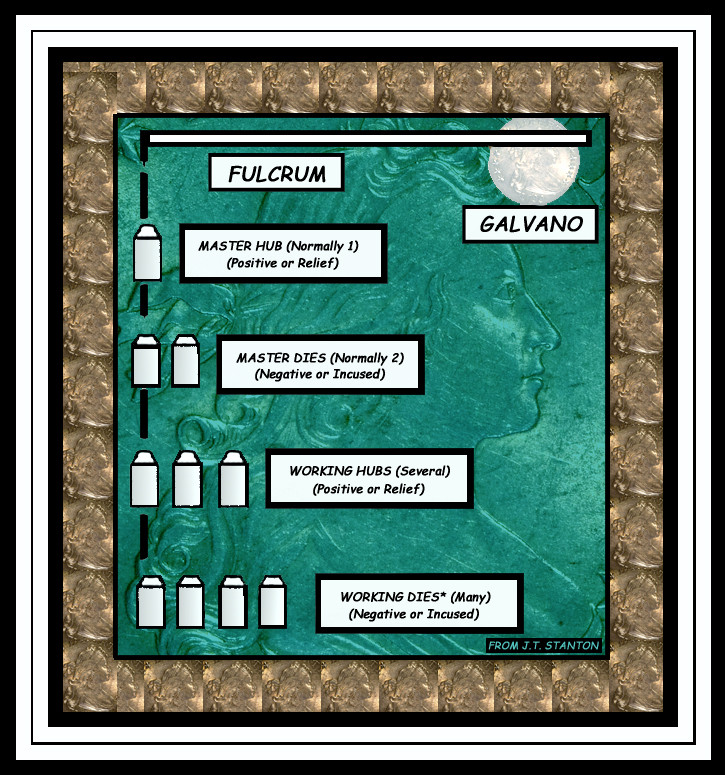 The Denver mint now makes its own dies, but I forget the date that started. The Denver mint now makes its own dies, but I forget the date that started.
The punching of the mint mark I feel was done at the mint locations. The dies never went back into to be repunched after they were used.
|
|
Valued Member
United States
403 Posts |
Thanks for all the time you put into educating us newbies. I've learned a lot and appreciate the difference between a variety and die state. VAMs for silver dollars seem to be a different beast, where die states often define a variety and add tremendous value as they evolve.
|
|
Bedrock of the Community
United States
62064 Posts |
I don't even go there. LOL They are too rich for my blood.
|
| |
Replies: 8 / Views: 1,756 |
|






 Posted 03/04/2016 7:05 pm





