| Author |
 Replies: 19 / Views: 2,923 Replies: 19 / Views: 2,923 |
|
New Member
Canada
11 Posts |
These coins were dug up in the middle east from what I was told, I haven't weighed the coins, any help would be appreciated. thanks front 1: 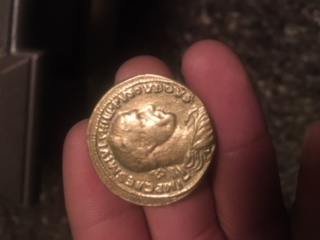 back 1: 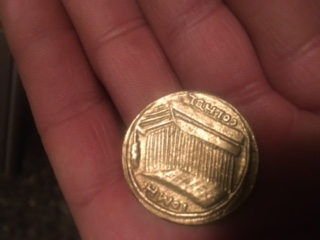 front 2: 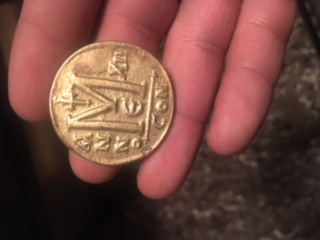 back 2: 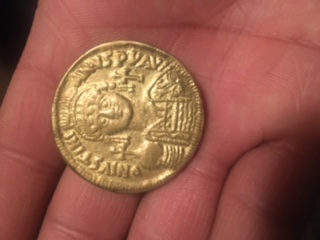 front 3: This coin is about a cookie size, I haven't weighed it either. and it doesn't have a back strike. 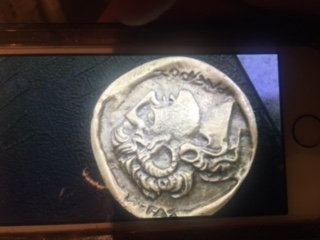 |
|
|
|
Moderator
 United States
23731 Posts |
 to the community Sorry to tell you but they are all fake. Most likely sold at a bazaar to tourist. |
|
New Member
 Canada
11 Posts |
Thank you for your help, But As for being fake, I'm very sure they are not fake, they are in very good condition because when they were dug up, they were found in a pot of some kind in an ancient grave of some sort. I did not purchase these coins, they were given to me by a family member who found them himself, I brought them back with me because he has no idea what they are or worth, according to him he said the area area he found them must have been an ancient church in the mountains less than 2 km from his home.
|
|
Rest in Peace
United States
17900 Posts |
They are fake, and not very good ones.
In many parts of the world it's rare NOT to be approached by someone who sees you as a rich tourist ripe for the fleecing with these types of coins.
|
|
Pillar of the Community
United Kingdom
2624 Posts |
With all due respect you post the coins asking for more information. Our learned friend Echizento (with almost 18,000 posts) tells you they are fake.
Better not to argue with him on that given he is an expert in such matters and you are not.
Rather than say "no they are real" better to ask "how do you know" and maybe learn something..
In truth there is no single thing...he probably knows what coins all 3 imitate... I just know the second is trying to be a Byzantine follis but has got it all slightly wrong.
Its probably dissapointing news for you but we would prefer to be telling you that you happened across something rare and valuable...that os not the case however.
|
|
New Member
Canada
11 Posts |
I was really trying to find the origin, but now I'm being told they are fake, deflated.
What is it about the coins that makes them look fake, or makes you sure they are fake, thank you for any information, but I would just like to know how that judgement came along so quick, I'm now trying to convince myself, again I did not purchase these coins.
|
|
New Member
Canada
11 Posts |
I thank you all, by no means am I second guessing a professional, I am believing they are fake now, I'm no expert at all.
|
|
Pillar of the Community
United States
6130 Posts |
The most obvious sign is the color. They both look "new" which is not possible for ancient coins. Unless kept in an airtight, inert environment, copper cannot go 1,000-2,000 years without developing a patina (think of the Statue of Liberty) this is especially true of coins that were buried in the desert. You can zap the patina off with electricity (electrolysis) or polish the bejeezus out of it, but these ruin the surface of the coin.
|
|
New Member
Canada
11 Posts |
again thanks to everyone who is commenting,
they were found in an ancient grave/ church site in the mountains area between Lebanon and Syria. Many people in the area have found artifacts over the years. I have seen the area. I did not purchase these coins.
About the new look, a question, could it be that they were preserved by burial. I'm just trying to see if there is something with the striking or image that says they are fake other than color. also there were many other coins he had found, by I chose to bring back these.
|
|
Rest in Peace
United States
17900 Posts |
The three "coins" you have are from vastly different ages and locations. Even without getting in to the complexity of strike, planchet, and design elements which all quickly point to these as attempted fakes of real ancient and Byzantine coins - the chances of those three coins being together in a single "burial" are so close to zero, that you might as well say zero.
|
|
Pillar of the Community
United States
7067 Posts |
Moe, the first - with its reverse of the temple of Jupiter Heliopolitanus - is a well documented fake and is listed at several important sites, including Wildwinds, edgarlowen, Harvard, and Forumancientcoins, as fake. The second is a cast - in the wrong metal (it's supposed to be bronze) - of a follis of the Byzantine emperor Justinian I. The third is all sorts of wrong: style, edge, etc. This is an extremely obvious fake and, although I guess it might fool a tourist, it would never fool any serious collector of ancients. Having stated all this, I should also say, however, that I am a firm adherent of Stephen Colbert's "truthiness." Facts and logic are too often inconvenient and messy. Don't let them get in the way of what you know to be true..  Edited by Kamnaskires
03/21/2016 3:54 pm
|
|
New Member
Canada
11 Posts |
It hurts, but thanks guys, I really appreciate everyone's comments and help.
I'm going to make a call to Lebanon and talk to my uncle, he's old, and he doesn't even have money to get by let alone to be buying fake coins, or a car to leave his village. He makes a living growing olives.
|
|
Moderator
United States
23731 Posts |
Sorry I should have been a bit more specific, but when you see as many of these that we all have it's very easy to tell the good from the bad. Bob L, explained what's wrong with them. Also keep in mind it is illegal to ship coins out of most Middle Eastern countries without and export license and they are not easy to get.
|
|
Pillar of the Community
Canada
5293 Posts |
When it comes to determining whether a coin is fake or not, it is based on the coin, not the story behind it.
You have to believe the evidence of the coin itself.
|
|
New Member
Canada
11 Posts |
I didn't know about being illegal to bring these coins overseas. On the bright side, good thing they are fake I guess.
|
|
New Member
Canada
11 Posts |
Checked some of the related sources you mentioned and just found this on the first coin. just mine is in very good condition. 10414. PHILIP II ARCHITECTURAL REVERSE [REPRODUCTION] , 247-249, AE29 of Heliopolis, Coele-Syria, 12.1 g. Obverse: Laureate, draped bust of Philip I right. Reverse: Temple of Jupiter - Heliopolitanus, cypress tree to right. Good VF. Nice coin but unfortunately a reproduction with an otherwise unknown obverse legend. Listed as a forgery on Wildwinds and Harvard. http://www.edgarlowen.com/philip-temple-10414.jpg |
| |
Replies: 19 / Views: 2,923 |










 Posted 03/21/2016 1:27 pm


