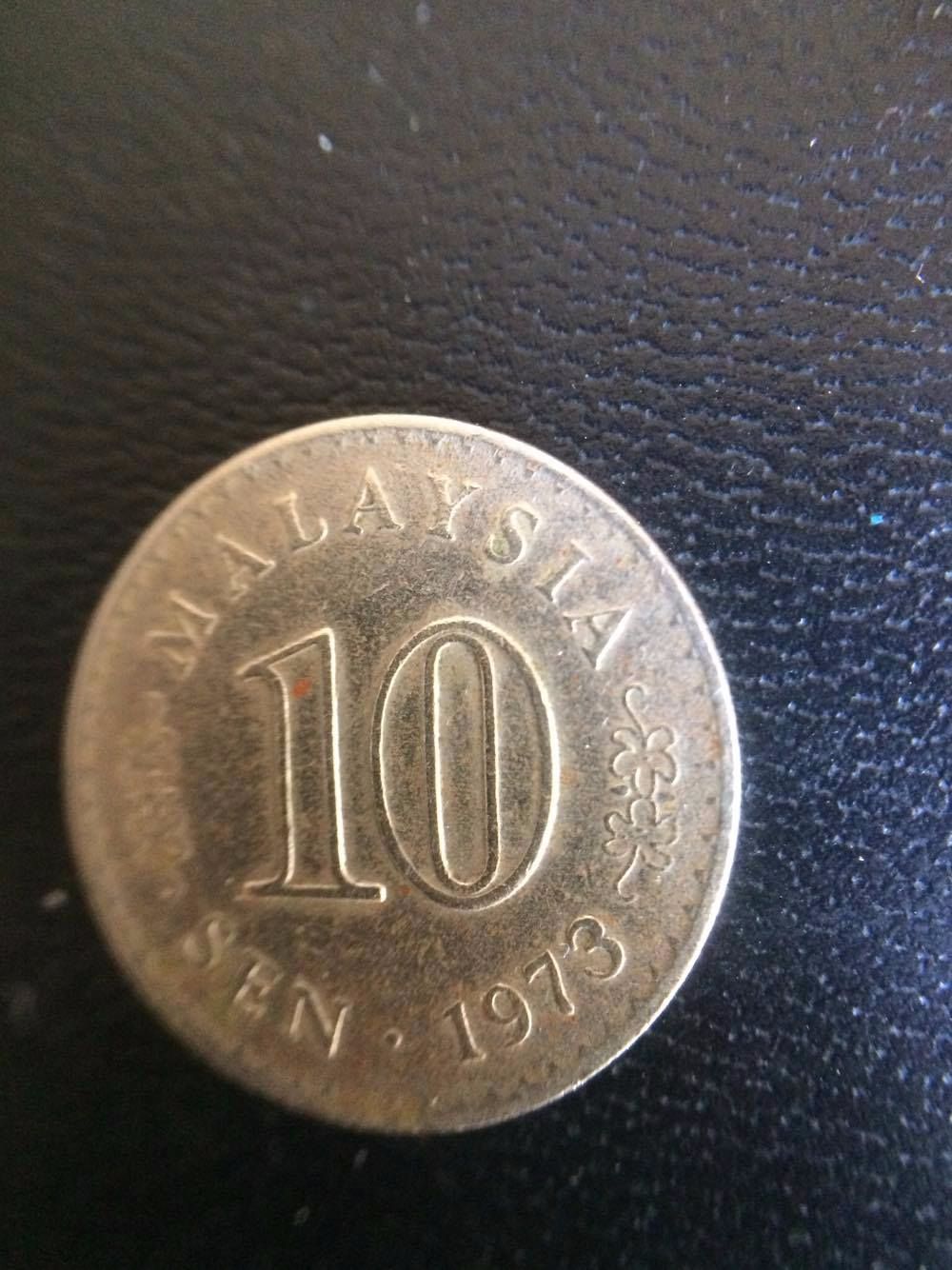
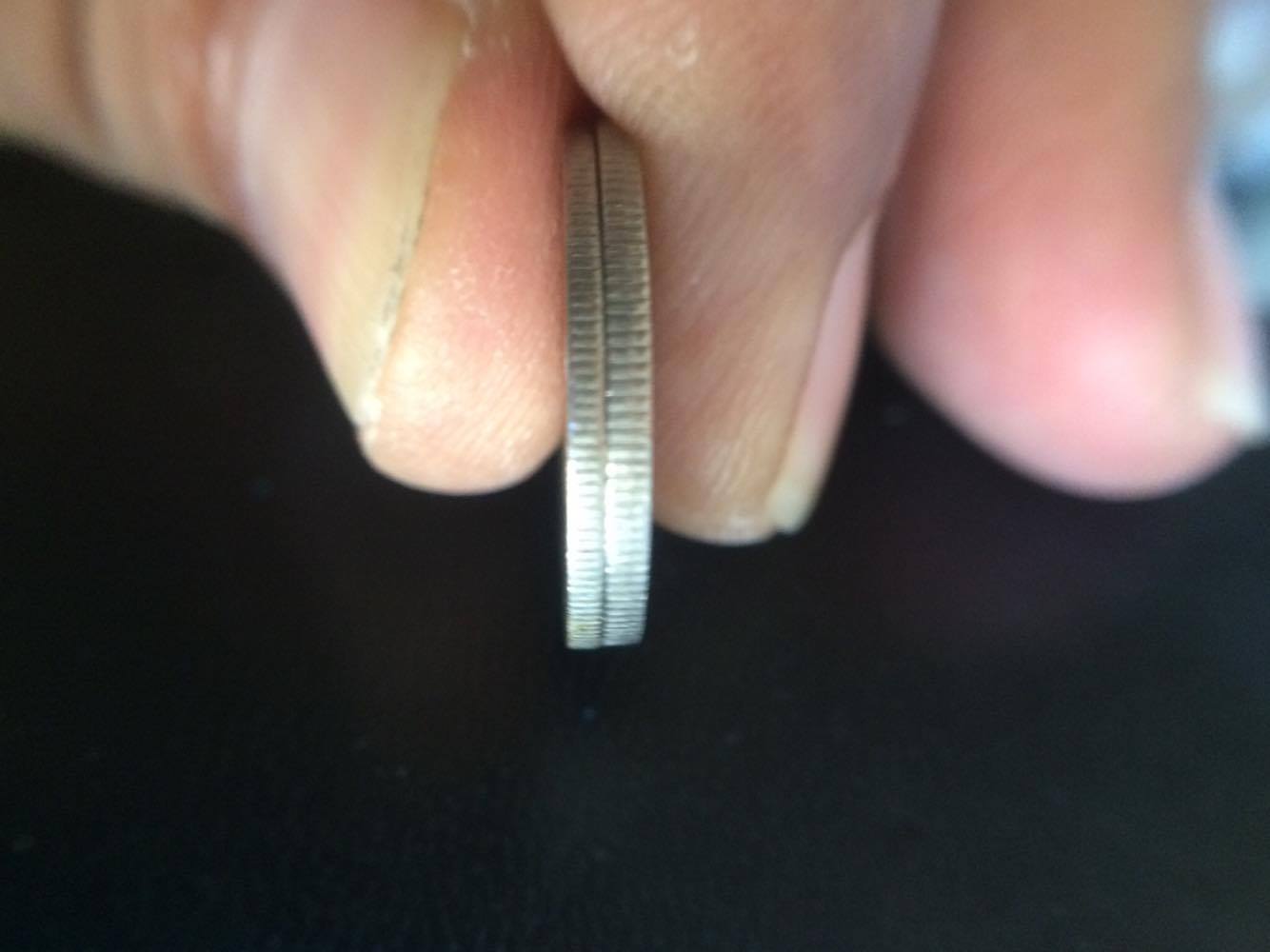
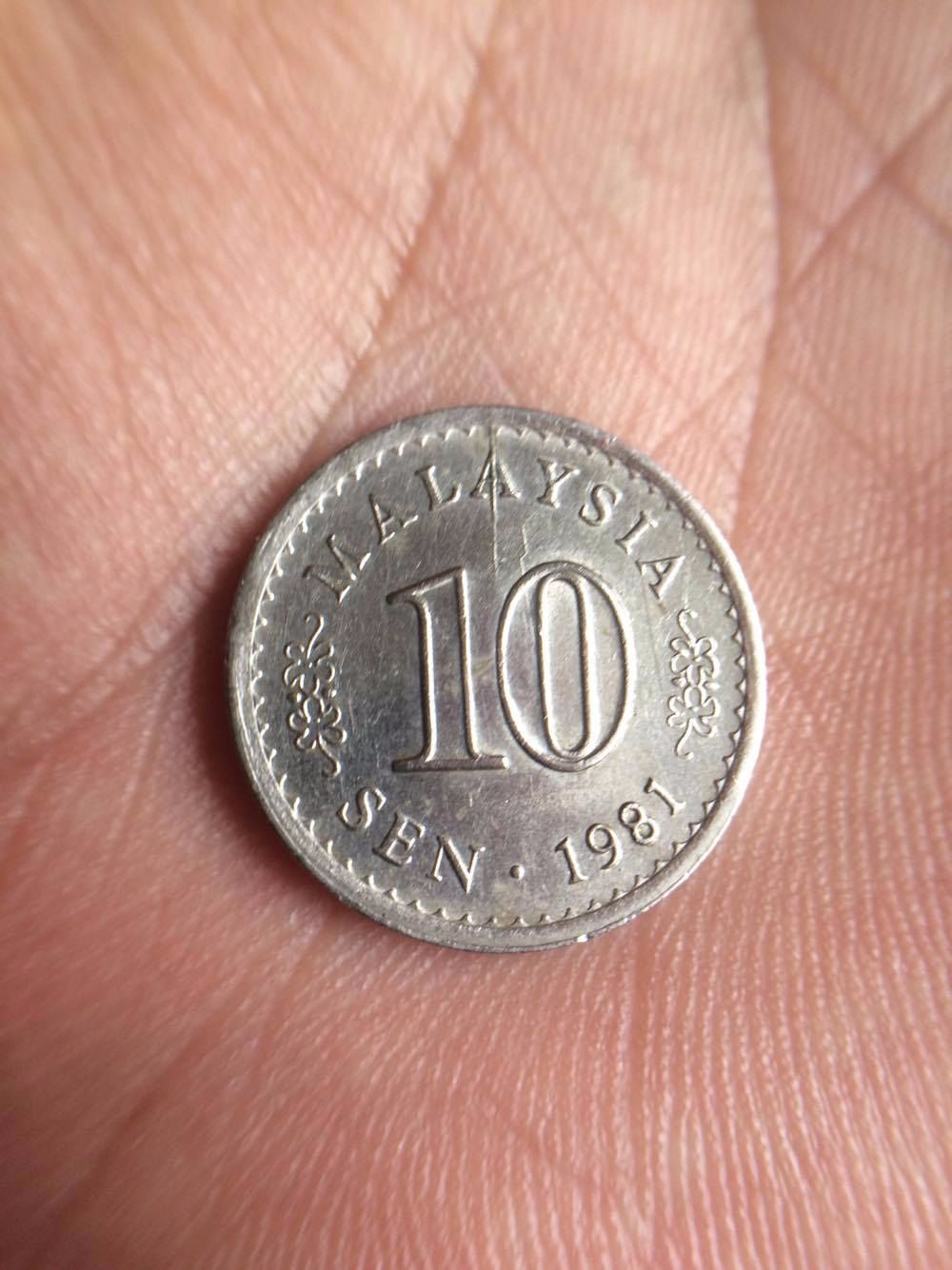
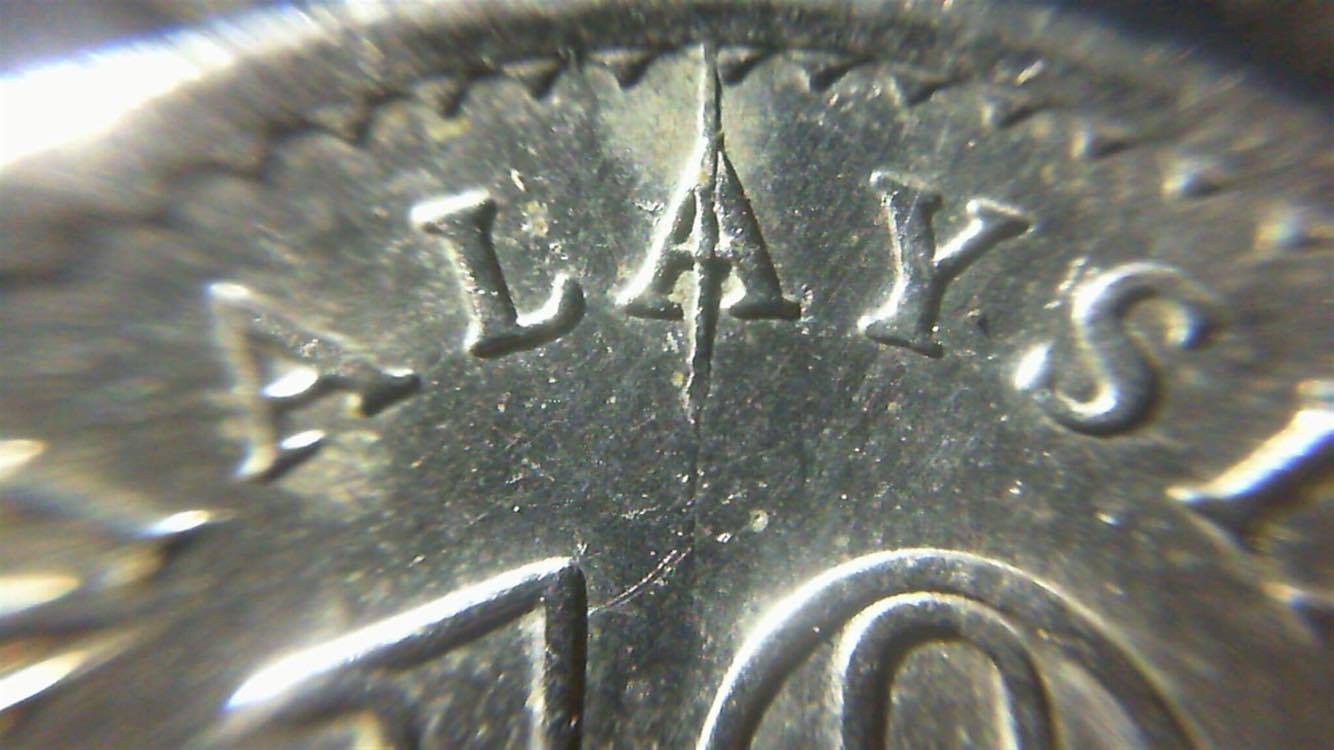
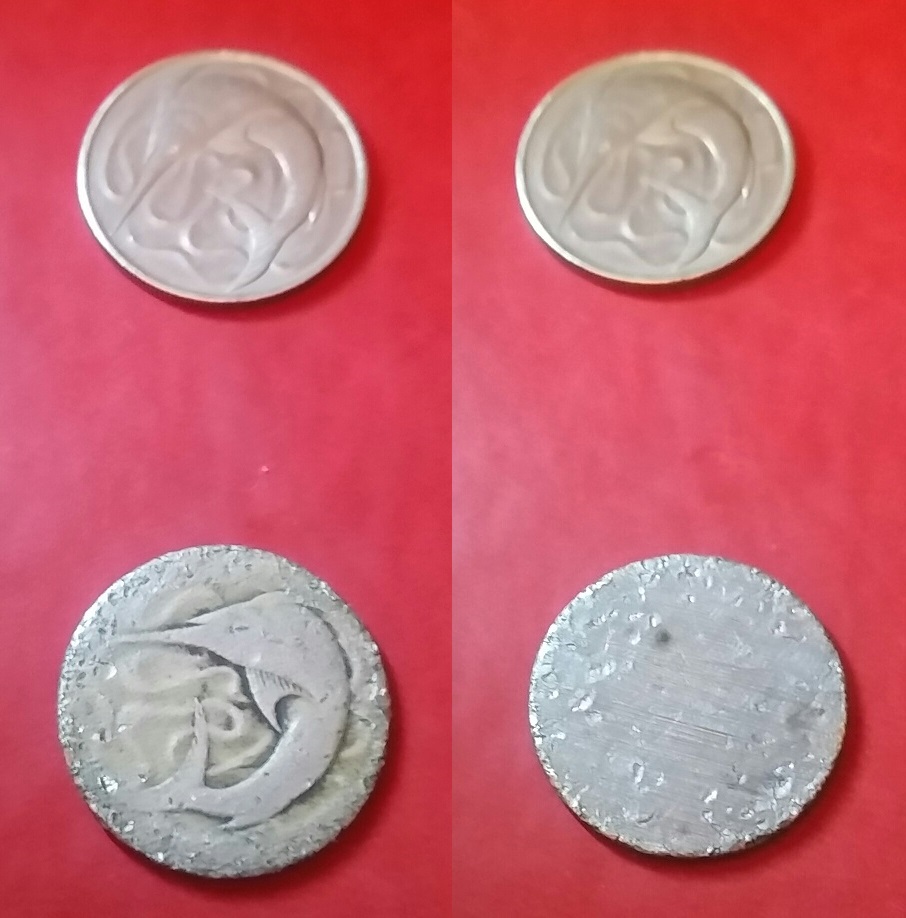
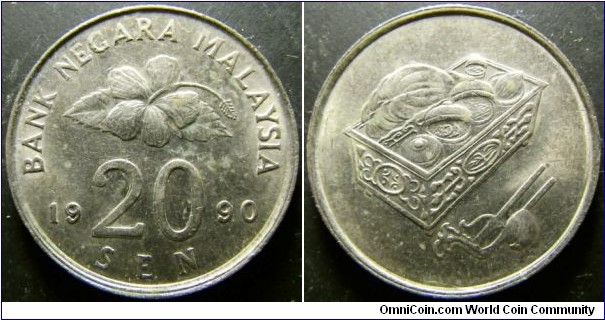
While sorting through some Singapore coins, I came across a 20 cent coin (attached). The obverse was oddly etched, with the rim completely gone. Even the vertical lines on the edge were etched.
My first thought was that someone had purposely damaged the coin.
However, when I flipped to the reverse side, everything was missing. It looked like only one side of the blank was struck and the reverse side etched around the rim area with a lot of scratches.
Blanks made with precious metals and are smooth and polished. As this is a pre-1986 circulated 20 cent coin, its composition is copper-nickel.
So, my first question is, can anyone send me a picture of a pre-1986 blank?
The damage on the reverse made me think it had been ground off. That may explain the reverse side, but not the etching on both the obverse and reverse. However, because the etching around the reverse side rim area was not scratched, the scratching must have occurred before the etching.
Also, if the reverse side was ground off, there should be a change in weight and thickness. My scale doesn't show gram decimal amounts, the normal weight of a pre-1986 circulated 20 cent coin and this funky 20 cent piece are the same.
Dimensionally, the thickness of funky coin is only slightly thinner due to the missing rim on the obverse. This thickness combined with the amount required to grind off the reverse rim and all details would make the coin much skinnier than it is.
Could this have all happened at the mint? If not, what would cause this type of damage? Any thoughts?
Lastly, if this is a minting error, how would you value this coin?
Keith












 Posted 03/31/2016 07:14 am