| Author |
 Replies: 8 / Views: 1,865 Replies: 8 / Views: 1,865 |
|
|
Pillar of the Community
United States
4883 Posts |
Bought from an extremely reputable dealer for a very modest price. A lot going on with it, though. Weight's fine at 26.95 grams, but the diameter is irregular, varying from 39.7 all the way up to 40.2 mm. There are the expected edge pattern overlaps at the "8" in the date and also 180° from that point, but there's also an odd section starting around the "T" in "Gratia" and terminating about at the dot following the date. Other things I note include the small dots above the left pillar (giving the impression of a smokestack), a die crack through the dot adjacent to the mint mark, a disruption in the field between the "E" and he "X" in "REX", as well as another above the king's head. I suppose official manufacture could certainly be this sloppy in the late 18th century, but has anyone else seen one this "off" in so many respects and have it still be authentic? 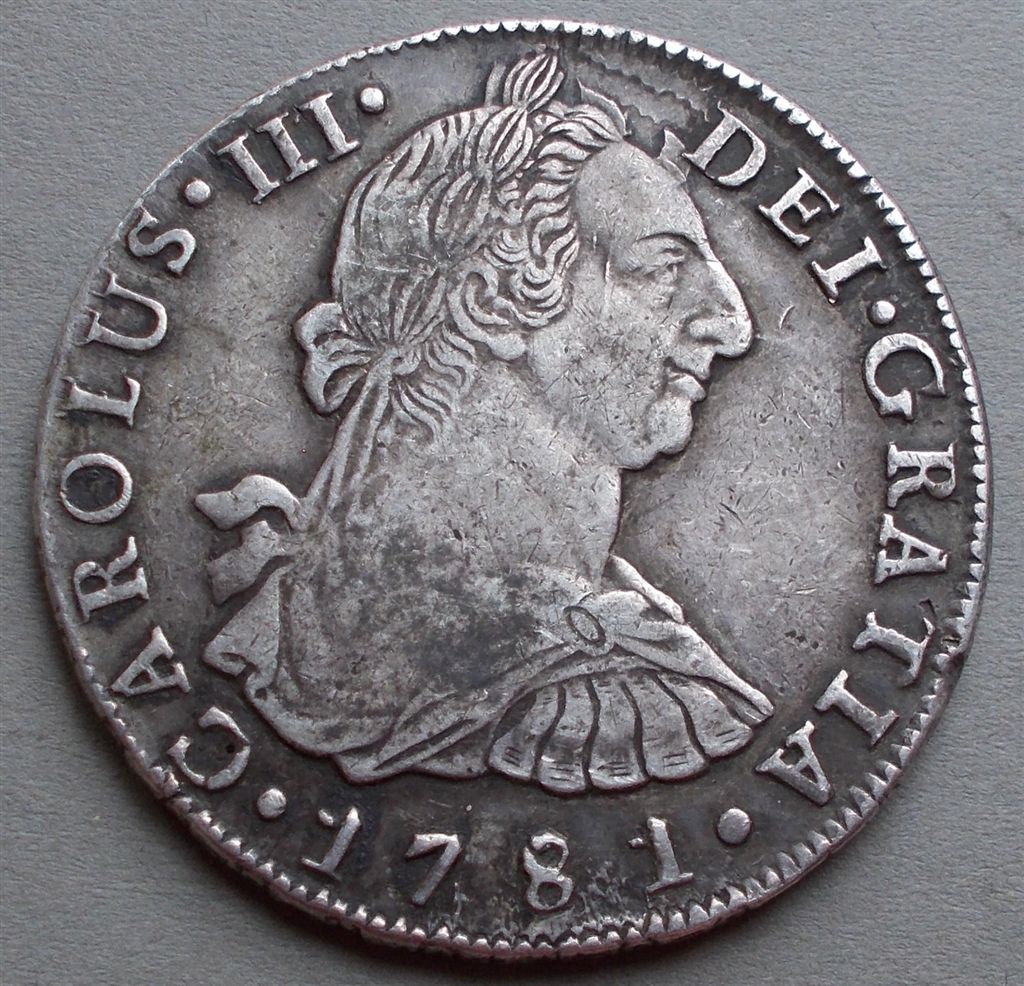 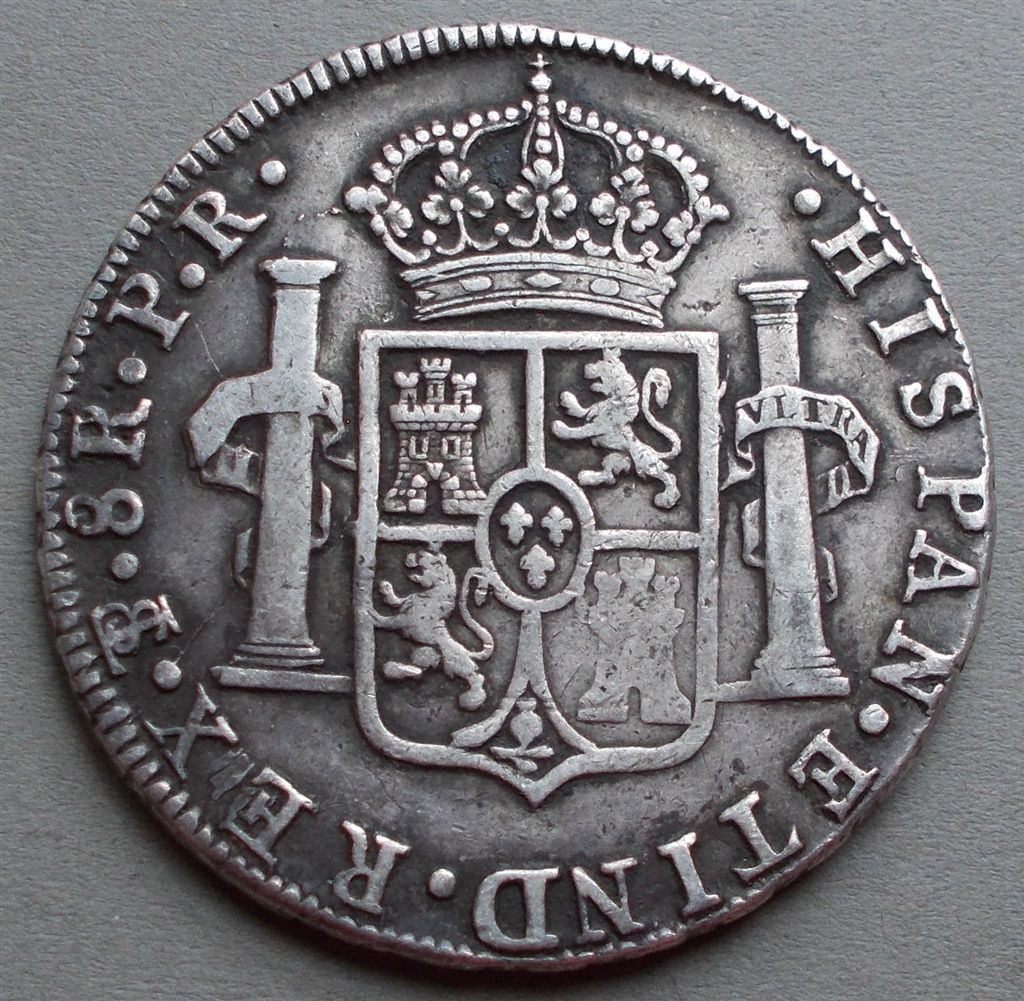 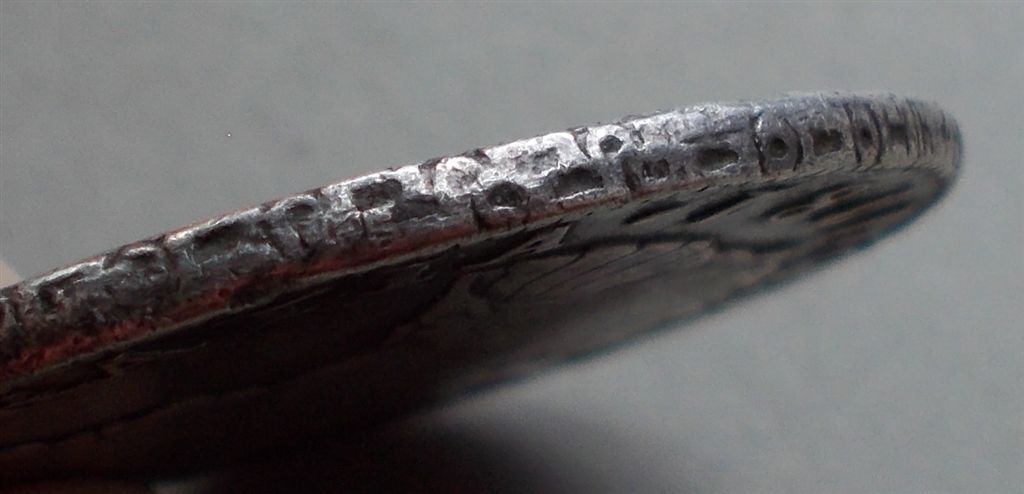 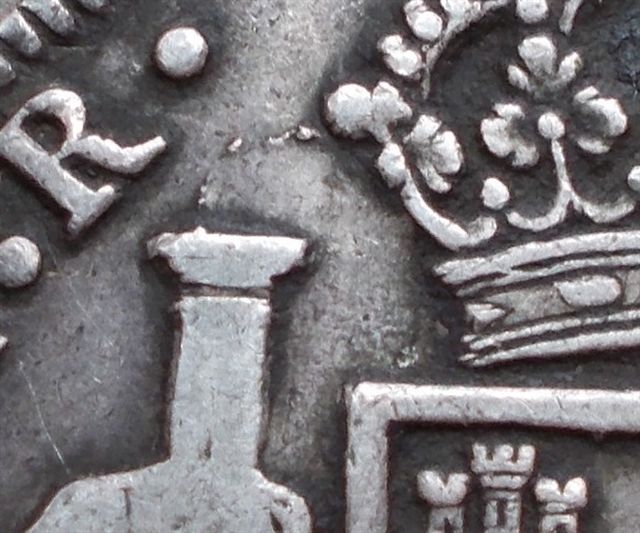 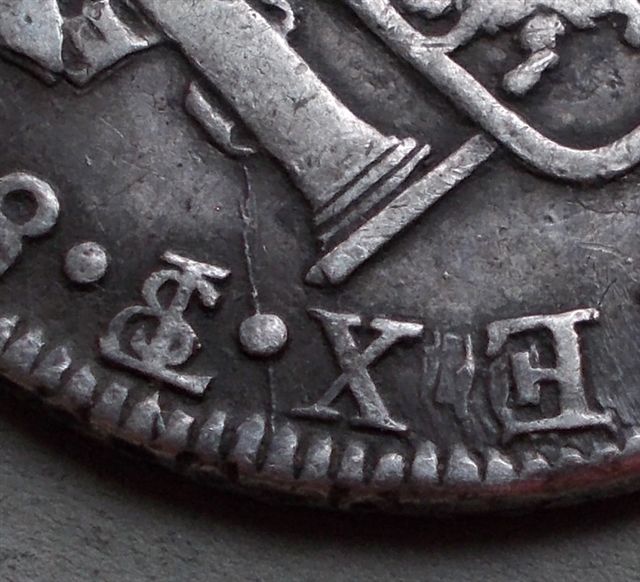 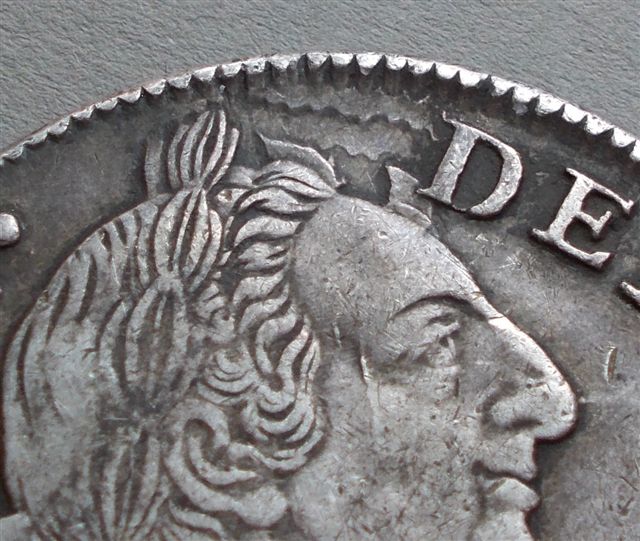 Colligo ergo sum
|
|
|
|
Pillar of the Community
United States
1156 Posts |
I was going to post my 1781 PTS PR 8 reales for comparison but on closer examination I have a broken castle counterfeit.
IMO, the subject coin has too many deviations from a regal issue for me to think it might be authentic. In addition to what has already been noted, I see problems with the shapes of many letters and wildly inconsistent wear/strike in the castles and with PLUS/VLTRA.
Your extremely reputable dealer needs a copy of swamperbob's book.
|
|
Pillar of the Community
 United States
4883 Posts |
I took a measurement of its specific gravity this evening, and came up with 10.28, which wouldn't seem to indicate a debased composition.
Colligo ergo sum
|
|
Pillar of the Community
United States
1156 Posts |
Because it has so many anomalies, you might want to ask colonialjohn for an XRF. I would be very interested in finding out the results.
|
|
Pillar of the Community
United States
4883 Posts |
I neglected to mention that this example also has a good ring, so I don't think it's been alloyed with Pb to bring up the weight.
Colligo ergo sum
|
|
Pillar of the Community
Hong Kong
1270 Posts |
The coin looks crude even worse than an average contemporary Bolivian 8R but the phyiscal data are all within the allowable limits. I have no specimen of such year. I can't be sure it is genuine or a contemporary counterfeit.
|
|
Pillar of the Community
United States
5362 Posts |
Interesting coin.
The feature above the King's head looks like a deep die clash mark. Such a heavy clash likely damaged the dies themselves. The cracks could have been a result of that alone. I do not see what I call soft die breaks on the coin.
The edge looks like it was partially edged twice? Perhaps because of an edge that was not square to the faces of the blank. That can happen when a very worn blanking punch is used. It could also point to a silver counterfeit but I have never seen one with the Potosi mint mark because there was no Chinese premium. This feature is very concerning since there is apparently no similar problem 180 degrees away.
The SG is close to genuine 890 fine - close enough that it may be genuine. Potosi was a mint the Chinese did not trust which is why there was no premium paid for Pts coins. The reason was that early assays by the US mint and other mints disclosed a failure to match standards.
Regarding an alloy with lead to increase the weight - that was not generally done by forgers of the time around 1800. The use of Pb, Sn (tin) and At (antimony) alloys for plugs was common in the 1890s but not before and not for entire coins because the surfaces were poor. Most forgers of the early 1800s interested in getting the correct weight simply added diameter or thickness to increase the volume and offset the low density. That was because SG testing was not common before 1830.
Regarding the punch set used. The Potosi set differs from the Mexico City matrix. I have not developed a theoretical set for the Charles III coins yet because they were not part of the Chinese trade coin issue. The castle punch (the one that is clear) is a very close match to the punch I consider to be genuine.
So while overall I see few problems - the one that remains - the edge is serious. I would likely resort to XRF (handheld should be OK). The trace needed is Arsenic not gold. The only problem with positive proof based on the trace contaminant is that arsenic and gold do not behave identically when alloyed with silver. The test is less than perfectly certain at this time. Additional testing may make the test more certain but right now I have less than complete faith in the result.
I would classify the coin as suspicious for now.
|
|
Pillar of the Community
United States
4883 Posts |
Quote:
This feature is very concerning since there is apparently no similar problem 180 degrees away. For whatever it's worth, here's what the edge looks like 180° from that clearly weird section. 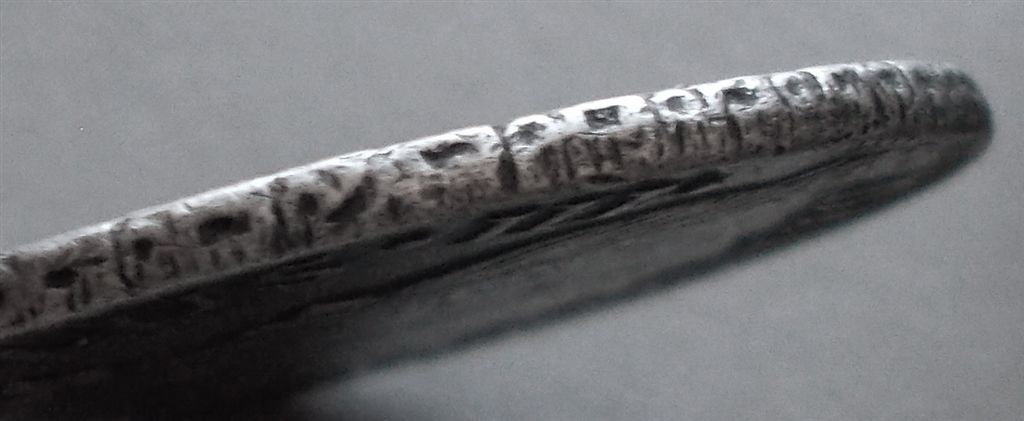 I'd judge here's some offset in the pattern there, too, but it's just not as obvious at first glance. Colligo ergo sum
|
|
Pillar of the Community
United States
5362 Posts |
The last picture changes my opinion to being more in favor of genuine than fake. The coin does appear to have 4 laps - these two long laps could represent partial passes back and forth caused by a sloped edge; and the original opposed pair of shorter laps that you spoke about. The doubled pass (the long lap) obliterates the edge leaving no other design trace so I would propose it happened last.
You mentioned initially that the coin was 0.5mm out of round. That is actually not very far out of round, I have seen much worse.
I wonder if Potosi had adopted the version of the casting machine (edge mill) that used a spring to maintain the grip as early as 1781? Spain and France were not really allies at that time so technological innovations may have been slow to pass from France to Spain. Confirmation would require a search of local mint records and the search might not yield such a technical detail. The simplest and earliest Castang apparatus relied only on a grip that is created by the operator adjusting the distance between the dies manually. This set distance was fixed rigidly. Later versions had a spring that would maintain a high level of compression through slight irregularities in diameter without manually adjusting the gap. A 0.5mm variation is rather minimal and should have been taken care of automatically.
If, however, there was no automatic method in place the operator would need to adjust the gap slightly to cut the edge at a uniform depth. As the operator turns the crank the loss of pressure should have been felt as an easing of the effort required to turn the crank - the operator would then be able to close the gap and continue until the pressure increased (at which point he could back it off). This of course would be frustrating if all the blanks were out of round. So if the operator simply let it go he may have produced a section with a very weak edge.
This would be even more likely in the case of a blank with an edge that is not cut square to the faces of the coin. If the coin was even more out of round before edging due to fins on one side of the blank left by a dull (worn) blanking press, then the edge dies may possibly have lost partial contact at the narrow section causing a very poor partial edge pattern to form.
It is within the realm of possibility that the planchet may have been inserted a second time just before the anomaly and cranked part way around to recut the weak spot then backed out. This would produce an elongated overlap on opposite sides of the coin and they would be over the original defective edge run.
That is about the only thing I can see that would justify what I am seeing. It would certainly be an anomaly. It is definitely NOT something you see often.
So, since it could happen and since the coin displays the features I would expect to see, I conclude that the edge does not necessarily condemn the coin in this case. We are speaking of a four overlap coin and 4 laps are possible.
I would now move the coin to a likely genuine status pending alloy confirmation.
|
| |
Replies: 8 / Views: 1,865 |
|




 Posted 04/06/2016 11:17 pm





