| Author |
 Replies: 15 / Views: 2,375 Replies: 15 / Views: 2,375 |
|
|
Pillar of the Community
United States
2643 Posts |
|
|
|
|
Moderator
 United States
23731 Posts |
Wow! that's a lot of coins. Would be interesting to find out what the types are and hope many gold, silver, and bronze coins were found.
|
|
Pillar of the Community
 United States
2643 Posts |
From the article: Quote:
The coins, experts revealed, were most probably never in circulation, as they show little evidence of wear and tear, while the containers were smaller than the ones usually used to transport wine and grain and seem specially designed to hold the money.
Experts think the coins may have been part of a tax collection or levies paid to the army. |
|
Moderator
Australia
16991 Posts |
When it makes the news on the far side of the world, you can be assured it's a pretty big hoard. The article on the ABC Australia website has pictures of the actual hoard. Don't say "infinitely" when you mean "very"; otherwise, you'll have no word left when you want to talk about something really infinite. - C. S. Lewis
|
|
Pillar of the Community
United States
711 Posts |
Great links / articles guys.
I'd love to sort through one of those jugs for my collection somehow.
It would be great if the museum sold off the bulk of the lot through some sort of publicly available auction.
|
|
Moderator
Australia
16991 Posts |
This is Spain we're talking about. Doesn't matter if the coins are as common as rocks, none will ever make it to market.
Don't say "infinitely" when you mean "very"; otherwise, you'll have no word left when you want to talk about something really infinite. - C. S. Lewis
|
|
Pillar of the Community
United States
616 Posts |
I'm not familiar with Spanish laws regarding antiquities. Do you mean they are considered state property?
If so 600kg of coins pretty much proves my belief that there's a difference between a handmade coin and a handmade art object.
These things will likely sit in a warehouse somewhere unappreciated.
|
|
Pillar of the Community
Norway
1358 Posts |
Now that is a very interesting find! I hope that some of the coins will be released for sale.
I somehow now feel the need to just buy a ticket to Spain and start digging...
|
|
Moderator
United States
34549 Posts |
As a mental exercize, I wonder if our Roman coin experts can come up with an estimate of the number of coins in the hoard. If a typical UNC Roman bronze, regardles of silvering, weighs 2 g, then one kilo would have 500 coins and this hoard would comprise roughly 30,000 coins. Can anyone improve on my math?
"If you climb a good tree, you get a push."
-----Ghanaian proverb
"The danger we all now face is distinguishing between what is authentic and what is performed."
-----King Adz
|
|
Valued Member
United States
234 Posts |
I would bet they included the weight of the jugs they were in plus the coins look clumped together with so after cleaning the total weight should be much less. In one photo I saw it looked like some jugs were unbroken so maybe the coins are still inside.
|
|
Moderator
Australia
16991 Posts |
Quote:
I'm not familiar with Spanish laws regarding antiquities. Do you mean they are considered state property? It depends on how they were discovered. Under Spanish law, any artifacts more than 100 years old (including coins) are considered part of "Spanish Historical Heritage". Such items found "as a result of excavations, earth moving or works of any type or by chance" are considered state property. Any action to claim such objects and/or take them out of the country must take place under these Historical Heritage laws, which involve a long and complex process of examinations and inquiries - a process which involves a whole bunch of state-employed archaeologists who are generally hostile to the entire concept of foreigners coming in and buying Spanish artifacts to take away with them. Anyone interested can download a copy of the English version of the law by clicking here. Quote:
I somehow now feel the need to just buy a ticket to Spain and start digging... Please don't, unless the prospect of jail time in a Spanish prison appeals to you. Archaeological excavations are illegal without a permit and if you're one of those stinkin' foreigner coin collectors, you can forget about getting a permit. Owning a metal detector isn't illegal, but it too is shrouded in so many permit restrictions it might as well be. Don't say "infinitely" when you mean "very"; otherwise, you'll have no word left when you want to talk about something really infinite. - C. S. Lewis
|
|
Pillar of the Community
United States
6130 Posts |
Very interesting to find such a huge stash of what is essentially pocket change. Since the coins were "homogenous" I think the hypothesis that the coins were an official shipment of soldier's pay or similar is probably correct. More than likely, the caravan was either robbed and the goods buried for retrieval when the heat died down, or the caravan was "robbed" and the coins buried for later retrieval when the heat died down. Either way, the mastermind was clearly caught, or else died before being able to cash in his whole retirement fund. Fascinating stuff. And yes, it does seem that Spain is a gold mine for old coins. I have seen more than a few Spanish sellers on ebay who peddle mind boggling volumes of Roman, medieval, and "pirate treasure" era (1500-1850) coins. I have bought a few such lots, which cobtained some pretty nice coins. |
|
New Member
United States
28 Posts |
If they are considered state property, will they eventually hit the market? I'm curious if a find of this proportion will drive prices/values down. Really cool either way, it would be a dream to stumble on a find like this. http://www.msn.com/en-us/news/world...r?li=BBnb7Kz |
|
Pillar of the Community
United States
949 Posts |
I hope they will be smart and get this hoard fully recorded and imaged before breaking it up. We have had discussions here that needed to be informed about the circulation pattern of coins for this period, but all too often previous hoard records have fallen short of the needed data. Now they have a chance to get it straight. But the fact that this hoard was recovered in our time, means that this coinage was not available to the people for whom it was originally intended (probably military garrisoned in Hispania). This helps illustrate how local currency shortages came about; i.e. the kind of local crisis that impelled local production of an "emergency" coinage. That, I think, is the motivation behind at least some of the imitative coins we see. But the composition of this hoard would do a lot to help clarify that, depending on the presence or absence of imitatives. On the presumption that this hoard was more "cause" than "effect" I'm guessing there will not be many imitatives in it. I hope someday they will let us know, and keep it intact until they do. ------------- Added: For an indication that currency crisis was not as severe in Spain as elsewhere, see https://books.google.com/books?id=z...oard&f=falseScroll up and down for a bigger piece of that story. Edited by lrbguy
04/29/2016 11:11 am
|
|
Pillar of the Community
United States
6130 Posts |
The article states that the coins were "homogenous" and "remarkably well preserved" indicating that this was probably a shipment from the Mint of brand new coins. As such, it would probably give us about as much insight into the circulation coins of the time as a heap of brand new straps of dollar bills.
I think what would be more valuable would be an in depth study of the coins to group them based on die pairs. Depending on the condition of the coins, this stash might let us know how many dies were consumed in the making of this shipment, the amount of variability between each die, how common errors were, and methods used to repair worn out or broken dies.
Sadly, I fear that the Spanish government will not be willing to fork over the kind of money required for that sort of a study, and will likely give a few hundred to some museums, then stash the rest in storage.
|
|
Pillar of the Community
United States
949 Posts |
Now that I have seen closeups of a few of the coins I have to revise my comments from earlier. Despite the Washinton Post caption estimating late 4th century, the pic I saw was showing folles of the First Tetrarchy in late third and early 4th centuries. I saw a GENIO POPVLI ROMANI reverse from the mint at Ticinum which corresponds to RIC VI Ticinum 31 or 32 for one of the four Diocletian, Maximian, Constantius I or Galerius from 296-297. Mint mark PT: 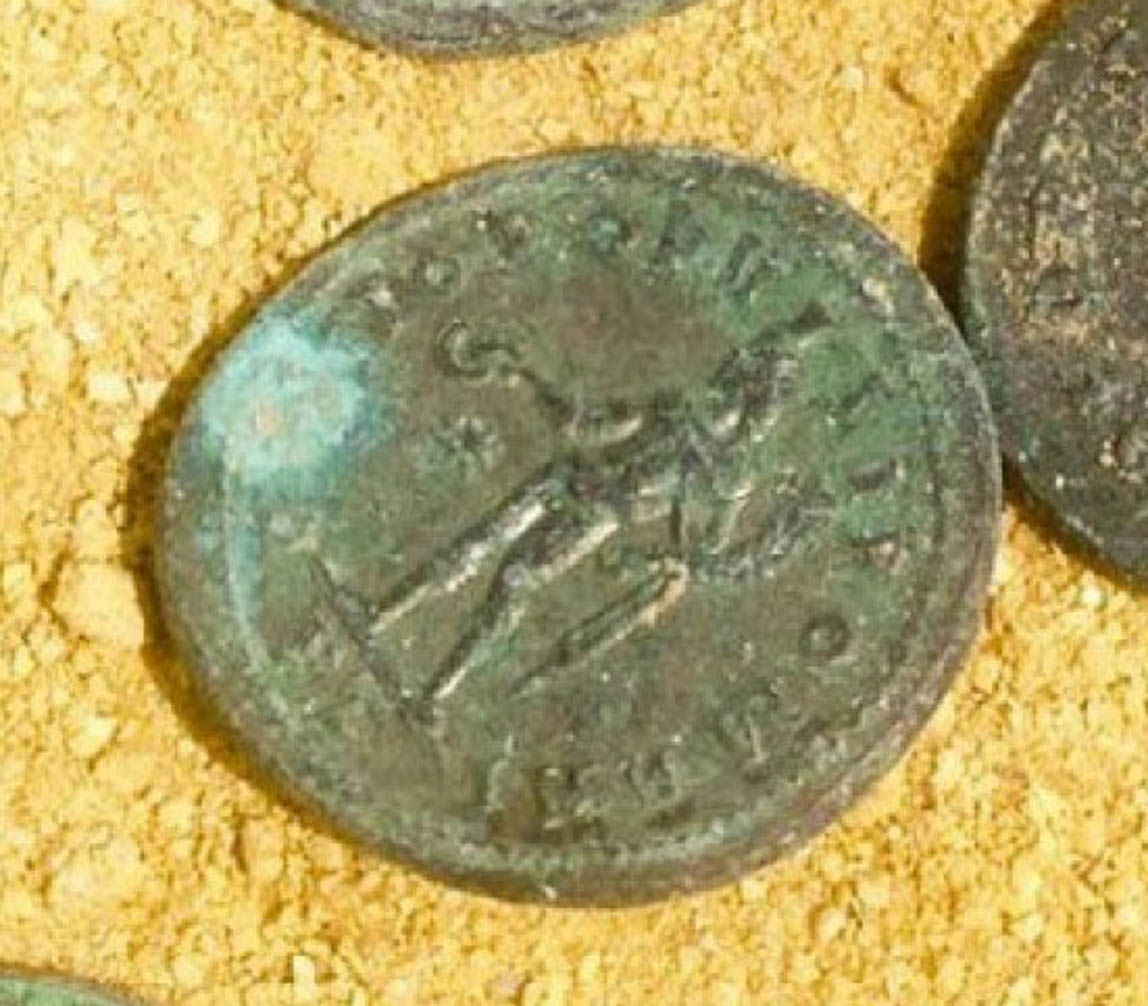 Not far from it I saw a SACRA MONET AVGG ET CAESS NOSTR reverse corresponding to RIC VI Ticinum 47 or 48 for the same group. Mint mark is less certain but appears to be ST: 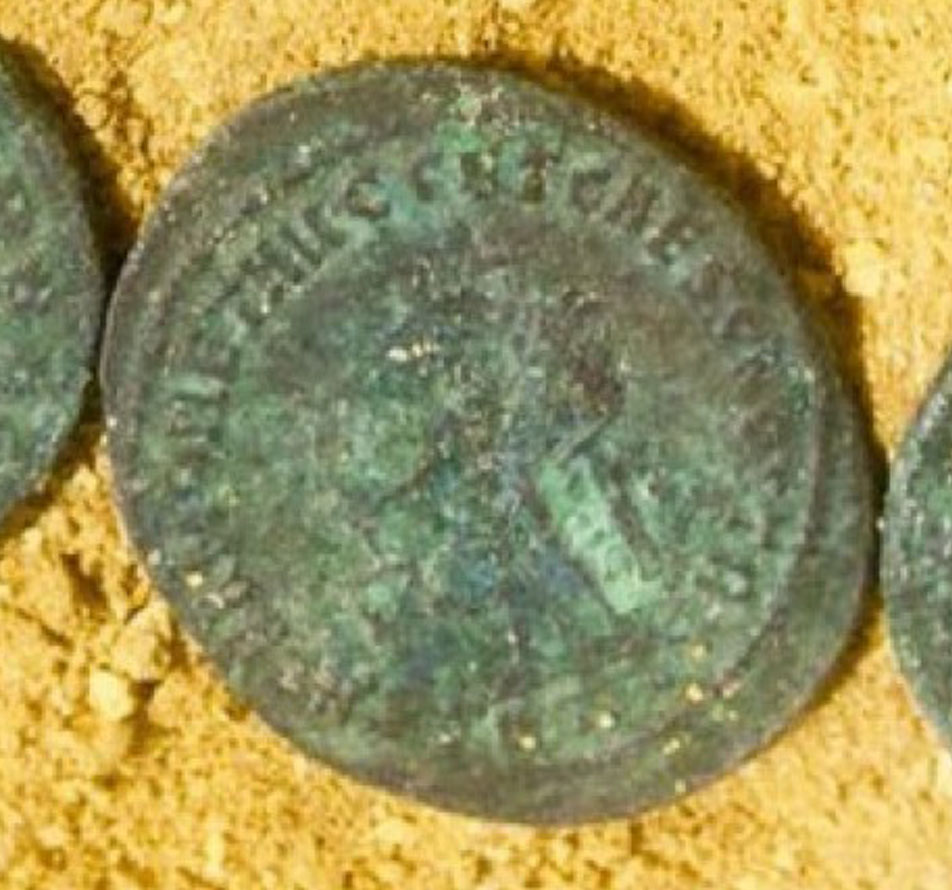 Most of the obverses I saw appeared to be for the Augusti, mostly Maximian. My sample is too small, but these coins have some size to them. I am not aware that there was much evidence of local imitation for these large bronze coins so soon after the Diocletianic reform of 294. The range of dates for these issues may be close enough that they could have been sent directly from the mint (at Ticinum) but I would not bet on it. However, the fact that these are so soon after the reform suggests that these were a paymasters horde for the military, since these coins would have been good currency at the time. They were not merely pocket change. Here's one of the Washington Post pics, I was looking at. 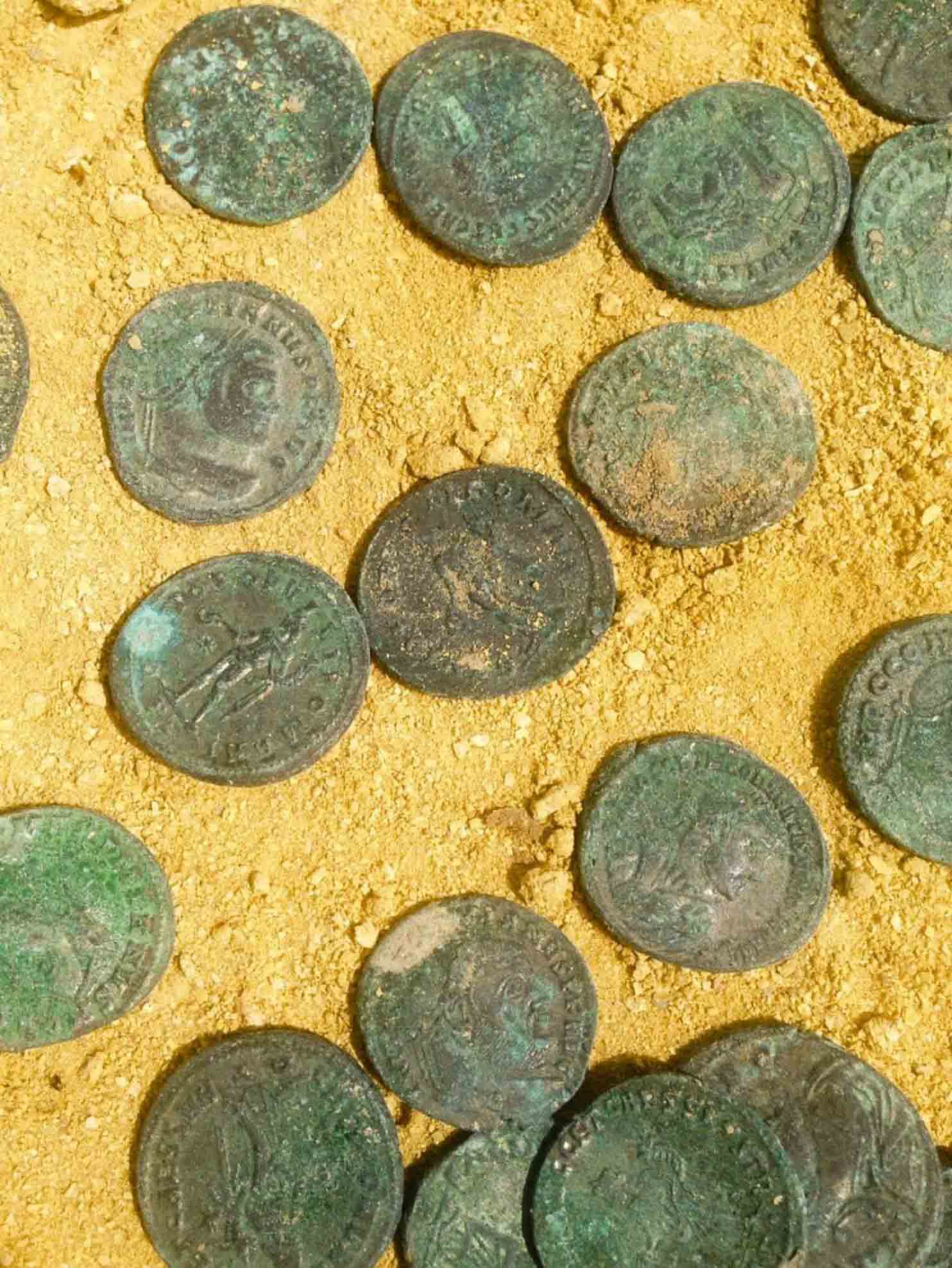 Edited by lrbguy
04/29/2016 5:39 pm
|
| |
Replies: 15 / Views: 2,375 |
|










 Posted 04/28/2016 4:25 pm


