| Author |
 Replies: 12 / Views: 3,219 Replies: 12 / Views: 3,219 |
|
|
New Member
United States
2 Posts |
Hello,
Can someone please explain "toning" to me? I see coins that are "toned" but are graded high and usually expensive. How can I tell what is "good toning" from bad. I thought the shiny coins that look like they were just minted would be the best ones to try to get. Thanks Ron
|
|
|
|
Pillar of the Community
United States
717 Posts |
Toning is the coins metal reacting to it's environment. Some metals react more easily than others, silver and copper for example. If you have the opportunity to see an original mint set from the 50's, they were placed in cardboard holders that caused the coins to tone or tarnish. Sometimes they just turn dark, other times they are colorful. Some collectors really like the colorful toning, others like their coins as original as possible (blast white for silver, red for copper). Here is a silver dime that has started to tarnish, not real attractive, but not really ugly either. 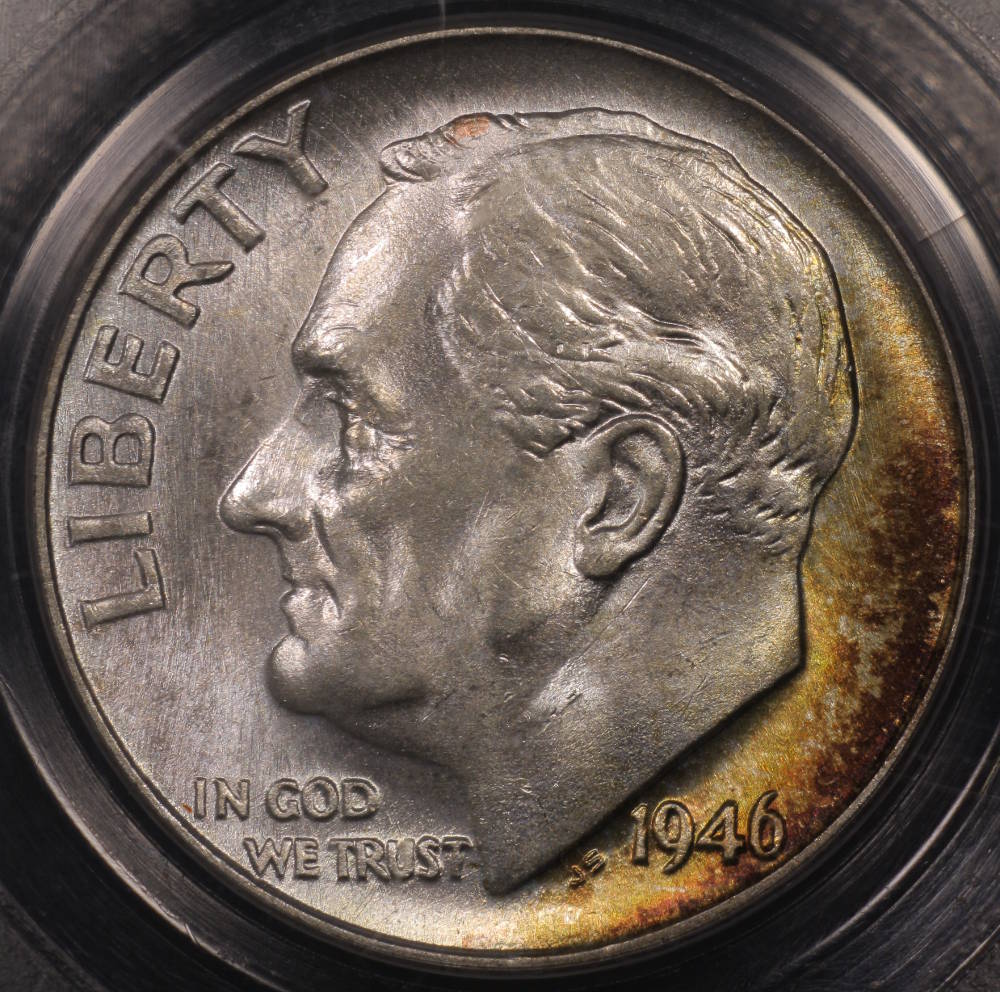 Here is another silver dime I have that tarnished with a bit more color, many will pay a premium for coins like this, but if you like blast white, you won't be worried about coins like this! 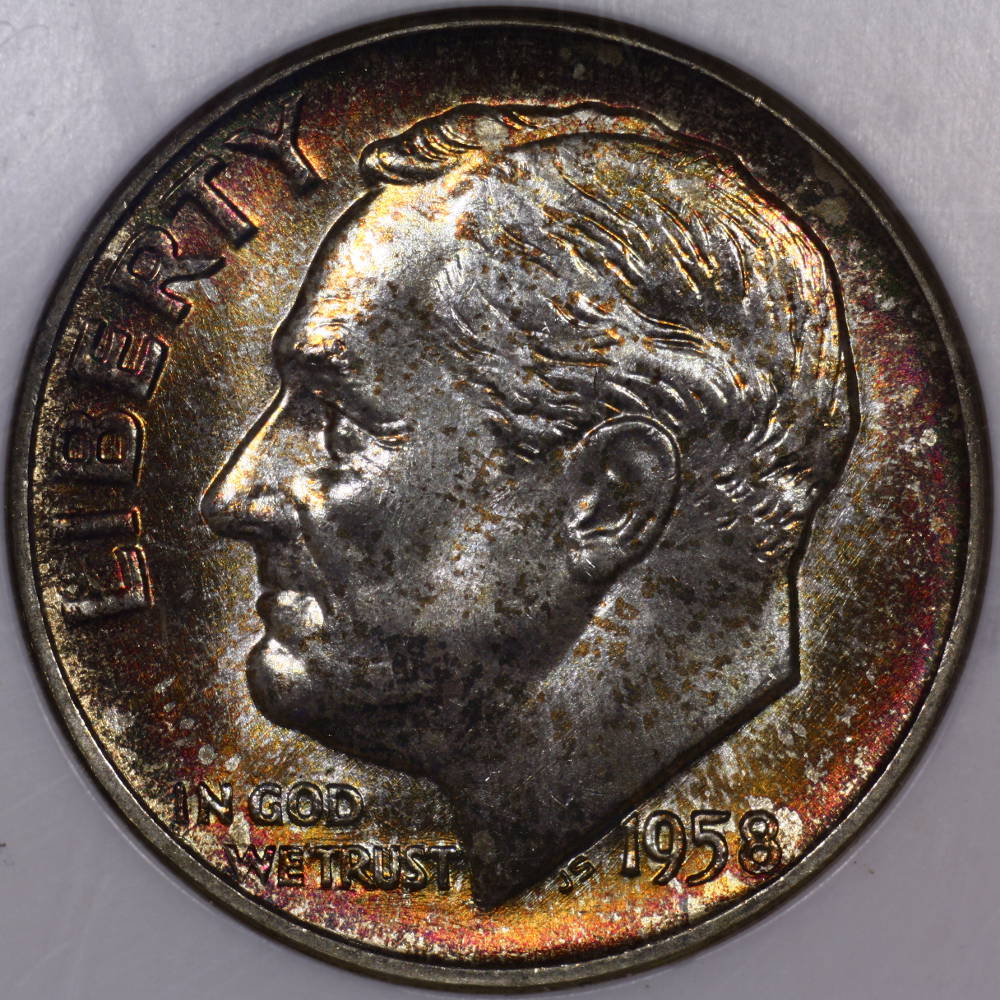 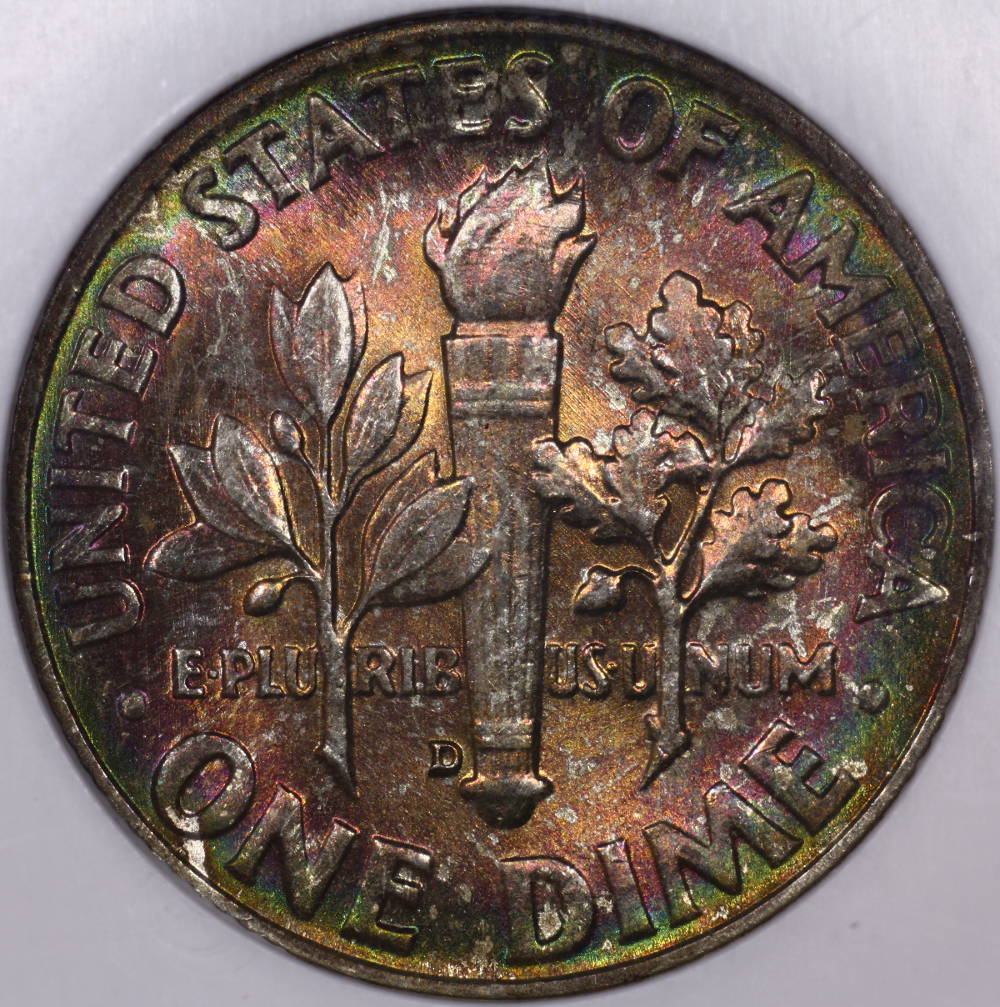 Eventually you will decide your interests, what you want to collect, and if you want toned coins in your collection, or even if you want all of them to match as much as possible (all toned, or all blast white, etc.) You get to decide what you enjoy to collect! |
|
Pillar of the Community
United States
717 Posts |
I would like to add that some people "artificially tone" coins (called AT) by using heat or chemicals, or both. It is very difficult to make these look natural, and after looking at a lot of coins, you will begin to tell the difference more easily.
I have heard a definition of AT as any process which intentionally accelerates the toning process, but some people will put coins in cardboard, and place them on a windowsill (inside) for a year or more. Is that AT? It is the same process that my dime above went through, but it was intentional...and an attempt to accelerate the process, but if the end result looks the same?
|
|
Rest in Peace
United States
10625 Posts |
Toning is a matter preference. Some people prefer blast white for silver or red for copper while others prefer coins to be colorful tones. Check out this website for some insight on the natural toning process of silver coins, specifically Morgan dollars in this case. http://www.jhonecash.com/coins/tonedmorgans.asp |
|
Moderator
 United States
196180 Posts |
|
|
Pillar of the Community
United States
992 Posts |
Buy the coin, not the slab.
Buy the coin, not the story.
Buy the coin, not the toning.
|
|
Pillar of the Community
United States
4509 Posts |
Toning can impact the grading of a coin. If the toning is colorful with strong eye appeal it can bump up the grade. If the coin has dark unattractive toning, the grade could be lowered. Some toning is neutral in the grading process, for example coins that a single color light toning that is a common color typically will not change the grade.
Attractive multi color toned coins often will sell at a premium.
Edited by Slider23
05/04/2016 12:14 pm
|
|
Pillar of the Community
Canada
1747 Posts |
when the coin is "Graded" either by a TPG or by a some individual, the grade reflects the amount of wear or damage to the physical coin. so you could have a MS-65 or higher silver coin, but have some serious awful toning. it is still an MS65 coin. What you are more asking about is what people here call eye appeal, some people like the way toning adds color to a coin, and can have a rainbow effect, some don't. You will need to figure out what you personally like. However, the amount of people who would buy a toned coin is a smaller subset of the coin collecting community, so selling the coin in the future may be more difficult. |
|
Moderator
United States
196180 Posts |
I agree, toning only affects eye appeal and not the technical grade.
|
|
Bedrock of the Community
United States
20753 Posts |
 As to what toning is. Just remember that all metals react with other stuff. Even metals like Gold that people think are safe from such reactions will react with certain gasses. By all this I mean the metal of a coin will react with certain gasses depending on what the metal is and what the reactant gasses are. For example Copper reacts with gasses like Sulfur Oxides. And by reacting I mean metals become tarnished, stained, corroded, toned, etc. depending on what you call it. Iron, for instance, reacts with Oxygen and the end results is called Rust. Rust is a form of Toning or Corroding or Tarnishing, etc. With coins some people like coins with metals that have reacted with something to form what they call Toning. I prefer a coin to look like it was just minted. |
|
New Member
 United States
2 Posts |
Thank you to everyone that answered about toning. I see there is a lot to learn about coin collecting. I had assumed that the most valuable coins were the ones that were bright and shiny. I have seen some toned coins that were pretty, but I think I like the shiny ones best. However I have heard that if you clean a coin, you have ruined it. As I said, I am not really doing this to make a profit, of course if I found something that I could sell and live happily ever after I would not mind that :-) but the main thing is to have something to do that is enjoyable and that I can pass on to my daughter. Thanks again.
|
|
Pillar of the Community
 United States
5828 Posts |
One more thing to add: Most coins that are blast white from the 1800s have been cleaned (with gold and some others being the exeption, and possibly well stored proofs and Morgan dollars). I, personally, prefer original surfaces even it that means its toned. just my 2 cents. By the way, have you cleaned any of your coins? |
|
Pillar of the Community
United States
2252 Posts |
Quote:
Buy the coin, not the slab.
Buy the coin, not the story.
Buy the coin, not the toning. And your point is... ? Edited by jpsned
05/07/2016 2:04 pm
|
| |
Replies: 12 / Views: 3,219 |
|










 Posted 05/04/2016 12:29 am


