| Author |
 Replies: 12 / Views: 1,719 Replies: 12 / Views: 1,719 |
|
|
Pillar of the Community
United States
4883 Posts |
The previious owner of this specimen had it as having been struck at Antioch, which I believe to be incorrect. I'm seeing it instead as RIC 27b (Sear 8918). What prompted me to acquire this was the very handsomely rendered portrait. This'd seem to be another instance in which the reverse die is somewhat more used up than the obverse one. 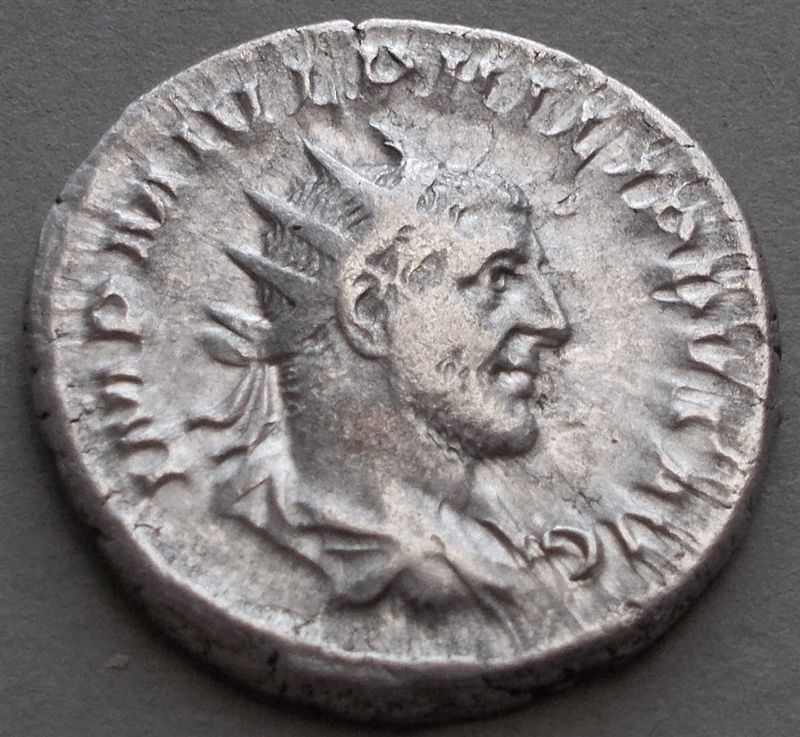 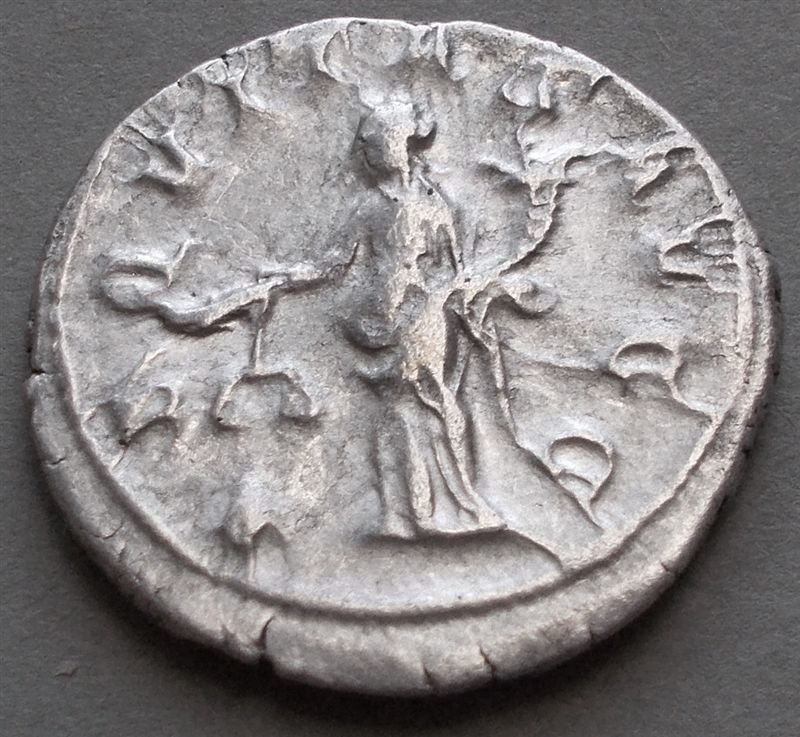 Colligo ergo sum
Edited by Lucky Cuss
05/04/2016 2:02 pm
|
|
|
|
Pillar of the Community
United States
7067 Posts |
Nice one! Handsomely rendered portrait indeed.  |
|
Pillar of the Community
United States
6130 Posts |
 Philip I had quite a distinctive jaw, which is captured well here. It does raise questions as to whether he was ancient Rome's only "non-white" emperors, as he was both born in the middle east, and had a very distinctive face, as portrayed in his coins and statues. It really is a shame that so many of these silvers were so poorly struck with worn out dies, but I agree that the portrait must have been freshly sunk when this coin was struck. I do feel sorry for him--it appears that he was not quite "strong" enough to deal with the events of his reign, and was often pressed into action by those around him. He apparently wanted to surrender to Decius and retreat from public view, but his soldiers pressured him into battle, and then apparently killed him to prove their allegiance to Decius. |
|
Moderator
 United States
23731 Posts |
|
|
Pillar of the Community
Belgium
1194 Posts |
very nice coin . With the antoniniani , there are often problems with the legends and the reverse , often struck very softly . albert
|
|
Pillar of the Community
United States
5155 Posts |
I have a little set with him in it. 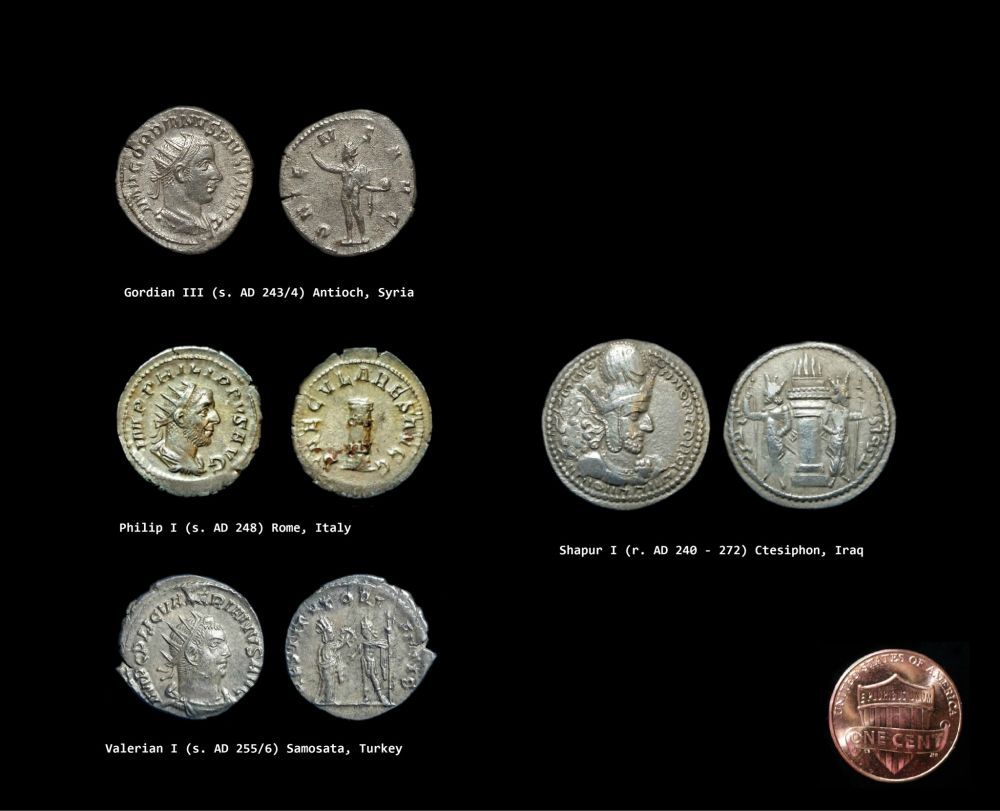 |
|
Pillar of the Community
United States
949 Posts |
Quote:
This'd seem to be another instance in which the reverse die is somewhat more used up than the obverse one.
Pleasant smile on the obverse. For the reverse what makes you think its die wear? |
|
Pillar of the Community
 United States
4883 Posts |
Quote:
Pleasant smile on the obverse. A quite benign countenance, to be sure. Effectively conveys benevolence which would be very much in keeping with the Aequitas reverse. Quote:
For the reverse what makes you think its die wear? The indistinct aspects of the central device, coupled with particularly prominent flow lines. Colligo ergo sum
|
|
Pillar of the Community
United States
949 Posts |
Quote:
The indistinct aspects of the central device, coupled with particularly prominent flow lines. If we assume these problems are the result of die wear, we run into a little problem. This kind of degraded image occurs on one side or the other for most of the antonniniani produced from 240-260 and then seems to get better during the reign of Gallienus. Why so much more "die wear" during this period than at other times? Could these problems be associated with other causes? |
|
Pillar of the Community
United States
4883 Posts |
Quote:
This kind of degraded image occurs on one side or the other for most of the antonniniani produced from 240-260 and then seems to get better during the reign of Gallienus. Why so much more "die wear" during this period than at other times?
Could these problems be associated with other causes? Well, feel free to suggest any such. The same question posed questioning die wear as the the culprit could be asked of other conjectural reasons as well. If it instead was a matter of, say, striking technique, then why did that problem get suddenly rectified only later on? It generally seems to be the reverse that is lacking. The reverse designs were somewhat generic in this era and could easily have been used for one emperor and then his successor, too. That could result in their usage being stretched to the limit in many cases. Or perhaps there was a cultural or bureaucratic bias that went against producing degraded images of the emperor, but not of personifications, or even deities. Thus the obverse dies might've been quite deliberately replaced more often. We don't even know what we call an "antoninianus" was actually called by the Romans. So delving into the minutae of the production process is a tough proposition. In many cases, I see what, were I to assess a more modern coin presenting similarly, looks like a strike with a worn die. So based upon the physical characteristics that support that conjecture, and applying the principle of Occam's razor ( lex parsimoniae), I'll go with that explanation for the present. Colligo ergo sum
|
|
New Member
United States
28 Posts |
The story behind Philip is neat to me, that can be the most attractive part of coin sometimes in my opinion. Nice piece!
|
|
Pillar of the Community
United States
4883 Posts |
Just to show that the above discussion and theory regarding the observed disparities between the strike on one side versus the other isn't conveniently confirmed by a single paradigm, here's another example of a Philip I antoninianus that atypically goes very much the other way - the obverse has all sorts of flow lines and lack of portrait detail, while the reverse appears to have been struck with a totally fresh die. 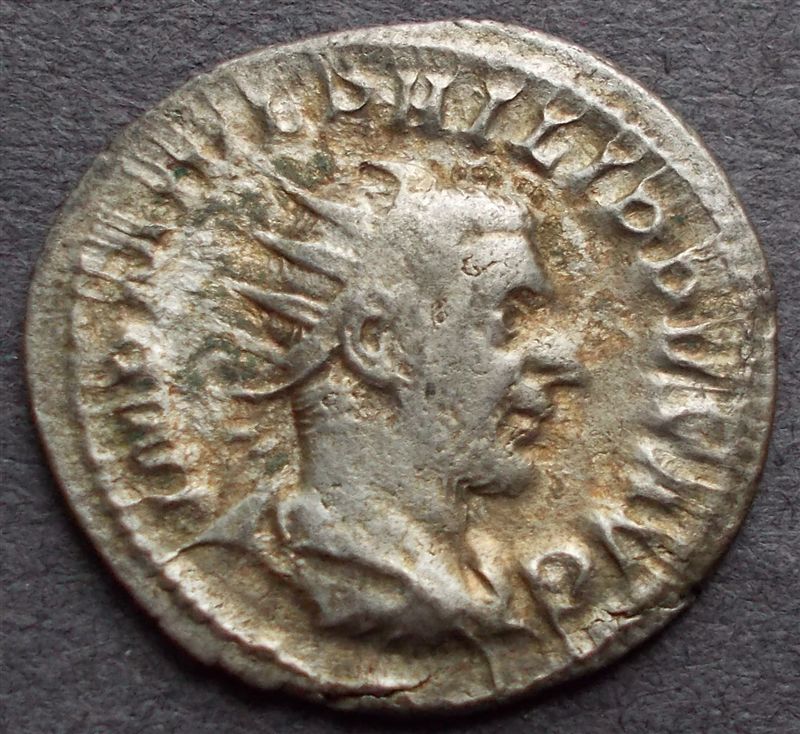 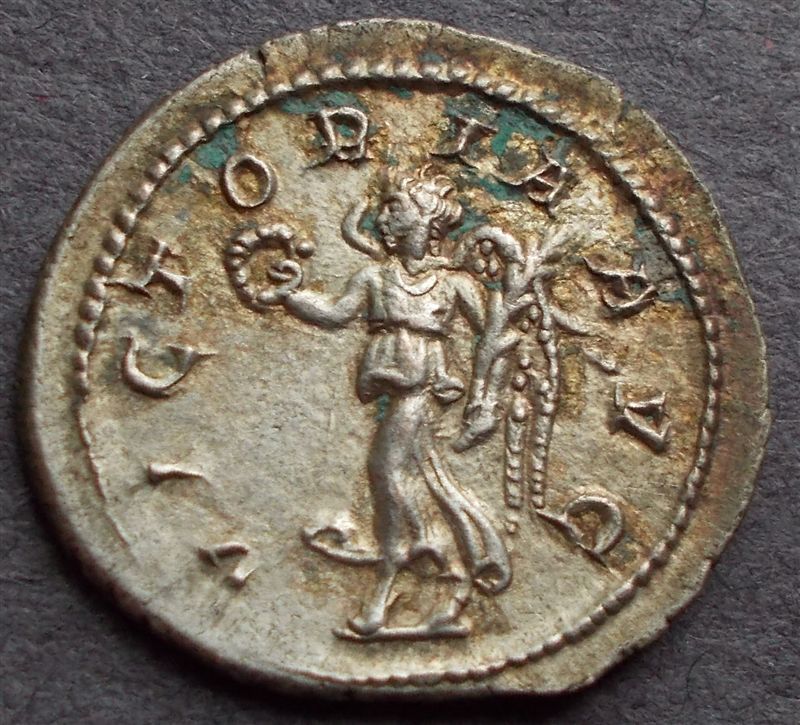 Colligo ergo sum
|
|
Pillar of the Community
United States
949 Posts |
Quote:
In many cases, I see what, were I to assess a more modern coin presenting similarly, looks like a strike with a worn die. Non sequitor. Tracking from modern technology back to the ancients is not advisable, unless you can show parallels. Applying scientific principles is a good course, and that is what this will call for. Not guesswork; logic. Something was different in the period 240-260 from what it had been before and what it became later, and this had an impact on how the minting technology of the time was able to work. The change was driven by inflation. What changed was the alloy of the metal used to make this denomination - the double denarius. The silver content dropped and they added other materials, such as tin, to keep the general appearance looking silvery. Eventually it became potin. With this mix it was harder to get a good strike with the amount of force and at the temperatures they had been used to using. (You can explore the physical effect yourself with bread dough of different consistencies and temperatures.) A metallurgist could tell you why their mix was "spongy" in the strike, but generally only the face in the anvil came out at all well. Since there is some variation in the quality throughout the period, it is evident that they tried various techniques to fix the problem, some of which worked marginally better than others. However, it was not until they switched to a bronze metallic core without silver or much tin in the mix (with a light coating of silver carefully weighed to keep up the tariff rate) that they were again able to get uniformly good strikes on both sides by normal striking methods. That they did in the days of Gallienus. --- Actually, they continued to look like heck until the coinage reform of Aurelian ten years later than I had said. So potin/billon reigned from 240-270 --- Of course, some of the time things worked out well. Here is an ant for Philip II in which both sides turned out well, and gave a coin that is the exception rather than the rule. 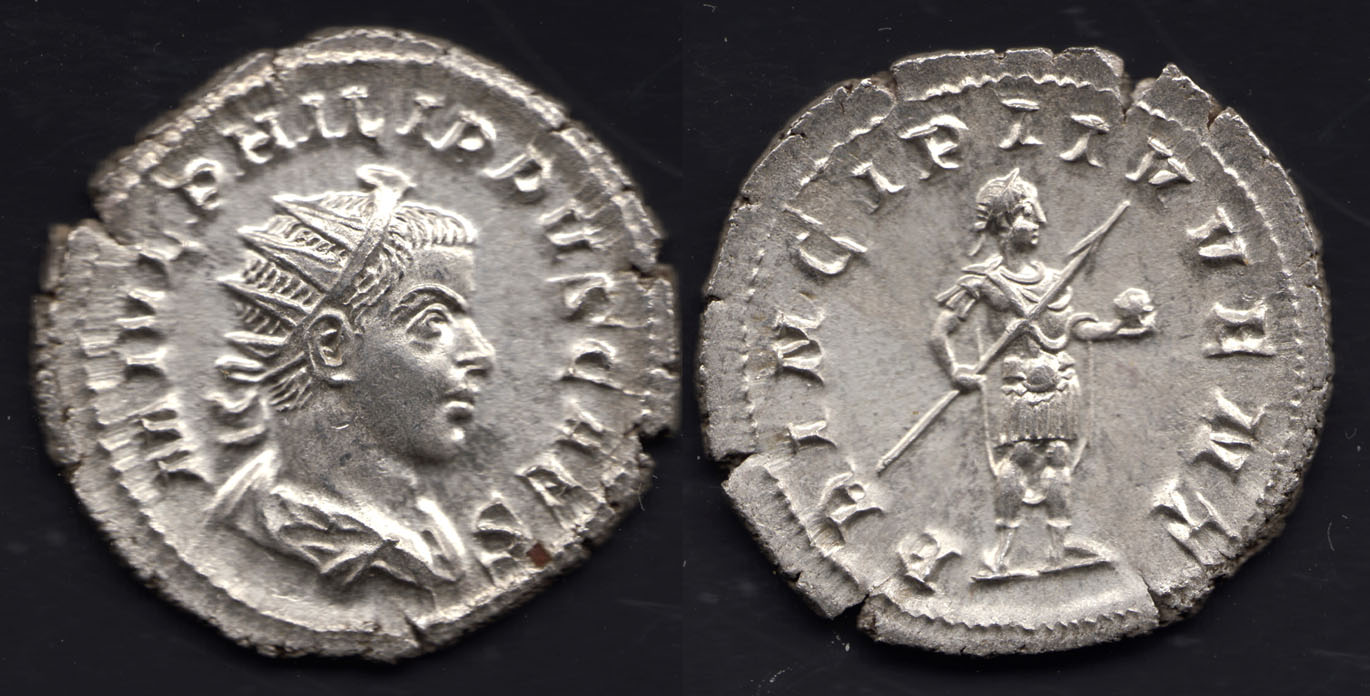 Wanna bet that for this coin the blank was a tad cooler than most prior to striking, and that the hammer came down a bit heavier? Edited by lrbguy
05/19/2016 6:10 pm
|
| |
Replies: 12 / Views: 1,719 |
|










 Posted 05/04/2016 12:20 pm


