|
This page may contain links that result in small commissions to keep this free site up and running.

Welcome Guest! Registering and/or logging in will remove the anchor (bottom) ads. It's Free!
To participate in the forum you must log in or register. | Author |
 Replies: 22 / Views: 6,527 Replies: 22 / Views: 6,527 |
|
Pillar of the Community

United States
4051 Posts |
I've been thinking recently about the requirements for imaging coins of different sizes, imaging variety details, etc and if there might be one lens that can do it all well. At first blush most would conclude "no way" but let's review the requirements before going there: Maximum aperture: most of the cameras we use have a DLA (Diffraction Limited Aperture) of around f7. Some newer high MP cameras have DLA of around f6, while older models are around f10. Apertures smaller than the DLA (larger f-number) begin to show blurring due to diffraction, but it's not really visible until at least one stop beyond the DLA, and even at 2 stops beyond might not be too objectionable. Thus a good "target" aperture is in the f8-f11 range, leaning toward the upper end if depth of field is needed, or at the lower end if maximum sharpness is desired. This is working (effective) aperture, so depends on the magnification by feff = finf * (M + 1) Imaging larger coins: magnification is lower for larger coins, so the effective aperture is larger, allowing you to stop the lens down to get more depth of field while still maintaining good sharpness. Shooting Dollars on APS-C requires M ~ 0.35, so a nominal aperture of f8 keeps the effective aperture below f11, and gives both good sharpness and depth of field. If a newer camera with smaller DLA, or a Full Frame camera is used, then f5.6 may be a better choice. Full Frame requires M ~ 0.6, higher than APS-C because the sensor is larger. Nominal aperture of f5.6 gives an effective aperture of f9 for Full Frame, still within the f8-f11 range. In any case, most all lenses that would be considered for coin photography have optimum apertures of f5.6 or larger, so finding a lens for Dollars is not an issue. Smaller Coins: the situation for smaller coins is very different than for larger ones. The magnification required for Dimes on APS-C is ~0.8, and on Full Frame is ~1.3. To keep within the f8-f11 range, this requires the lens to have maximum aperture of f5.6 for APS-C, and f4.7 for Full Frame. Most lenses have best performance a stop or two down from their maximum aperture, so this means a lens to shoot small coins like Dimes should have maximum aperture of f2.8-f3.5. Some lenses which are good wide open, like the 75ARD1, can be used with full performance and indeed this is the "sweet spot" for such duplication lenses, which are optimized for performance around M=1. Note however, that "dedicated" macro lenses generally don't go beyond M=1, so shooting Dimes on Full Frame is not even possible without adding extensions to get to M=1.3, and smaller coins like Gold Dollars, Trimes, etc need even more extension. A teleconverter can be added to increase the magnification, but this also decreases maximum aperture. Most dedicated macro lenses don't respond well to going beyond 1:1, and require stopping down further to achieve good performance. This is a good reason for coin photographers to stick with APS-C rather than Full Frame cameras in order to reduce the magnification requirements and enable imaging of the full range of coins within the limitations of readily-available optics. It also is a good reason why duplication lenses optimized around M=1 are an excellent choice for smaller coins. Variety marker imaging: This is where the difficulties really begin, since the feff = finf * (M + 1) formula starts to rapidly narrow the available options. Many variety markers (die cracks, scratches, breaks, etc) can be imaged effectively at M=2. Dedicated macro lenses need long extensions to achieve M=2, and their performance suffers since this is well beyond their specifications. A 2x teleconverter can be used, bringing a typical f2.8 macro lens at its optimum aperture of f4 at M=1 to f16 at M=2, well into diffraction territory. A better choice is a duplication lens, which generally still perform well at M=2. The 75ARD1 at nominal f4 achieves effective f12 at M=2, just outside the range we set for best performance. The best lens available for M=2 is the Canon 35mm f2.8 Macrophoto lens (35MP), which has optimum aperture of f3.3-f4 at M=2, so achieves effective aperture of f10-f12 and produces very sharp images. Unfortunately, the 35MP is limited to a minimum magnification of around M=1, so is not useful for imaging of larger coins. Variety detail imaging: Let's use the Lincoln Cent "money shot" as the example here. On APS-C, a magnification of M=5 frames the full date and MM of a Lincoln Cent with just a little room around them. This is an excellent magnification to show RPMs and the position of the MM vs the date, or Doubled Dies on the date. To keep within the f11 range at M=5 requires a nominal aperture of f1.8. Very few lenses (none, I believe) are capable of this feat. A lens such as the Canon MPE-65 is capable of a maximum of M=5, but it needs to be stopped-down to f4 or f5.6 for its best performance, putting it at f24-f33 effective, deep into diffraction territory. Plus, its minimum magnification of M=1 limits its use for full-coin imaging similar to the 35MP. The best lenses for variety detail imaging are microscope objectives. The Mitutoyo MPlan APO 5x has a nominal aperture of f3, so that at 5x it is at f18. This is well into diffraction-limited territory, but is nearly as good as you can get at this magnification. The 4x Nikon Plan Apo has a nominal aperture of f2, and can easily be pushed to 5x, resulting in f12 effective aperture. These are the best performers you can get at these magnifications. A more modest Nikon M5 has nominal aperture of f4.2, resulting in effective aperture of f25 at 5x. The good performance of this lens has been well-documented in this forum, yet it can easily be bettered by the more capable Mitutoyo or high-end Nikons. Yet none of these microscope objectives can begin to image full coins, so they cannot stand on their own as a full-range coin imaging lens. The above descriptions of the requirements across the full magnification range used for coin photography indicate that it is a difficult task to utilize one lens across that range with a high level of performance. But is it impossible? What sort of lens might work for this task? The lens would need to have a wide maximum aperture; have strong performance wide open; and be optimized not just in one magnification range, but in two ranges, which would allow a much wider total optimum range. A couple lenses like this do exist: 75mm f4.5 Rodenstock Apo Rodagon D M1:2 95mm f2.8 Nikon Printing-Nikkor M1:2 Why are these so special, and what does it mean to be "optimized in two ranges"? The key here is that these lenses are optimized around M=0.5 when forward mounted, and M=2 when reverse mounted. Their usable range forward mounted is M=0.25 to M=1, and reverse mounted from M=1 to M=4 (with diminishing performance above M=2). It is this two range characteristic that makes them so special. Since both these lenses are outside their optimum range at M=5, a better result can be achieved by using them at M=2.5 along with a 2x teleconverter to achieve M=5. As long as the teleconverter is of high quality, there is very little drawback to doing this, and it keeps the lenses themselves operating at nearly their design optimum. The Printing-Nikkor will obviously outperform the 75ARD2, with its wider maximum aperture and true apochromatic correction, but at a far higher price. 95PN's sell for $1200-$1800 typically, while 75ARD2's can be had for <$300. How much better is the 95PN vs the 75ARD2 over the whole range? As you might expect, for full-coin imaging over the whole range of coin sizes, stopped-down to the apertures discussed above, you will likely not see much difference between the lenses. Both are well-corrected for chromatic aberrations, and as most folks on this forum have learned over the last few years, lighting and other technique swamp the small differences that are present between high quality lenses. Where the differences will become apparent is in pushing the lenses to M=5 for variety imaging. The 75ARD2 has max aperture of f4.5, so at M=5 the effective aperture will be f27, far into diffraction territory. The 95PN has max aperture of f2.8, so at M=5 the effective aperture will be f17, about the same as the Mitutoyo MPlan APO 5x objective. Based on this, the 95PN should produce much sharper images at M=5, and indeed it does. See the images below to compare: The Lincoln Cent "money shot" using the 75ARD2 with 2x teleconverter:  A 100% crop from the 75ARD2 image above:  The same shot using the 95PN:  A 100% crop from the 95PN image above  For the images above, all sharpening was turned off and no postprocessing other than cropping was done. The 75ARD2 image required 4 shots in the stack, while the 95PN required 8. This in itself is a strong indication of quality. That said, the 75ARD2 image is not bad at all, though it's not quite as good as you can get from an M5 objective. The 95PN image is really good, better than an M5, but not quite as good as you would get from the Mitutoyo 5x objective. Bottom line, the 95PN can be used effectively for top quality images across the whole range of coin sizes, variety markers, and even for variety details shots at 5x magnification. One lens can do it all, and because of this I would call the 95PN "the perfect coin lens". |
|
|
|
Pillar of the Community
2087 Posts |
In my readings over the last year I came to realize that in the magnification ranges usually used for coins, as is stated above, full frame( sensor size 36mm X24mm) is more challenging than APSc however if you get it right you can get better IQ for larger prints. Of course if you don't need large prints, one has to wonder if Full frame is actually appropriate for a coin photographer.
IN machine vision small sensors are preferred and I actually suspect MFT has much better potential than APSc for coin imaging. If we were to use strict criteria ( as an ever decreasing number of people insist should be done) and say macro Photography only starts with a minimum magnification of Life sized(1-1 or 1X), then the majority of coin photography with a MFT camera would fall in to the category of close up photography. With the less than life sized magnifications , the MFT photographer is working with much more usable Depths of field ( for the same field of view) b for example ( this is approximate maths) MFT has a crop factor of 2, to get the same Field of view as a ff sensor with a 90mm lens MFT would only require a 45mm lens using half life size magnification. With half life sized magnification the MFT sensor would have a much greater DOF. As a result of this a whole separate range of lenses come into the game most of the Schneider Kreuznach APO HM lenses are optimized for small sensors and the MFT sensor overlaps with that range.
I say MFT has potential as there is the issue of noise. Currently the MFT cameras that have the best ancillary features ( EFCS no anti aliasing filter) all appear to have 16mp and higher. So those sensors have 2.5um pixels with a DLA around 6.9 or lower( I am using fuzzy maths). So although you have greater DOF for the same field of view you also have more noise. I have found that is an issue with my MFT camera. I haven't compared many MFT camera's so perhaps there is one out there that has my ideal feature for MFT: an 8 - 10 MP sensor with EFCS and no Anti Aliasing filter.
So at the moment APSc does seems best for coins (I am frequently setting my ff camera to APSc capture for that reason) So I appreciate how good the PN 95mm must be. For a dedicated MFT user I suspect there are other lens options ( ones that probably don't perform as well on APSc and FF) that might come very close to producing pictures of the same standard as the 95mm PN. The big problem is of course no one has done the comparisons.
I do have on question with the crops you show: the 100% crop from the ARD 75mm seems to show diffraction artifacts typically seen when inadequate diffusion is used. The 95mm doesn't show the same issue to the same degree. So I am wondering how much the difference is due to the lighting.
What I mean:
I assume the lighting remained constant for the comparison( there would not have been that much difference in working distance), so perhaps some of the differences might have been due to the lighting being optimal for the 95mm and less than optimal for the 75mm.
Edited by austrokiwi
05/09/2016 03:57 am
|
|
Pillar of the Community
 United States
4051 Posts |
A similar argument can be made for going with larger pixel sizes, ie fewer MP, on APS-C. The larger pixels mean a larger DLA, and consequent ability to stop-down the lens more before diffraction becomes an issue, in turn giving a larger DOF. This is one reason the Canon XS remains my recommendation for coin photographers, as its DLA is f10 and it can handle up to f20 before diffraction starts to show up strongly. This makes getting good DOF much easier, and opens up a broader range of available lenses. Most of the El-Cheapos can work well on the XS.
BTW, the DLA for 2.5um pixels would be f4, which is a pretty tall order, even for small sensors. As you describe above, the lower magnification does help, but lens choices become very restrictive.
So I talked about the perfect coin lens...and now we're talking about what the the perfect coin camera would be. Good stuff!
Contact me for photographic equipment or visit my home page at: http://macrocoins.com |
|
Pillar of the Community
United States
4051 Posts |
Quote:
I do have on question with the crops you show: the 100% crop from the ARD 75mm seems to show diffraction artifacts typically seen when inadequate diffusion is used. The 95mm doesn't show the same issue to the same degree. So I am wondering how much the difference is due to the lighting.
What I mean:
I assume the lighting remained constant for the comparison( there would not have been that much difference in working distance), so perhaps some of the differences might have been due to the lighting being optimal for the 95mm and less than optimal for the 75mm. For some reason I missed this first time I read the post... Lighting was as close as I could make it between the two. There are very slight differences because I probably bumped the lights as I swapped lenses, but they are close enough that I don't think lighting is a factor. |
|
Pillar of the Community
2087 Posts |
ok, on the lighting I had a look at Mark Goodmans site. He has a section where he rates those he regards as the top lenses( http://coinimaging.com/hall_of_fame.html ). The 95mm pn does not always fall in the top ranked lenses. However I understand you as saying saying it is the most versatile. I was a little surprised that Mark Goodman rated the SK 45/4 very highly. It is a good lens but I have found others better on APSC and FF. I think the SK45/4 really excels on the MFT sensor hence my surprise at Mark Goodman's rating ( I assume he uses APSc) It could be my example isn't as good as his example. Alternately it could be the fact I developed my opinion using a full frame sensor. I also see he has the Minolta MD 50mm F 3.5. that's a lens I sold off after I purchased the A7r. It worked really well on APSc at 24mp but on full frame, it vignetted, and was soft on the edges( I had the impression it did not have a flat field. Minolta lenses of that era were very variable. the 35-70 zoom with Macro was such a phenomenal lens that Leica badged it. However Leica had to check( perhaps reassemble) every lens they got from Minolta to ensure they performed( there was a significant rejection rate) Edited by austrokiwi
05/09/2016 1:33 pm
|
|
Pillar of the Community
United States
4051 Posts |
Interestingly, Mark did not publish the results for the 95PN at 0.5:1 in such a way that they are searchable with his hall of fame and comparison pages. Many graphs start just after 0.5:1, and many end just before 2:1. You have to go back to the lens test pages themselves, and do a little extrapolation to see what the performance looks like at 0.5:1 and 2:1. Doing this, you will see that the 95PN is about equal in both sharpness and resolution to the 150PN, the best lens in his hall of fame.
|
|
Pillar of the Community
United States
9395 Posts |
I wonder what's the real advantage to using a single lens instead of two or three to cover the different magnifications? It looks like you have to forward and reverse mount the lens depending on the magnification, and maybe use teleconverters, too. Isn't it just as easy to swap lenses? The printing Nikkor seems to be as expensive as a few other lenses combined, as well.
I suppose not having to use 4x, 5x and 10x microscope objectives with a tube lens (requiring a completely different camera attachment) might be more convenient.
|
|
Pillar of the Community
United States
4051 Posts |
There is no real advantage. My post was more a primer for folks on what is important in the various magnification ranges, and why. It's actually a bit of a miracle that one lens can operate over such a wide range of magnifications with good performance, but doubtful folks will be going out looking for 95PN's at $1500+ to do this when a couple EL-Cheapos plus a couple microscope objectives can do the same job for <$100.
|
|
Valued Member
United States
71 Posts |
Thanks for this post, Ray. It really broadened my view on diffraction. I have a questions, though. Given the formula of the effective aperture, it does not seem possible to avoid diffraction once M goes beyond 5x. If M is 5x, even a lens with an optimal aperture of F2.8 would reach F2.8*(5+1) = F16.8. On the other hand, short focus lenses (like the Canon 20mm Marophoto lens) can easily reach 8x-10x used on a long bellows. If magnification beyond 5x is not desirable due to diffraction, is there any point spending extra on such extremely short focus lenses? (In fact the Canon 20mm is F3.5.) Is there any way to take pictures beyond 5x except using teleconverters and microscope objectives?
Lester Leftkowitz gives an example of diffraction in his book (page 259 on diffraction). He showed a picture taken with M=10x at F22, with severe diffraction. But when the aperture is set at F4, the resolution is greatly improved and the picture looks pretty acceptable. At F4, the effective aperture is still F4*(10+1) = F44. How do we explain this?
|
|
Pillar of the Community
United States
9395 Posts |
Quote:
. Given the formula of the effective aperture, it does not seem possible to avoid diffraction once M goes beyond 5x. If M is 5x The real problem is getting good resolution at higher magnification, decent working distance, and reasonable cost. You can get a used 10x plan APO microscope objective at NA=0.45 or so at reasonable cost, but the working distance might be just a few millimeters, and you might need to put a cover slip over the coin, to avoid severe image degradation. For $8000 or so, you can get a 10x/0.42 Mitutoyo high resolution metallurgical (no cover slip required) objective with about 15mm working distance. Above 10x, it gets a lot tougher. Maybe you could arrange some sort of epi-illumination to avoid some of the working distance issues, but I don't know how good the results would be with coins. |
|
Pillar of the Community
United States
4051 Posts |
Quote:
Thanks for this post, Ray. It really broadened my view on diffraction. I have a questions, though. Given the formula of the effective aperture, it does not seem possible to avoid diffraction once M goes beyond 5x. If M is 5x, even a lens with an optimal aperture of F2.8 would reach F2.8*(5+1) = F16.8. On the other hand, short focus lenses (like the Canon 20mm Marophoto lens) can easily reach 8x-10x used on a long bellows. If magnification beyond 5x is not desirable due to diffraction, is there any point spending extra on such extremely short focus lenses? (In fact the Canon 20mm is F3.5.) Is there any way to take pictures beyond 5x except using teleconverters and microscope objectives?
Lester Leftkowitz gives an example of diffraction in his book (page 259 on diffraction). He showed a picture taken with M=10x at F22, with severe diffraction. But when the aperture is set at F4, the resolution is greatly improved and the picture looks pretty acceptable. At F4, the effective aperture is still F4*(10+1) = F44. How do we explain this? The way diffraction "appears" depends on how much the final image was reduced from the original. Let's take an example: Nominal aperture f2.8 Magnification 5x Effective aperture f16.8 Sensor specs: 18MP, 5184x3456, APS-C, 4.3um pixel pitch DLA: f6.7 At f16.8 we are more than 2 stops beyond the DLA, so diffraction has caused adjacent pixels to merge significantly, essentially to the point that the image no longer has 18MP of information, but more like 4.5MP. If viewed at 100% pixel level, this reduction in information shows up as strong diffraction blurring. But if viewed at 50% pixel level (or downsized 50% to 2592x1728 and viewed at 100%) the image will appear sharp. Now, 2592x1728 is still a very large image. A more typical size for web publishing would be 1296x864, representing another 50% downsizing of the image. This additional downsizing would allow you to shoot the image stopped-down 2 more stops to f33.6 and still appear just as sharp. This effect of "downsize sharpening" is an interesting one and is why your example of an image taken at f44 appears sharp. If the image had been viewed at full size, it would have shown significant diffraction blurring. But the picture printed in Lefkowitz was printed quite a bit smaller than a full-size print, and this resulted in it appearing sharp in spite of its small effective aperture. Contact me for photographic equipment or visit my home page at: http://macrocoins.com |
|
Valued Member
United States
71 Posts |
Thanks for your explanation, Ray. I really appreciate your thoughts. "Downsize sharpening" is what I have been doing, though not realizing it, as I am kind of obsessed with taking pictures of minute details on the coin surface such as flowlines and need high magnification. The 100% crop often is blurry, but at 25%, some pictures are acceptable in sharpness. This brings up another question. Should we aim at avoiding diffraction, to ensure sharpness at 100% crop, or somehow make use of the downsize sharpening effect? It looks like downsize sharping is the way to go if we venture beyond 5x.
By the way, is F2.8 the sharpest aperture for 95PN?
|
|
Pillar of the Community
United States
4051 Posts |
In my tests the sharpest aperture at 2:1 was f3.3, but f2.8 is not much degraded and so I chose it for the 2.5x2xTC shot.
At 4x and above, the lens is usually the limiting factor for sharpness, not the camera. Once the lens is diffraction-limited, all you have left is size reduction if you want max sharpness in a published image.
Almost all my photos are published at 25%, even the ones that don't need downsizing for sharpness. Pixel level detail is nice, but what you should shoot for is best sharpness at your final published size, and I recommend ~800 pixels for web publishing. I generally use 864 pixels since this is 25% of my T2i sensor height.
I find that a downsizing of 50% is required to offset the effects of the sensor demosaicing algorithm. Some later cameras seem to do better in this regard, and in fact I've seen some very sharp 100% crops. It's not clear to me these have not been processed, either in-camera or out, but the 100% quality level has been intriguing to me.
What are you using today? Are you focus stacking?
Contact me for photographic equipment or visit my home page at: http://macrocoins.com |
|
Valued Member
United States
71 Posts |
I will remember your advice, Ray. I received a fixed aperture 75ARD1 today. Even at 1x, the details are very impressive. So instead of pushing into 8x-10x and then using a picture downsized to 25%, it probably would make more sense to shoot for 3x-4x and use the 100% crops.
I have a Nikon D5200. For high mag pictures, I use a reversed Rodagon 35mm enlarger lens or a Schneider 50mm Componon-S or an el Nikkor 50mm . I have a Canon Macrophoto 35mm lens, too. I sometimes add a 2x telephoto lens to these, just for the sake of experiment. I did some stacking using a Z-axis stage, but not seriously.
|
|
Pillar of the Community
United States
4051 Posts |
Usually 100% crops are not all that sharp due to the camera/sensor aberrations. Demosaicing, AA filters, etc tend to blur the 100% images. These are mostly gone with a 50% downsize. So if you want to get 4x magnification effectively, it's better to shoot at 2x, downsize by 2x, then do the 100% crop rather than shooting at 1x and doing 100% crop.
Contact me for photographic equipment or visit my home page at: http://macrocoins.com |
|
Valued Member
United States
441 Posts |
Quote:
Usually 100% crops are not all that sharp due to the camera/sensor aberrations. Demosaicing, AA filters, etc tend to blur the 100% images. These are mostly gone with a 50% downsize. So if you want to get 4x magnification effectively, it's better to shoot at 2x, downsize by 2x, then do the 100% crop rather than shooting at 1x and doing 100% crop. Forgive my ignorance as I'm not a pro photographer. 1)How does one know if they're shooting a pic a 1x, 2x, etc? Is it based on the pic resolution size or the subject coin size? 2)When downsizing, is it better to do so when converting a RAW (3888x2592) to JPG or after converting? I use DPP with Canon tethering for my coin photographing. I have to resize down to roughly 485px square or about 19% with a locked aspect ratio to get pics to display properly in my coin tracking program (CaptureMyAssets). 3)Please explain "100% crop" versus just cropping a pic to get rid of extra stuff that's not needed in a pic. Does circle cropping in DPP, then recropping in PSP adversely affect image quality? My process: I circle crop a nickel pic in DPP and convert to JPG, it's at 3888x2592. Then, I crop again in PSP to "square" it and have an image at about 2510x2527. I then resize to 19% to allow photo to display properly in my coin tracking program. Is there a better way? Any info is greatly appreciated. EDIT: For example, this is what I end up with after resizing the JPG down to 19% before doing any further tweaking. Lens is a El Nikkor 80mm 5.6, pic shot at f8 on bellows setup: 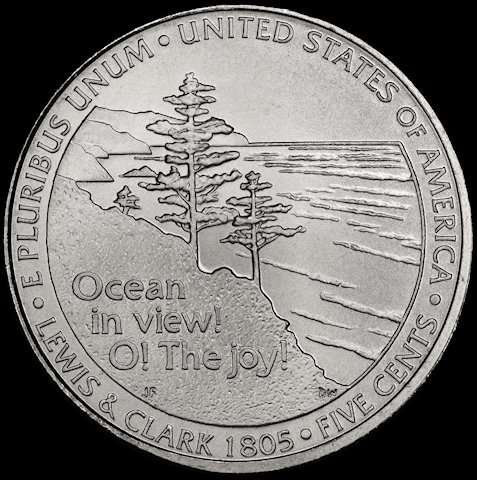 Edited by andywoj00
05/14/2016 11:41 am
|
| |
Replies: 22 / Views: 6,527 |
To participate in the forum you must log in or register.
Disclaimer: While a tremendous amount of effort goes into ensuring the accuracy of the information contained in this site, Coin Community assumes no liability for errors. Copyright 2005 - 2026 Coin Community Family- all rights reserved worldwide. Use of any images or content on this website without prior written permission of Coin Community or the original lender is strictly prohibited.
Contact Us | Advertise Here | Privacy Policy / Terms of Use
|
| Coin Community Forum |
© 2005 - 2026 Coin Community Forums |
| It took 0.59 seconds to rattle this change. |
 |
|
| |
| |







 Posted 05/09/2016 04:13 am


