| Author |
 Replies: 16 / Views: 2,786 Replies: 16 / Views: 2,786 |
|
Valued Member
United States
282 Posts |
I'm looking at this coin now but am a little thrown off by the strange color on the shield. Can it be the result of a bad cleaning job, a tight storage medium (pressing against the center of the coin perhaps), or just a fluke of the natural processes? 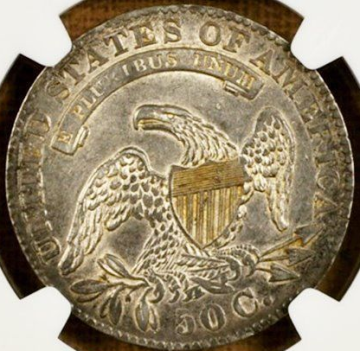 |
|
|
|
Pillar of the Community
United States
3210 Posts |
Looks to me heavily cleaned or dipped one to many times. It doesn't look natural at all. Is it in a NGC problem free slab? If so someone fell asleep at work
|
|
Pillar of the Community
United States
4432 Posts |
What does the holder reveal ... grade-wise? IMHO, it's been played with ...
|
|
Valued Member
 United States
282 Posts |
It's in a straight AU 55 slab. I think NGC needs to up the caffeine in their coffee a bit. 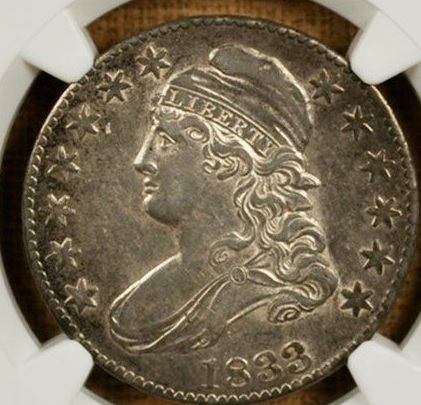 |
|
Rest in Peace
United States
17900 Posts |
I see no halo indicating a dip and no parallel lines to indicate a mechanical cleaning. A tough call to make from photos only, but it looks righteous to me.
|
|
Pillar of the Community
United States
1499 Posts |
The short answer to your question is that the coin has been dipped, and it has re-toned. The surfaces are not "original," but if it had not been dipped, it might have been very dark, and you might not have liked it. It is a "market acceptable" AU. I'm getting a bit tired of this attitude about dipped silver coins. If you don't want to buy them, then don't buy them. But please don't go around complaining about the fact that such pieces have been given straight grades. There is a difference between dipped and cleaned. A cleaned coin has had the metal on its surfaces moved by a physical means. A dipped coin has had a very thin layer of oxidized metal removed by a weak acid solution. Coins can be dipped too often; they can be dipped for too long; and they can be improperly rinsed. All three of these problems can lower the value and perhaps result in a "details grade." If you want 50, 100 or 200 year old coins that have never been touched, then don't expect them to be lightly toned or bright and shiny unless it is a Morgan dollar. Also you get this "original surfaces" distinction in the market get ready to pay some very high prices because the supply of such items is very limited. Also get ready for some healthy discussions because a lot of the purists who think they know which coins are "original" and which ones are not, don't what they are talking about. Many of these coins are "original now." They have been dipped and have re-toned. That is my rant, but I hope you have learned something from it. |
|
Bedrock of the Community
United States
12437 Posts |
The yellow areas on the reverse kind of look like glue or lacquer residue.
|
|
Valued Member
United States
282 Posts |
Billjones, thanks for the interesting rant; you certainly made some good points. My original question was purely regarding the difference in color between the shield and the rest of the coin which in my opinion decreases the beauty of the coin significantly. If it was some natural process then perhaps it could be accepted as the wonderful variations of nature. But if it's due to some artificial means it would not be so readily acceptable.
|
|
Pillar of the Community
 United States
5828 Posts |
 Billjones that was a good point. OP, your coin has been dipped and retoned but is still market acceptable as an AU-55 |
|
Pillar of the Community
United States
3843 Posts |
Nice looking AU-53/55. billjones has good advice.
|
|
Valued Member
United States
108 Posts |
Very strange reverse. Don't think I've seen one quite like that before.
|
|
Valued Member
United States
282 Posts |
Not my coin yet but thinking about it. I'm still put off by the strange color differential so I think I'll trust my gut on this one. This one goes back into the lake.
|
|
Pillar of the Community
United States
6370 Posts |
Quote:
I'm getting a bit tired of this attitude about dipped silver coins. If you don't want to buy them, then don't buy them. But please don't go around complaining about the fact that such pieces have been given straight grades. There is a difference between dipped and cleaned. A cleaned coin has had the metal on its surfaces moved by a physical means. A dipped coin has had a very thin layer of oxidized metal removed by a weak acid solution. Coins can be dipped too often; they can be dipped for too long; and they can be improperly rinsed. All three of these problems can lower the value and perhaps result in a "details grade." I get the differentiation between cleaned and dipped. I'm not one that is peeved by a careful dipping, such as when a toned MS-65 Barber quarter is dipped to make a blast-white MS-65 Barber quarter. For me, if the eye appeal is unaffected, and the luster is unmarred, then the coin is problem-free in my book. However, if the coin is a VF/EF 150+ year-old coin (SLQ, for example), I'd have problems accepting a dipped coin as problem-free. For example, I would expect this 1854 to be "detailed," even though it was only dipped and not cleaned: 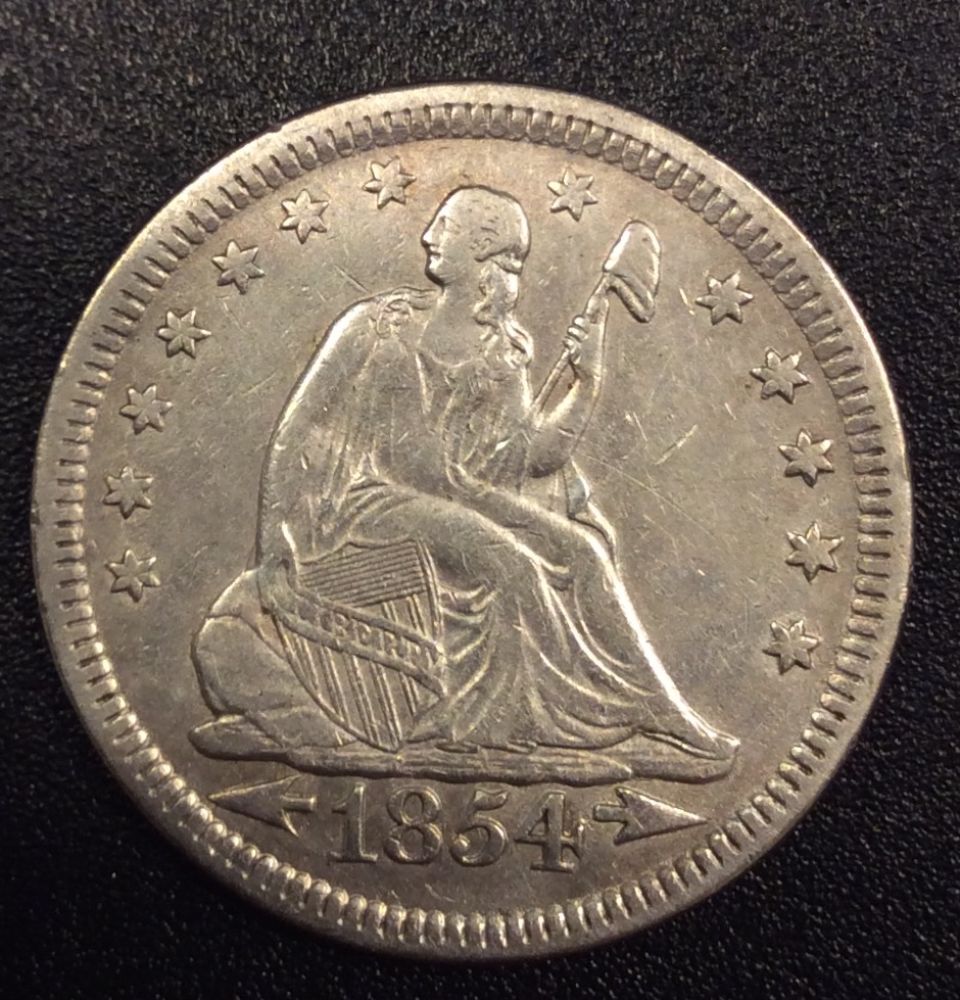 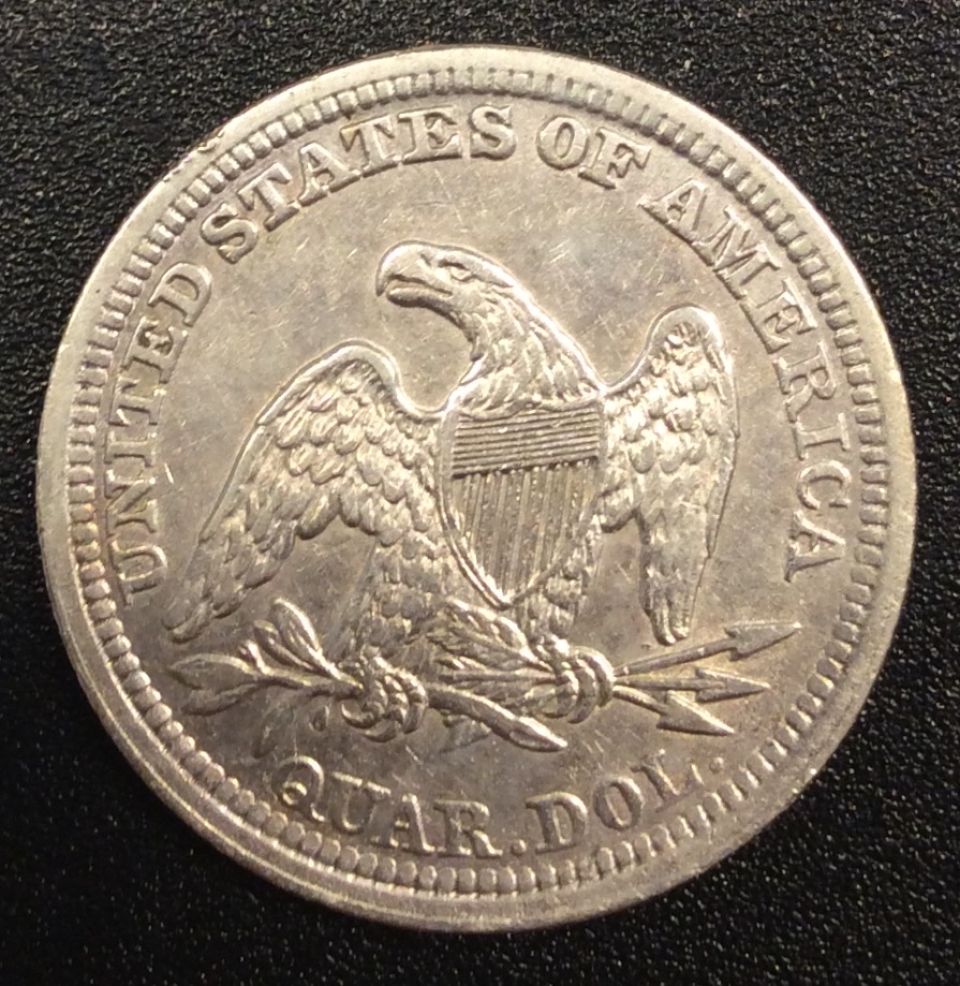 You can pick my thoughts apart and call me a whiner, but that is where I think the line should be drawn for dipped coins to be considered "details." AU/UNC is okay to have been dipped, while anything less looks wrong and should be "detailed." |
|
Bedrock of the Community
United States
10982 Posts |
That Seated quarter looks over-dipped and dull to me. One issue we also have is that the "bright is best" numismatic philosophy went on for well over 100 years and probably just ended in the last quarter century. Bill singles out white Morgans and "possibly" being original and even many (perhaps most) of them have been dipped. Virgin frost on an MS silver coin is rare and a sight to behold. Once you've seen it it's pretty easy to discern those that are simply "market-acceptable" from others. Secondary toning can be be quite heavy on 19th century silver and that is another matter as well. Good topic that needs to be addressed IMO. As a side note on semantics: SLQ=Standing Liberty Quarter & LSQ=Liberty Seated quarter. |
|
Pillar of the Community
United States
1499 Posts |
Quote:
You can pick my thoughts apart and call me a whiner, but that is where I think the line should be drawn for dipped coins to be considered "details." AU/UNC is okay to have been dipped, while anything less looks wrong and should be "detailed." No one should ever consider dipping a coin that grades less than AU-55 or perhaps AU-58. Dipping a circulated coin is just plain stupid. You have nothing to gain from any collector who has a decent eye for grading by doing that. Yet there are dealers and coin doctors out there who do it. I've seen some circulated coins that had colorful toning. To me they are eyesores because 99 times out of 100, those are circulated coins that have been dipped. Some collectors seem to love them, however. |
|
Pillar of the Community
United States
1760 Posts |
Dipped many, years ago and has since begun to retone.
|
| |
Replies: 16 / Views: 2,786 |







 Posted 05/16/2016 09:35 am





