| Author |
 Replies: 14 / Views: 9,802 Replies: 14 / Views: 9,802 |
|
|
Valued Member
Slovenia
459 Posts |
For some reason I've always wanted to find an example of fake 2€ coin in circulation. Today, at work, this coin stood out from the rest. Many things did not feel right: weitgh, feel, details, coloring. Upon puting it on a scale it was confirmed: it weights 8,1 g, while normal coin should be 8,5 g. Another interesting things: most of the time people are told that fake 2 € coins are not magnetic. This is not true in case of this coin. This example is highly magnetic, much more than it should be. I still had to pay 2€ in the register though  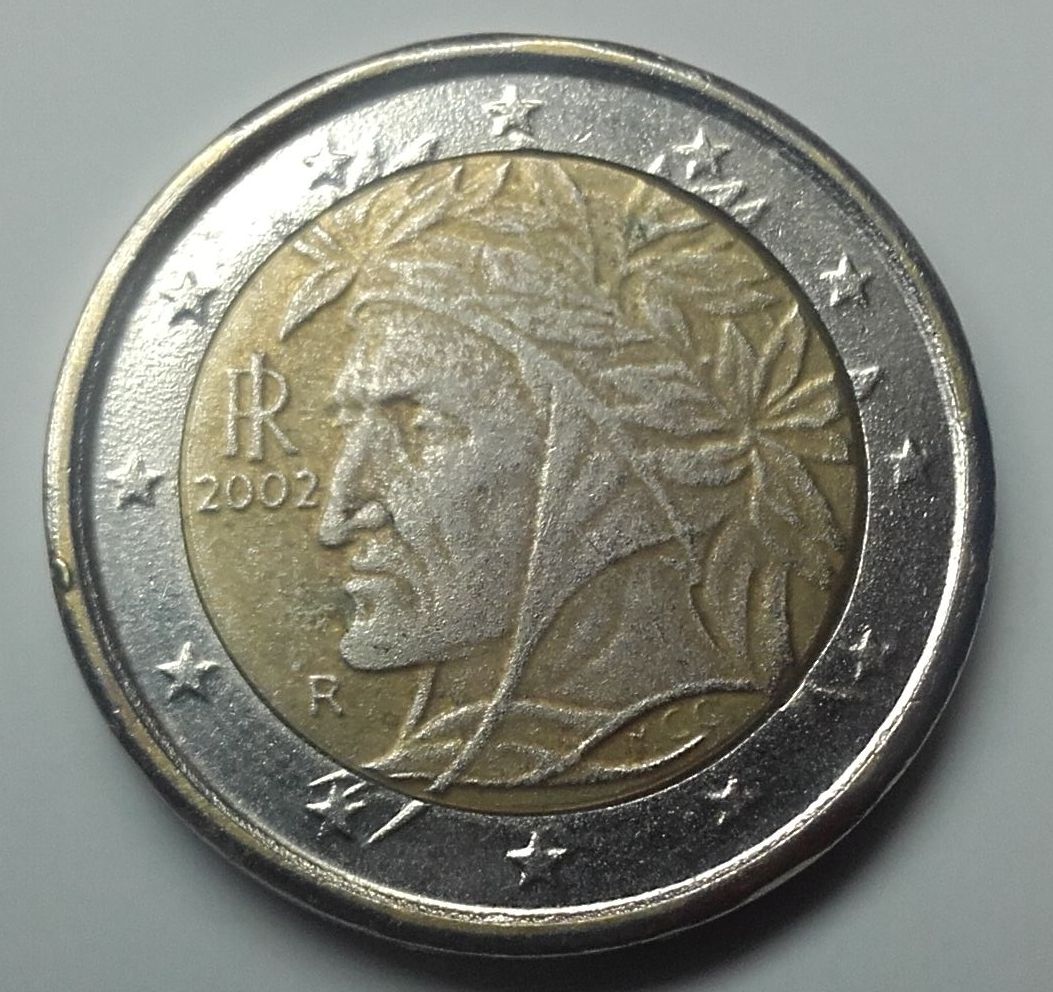 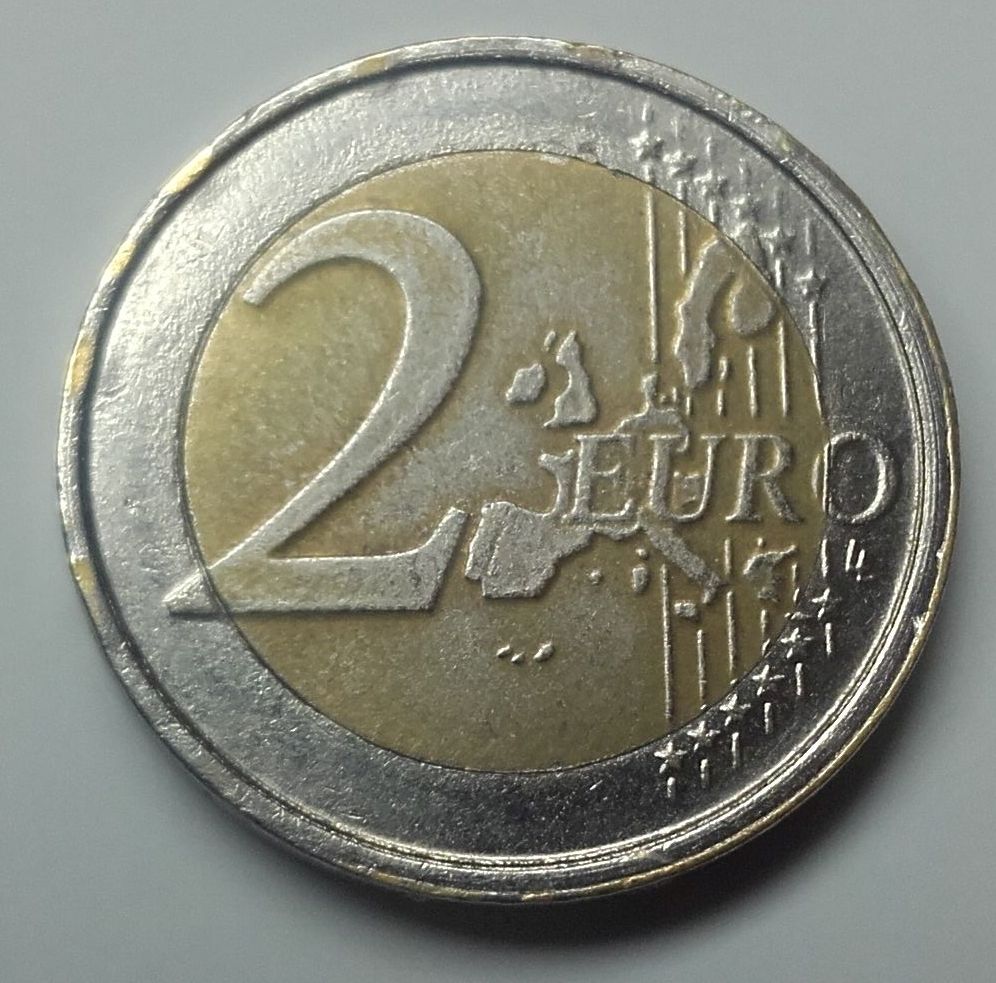 |
|
|
|
Pillar of the Community
United States
4963 Posts |
Neat find! When I'm in Europe next month I'll keep an eye out.
|
|
Valued Member
 Slovenia
459 Posts |
Just don't find too many of those  |
|
Pillar of the Community
Sweden
1078 Posts |
Very intersting. Apparently Italy is one of the biggest counterfeiters of Euros, atleast when it comes to banknotes. I've never found a fake coin in circulation myself, but fakes are always interesting. I've traveled to the Eurozone a whole bit and yet, no counterfeits.
Thanks for sharing!
|
|
Valued Member
Slovenia
459 Posts |
I don't think these coins are counterfit in Italy per se. The counterfiters most likly choose the most low profile coins to avoid detection. Italian coins are in abundance in this part of eu and a common year (2002 having the highest mintage) makes it a goot target. Only other fake euro coin I've seen was Germany 2002 and that one has a very simple design too. At least compated with otalian coin.
And the odds of finding one - for three years I've checked every coin I got (plus cash register at work) and this one was the first one that raised a flag for me :)
|
|
Valued Member
Belarus
119 Posts |
Thank you for the interesting information. I do not pay attention to the authenticity of the coins. Now I will try to check their coins. Maybe I'm lucky.  |
|
Pillar of the Community
Norway
1358 Posts |
Agreed, fake Euro coins are still a rarity (at least to the naked eye). Maybe that's a compliment to counterfeit coiners, but despite having lived in the Euro zone for many years, I never encountered a fake coin myself. Would be a great addition to my ever growing fake coin collection, some fake Euro coins.
Anyway, I really like this example and compliments to Dagaz for keeping your eyes open! Too bad you had to pay 2 euro still, though...
|
|
Pillar of the Community
United States
5362 Posts |
According to one report I read recently a small fraction of 1 percent of Euro and 2 Euro coins in circulation are counterfeit. (The 2 Euros are more common.) So they are hardly rare given the millions of coins in circulation. In the UK pound and 2 pound coins have far higher rates of forgery with the 1 pound coins now at just over 3% counterfeit. The two pound is lower but still about 2%.
Counterfeit coins are not as rare as the average person suspects just more difficult to detect because of better coin manufacturing techniques.
The problem with counterfeit coins in circulation is that the authorities and banks do not reimburse the person who is the victim. They also have passed laws making it illegal to pass the coins on. So the only absolutely safe way would appear to be to avoid using coins at all.
Edited by swamperbob
06/28/2016 2:32 pm
|
|
Pillar of the Community
United States
5362 Posts |
For anyone interested here is where you can read the report on line. Pages 7 and 12 are the most interesting to me. Page 7 provides total numbers of coins removed from circulation as counterfeit. Page 12 shows where mints have been discovered. However, the entire report is very interesting reading. http://ec.europa.eu/economy_finance...coins_en.pdf |
|
Pillar of the Community
United States
2023 Posts |
This is very surprising. I suppose the only way to make it worthwhile to counterfeit such a low denomination (compared to $20 or $100 bills) is in volume, but is it that easy to make a passable coin? Most people probably don't look that closely to it's easy to circulate. But to do so many, even presuming multiple sources? What are they made of?
|
|
Pillar of the Community
United States
5362 Posts |
The fact that people don't look at coins is why they are targeted. A 2 Euro coin can be made for a small fraction of face value so profits can be decent as long as the forger is not greedy.
In addition, the passers do not face criminal prosecution in most cases because the government really only cares about catching the source. It is hard to justify a court case for a 2 Euro charge.
Bills have always required more expertise to copy and they get more scrutiny.
Most copies are single metal planchets like copper nickel and they are then plated to produce the bi-metallic appearance. Sometimes there are two steps to plating because a cheap metal planchet like brass is used.
|
|
Pillar of the Community
Russian Federation
5186 Posts |
I have a counterfeit Israeli 10 sheqel coin (my grandmother got it in change and was surprised when it wasn't accepted in a vending machine).
Not actually 2 euros, but about the same face value (2.33 euros according to Google), also bimetallic, and also not magnetic when the real type is. Can't recall what else didn't feel right, unfortunately.
|
|
Pillar of the Community
United States
2023 Posts |
Thank you for the reply, swamperbob, and apologies for so many questions. It was late and my focus was ... soft.
|
|
Pillar of the Community
United States
5362 Posts |
Alpha2814 No problem at all. I love questions about counterfeiting. It has been my area of study for well over 50 years.
|
|
Pillar of the Community
United States
1915 Posts |
I also enjoy the collecting and making catalogs of counterfeit coins. I need to add some British Pound coins and now it seems I need to find some 2 Euro coins from Italy as well. It's not so easy to buy fakes some times. I see them once in a while and contact the sellers to let them know I'm not fooled but would like to pay a modest fee for their goods anyway. But never a reply.
|
| |
Replies: 14 / Views: 9,802 |
|







 Posted 06/15/2016 01:36 am





