| Author |
 Replies: 13 / Views: 2,675 Replies: 13 / Views: 2,675 |
|
|
Pillar of the Community
United States
2023 Posts |
(Disclaimer: This is my first post with images. This is good practice as I'm experimenting with picture-taking methods, and the main question is about the color of the 1944 cent so I'm not worried about focus or fine details unless you are.) I'd never seen another Wheat cent with this yellow-ish color until recently, probably somewhere on this board. It is not magnetic and the surface is rather uneven -- it doesn't look too worn, and it doesn't look like the kind of corrosion I would expect. The reverse looks like it had a spill of sludge of some kind -- I haven't tried to remove it. Any ideas what happened to it? The 1953 cent is for color-comparison. 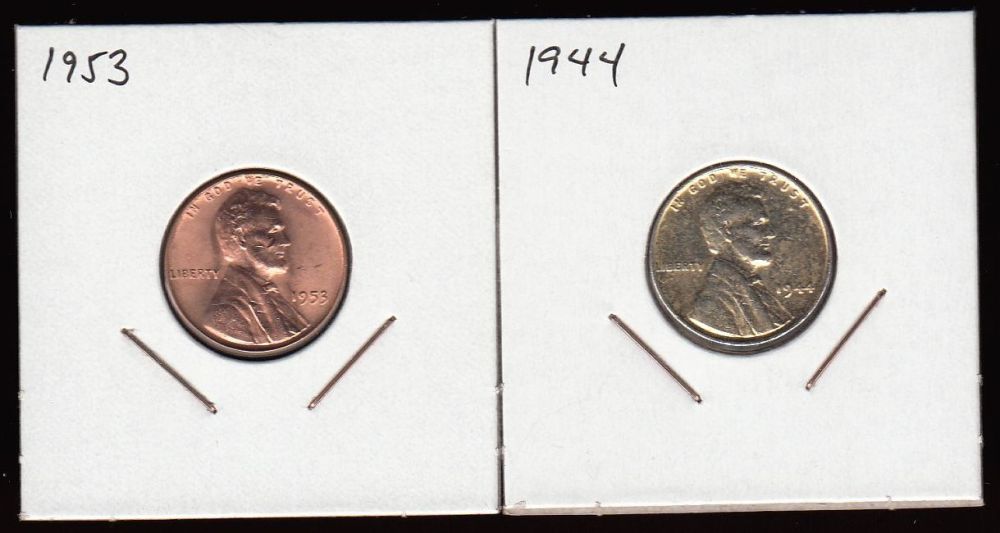 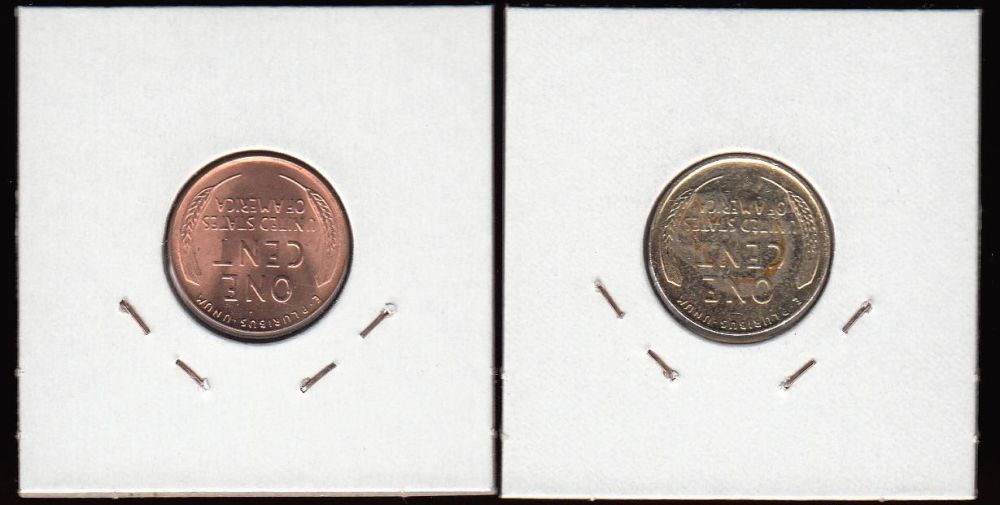 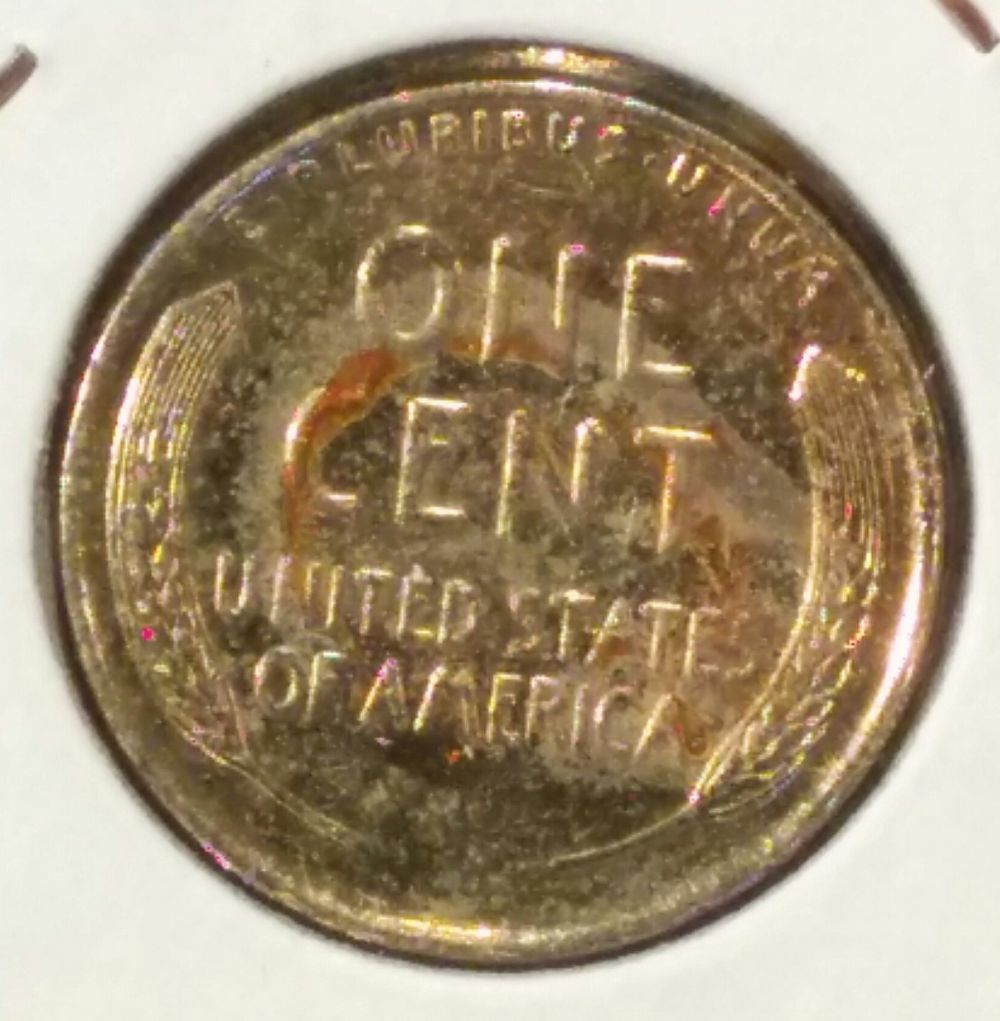 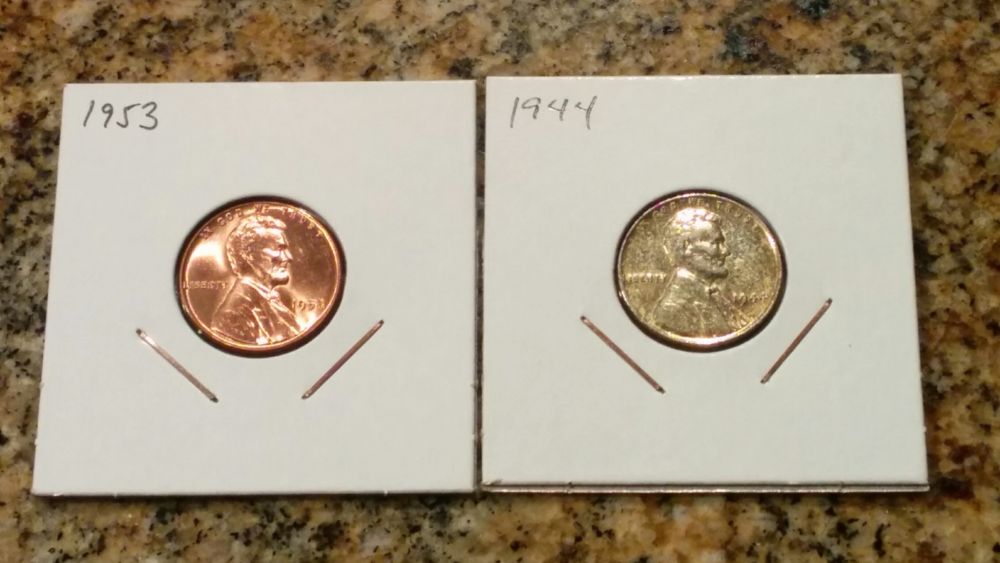 |
|
|
|
Moderator
 United States
14463 Posts |
it almost looks like it had been plated in gold or brass, then handled.
|
|
Moderator
United States
56855 Posts |
 John1  |
|
Rest in Peace
United States
18456 Posts |
Excellent diagnosis .  |
|
Pillar of the Community
Canada
1747 Posts |
Copper alloys are interesting to me, I see a lot of the older wheeties, and they are a green brown color, not quite as yellow as the one you posted but more green.
I would agree as above, yours has been plated, probably an old high school experiment.
|
|
Pillar of the Community
 United States
2023 Posts |
Plating didn't occur to me until I looked this closely last night, thank you for the insight. This was in my stash from 25+ years ago, when I thought it was actually worth something. (It still looks kinda cool from a distance.)
|
|
Pillar of the Community
United States
6130 Posts |
After the 1943 steel cent turned out to be a failure (they were prone to rust), the US Mint struck an agreement to use shell casings from military firing ranges to strike cents, starting in 1944. These were brass, as opposed to bronze. The supply of casings was exhausted by the end of 1946, and the mint switched back to bronze until sometime in the 60s when the composition was changed again (I forget when.)
Brass is much more yellow when uncirculated, compared to bronze.
There is also a gold chance that it is plated.
|
|
Formerly coinlover1899
 United States
3058 Posts |
Looks plated.
www.InGodWeTrustCoins.com
|
|
Pillar of the Community
United States
2023 Posts |
I read the shell-casing thing a couple of months ago. That seemed the most logical explanation for the color difference, but I would have expected to see other cents roughly the same color as mine. I don't recall where I came across this one -- either while roll-hunting in the 1970s, or I pulled (exchanged) it from the till at my McJob in the late 1980s. In either case, it had some degree of circulation before I got my hands on it.
|
|
Bedrock of the Community
United States
20027 Posts |
|
|
Bedrock of the Community
United States
17884 Posts |
Yes they did use brass shellcases from 1944 to 46, but they also added extra copper to bring the alloy up to 95 % copper 5% zinc so the color even when Unc is only very slightly different from the pre 1942 and post 46 cents.
|
|
Bedrock of the Community
United States
94367 Posts |
Correct - the difference is generally not even noticeable.
|
|
Bedrock of the Community
United States
20753 Posts |
However you may have found a counterfeited Cent made with Gold.   |
|
Pillar of the Community
United States
2023 Posts |
I should be so lucky. Reminds me of an old joke:
Q: How does a [demographically stupid] person make counterfeit $10 bills?
A: They rub the zeros off $100's.
|
| |
Replies: 13 / Views: 2,675 |
|







 Posted 06/16/2016 05:28 am





