| Author |
 Replies: 15 / Views: 2,489 Replies: 15 / Views: 2,489 |
|
|
Valued Member
United States
136 Posts |
The unbelieving thing about this penny is that. I filed all ready a little at the Edge. And the white color still coming up on the new flat. I applied also Magnet every where. But all is Antimagnetic. Most of the times something is "plated" normally can be attracted by a magnet. Normal weight on a 1970 penny is 3.11 Grs. The weight on this one it's only 3.08 Grs. Some of you have idea what kind of material can be? Thank for your help. 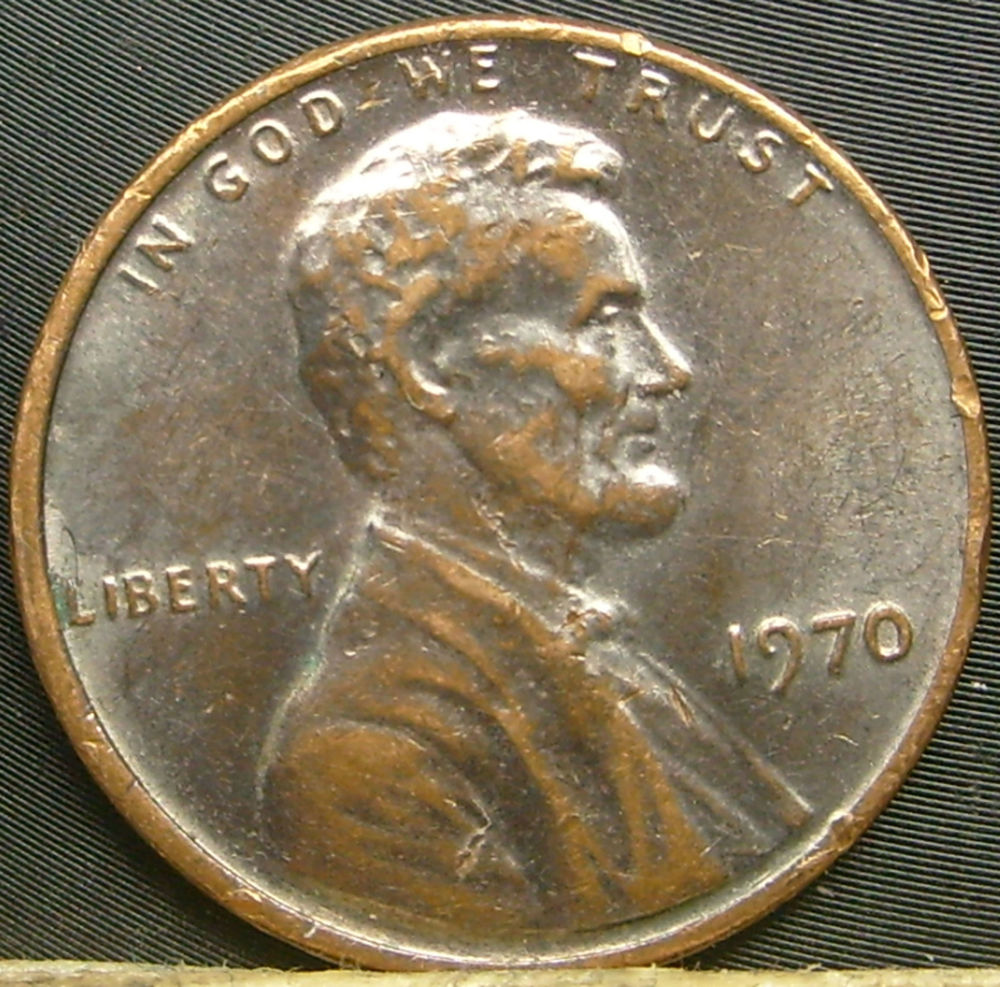 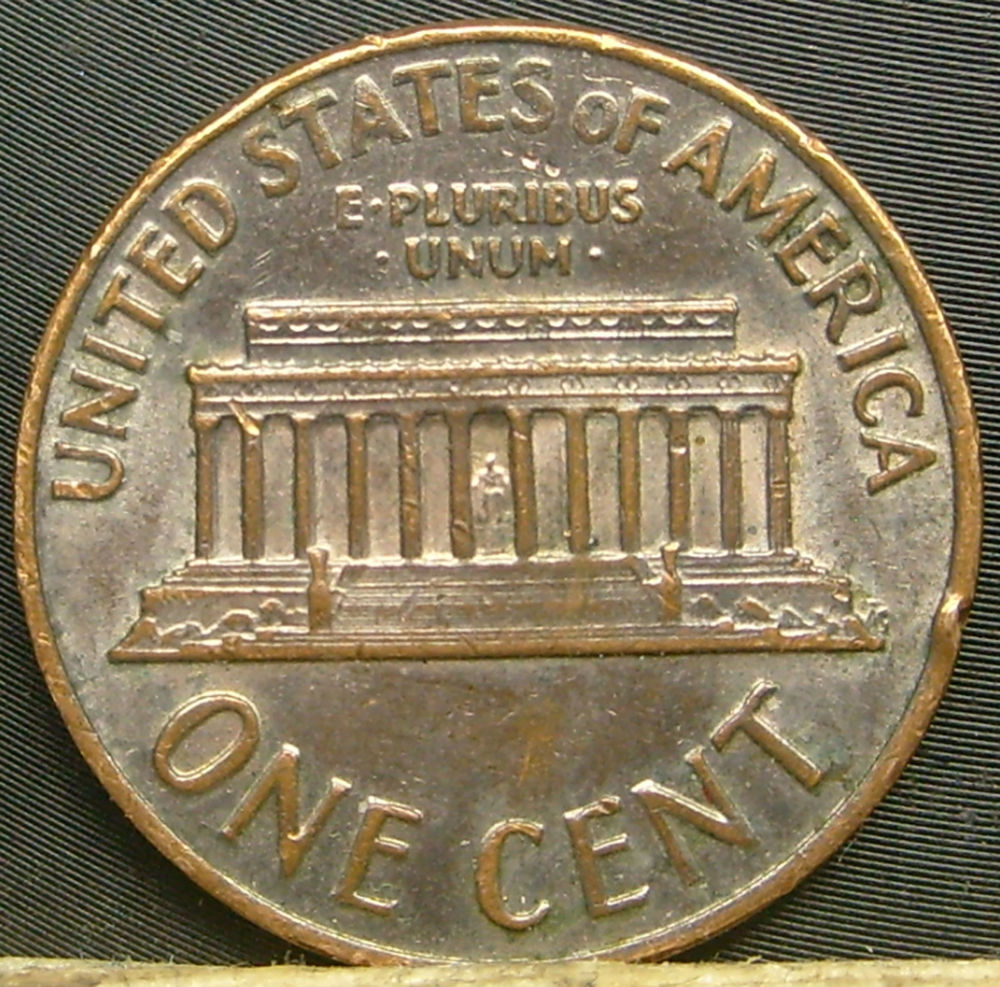 Edited by Carlos arriaga
07/30/2016 3:54 pm
|
|
|
|
Pillar of the Community
United States
2775 Posts |
A soak in acetone may help dislodge or dissolve if needed. If so rinse and re-soak if needed with fresh acetone.
Reminds me of a learning experience with using fresh acetone as opposed to being to cheap and reusing used acetone.
Once soaked a copper cent with white paint on it and dissolved it in seconds with no problem. Looked as clean as clean could get. No residue to the eye.
The process took a whole 30 seconds and left the acetone looking clear.
Myself being thrifty and smart thought to reuse said acetone on two other copper cents for only a quick dip.
Found the two coins that followed in the used acetone redeposit a white haze that never came off either coin, even after repeated soaks and rinses with fresh acetone. Points to ponder. Thanks, Doug.
PS: If its oxidation then others may have suggestions. Don't think the coin is worth the extra effort unless you just need it clean for some reason.
Edited by Halo1st
07/30/2016 6:07 pm
|
|
Valued Member
 United States
136 Posts |
Edited by Carlos arriaga
07/30/2016 6:10 pm
|
|
Pillar of the Community
United States
3516 Posts |
That is not the same kind of white, on the coins you found on the internet, there is not a hint of brown showing through. On yours it is mostly copper, as Halo said, it looks to be some paint on the coin,
|
|
Pillar of the Community
United States
2775 Posts |
Quote:
same kind of white  Not seeing it in these pics or examples! Thanks, Doug. |
|
Pillar of the Community
United States
3516 Posts |
Also the first coin from the internet was struck on a different planchet which yours is not, it looks like a normal coin to me
|
|
Bedrock of the Community
United States
62064 Posts |
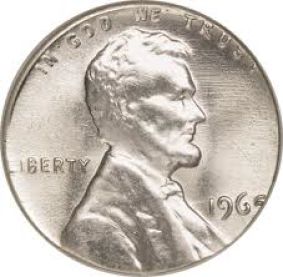
1966 cent struck on dime planchet.
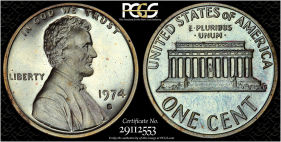
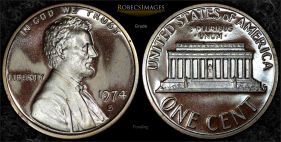
1974 is an aluminum planchet.
1974-D looks like a plated cent. (not a proof coin, It is a business strike coin possibly polished as well as plated)
Looks like milk residue to me on the coin.
|
|
Valued Member
United States
136 Posts |
Thank for all those lessons. Tomorrow I'll find some acetone to see what happen. That's better than keep using file o sand paper. Thank again.
The pictures do not show the pretty it's look now. Instead with some circulation marks (scratched), seem like shiny-new.
Edited by Carlos arriaga
07/31/2016 08:25 am
|
|
Valued Member
United States
136 Posts |
Halo-1st. Thank for the "idea" of the Acetone. I putted for 9 Hours OBERSE-UP and 9 Hours REVERSE-UP (pure, clean and fresh Acetone). And it's coming to be a little most white than before. By checking the Edge; most look like The plated it self is Copper over other metal. And also the Shining reaction keep very elevate. My acetone is finish. but I'm planning to repeat The acetone cleaning. Again Thank a lot.
!HO! LA LA. Yesterday I putted the used acetone in a plastic-hard box and this morning. the box is melted. Unbelieving.
Edited by Carlos arriaga
08/03/2016 06:52 am
|
|
Valued Member
United States
403 Posts |
Be cautious Carlos. Acetone is a very good solvent for many types of gunk and plastics, which why it is used for degreasing and cleaning purposes in many industries. It is also hazardous because it's volatile and very flammable. Use a glass container in a well-ventilated area away from open flames! It will leave a white residue on a coin upon evaporation, although the amount will vary with purity and contamination. The residue is invisible if the acetone is of good quality.
|
|
Valued Member
United States
136 Posts |
I knew the Acetone is strong; but not that strong. After those 18 hours (total) in acetone. with a Lupe 15X I see some very little spots of the cent with RUST. Then my next step will be the use of BREAK FLUID O MOTOR OIL. to eliminate those little spots of Rust. I love how the cent look right now. Yes, next time I'll use a glass container to save the used Acetone.
|
|
Bedrock of the Community
United States
62064 Posts |
As long as they don't turn pink it should be OK in your collection. (a dead give away for dipping a coin) But if you submit it to be graded, they may body bag it or list it as genuine with no grade. So if there is grit around the devices, I would leave the coin alone. Who know what down the road they may see an issue with the alteration of the coins color.
|
|
Valued Member
United States
136 Posts |
Thank Richard for that advice. The Penny still white and shining. I will leave it alone for now.
maybe later some body can check what is going on with the material.
|
|
Bedrock of the Community
United States
62064 Posts |
The copper rims show it was altered on the surface. The wear takes what ever off the raised devices first. Not an error coin. It would be worth copper melt. (if they let us melt them)
|
|
Valued Member
United States
136 Posts |
The Grain direction of the white compound, are straight lines on both surfaces. following one path direction.
The Grain direction of the brown copper are like irregular big spirals or irregular rounded path. AFTER DIPPING IT IN CLEAN-FRESH ACETONE FOR 18 HOURS.
Thank for your help any way and your comments.
Edited by Carlos arriaga
08/06/2016 09:31 am
|
|
Pillar of the Community
United States
2775 Posts |
Carlos. Some after pics may show better what you see now. Having hard time following your process here, as you mention trying acetone for 18hrs, which sounds like maybe in a plastic container, then going try brake fluid or motor oil maybe. Also mentioning file or sandpaper maybe, all of which is not good. At first you noted it looking better, then rust, then white is returning, but now resulting in straight and circular lines. Not going into all the do's and don't of acetone usage as it has been covered here in the past many times. That said, follow the directions and adhere to the warnings on the label. I prefer to only use clean glass or stainless steel vessels for the process. Note: I do not trust vessels that have been washed with house hold detergents alone. I'll clean the container with acetone or similar prior to coin dipping. I also prefer a short container with wide opening for easy reach within. I use a lid or cover as the acetone will evaporate quickly if not covered. Lastly and more importantly, (should also be on the label) Keep Out of Reach of curious kids and animals. Thanks, Doug. Edited by Halo1st
08/06/2016 11:53 am
|
| |
Replies: 15 / Views: 2,489 |
|







 Posted 07/30/2016 6:07 pm