| Author |
 Replies: 19 / Views: 2,332 Replies: 19 / Views: 2,332 |
|
Pillar of the Community
United States
533 Posts |
I have been going through various stashes of coins at my parents' house, and I stumbled across an odd looking nickel. I'm not real familiar with the minting process, but it looks like the rim was never finished. Or the planchet was about 40% to thick, but the dies made the strike the same distance apart and the edge is just really thick. I don't know if you can understand what I am trying to describe, but maybe...
I don't think I will be able to take any pics until sun/monday when I get home, but if you know what I am talking about let me know.
Thanks!
MorganNoob Edited by MorganNoob
03/04/2008 12:53 am
|
|
|
|
Pillar of the Community
United States
2177 Posts |
Sounds like a rimless nickel.  |
|
Pillar of the Community
United States
527 Posts |
from what I understand, the blank is punched, then the rim is raised, and then it is struck with the details. It sound like this coin just missed the rim step.
|
|
Pillar of the Community
 United States
533 Posts |
Quote:
Sounds like a rimless nickel. Sooooo, getting down to brass tacks, is it worth much? |
|
Pillar of the Community
United States
7629 Posts |
Nobody can attribute your coin and give you values without being able to see it.
|
|
Pillar of the Community
United States
533 Posts |
Alright, I returned home to my digital camera, and I have some pics. Let me know what you think. 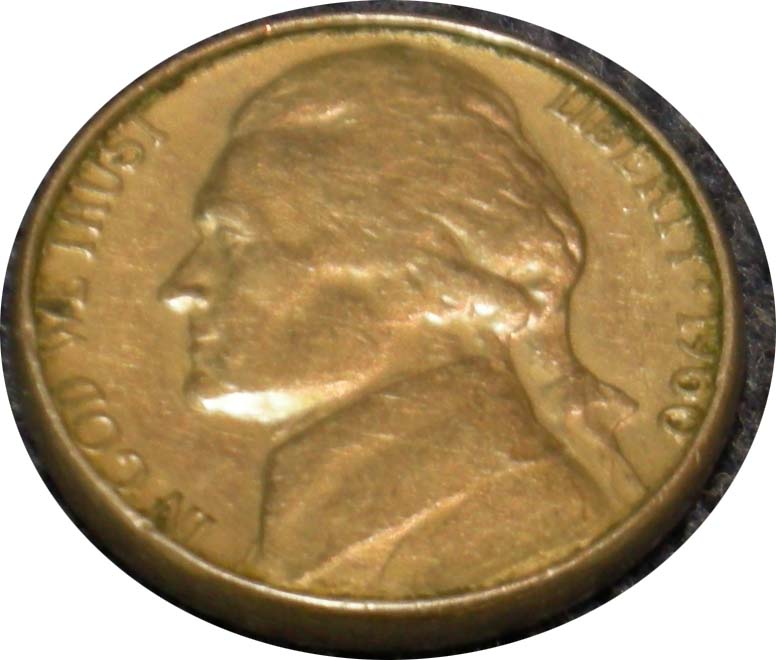 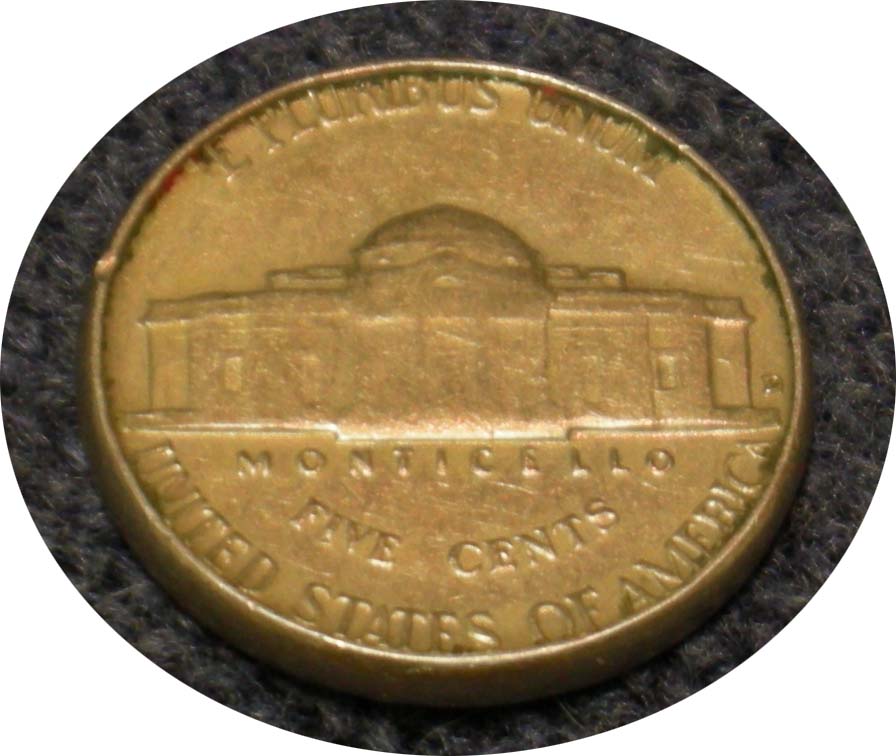 |
|
Moderator
 United States
6563 Posts |
 Any chance of having it weighed? |
|
Pillar of the Community
United States
533 Posts |
Edited by MorganNoob
03/04/2008 01:57 am
|
|
Pillar of the Community
United States
533 Posts |
Oh, its also slightly smaller then a regular Nickel. It is almost the correct thickness, but in a stack it stands out because it is slightly smaller (dia) and slightly thicker...
|
|
Pillar of the Community
United States
3507 Posts |
Nothing special. It was in a commercial clothes dryer for awhile and that is what happens. It tumbles with other coins trapped inside one of the fins. I was going to suggest that but I figured I'd wait for the picture. Here is a link to a picture of a cent that was in the same situation. Nickel being harder doesn't get as beat up as badly. http://foundinrolls.com/images/dryer1.jpgThanks, Bill |
|
Pillar of the Community
United States
533 Posts |
Quote:
It was in a commercial clothes dryer for awhile and that is what happens. It tumbles with other coins trapped inside one of the fins.
Nickel being harder doesn't get as beat up as badly. Not beaten up as badly, I think is quite the understatement. I don't know. The rim of that penny is quite rounded and worn, the nickel is much sharper. Again, I don't know, I am a rookie, but I understand the concept of what you are saying, and I just dont think that it fits. I mean, this is in better condition then most of the 1960 nickels that I see in circulation, and I can't imagine that being exposed to the chemicals and wear in a commercial washer would have that effect on the rim but not the rest of the coin. I think that part of what makes that cent 'rimless' is that chemicals have eaten off so much of the face, which is entirely not the case with this nickel. As I said before, the rim is THICKER then a normal nickel, and other then a couple small dings is completely uniform, which being tumbled would not produce. I don't mean to sound dismissive of your explanation, but I just dont think that it fits. |
|
Pillar of the Community
United States
3507 Posts |
No chemicals involved, I mentioned the dryer not the washer:-) I have some of each denomination, that were handed to me by a friend who owned a laundromat:-) I watched him pull them out of the machines fins, which are hollow:-)
The nickels looked like this.
The next possibility in line is that it was used in a nickel slot machine, I have a bunch of those too. The amount of time that the coin was stuck in the dryer or used in the slot machine dictates the roundness of the edge. The number of coins that the nickel tumbled with in the clothes dryer dictates the amount of damage that occurs to the obverse and reverse.
The probable scenario was that this coin was in the fin of the dryer with a few cents. The steel of the dryer would round the edges and the cents would only slightly damage the surface of the obverse and reverse.
The rim does get thicker as a coin is tumbled.
Thanks,
Bill
Edited by foundinrolls
03/07/2008 9:18 pm
|
|
Pillar of the Community
United States
533 Posts |
Ok, I suppose it sounds plausible, and you have seen it first hand, so thanks! No more mystery nickel! So, the edge of the nickel doesn't really get worn, it just gets reshaped from constantly tumbling over and over. Kinda cool to wonder how many times that baby had to land on its edge to come out like that.
|
|
Bedrock of the Community
United States
10284 Posts |
It appears that the rim is rolled. I think I remember a ways back when it was a fad to bang the rim of a coin with a spoon and eventually make it into a ring as the rim would get quite wide.
I guess this was done more often with quarters and silver ones at that. A nickel is pretty hard metal compared to other coins.
Maybe it is an unfinished project. Anyone else remember these rolled edge coins?
|
|
Pillar of the Community
United States
1424 Posts |
 Looks like the beginning stages of a coin ring to me too. |
|
Bedrock of the Community
United States
10284 Posts |
Ahhh, at least somebody else remembers those rings.
Do you know if they drilled out the middle when they were done?
I would think the silver coins could be re-sized to fit but if this is a start I am sure they gave up. I like the dryer theory too.
I think that fellow has seen this effect from the dryer and have no doubt that could be the cause as well.
POST #50! Do I win a prize? LOL!
|
| |
Replies: 19 / Views: 2,332 |







 Posted 03/01/2008 6:20 pm





