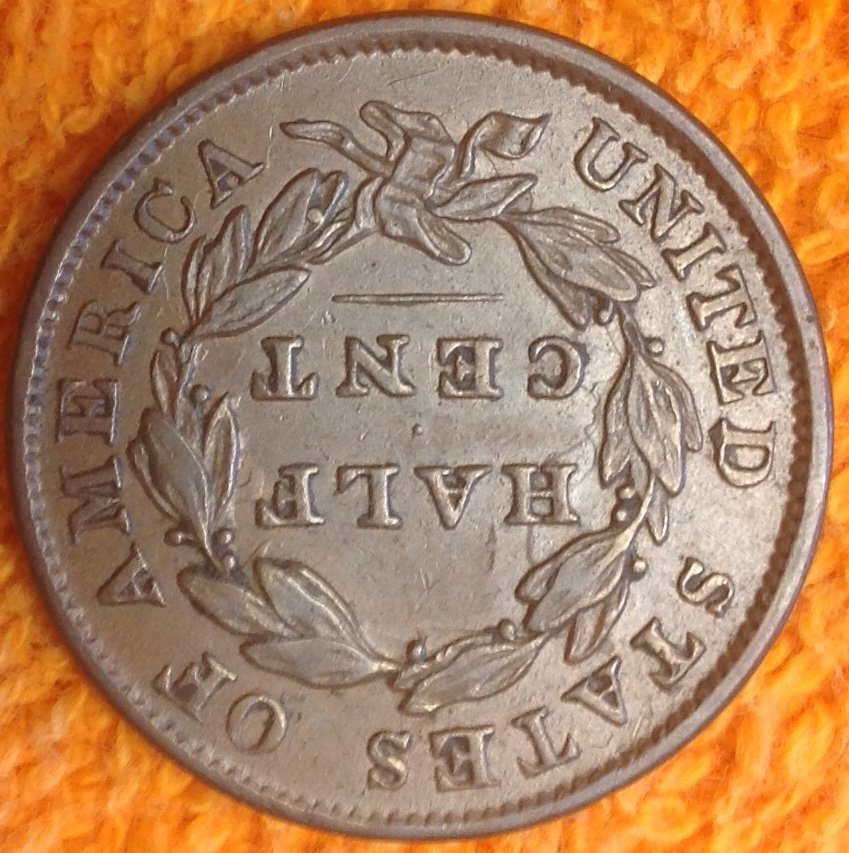
Die clash occurs when the two dies used to strike a coin (called the hammer and anvil) strike each other without a planchet (metal blank) in between. The result is that the details from the reverse die are "clashed" into the obverse die, or vice versa, or both. This clashed image will then be transferred to the next planchets / coin blanks to be fed through the dies; the stronger the impact (higher striking force), the longer the clash will last and the more visible it will be; this is also affected by the metal used for the dies and the composition of the planchets. Over time, if the same dies are used for many more strikes, die erosion (wear to the striking surfaces) will eventually erase the evidence of the clash.
The end results can range from the barely-noticeable (you need a 10x microscope, good lighting, and a knowledge of where to look) to the extremely obvious (you can see very clear marks that can be matched to features on the opposite side of the coin.)
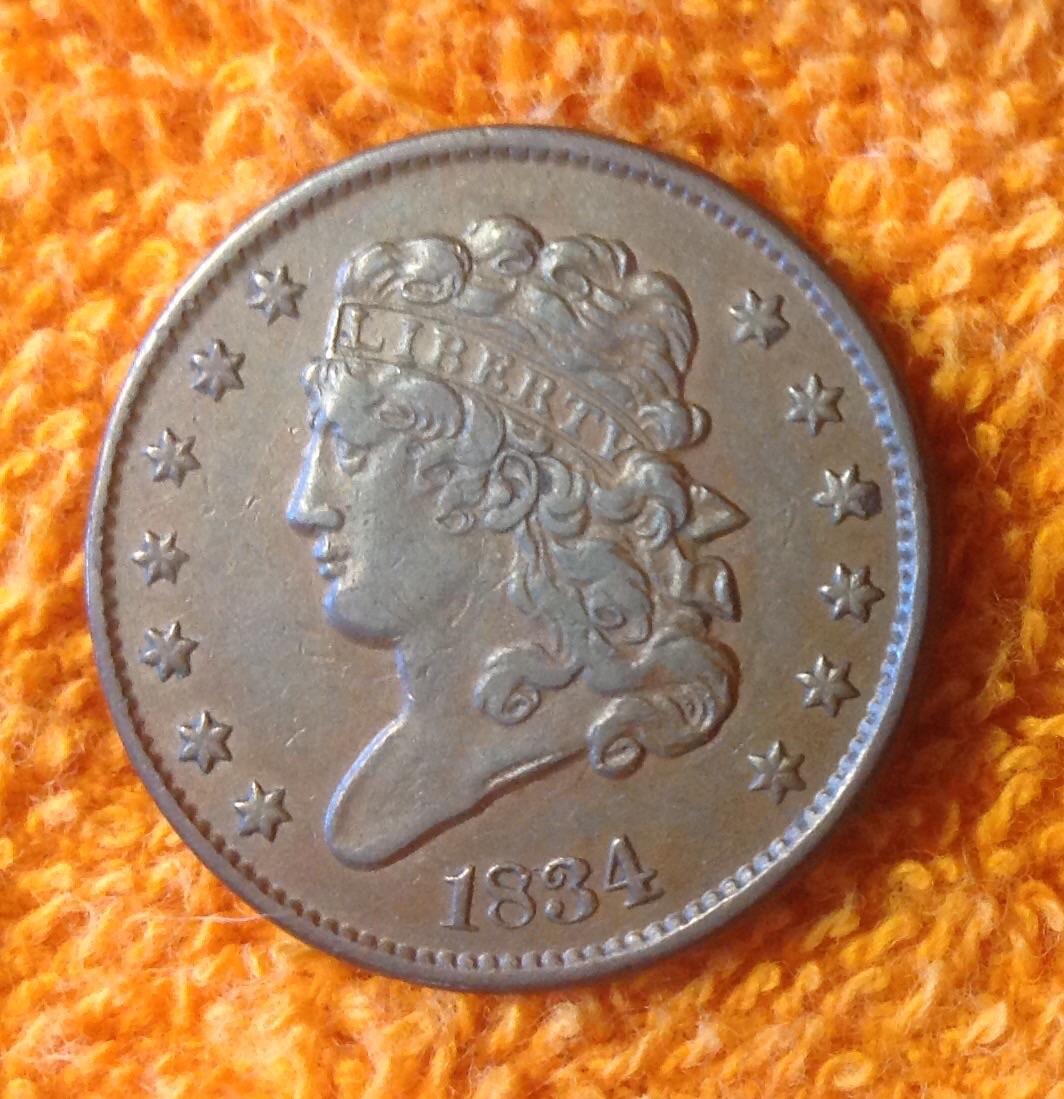
Your lovely Little Sister grades around XF (
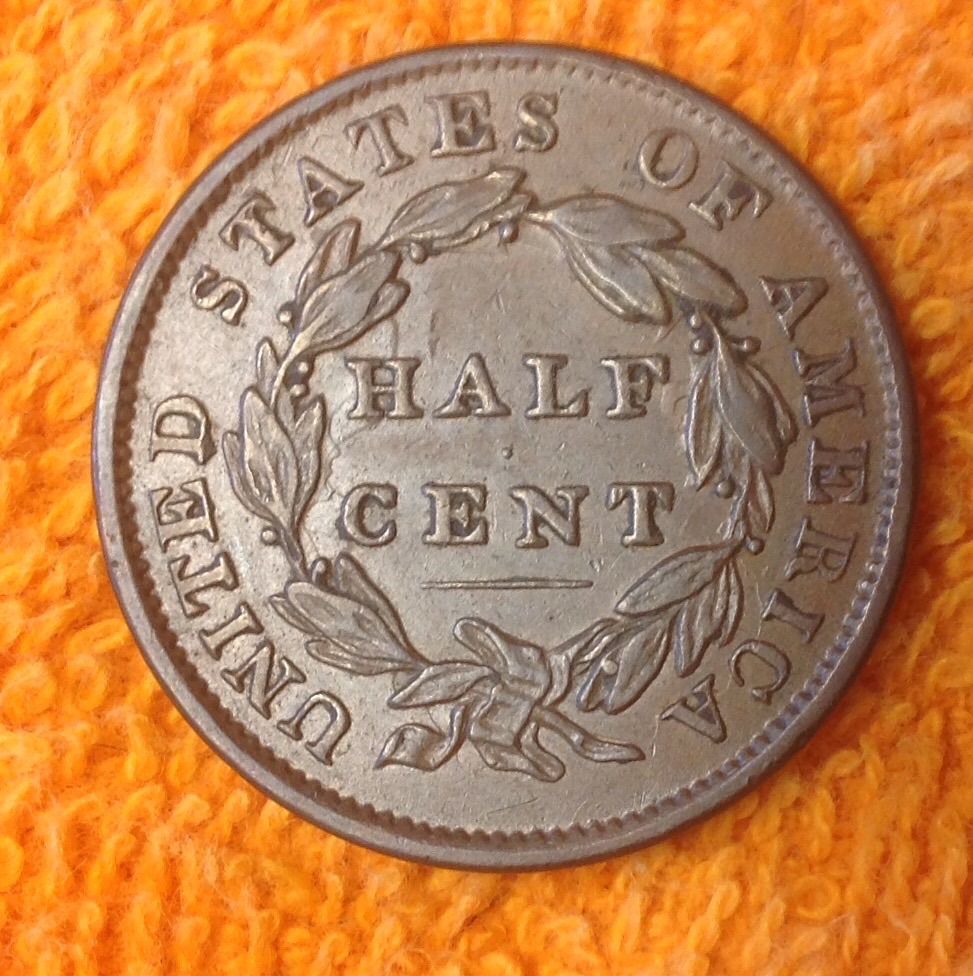
TPG) with good color and an interesting die clash, as TJ noted above. It is a very nice piece of early copper & looks very original. The variety (used to identify coins struck from different die pairs) is Cohen-1, or C-1 for short; there were only one pair of dies used in 1834 to strike
Half Cents. The clash marks present on your coin indicate that it is Manley state 2.0 (a die state number, which is used to identify how early or late in the life of a particular die pair your coin was struck.) In this case, Manley 2.0 represents an intermediate, or middle, die state (your coin was struck approximately halfway through the useful life of the C-1 die pair.)
Regards. A
Member
ANA - EAC - TNA - SSDC - CCT #890
"Most of the things worth doing in the world had been declared impossible before they were done." -- Louis D. Brandeis









 Posted 07/31/2016 4:38 pm