











 Posted 08/23/2016 6:37 pm


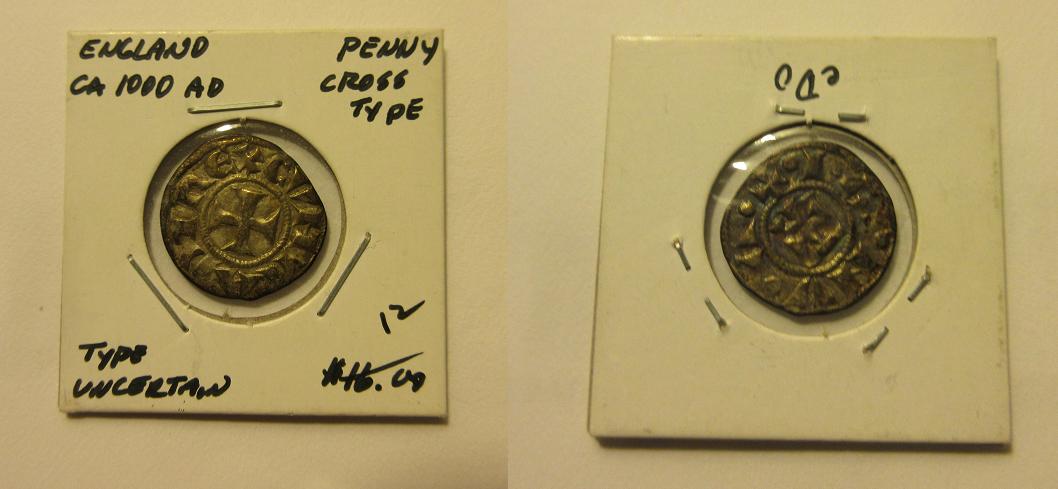
Sorry, but it's not English. The cross was used on many, if not most, mediaeval European coinages. This coin comes from the Italian city-state of Genoa.
On the obverse, we have the cross, around which is the name of the king who gave Genoa its freedom: Conrad III of Germany. The name is in Latin: CVNRADI REX.
On the reverse, we have the symbol of the city, a gate, with the city name in Latin, IANVA, around it. The symbol is a visual pun on the name: the Latin word for "gate" is also "ianua".
It is not as old as AD 1000, but exactly how old it is is uncertain. Having King Conrad's name on it does not unfortunately help much with the dating of this coin. Genoa made coins with this exact same design, and the lond-dead King Conrad's name, from the 1150s up into the 1400s.
On the obverse, we have the cross, around which is the name of the king who gave Genoa its freedom: Conrad III of Germany. The name is in Latin: CVNRADI REX.
On the reverse, we have the symbol of the city, a gate, with the city name in Latin, IANVA, around it. The symbol is a visual pun on the name: the Latin word for "gate" is also "ianua".
It is not as old as AD 1000, but exactly how old it is is uncertain. Having King Conrad's name on it does not unfortunately help much with the dating of this coin. Genoa made coins with this exact same design, and the lond-dead King Conrad's name, from the 1150s up into the 1400s.
Don't say "infinitely" when you mean "very"; otherwise, you'll have no word left when you want to talk about something really infinite. - C. S. Lewis


