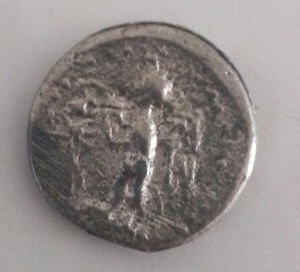
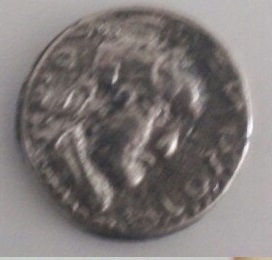
Cheap cast copies generally will have a seam around the edge where the metal seeped into the crack where the two dies were put together. The overall mushiness of the design also indicates that it was cast, not struck. It most likely is made of steel or iron, or perhaps nickel. If it sticks to a magnet, that's a sure way to tell it's fake.
There's an age-old con where a kid approaches a tourist with an "ancient" coin he or she just "found" and offers it to the tourist for a few dollars. They do not let the tourist see the coin up close until they have paid, and are vanished before the victim realizes what has happened. The kid then goes and buys another fake from his supplier, and does it all again.
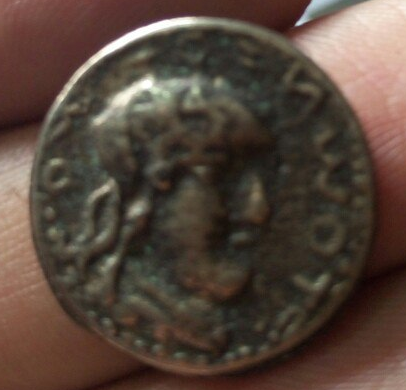
Fakes can either be made by making an impression from an expensive genuine coin, or the forger can simply try to carve the dies by hand using a picture from the internet. Unexperienced forgers probably do not know what sort of legends were used on Roman coins, and do not know to put the legend on "backwards" so it is legible on the coin. That seems to be the case with yours--gibberish legends rendered in mostly backwards characters.
Disclaimer: While a tremendous amount of effort goes into ensuring the accuracy of the information contained in this site, Coin Community assumes no liability for errors. Copyright 2005 - 2026 Coin Community Family- all rights reserved worldwide. Use of any images or content on this website without prior written permission of Coin Community or the original lender is strictly prohibited. Contact Us | Advertise Here | Privacy Policy / Terms of Use












 Posted 08/22/2016 09:42 am


