Quote:
...but there are also 'special' fakes... Antique ones made by artists some centuries ago etc...
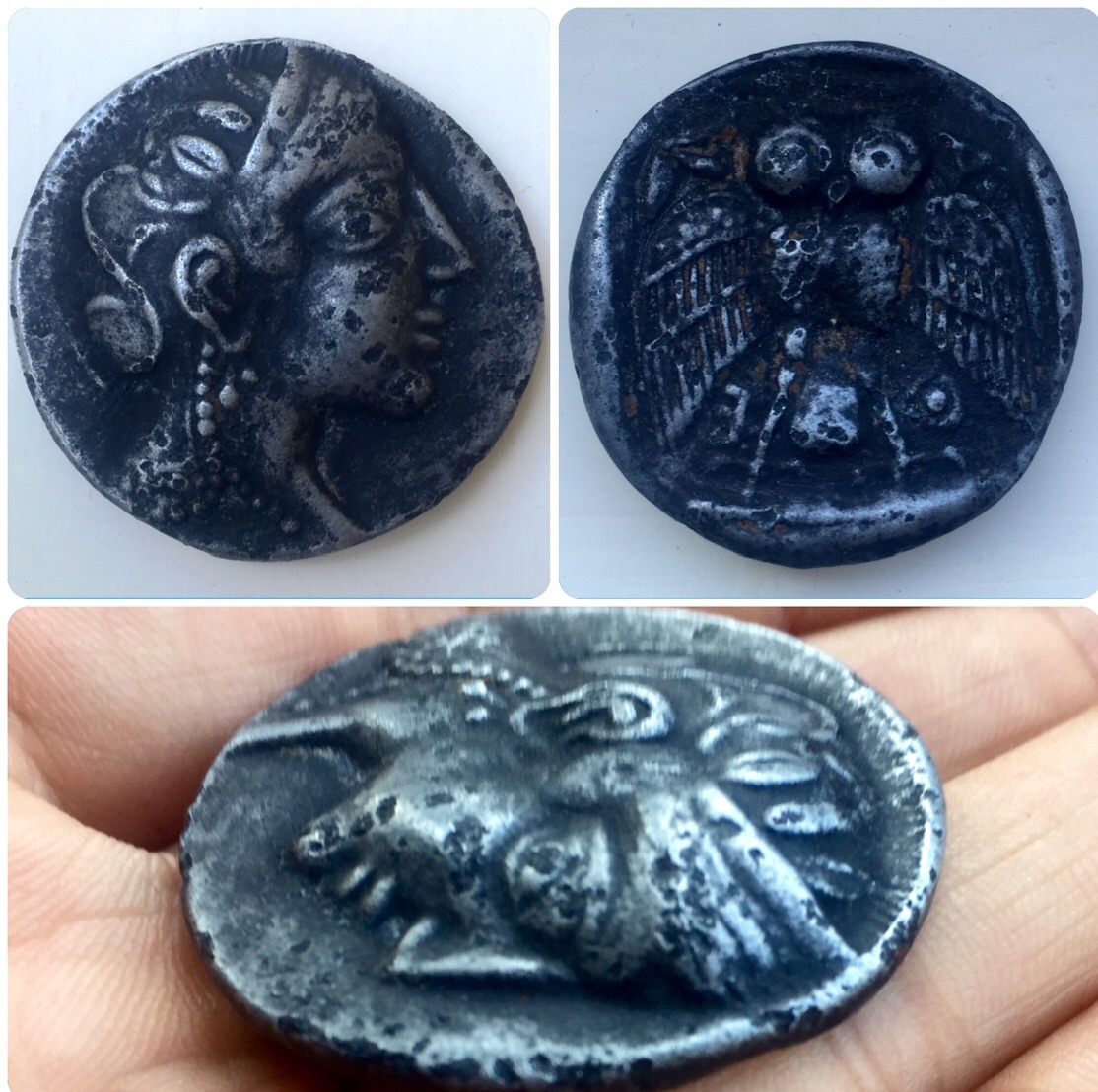
Contemporary counterfeits are, of course, valuable ancient artifacts in their own right and can easily be worth as much as, if not more than, the genuine article. This is not a contemporary counterfeit. They are closer than this to the genuine weight, and don't look this nice since they usually have a base-metal core that has corroded through in spots.
There are some famous counterfeits of more modern times. "Becker" counterfeits from the 1700s are, likewise, historic artifacts with niche collector market. This isn't a Becker, or a Paduan, or from any other modern famous counterfeiter. Such pieces often differ very much in style and design from genuine coins, since they were usually copied from drawings or with designs extrapolated from very worn coins. You also won't find them in Syria, since Becker and friends made their coins in Europe, for sale to European collectors, and very few of them have ever left Europe.
No, sadly, this piece is a "tourist copy". Such pieces are usually copies of copies: someone goes to a local museum, buys a museuim replica, and makes copies of that replica. It was most likely made sometime in the last decade or so, probably. They have little interest to a modern collector, except as an example of the type of fake.
Don't say "infinitely" when you mean "very"; otherwise, you'll have no word left when you want to talk about something really infinite. - C. S. Lewis









 Posted 09/07/2016 2:41 pm


 to the community


