| Author |
 Replies: 8 / Views: 1,346 Replies: 8 / Views: 1,346 |
|
|
New Member
United States
48 Posts |
Seeking some opinions before making a coin purchase. Is an NGC certified XF portrait dollar worth $156, and worth the risk of it not being real but Type II reproduction that so commonly get passed off as authentic, even with the most reputable tpgs? Thank you for any helpful comments and I'm looking forward to gleaning insight from the collective wisdom here  Edited by Diirizzyl
09/24/2016 08:07 am
|
|
|
|
New Member
 United States
48 Posts |
Ive sent the seller a message requesting they check the coins edge best they can for diagonal marks
|
|
Pillar of the Community
United States
689 Posts |
Seems a bit pricey, depends on date and variety. But if the coin looks nice go for it. I know that NGC has made mistakes, no chance of XRF in the plastic. If it is fake you might get reimbursed.
|
|
New Member
United States
48 Posts |
Seller was nice and checked for telltale diagonal edge marks shown here in photos they shared with me. Decided not to purchase based on these marks alone because they basically match exactly the marks on the AU (1792 Mo) I already have. 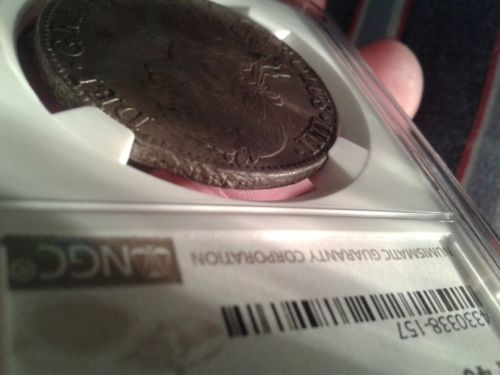 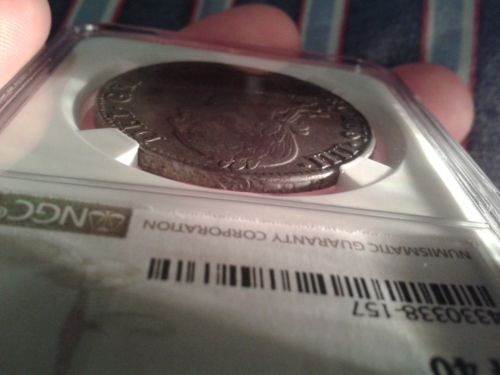 |
|
Pillar of the Community
United States
1758 Posts |
Sad to say but once an 8R or any coin for that matter is in plastic or a TPG holder XRF can not differentiate the metal from the plastic ingredients since the plastic make-up distorts the coin's alloy readings (i.e., its silver and gold percentages). So your safe. Even if you find its a fake from help from the GNL book Material Analysis can't work against you ... you can sell it back to the market if it bothers you ... some people on public channels will yell FOUL --- putting a fake back on E-Bay or such ... but you get the idea. If its slabbed XRF is useless ... IMO. Tried it and proved it in the laboratory. John Lorenzo (GNL Book Co-Author) Numismatist United States Edited by colonialjohn
09/24/2016 4:52 pm
|
|
New Member
United States
48 Posts |
Nice thank you for your reply! I definitely don't mind cracking open someone else's TPG capsule once it falls into my hands. Not a fan of those coin caskets myself, but definitely appreciate the TPG services. I feel confident enough I can id a genuine from its full edge view, so I've been requesting edge photos from sellers. |
|
Valued Member
United States
51 Posts |
So what are the telltale edge markings being discussed here? I have an 8 reale piece from Bolivia that I've been blissfully assuming was genuine, but now y'all have got me starting to worry!
|
|
New Member
United States
48 Posts |
Search for any threads here about 8 reales that Swamperbob has commented on. There is a wealth of knowledge concerning pillar and portrait dollar varieties and the many types of counterfeits out there. Some of the Counterfeits have value even, notably the type2 China trade 90% silver that I believe the above pictured coin is due to the diagonal edge markings
|
|
Pillar of the Community
United States
5362 Posts |
Diirizzyl Welcome.
The type 2 or Class 2 Circulating Silver Counterfeits were a type of trade coin made for China by several different independent manufacturers in several countries for various reasons between 1830 and 1930.
They are full weight often full alloy silver so you could call them unofficial "re-strikes" a name that bothers some members because re-strike implies the use of original dies. These were copied dies but at times very faithful to the original designs. They are so common that I doubt they will stop being traded as "genuine" by the majority of coin dealers. The reasons are complex but at the heart it is financial. If a coin is genuine silver and has the correct design many folks will just not believe that there was a reason to make these.
I spent several decade following this story because in the early 1960s I had the opportunity to meet a man who said he made them up to 1930 in Massachusetts. This was not a small shop operation but produced 10s or 100s of thousands of copies over several decades. Between 1870 and 1930 the Chinese paid an average of 25% over the spot value of silver in 8 reales from Mexico that had the portrait of Charles IV or Charles III. This preference for this one type of coin is exceptionally well documented. At the time making a dollar coin cost roughly 3 cents each and for an additional 3 cents they could be shipped in quantity to China that left a 19 cent per coin profit. That was a big margin ant that time. This was especially true when yopu consider that in 1873 the US left the silver standard and silver prices plummeted. By 1893 the US silver dollar contained under 40 cents worth of silver. But the Chinese paid the extra 25 cents.
While silver prices fluctuated the demand from China did not stop until the "Bustman" Dollar was prohibited by the red Chinese government in 1935.
All that being said - there is no premium value for the class nor is there a real penalty.
There are two different classes that you should be much more concerned with. Contemporary Circulating Counterfeits - the Class 1 or type 1 coins are usually (but not always) higher in value than their genuine counterparts.
The other class are the essentially worthless copies being produced now (and since the 1940s) in China and elsewhere. These Numismatic Forgeries are frauds made to deceive collectors. They are rarely silver and are usually crudely made using modern mold or die making techniques.
You need to be able to distinguish all types. Class 4 includes the altered originals with changed dates, mint marks or assayer initials that are used to fool collectors as well.
|
| |
Replies: 8 / Views: 1,346 |
|







 Posted 09/24/2016 12:14 pm





