| Author |
 Replies: 10 / Views: 1,426 Replies: 10 / Views: 1,426 |
|
|
Pillar of the Community
United States
6130 Posts |
To... Islam? http://www.ebay.com/itm/ZENGID-AE-F...291882877337Lost this one by a mile, but figured I would share since I had never seen one like it before. These were made by the Zengid dynasty in Syria under al-Salih Isma'il, from 569-577 AH (1169-1181). I didn't want it $100 worth, but I think this is fascinating evidence that Muslims were digging up and using hoards of Roman coins, even so far into the golden age of Islam. Here is the Zeno.ru page: http://www.zeno.ru/showgallery.php?cat=11043 |
|
|
|
Moderator
 United States
23731 Posts |
Interesting coin. It was not uncommon for some Islamic nations to copy coins from earlier empires and even from current ones. The Arab-Byzantine type coins are and example of that. This coin is a little less known and one that is sort after. Who ever won it got an excellent deal.
|
|
Pillar of the Community
 United States
6130 Posts |
Heh... I was the high bidder for three days at $35... I was hopeful, but the coin shot up in the last milliseconds.
What really strikes me as odd is that this ruler was allowed to put a human face on his coins... really all fals of this dynasty sport some sort of human face. I guess it is a good demonstration of how liberal the Abbasids were becoming prior to the Mongol invasion. I was taught in high school history (and blindly accepted) that no Muslim dynasty ever tolerated the depiction of the human form out of fear of "idolatry". Probably one of the most striking examples was the Tabaristan drachm with the ruler's face replaced with a diamond.
|
|
Moderator
Australia
17005 Posts |
As I understand it, these Islamic rulers interpreted the proscriptions against "graven images" differently. Coins are "struck", not "graven", so making them is OK. The dies used to make the coins are "graven", however, so they still had a quandary; one that was solved by hiring non-Muslim artists to do the "graving".
Don't say "infinitely" when you mean "very"; otherwise, you'll have no word left when you want to talk about something really infinite. - C. S. Lewis
|
|
Pillar of the Community
United States
3495 Posts |
While I have never purchased one I have long been intrigued by many of the Hellenistic type Islamic coins. The Islamic conquests were very much about replacing the Byzantines as imperial overlords. The Byzantines could no longer offer their subjects the benefits of 'belonging' to the empire. The new regime not only offered security from enemies but they taxed their subjects at a much more reasonable rate. The success of the Islamic Revolution was based on the premise (as all successful empires) that as long as you behave yourself, pay your taxes and swear allegiance you may do pretty much as you please. Step out of line and we will burn down the whole city. Local governments conducted business (and issued coinage) in Greek for over 100 years before Arabic replaced it. The success of the new faith was also bolstered by one key policy. Christians and Jews were taxed at higher rates than Moslems. Conversion took about 2 minutes and over time (esp tax time) the numbers of converts grew immensely ! Najm al-Din Alpi bin Timurtash of Mardin Mint: Mardin Period: April 1152 - June 1177 AD (547 - 572 AH2) Denomination: AE Dirham 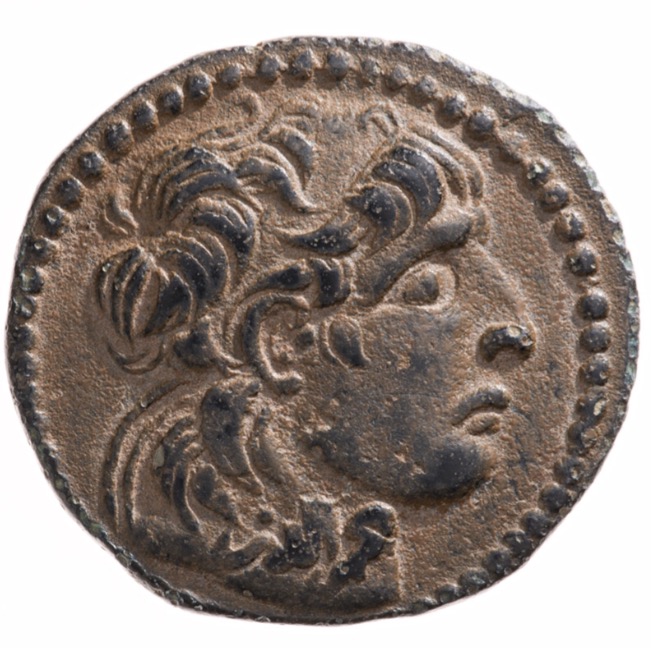 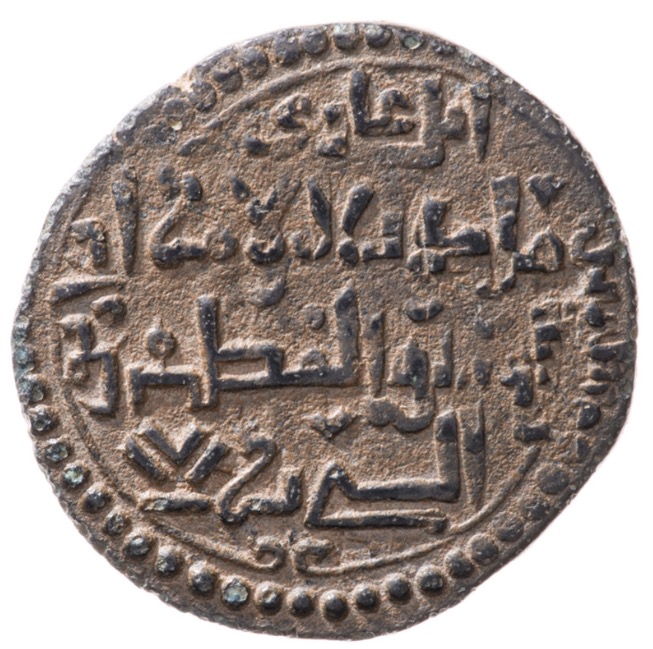 One of these days I need to find one of these They are after all .......... bronze !!! |
|
Pillar of the Community
United States
4963 Posts |
Quote:
I was taught in high school history (and blindly accepted) that no Muslim dynasty ever tolerated the depiction of the human form out of fear of "idolatry". I wish I had known this a year ago so I could have brought it up in sophomore history during the Islam unit. Oh well, this is still a very interesting topic. |
|
Pillar of the Community
United States
6130 Posts |
Good history there, Sap and Rufus!
At this time, the only human depicting Arabic coins I have (that is more than 300 years old) are a pair of billon and copper "bukhar hudat" type drachms from central Asia, modeled on the Hunnic imitations of Sassanian coins. They are pretty abstract, and I have heard it argued that the design was written off as "extremely stylized writing". Likewise, the "bull and horseman" jitals from India rapidly shift to "writing-like" as soon as the native Hindu dynasties became unable to resist continual invasion campaigns.
That fals does puzzle me, though... I was under the impression that the Greek method of engraving coins was lost during the Roman third century crisis? The artistry certainly never rebounds in Rome, nor does it make a re-emergence in Persia, the Byzantine empire, or anywhere else. Najm must have comissioned a brilliant engraver to copy a Greek coin for that fals... Certainly the Byzantines never attempted to recover that art!
|
|
Pillar of the Community
United States
5010 Posts |
interesting Islamic coins I wasn't familiar with...it's amazing how "Seleucid" the bust of that dirham looks!
|
|
Pillar of the Community
United States
3495 Posts |
We are not the only ones to look at the coinage of Ancient Greece and marvel at the beauty.
A thousand years ago the reactions were much the same and obviously a few industrious potentates ordered the minions to get to work on it !!
|
|
Pillar of the Community
United States
6130 Posts |
|
|
Valued Member
United Kingdom
90 Posts |
In answer to Finn235 I believe that many of engravers were Nestorian Christians who originated from the city of Nisibin and who had kept the skills of dye engraving alive. The monastery there was renowned as a seat of classical learning. https://books.google.co.uk/books?id...vers&f=false |
| |
Replies: 10 / Views: 1,426 |
|










 Posted 09/29/2016 2:28 pm


