| Author |
 Replies: 9 / Views: 1,174 Replies: 9 / Views: 1,174 |
|
|
Pillar of the Community
United States
790 Posts |
Looking at ancient and medieval coins, it's hard not to notice the contrast. Going back to centuries BC, we have coins that actually give us an idea what people looked like. Not to mention, the other elements of the designs were beautiful. 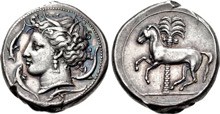 Over 1,000 years later, if you wanted to know what, say, William the Conqueror looked like, you get this. 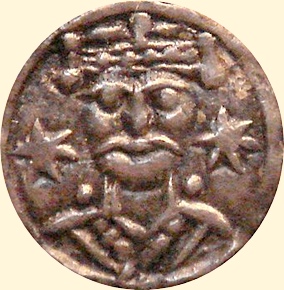 Can anyone explain the disparity? Thanks! Edited by twslisa
10/08/2016 06:59 am
|
|
|
|
Pillar of the Community
Australia
7096 Posts |
Edited by trout1105
10/08/2016 07:42 am
|
|
Bedrock of the Community
Australia
21792 Posts |
The ancient Greeks employed the finest artists of the time to engrave their coinage dies. It was a matter of city prestige.
Nevertheless, ancient Greek die cutting artistry does vary in the amount of talent that was available at a particular time and mint.
Modern artists can rely on photographs and modern die cutting techniques. For this reason, modern die cutting is a specialist skill, and less relies on sheer artistry and talent.
For my own tastes, I prefer the best of the ancient Greek coin designs to the best of modern coin designs. The possible exception maybe the St Gaudens Double Eagle, which is of neo Greek classic design anyway.
|
|
Pillar of the Community
Russian Federation
5186 Posts |
To be honest, that's just typical medieval style. (Actually a bit better than typical, it was usually even worse.) No, I don't know why, but it does make sense that it just wasn't as prestigious by that time. (This actually already happened by the late antiquity - your typical 5th or 6th century Roman coin would have a portrait with similar quality.) It went right back to quite good by the Renaissance though...  (that's James III of Scotland, 1484-1488 - said to be the first non-Italian coin type with a Renaissance portrait) |
|
Pillar of the Community
 United States
790 Posts |
Style it may be, but it's frustrating! I would really love to know what William I or Henry I or Empress Matilda actually looked like.
When you see Cleopatra coins, her legendary beauty, not to mention her appeal for powerful men, takes on unexpected nuances. She must have had an undefinable something that made her beautiful, or at least striking, that the coins can't convey.
|
|
Pillar of the Community
United States
790 Posts |
And yes, many more modern coins are definitely things of beauty.
|
|
Pillar of the Community
United States
6130 Posts |
I believe that during the Crisis that spanned most of the 3rd century, the highly skilled engravers fell out of favor, being replaced with progressively cheaper labor to inflate the coinage to keep military pay up.
The best engravers relied on employment to keep their art alive, and without that, they had to find other jobs. Just like the Dark Ages in England, it only takes one generation of hardship to destroy such an institution.
I am not sure why the Byzantines never seemed concerned with artistry on their coins, but the Muslims prided themselves in the calligraphy on their coins. The more liberal Muslim sects did attempt to revive the artwork on their coins, but these are pretty rare today.
|
|
Pillar of the Community
United States
790 Posts |
Good info. You can't entirely blame the dearth of engravers, though. Most forms of art, at least in that part of the world during the high Middle Ages, was a bit lacking. Here's an image that purports to be Henry I, from a manuscript about a century later. 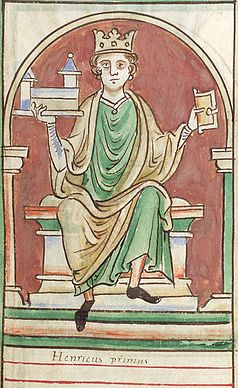 |
|
Pillar of the Community
Canada
5293 Posts |
I read somewhere (years ago, I forget where) that during the middle ages it was considered bad form if not downright sinful to have beautifully rendered artwork on coins, etc. So it was not so much a question of the lack of skill but of a philosophical outlook.
|
|
Moderator
 Australia
17005 Posts |
If you look at the Roman/Byzantine series, you can see the low degradation in artistic quality - "degradation" from a classicalist point of view - as the centuries progress. The explanation for it is complex. Contributing factors are: - The "depersonification" of the king or emperor. In an age when assassinations, usurpations and coups were commonplace and very few rulers died from natural causes, an important message to convey is that "the king" is sacred and inviolate and that you common people should not aspire to become the king. The depiction of the office of "king" or "emperor" became more important than an accurate depiction of the actual person holding that office at the time. - The decline in artistic ability generally, as the Dark Age set in and skills were lost. It is difficult for those of us who have lived in an Age of Progress to imagine what life then was like, knowing that the "good old days" really were better: Aqueducts and roads falling into disrepair and no-one knowing how to rebuild them, the army losing more wars than it won, territories that used to be a part of the Empire being over-run by barbarians. - The changing nature of the concept of coinage, and the changing physical properties of the coins themselves. Coins became flatter and thinner, and the way people used and handled coins changed with this. Thick coins could no longer be made, and Classical-style coinage is impossible to make on the thin mediaeval flans. We do sometimes see some attempts at reversal. The gold "augustalis" issued by Holy Roman Emperor Frederick II in Messina, Italy circa AD 1200, is perhaps the most famous example; this one sold for 10,000 euros on kuenker.de in 2014. With this coin, clearly what has happened is the emperor was shown an ancient Roman gold coin (that had presumably been dug up somewhere), and instead of melting it down like most other mediaeval kings had done before him, he took it to his mint-workers and told them, "I want my coins to look like that!". But they basically had to re-invent ancient coin production techniques in order to do so. Don't say "infinitely" when you mean "very"; otherwise, you'll have no word left when you want to talk about something really infinite. - C. S. Lewis
|
| |
Replies: 9 / Views: 1,174 |
|












 Posted 10/08/2016 08:34 am


