 Numismatic News
 - Coins can serve the same purpose as can an index fossil. Coins can help date an archaeological dig site in a similar fashion as can a fossil help date the strata in which that fossil is found. The important part in both scenarios is for the find to be documented in its proper context prior to that find being disbursed to museums, collectors or souvenir hunters.
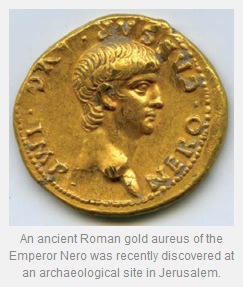
An ancient Roman gold aureus of the Emperor Nero was recently discovered by professional archaeologists in Jerusalem, this being a very unusual find since gold coins were not struck in Judaea during this period. It is also unusual since the coin depicts the young bust of Nero facing right on the obverse, making the iconography on the coin unacceptable to the contemporary Jewish population due the coin depicting of an individual.
Roman procurator Pontius Pilate issued coins a few years earlier on which the pagan sacrificial simpulum or libation ladle appears on one side, with three drooping barley ears on the reverse. Pilate's coins were struck in the name of the Emperor Tiberius but without the emperor's image. The objects depicted were possibly chosen as an intentional insult to religious beliefs held by the Jews, among whom these 'widows mite' bronze lepton coins circulated.
Read the Entire Article Subscribe to Numismatic News 








 Posted 10/23/2016 2:47 pm


