| Author |
 Replies: 7 / Views: 1,790 Replies: 7 / Views: 1,790 |
|
|
New Member
United Kingdom
2 Posts |
An aged relative here in the UK has just asked me to investigate selling a Cocos Islands coin her husband acquired there in 1945 when in the RAF. Front says 1910, back says 2310 / c.25 / 1913. I hope the attached scan is usable, using a non-croppable machine. Ewan McVicar 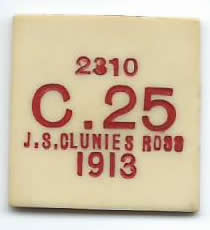 *** Edited by Staff to crop images. Please crop images before uploading. If you do not have software to do this you can use the free image optimizer. *** *** Edited by Staff to crop images. Please crop images before uploading. If you do not have software to do this you can use the free image optimizer. *** |
|
|
|
Bedrock of the Community
United States
11951 Posts |
I tried to look it up in a World coin guide.
There are no coins listed coins for Coco Islands between 1901 - 2000.
Maybe it is some sort of private token.
Or maybe it is nothing related to coin or token.
Just my opinion
|
|
Valued Member
Japan
349 Posts |
|
|
Pillar of the Community
 United States
1950 Posts |
These pieces are quite scarce... Looks like yours is in quite nice condition...
By the way, each of these pieces is individually numbered, that's what the '2310' number is (out of 5,000) for the 25 Cent pieces
|
|
Moderator
 Australia
17007 Posts |
Hello and welcome.  Here is the NGC catalogue page Here is the NGC catalogue page with data from the Krause catalogues - they are indeed "private tokens", but are considered tokens for general circulation and therefore are listed in the world coin catalogues. They are very popular here in Australia, as the islands are now an Australian territory. Being made of plastic, they are not graded to the same standard as metallic coins, or even paper money. Your piece does look very nice and clean, with little of the paint worn away. So I would put it towards the upper end of the price scale listed in the catalogue. Though these pieces are indeed rare enough that they are difficult to get a "catalogue value" for and auction prices might be a better indication. If auctioned here in Australia, I would expect it to fetch several hundred (Australian) dollars. Don't say "infinitely" when you mean "very"; otherwise, you'll have no word left when you want to talk about something really infinite. - C. S. Lewis
|
|
Pillar of the Community
United States
1674 Posts |
I would highly recommend getting the coin certified by one of the major grading companies, or at least by a well known expert. Many collectors will not even touch these without that due to many convincing fakes on the market.
|
|
Valued Member
United Kingdom
367 Posts |
I bought mine few years ago for my XX century ofec colection, and wondering about why is such a difference in colors. This one above and this from Stephen Album are almost white, and mine heavily yellow. 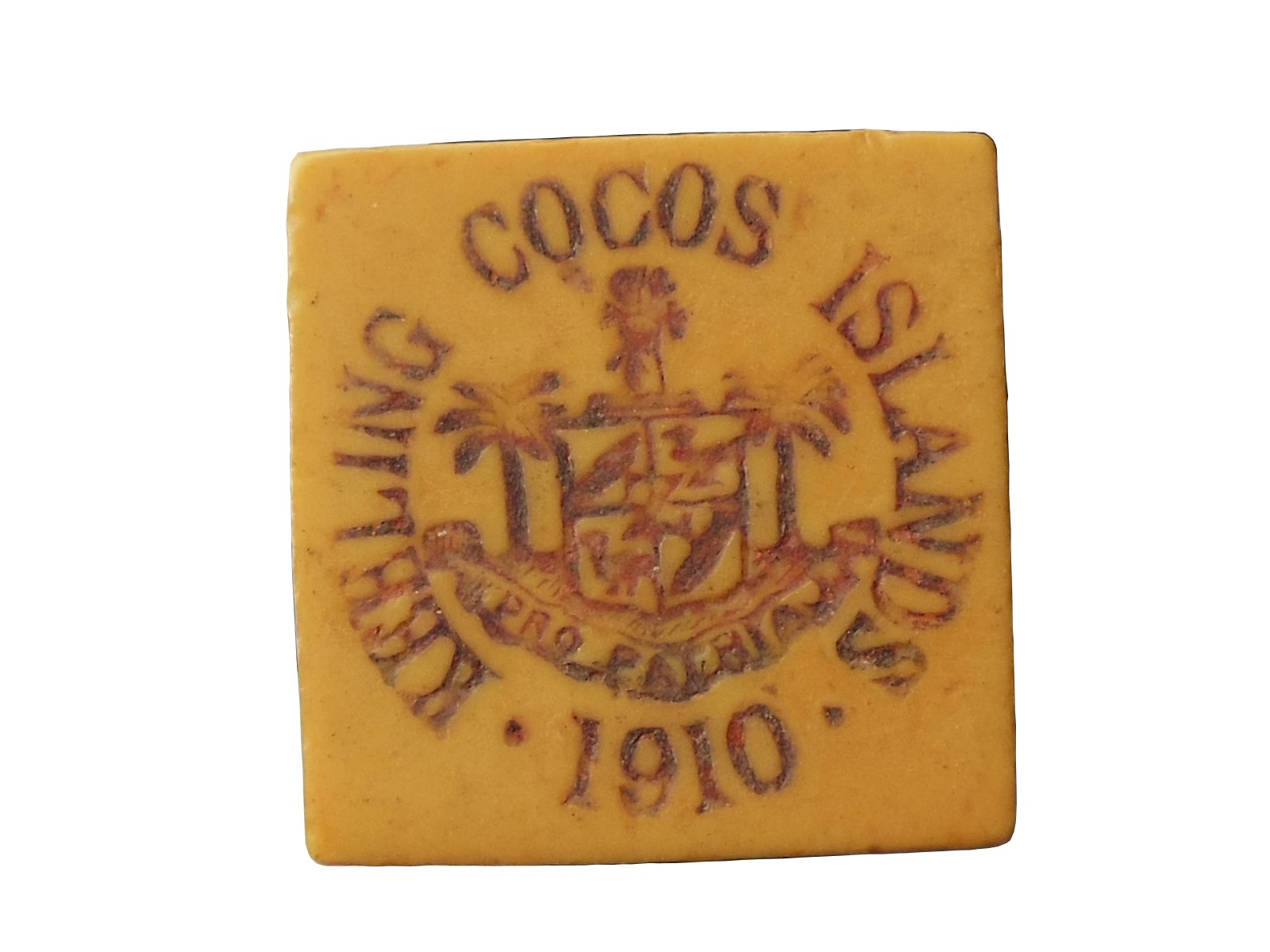 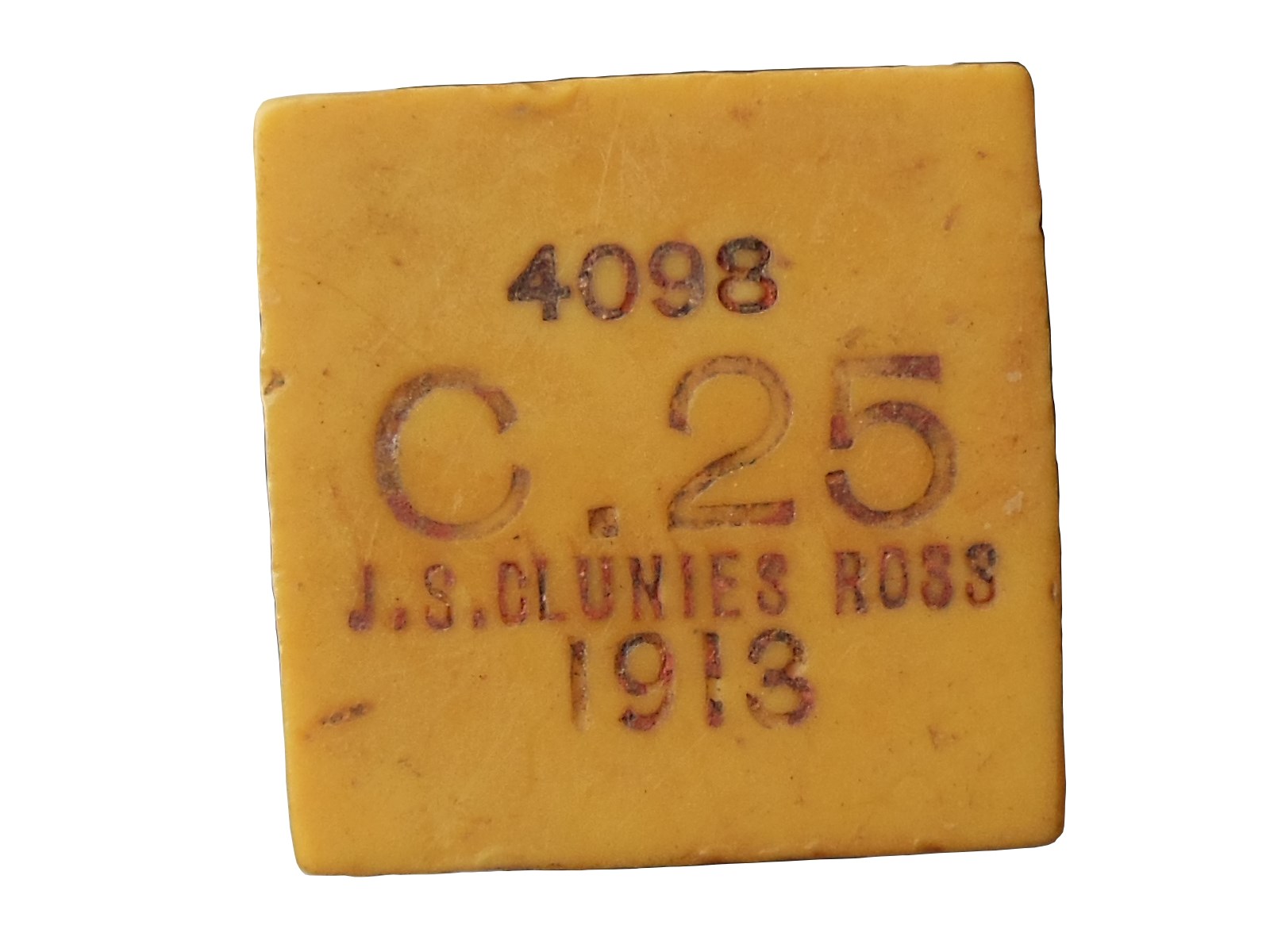 Edited by geraltttt82
10/26/2016 06:26 am
|
|
Moderator
Australia
17007 Posts |
They are different colours because they're made of plastic. This "ivorine" plastic fell out of favour as an ivory substitute precisely because it had a habit of turning yellow, and of doing so unevenly; keys on a piano made with an ivorine keyboard might turn all kinds of differnet shades of off-white, and it can look rather ugly. They are, as I said in an older thread where someone posted one, made of cellulose nitrate - camphor co-polymer - also known as "celluloid" in America; the same stuff they have always made table tennis balls out of. It has a tendency to turn yellow with age, especially if it gets contaminated (by, for example, people touching it, or even by chemicals in the batch of plastic it was made from). Exposure to air, heat and/or sunlight will also accelerate the aging process. Finally, in moist conditions they can grow moulds. A 100 year old piece of celluloid that is still pristine-white has likely been kept sealed up away from air and moisture, untouched, in the dark. I don't think there is any reliable treatment to "renew" celluloid to make it white again; it would be far easier to make a fake one than to try to clean up and retouch a genuine one. When it's all said and done, these pieces of plastic simply will not last as long as our metallic coins. Like all plastic, they will eventually self-destruct, degrading back into the carbon dioxide and water from which its raw materials were originally made, over a timeframe of mere centuries, rather than the millennia our coins are likely to last. Being a cellulose-based polymer rather than a petroleum-based one, the biodegradation route for this plastic is much faster. Don't say "infinitely" when you mean "very"; otherwise, you'll have no word left when you want to talk about something really infinite. - C. S. Lewis
|
| |
Replies: 7 / Views: 1,790 |
|










 Posted 10/25/2016 11:23 am


