| Author |
 Replies: 16 / Views: 2,776 Replies: 16 / Views: 2,776 |
|
Pillar of the Community
Canada
1461 Posts |
This is an ebay listed coin so some of you may have seen it. It almost looks like plated cast to me. But assuming real, what would cause this? 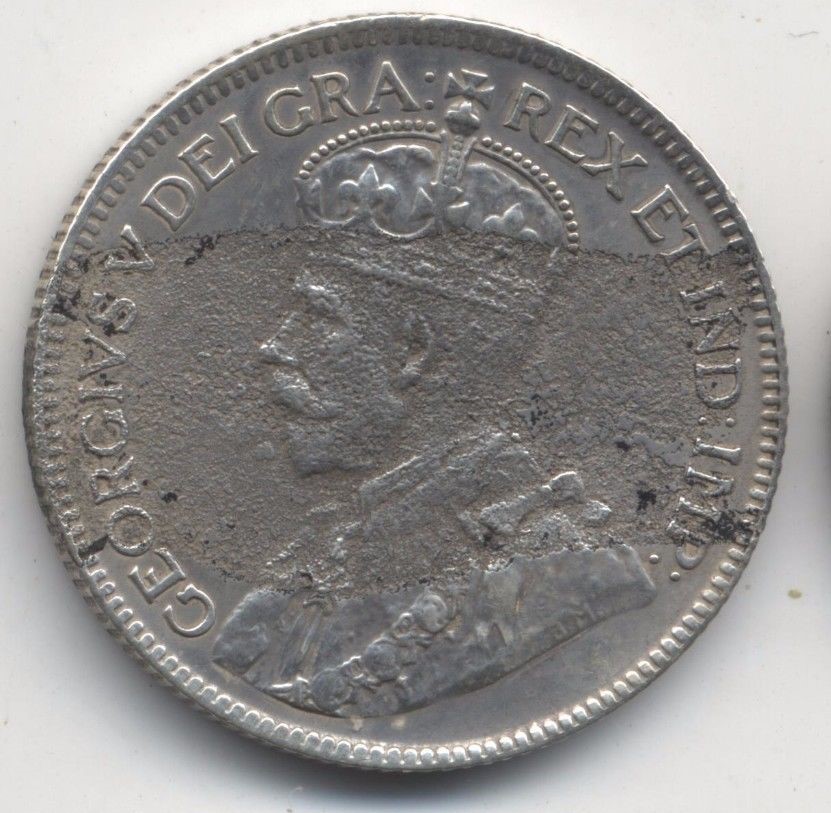 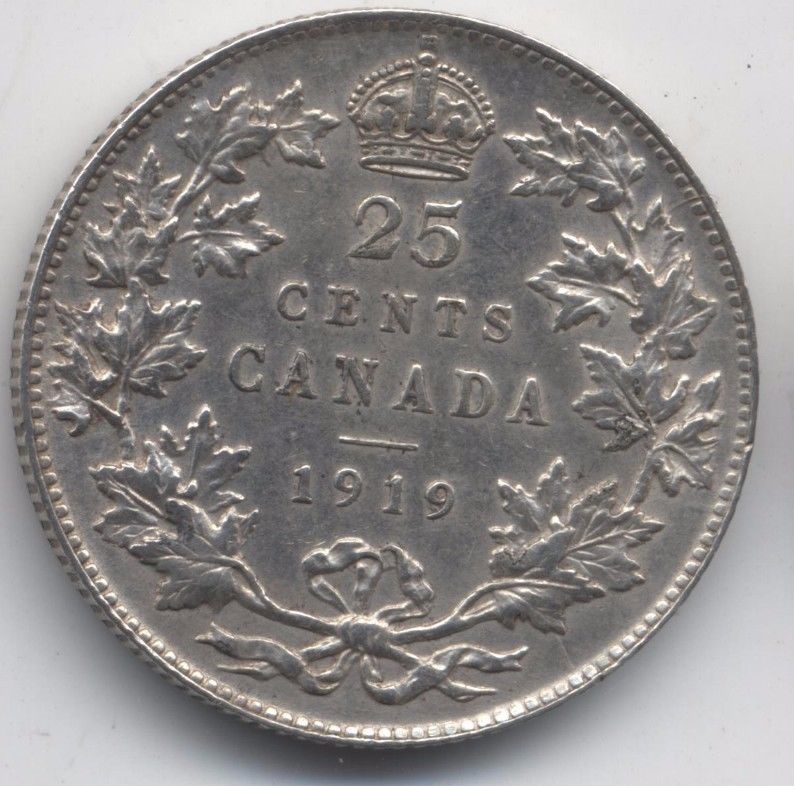 |
|
|
|
Pillar of the Community
Canada
2187 Posts |
Could you post a link to the ebay item? |
|
Pillar of the Community
 Canada
9900 Posts |
Corrosion.
"Dipping" is not considered cleaning...
-from PCGS website
|
|
Pillar of the Community
United States
5825 Posts |
Something, possibly a piece of tape, was positioned there.
It contained something corrosive.
If it was tape the corrosive compounds ate away at the coin and when removed left the pitted area.
Another possibility, it was a strike-through.
Probably not cloth since that tend to leave the weave pattern.
|
|
Pillar of the Community
Canada
871 Posts |
Whatever the "black stuff" is, it was likely corrosive. What is left of the black stuff is only on the pitted surface so that leads me to believe corrosion.
|
|
Valued Member
United States
302 Posts |
In any case PMD and hence belongs in a junk box. Too bad. |
|
Pillar of the Community
 Canada
1461 Posts |
The fact that it's PMD is obvious. Any idea of what type of acid can eat at silver like this? I just found it interesting since I've never seen a silver coin eaten in quite that way. |
|
Valued Member
United States
302 Posts |
Yes, sorry. Nitric or sulfuric acid. They will both dissolve silver. They're both strong and nasty agents.
|
|
Moderator
 Canada
10473 Posts |
Quote:
Nitric or sulfuric acid. They will both dissolve silver. They're both strong and nasty agents. ...not as nasty as hydrofluoric acid (HF), which will dissolve almost any metal!!  "Discovery follows discovery, each both raising and answering questions, each ending a long search, and each providing the new instruments for a new search." -- J. Robert OppenheimerContent of this post is licensed under a Creative Commons Attribution-NonCommercial 3.0 Unported License. See: http://creativecommons.org/licenses...0/deed.en_USMy eBay store
|
|
Pillar of the Community
Canada
9900 Posts |
Salt, moisture and enough time can also do this.
"Dipping" is not considered cleaning...
-from PCGS website
|
|
Valued Member
United States
302 Posts |
As I recall, hydrofluoric acid is used for etching designs on glass. Another one of my favorites in the nasty category is aqua regia (a mixture of nitric and hydrochloric acid). That one will dissolve both gold and platinum.
|
|
Pillar of the Community
Canada
9900 Posts |
My bullion dealer told me that rubber bands will corrode silverware, though I don't know how.
"Dipping" is not considered cleaning...
-from PCGS website
|
|
Valued Member
United States
408 Posts |
Quote:
Salt, moisture and enough time can also do this.  Because the coin is so old, it could be a variety of things that caused the corrosion to occur. Some possibilities have been stated. Also, sometimes, people just want to screw with coins and just see how they can destroy something. |
|
Bedrock of the Community
United States
12057 Posts |
As to rubber bands most natural latex bands contain elemental sulfur in some form or another, that sulfur reacts with hydrogen in the air to produce hydrogen sulfide, which in turn reacts with the silver to form silver sulfide, releasing hydrogen back into the air..cycle repeats until no more silver available, no more hydrogen available or no more sulfur available. That's to the best of my (somewhat old) chemistry knowledge. AB
Member ANA - EAC - TNA - SSDC - CCT #890 "Most of the things worth doing in the world had been declared impossible before they were done." -- Louis D. Brandeis |
|
Pillar of the Community
Canada
2430 Posts |
A very weak solution of Hydroflouric Acid will etch glass. A weak solution 2% or 3% of HF will do the etching.
Kick it up to 100% HF and lets just say that poor quarter would be like butter in a microwave.
|
|
Valued Member
Canada
458 Posts |
why some one destroys a nice coin is awful
|
| |
Replies: 16 / Views: 2,776 |







 Posted 10/30/2016 2:44 pm





