| Author |
 Replies: 12 / Views: 1,994 Replies: 12 / Views: 1,994 |
|
|
Pillar of the Community
United States
6429 Posts |
I bought this coin on ebay a couple years ago and I wonder what our world coin experts think about it. The planchet is not completely round and there are some small fissures in the metal. Are these likely to be manufacturing defects resulting from the minting process? I don't see any damage or obvious signs of cleaning and the surfaces look original to me. I'd appreciate any comments regarding authenticity, grade, originality, and/or value. Thanks! 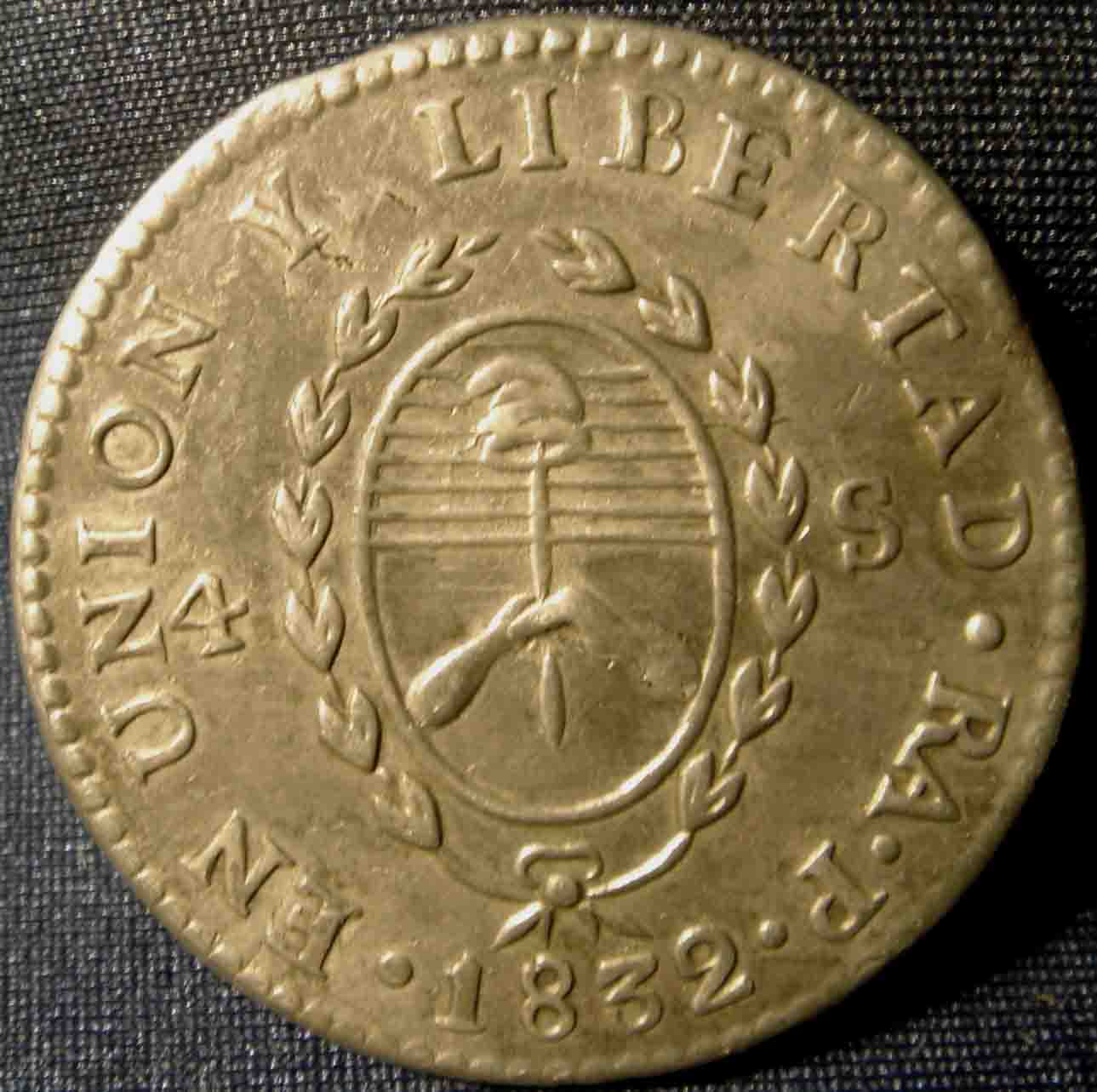 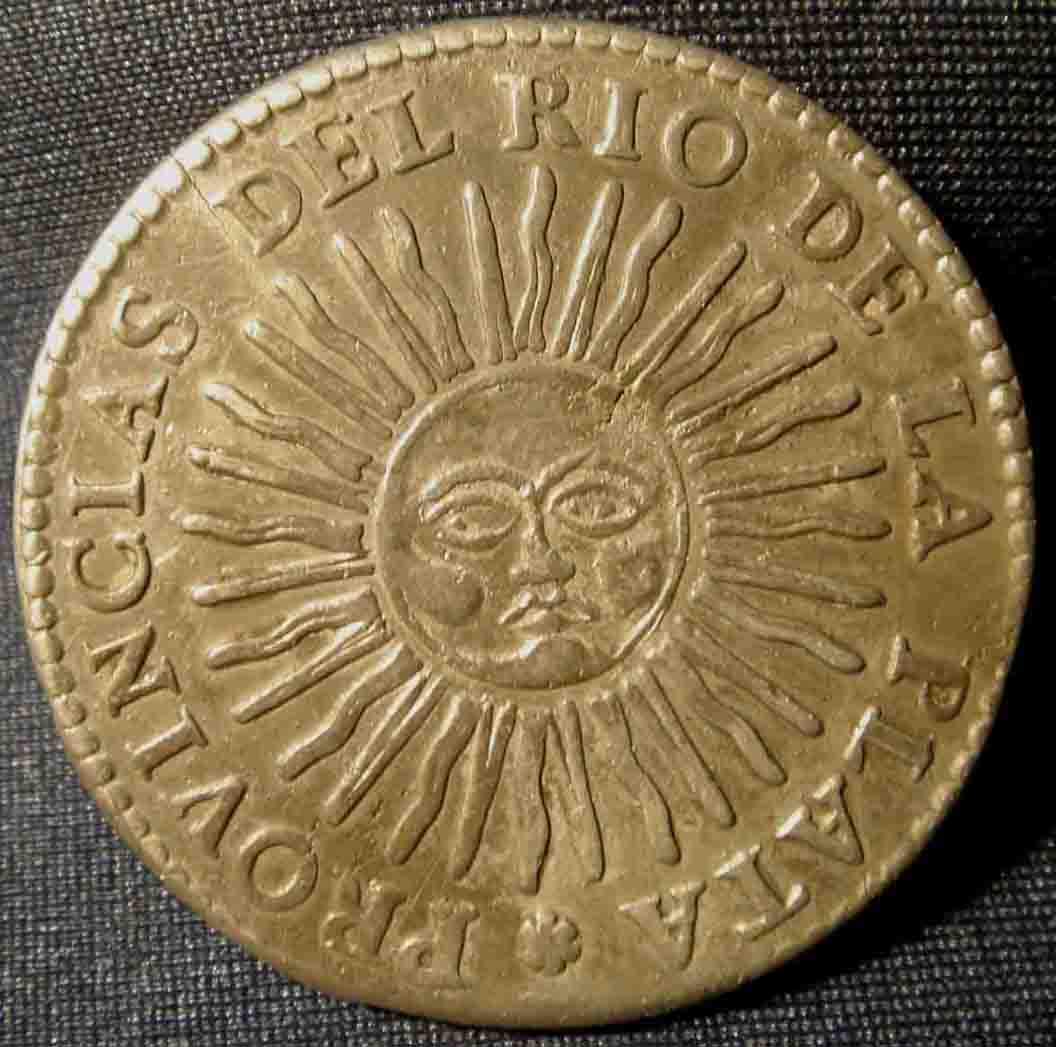 Edited by Jaobler
04/04/2008 02:19 am
|
|
|
|
Pillar of the Community
United Kingdom
2217 Posts |
Errors are common in all old coins, I have a feeling "in my bones" it will be genuine when Sap tells you it is ;)
|
|
Pillar of the Community
United States
1841 Posts |
I hope I'm wrong, but I think it may be a cast copy. The lack of denticles at 6 o'clock on the obverse (sunny side up) is one indicator. There are also some letters that appear to be poorly formed: The bottom of the PRO in provincias, the top of the E in del, the top of the L in plata. Also I wouldn't expect to see a planchet error show up on the devices, like at one o'clock on the sun.
|
|
Pillar of the Community
 United States
6429 Posts |
Hi Snowman, You know, I never considered whether this might be a fake. I bought it from a seller with a long history of foreign coin sales and excellent feedback, but you never know. I inspected the edges and they are textured with some kind of gripping marks. Those marks do not however cover the entire circumference; there are blank sections and at least one crack where a planchet fissure comes all the way to the edge. I don't see any sign of a casting seam. Here are some more photos: 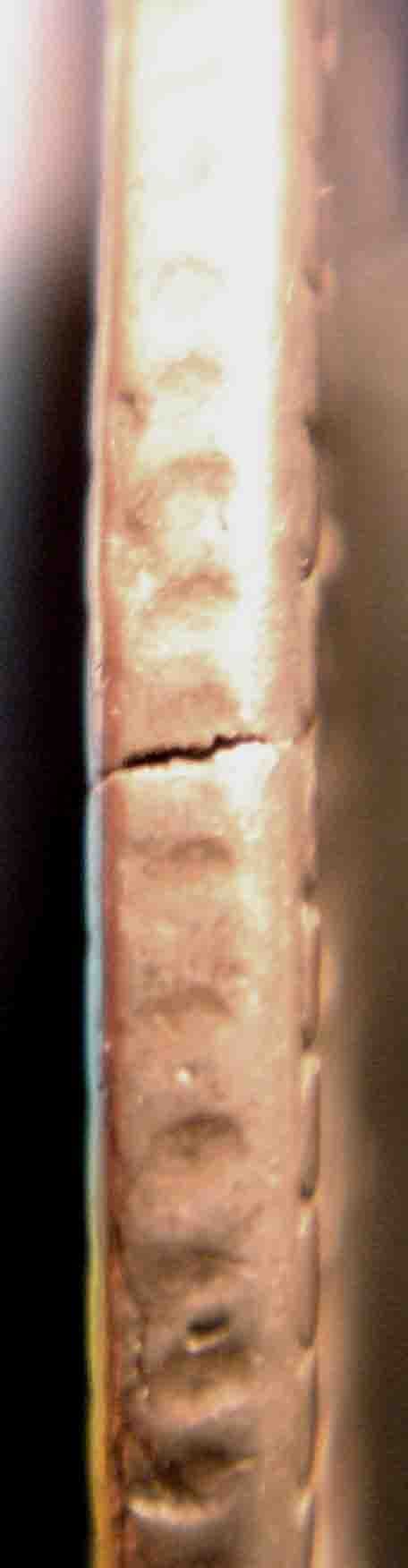 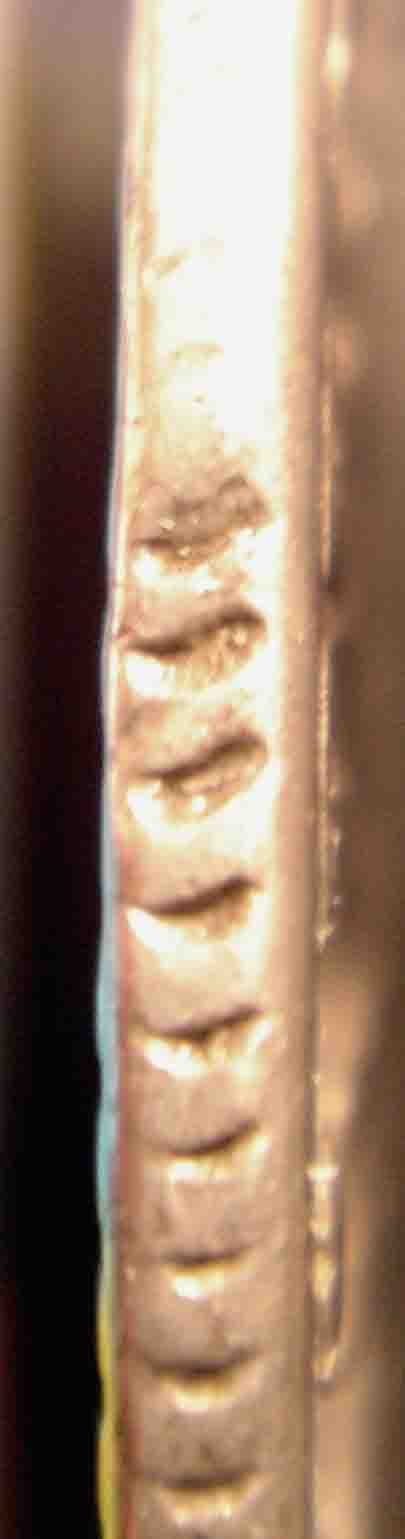 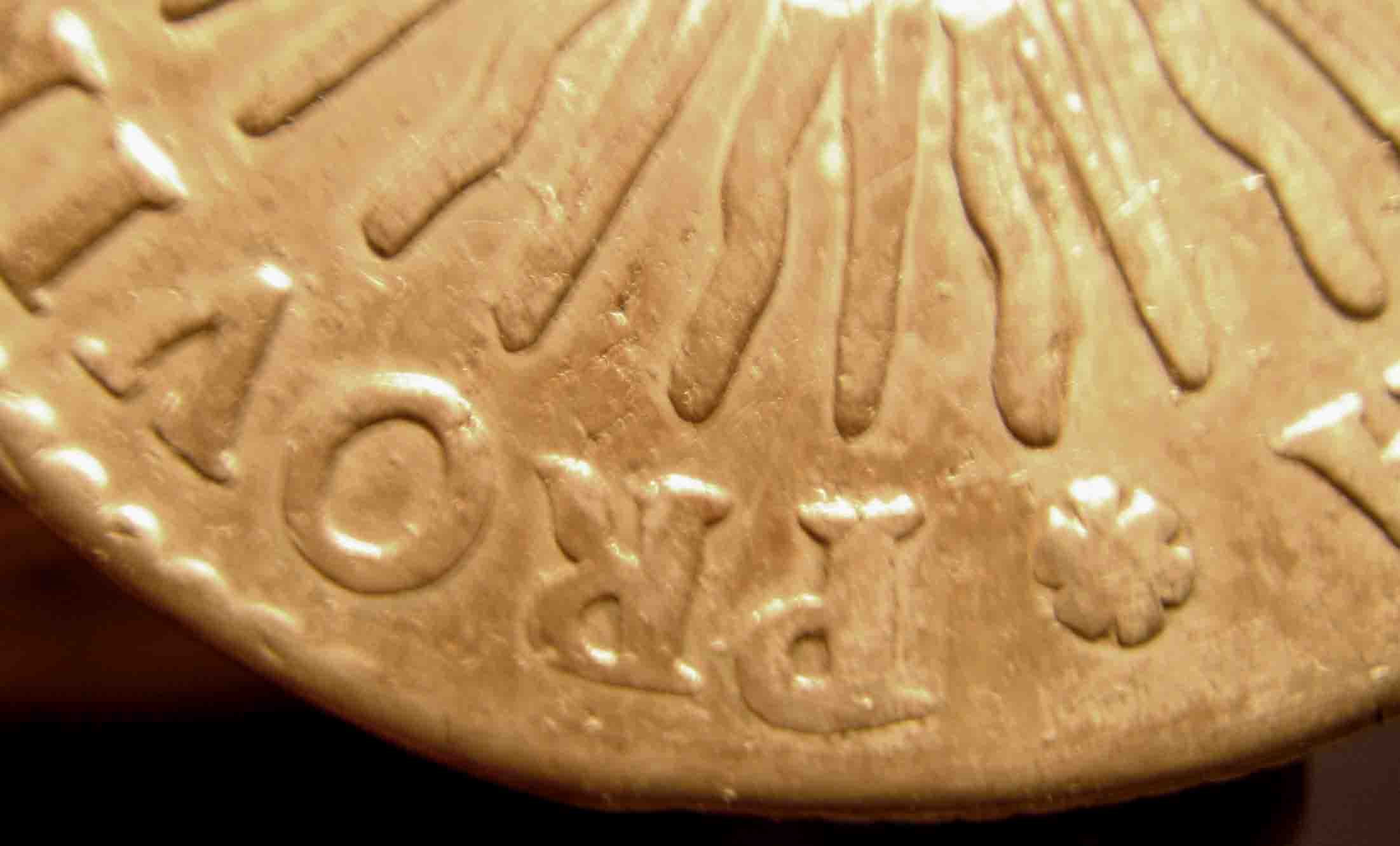 My old Krause doesn't give the standard weight for this coin. Does anyone know what it should weigh? I'll take it in to work tomorrow and get the actual weight. I am obviously interested in finding out whether it is genuine. If it is not, I'll contact the seller and see what he is willing to do about it! |
|
Moderator
 United States
6563 Posts |
the 4 Reales coin says 13.5320g, 0.8960 Silver .3898oz ASW
Looks to be the same as your 4 Soles but not sure. Just something
for you to go on for now I guess.
Everything looks right on it except the planchet defects.
Hopefully Sap and swamperbob will be in shortly
|
|
Pillar of the Community
United States
1841 Posts |
|
|
Pillar of the Community
United States
6429 Posts |
The coin weighs 12.923 grams according to our precision lab balance at work. Does anyone know whether that would be within the acceptable range for this Argentina 4 Soles coin type? Clearly it's a bit lighter than the 13.532 grams standard weight GO reports for a 4 Reales coin.
I wonder if Sap or Swamperbob are available to "weigh in" on this coin?
Thanks!
|
|
Moderator
 Australia
16982 Posts |
Hmmm. 12.9 grams sounds a bit light for an apparently unworn coin that's supposed to be 13.5 grams. At that weight, I'd suspect either a fake, or a genuine worn coin that's been "tooled".
But I'm not certain about the quality control standards of the Argentine provincial mints. I suspect it would be quite low, so such a weight variance, planchet flaws and a somewhat crude security edge could all be "normal". Really needs an expert in the post-colonial Latin American series (which I'm not).
Don't say "infinitely" when you mean "very"; otherwise, you'll have no word left when you want to talk about something really infinite. - C. S. Lewis
|
|
Pillar of the Community
United States
5362 Posts |
The weight makes me very suspicious, but I am no expert on that mint. I have no idea what their quality control standards were or how they were enforced.
The edge fracture does not look like silver to me. Silver is ductile and under striking pressure it flows. Cracks like the one I see here are most often seen on German Silver counterfeits struck in the 1840s. GS is NOT ductile and many coins break exactly like that. Most references to perimeter cracking of silver planchets associated with open sided presses are referring to much SMALLER cracks. This crack is seen easily with the naked eye and looks far too big for my taste. It could of course point to a debased original planchet that may have been smuggled into the mint but that is pure conjecture. The chances of this being coin silver seem to be rather low.
The coin also appears to have a few surface pits that look like the planchet was cast. Castings would not have the edge crack under normal circumstances so indications of possible casting of the coin itself would be at odds with a strike of a GS planchet. It can't be both. It is either cast or struck. But it could be a strike on a cast GS planchet. GS castings often have bubbles (actually zinc boiling off during the casting process). The edge design looks cast onto the coin which is how they did planchets. If you cast an edge onto the planchet and then polish the planchet to remove casting traces you often WEAR the edge to a grade below the struck surfaces.
The coin may be a cast copy but I really doubt it. There is a significant defect under the Y (in UNION Y LIBERTAD). That looks like a cast planchet defect that was possibly forced closed by the strike pressure.
The edge shots are consistent with my theory above - they look well worn with a poorly defined edge. Does anyone know what an EF to AU edge should look like for this coin?
I would suggest a Specific Gravity test - the accuracy of the scale used is definitely adequate to do an accurate test. If this is GS it will be about 9 if it is coin silver 10.3. I would love to know the results.
A strike in GS could in my opinion be a rather valuable forgery probably worth as much as $100. But once again, I am no expert on Argentinian coins.
|
|
Pillar of the Community
United States
6429 Posts |
I took Swamperbob's suggestion and performed a specific gravity test using the basic method he had described in another post. My result was 9.41, which is well below the correct value for a coin which should be about 90% silver. For reference I checked several 90% silver US coins; they tested in the range from 10.15 to 10.32 which tends to confirm that my test protocol is reasonably accurate. I have another Argentina coin, a 2 Soles denomination dated 1825 which I bought from an established dealer while visiting Argentina. That coin tests out at a specific gravity of 10.18 which is about right. It has moderate wear and weighs 6.675 grams. Here's the 2 Soles coin: 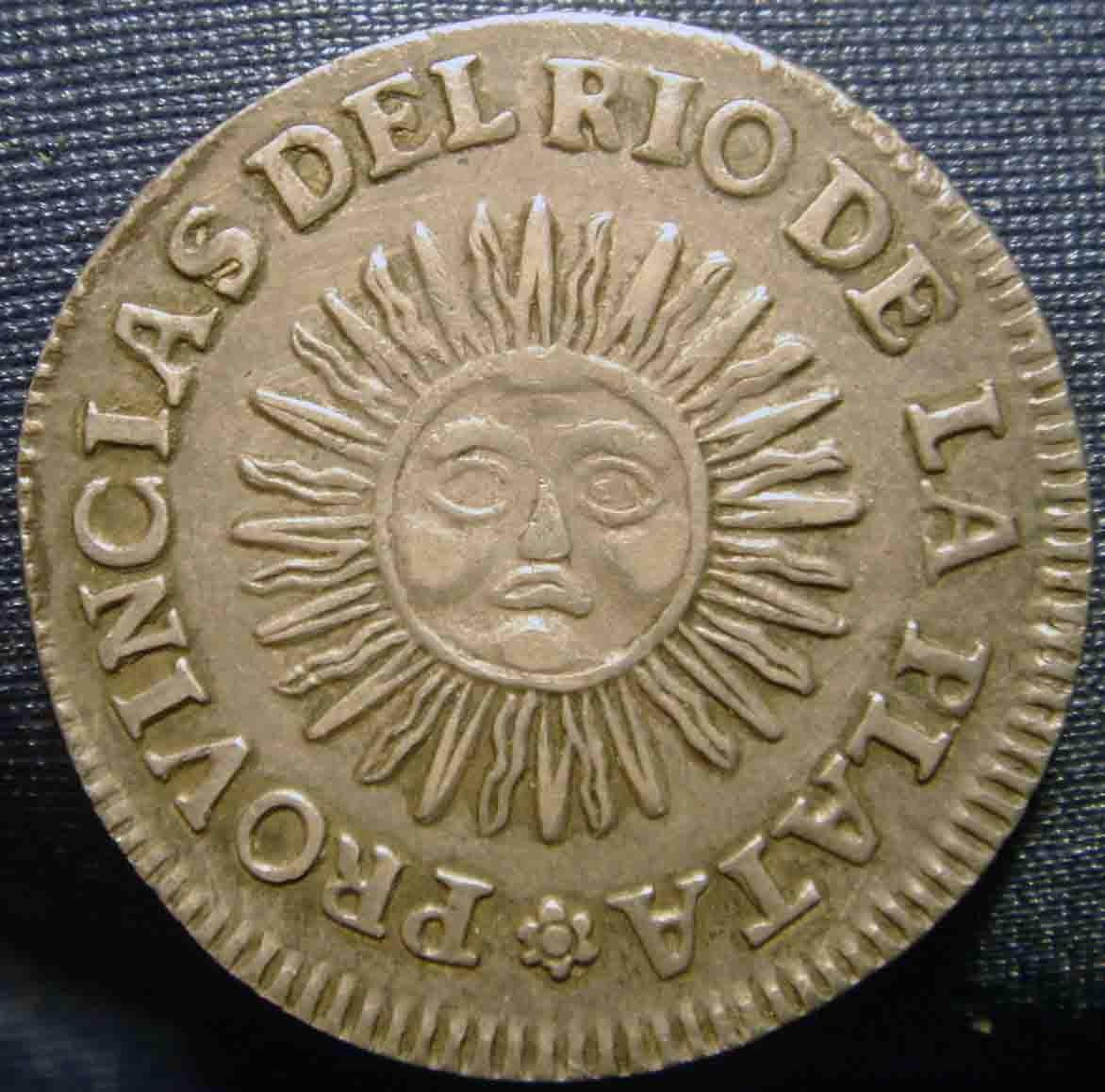 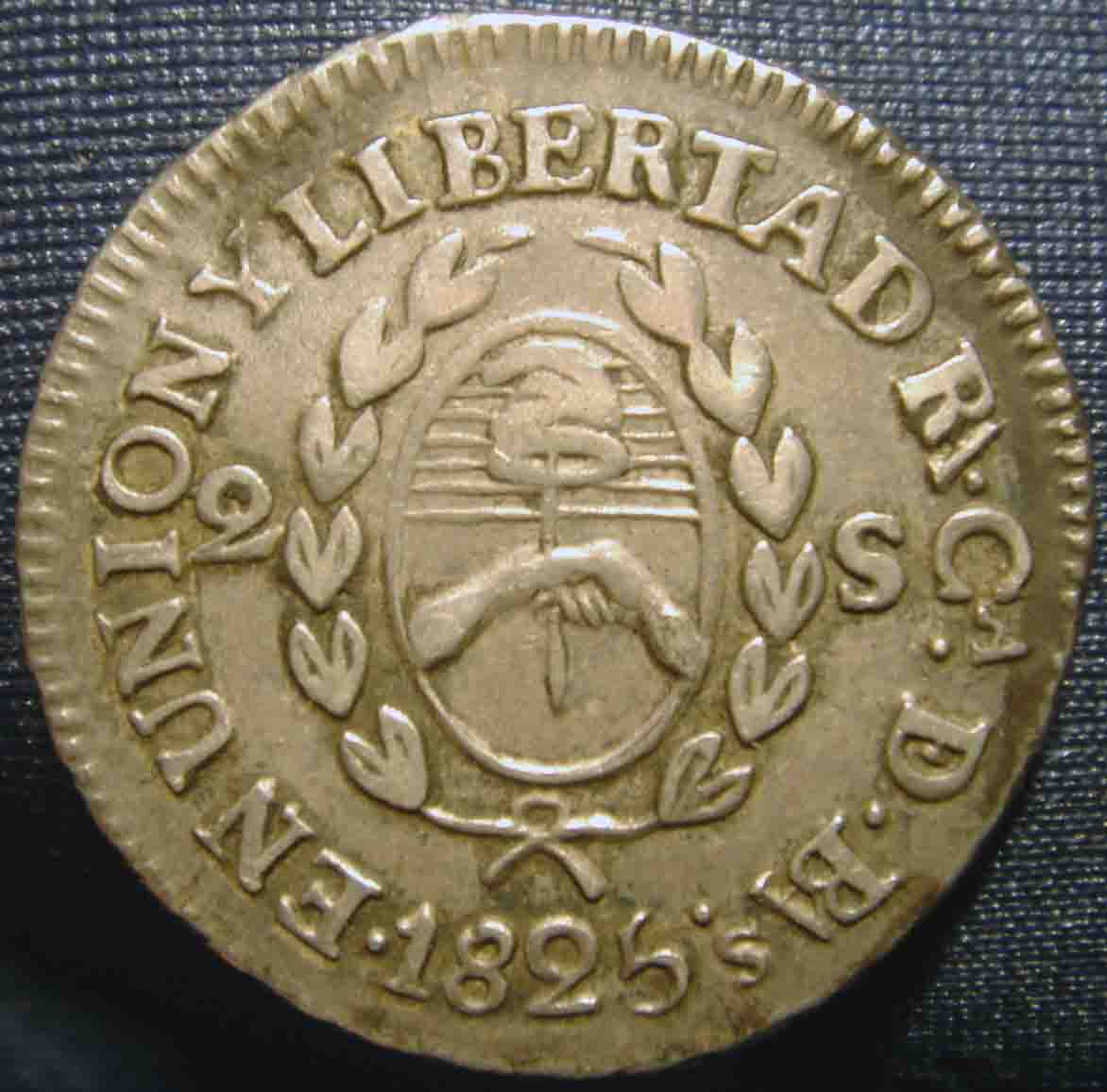 I would expect my 4 Soles coin to weigh at least double the weight of the 2 Soles coin, since it is actually higher grade than the 2 Soles. That weight would be 13.35 grams; at 12.923 grams my lightweight 4 Soles appears to be a confirmed counterfeit. Bummer!  I've emailed the original seller of this coin. I believe him to be a reputable dealer who probably made an innocent mistake. Hopefully he will be willing to take it back, even though it's been a long time since my purchase. |
|
Pillar of the Community
United States
1841 Posts |
Sorry to hear about the 4 soles. A period forgery is still an interesting coin though.
That 2 soles is a great coin. The 19th century sun pattern coins of South American are some of my favorites.
|
|
Pillar of the Community
United States
6429 Posts |
I'm starting to reconsider my opinion on authenticity. I've communicated with the seller and he is indeed a very experienced dealer of South American coins. He remembers this coin because of its unusual planchet fissures and believes it was struck from a planchet that was brittle due to improper annealing. He is sure it is genuine and is willing to buy it back at my original purchase price since he believes he can easily find a new buyer.
I have hammered silver myself to shape an ingot and have seen how it will initially flatten out and then become brittle and begin to crack at the edges. I've heard the term "cold working" used to describe this process. I would put the ingot back in the furnace and heat it to redness, then turn off the furnace and let it cool slowly. It would then be malleable again and could be further shaped by hammering. Based on this experience, the brittle planchet explanation makes sense.
I repeated my specific gravity tests and found out that in my setup this coin tends to trap air bubbles on the bottom surface when submerged. This was giving me low values. For my new tests I made sure there were no bubbles and the SG values were quite consistent with an average value of 10.25. This is pretty much right on for a coin that should be about 90% silver.
I'm still on the fence but am becoming more comfortable about hanging on to it. I think it would be fairly difficult to find a replacement.
|
|
Pillar of the Community
United States
6429 Posts |
Even though I was convinced the coin was authentic after all, I finally decided that the light weight bothered me. I returned my coin to the seller who happily took it back and refunded my purchase price. He is confident he will have no problem finding a new owner. He is a stand-up guy and I will not hesitate to purchase another coin from him if he offers one I like. So, I'm now in the market for another 4 Soles or 4 Reales Argentina coin from the period of 1813 - 1832. Anyone happen to have a nice one laying around?  |
| |
Replies: 12 / Views: 1,994 |
|










 Posted 03/16/2008 10:26 am


