You are right Finn235, inflation in second half of 6th century made that nummus weight went down, so nummus and 2 nummi coins came out of the monetary system, in last third of that century the lower value was pentanummi throughout the empire and four nummi (delta=4) specially in north Africa and Spania (they were familiar with this value due to vandal monetary system). Also these coins wouldn,t be practice and I think very difficult to use. It seems that the word "follis" (40 nummi) means "pouch" (a pouch of 40 nummi), and perhaps ( it is hypothesis) when they paid 40 nummi they added small coins till reaching the weight corresponding (they did not pay 40 coins but the corresponding weight whether they were 40 or 60 coins).
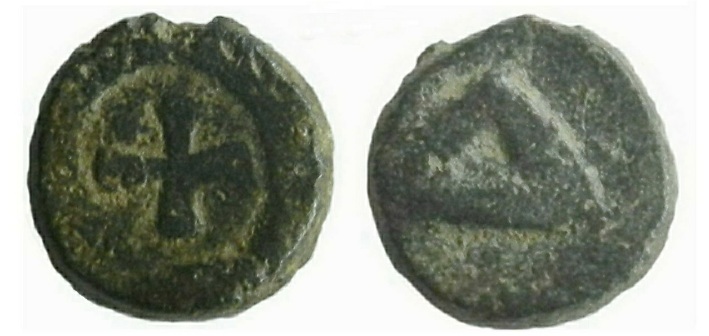
The fact is that this coin was unpublished till 1986 (Lechuga Galindo, M. y Mendez, Ortiz, R. (1986): "Numismática Bizantina de Cartagena". Historia de Cartagena, vol V, pp. 71-86.). Few years before, 3 of them were found in excavations in the city of CARTAGENA in South east of Spain (Cartago Spartaria for byzantines). Now they are 27 (from Cartagena) and (most) just from the layer corresponding to the fundational moment of the byzantine district. There are 12 more, finds from Spania province area. Another three from collections formed in Spain. And three in museums or collections out of Spain.
The first issues might be after 552/55 and before 589.
If you look for these coins, you can find one attributed to Heraclius and Alexandría mint, and another one as merovingian. Well, there are several studies and papers recording these finds in controlled archaelogical excavations (30) and shortly will be published a new paper about 45 coins known today. ; and the fact is that 42 (at least) come from the former byzantine provincia Spaniae.
v.
Edited by Veton
12/08/2016 03:29 am












 Posted 12/07/2016 09:42 am


