| Author |
 Replies: 11 / Views: 2,773 Replies: 11 / Views: 2,773 |
|
|
Pillar of the Community
United States
1609 Posts |
Sometimes I find coins in seemingly mint condition but they have a granular appearance when seen up close. Is this from new dies, older dies, or is it from something totally unrelated. The following picture shows what I'm talking about: 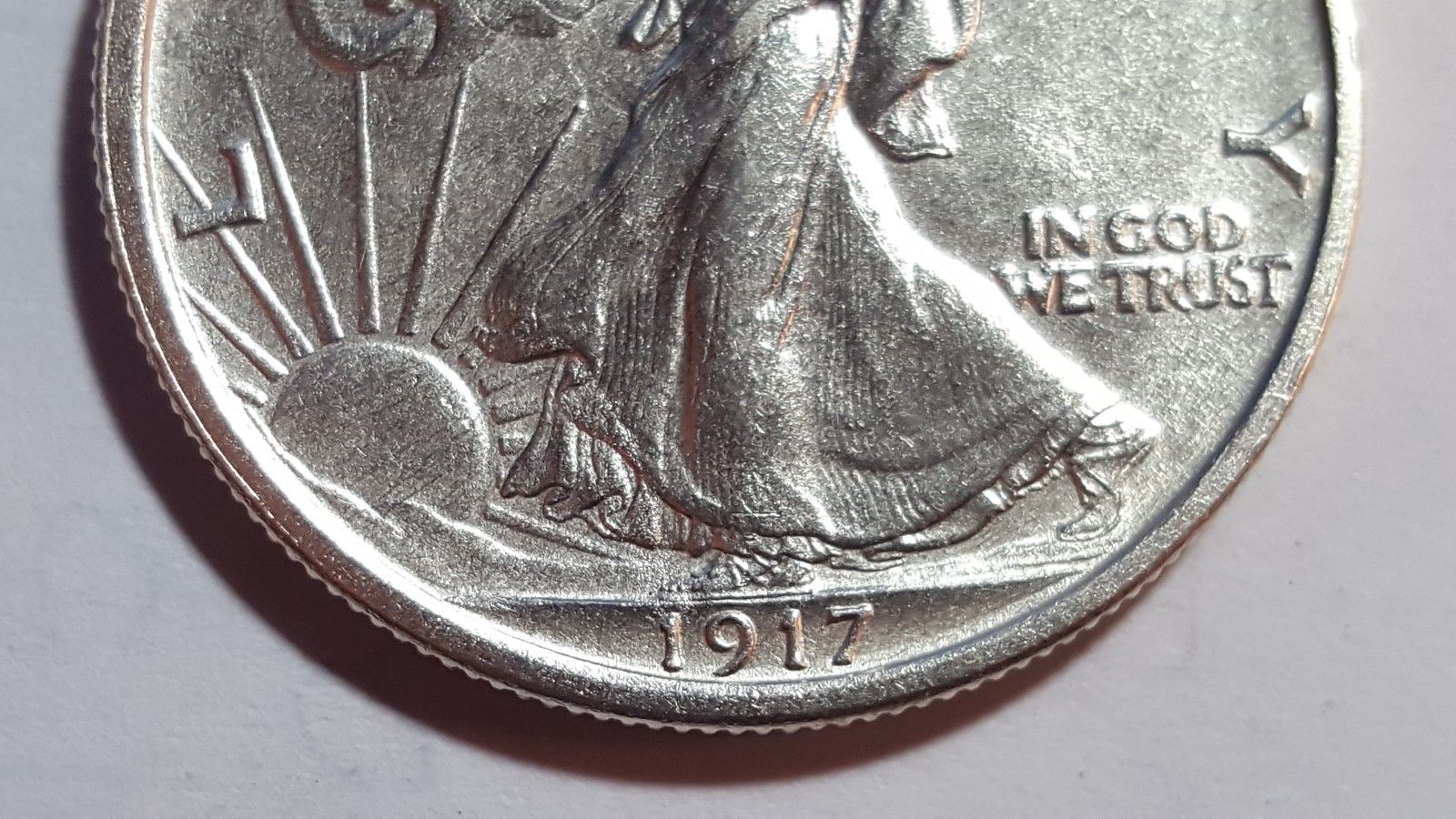
|
|
|
|
Pillar of the Community
United States
5825 Posts |
I suspect it was an attempted cleaning.
|
|
Rest in Peace
United States
17900 Posts |
Too long in the dip (acid), or too many trips to that pool. The acid takes off the top surface and if there are lots of particles adhering to the surface it take longer for the acid to eat down through them to the coin, resulting in pock marks where the acid could attack the coin directly without that interference.
|
|
Pillar of the Community
United States
4211 Posts |
Over dipping was my first guess also.
|
|
Bedrock of the Community
Australia
21792 Posts |
The occurrence of horn silver or silver crystallization is only seen on ancient coins.
|
|
Rest in Peace
United States
17900 Posts |
Sel - how does that apply here?
|
|
Pillar of the Community
United States
1005 Posts |
When acid attacks a metal surface, it preferentially etches along the metal grain boundaries/crystallites having certain orientations are etched differently than others. So the underlying crystal structure of the metal affects how the surface might respond to overdipping. So the grainy appearance could be due to the combination of this structure and acid etching caused by overdipping.
|
|
Bedrock of the Community
United States
94367 Posts |
|
|
Bedrock of the Community
Australia
21792 Posts |
A combination of very minimal wear with crystallization can occasionally show itself in surface granularity, as shown in the pictures here.
After a silver coin high purity has been struck, there is a tendency for the atoms align themselves in a crystal structure, given enough time (usually centuries).
It is worthwhile knowing what to look for, if your numismatic interest eventually extends into ancient coins. That was the direction in which my interests gradually grew towards.
|
|
Pillar of the Community
United States
1499 Posts |
The coin has been dipped too many times, or it was left in the acid solution for too long. Generally I have found that 1917 Walking Liberty half dollars can have a matte finish, even when they are in full Mint State. Dipping the coins can make it worse, as in this case. |
|
Valued Member
United States
97 Posts |
Dipping does not put tiny little hits into a coin's surface. 1916-17 WLH have a different surface and luster to begin with. This is mechanical damage, not chemical.
|
|
Valued Member
United States
404 Posts |
In my experience as an R&D lab technician, I must say that chemical erosion tends to act upon surfaces evenly and mechanical damage is inconsistent. Taking into account the type of machinery involved with minting coins, id agree with chemical damage. Unless the dies themselves had chemical damage and even if they did, the coin would still have full luster... My experience with corrosives tells me this is chemical damage...
|
| |
Replies: 11 / Views: 2,773 |
|








 Posted 12/10/2016 3:06 pm


