| Author |
 Replies: 15 / Views: 4,376 Replies: 15 / Views: 4,376 |
|
|
Pillar of the Community
United States
6130 Posts |
One of the most interesting things about Ancients to me is their use of extinct languages. An inscription that was as plain as day to a person of that day and age now is a scramble of shapes and lines that may require significant time and effort to decipher. In the interest of maybe breathing some life unto this slow corner of the forum, let's have a thread to show off our examples of coins sporting inscriptions in dead languages. Parameters: - The coin must be in a language no longer in regular use in the world, or at least written in an archaic script that is either extinct or confined to special religious or ceremonial use. - So we don't have page after page of the same coins, don't post coins Greek (still in use anyway) and Latin--be more creative! - Educate us! I'll kick us off with my favorite example: Western Satraps, Viradaman 234-238 AD Obv: Crowned bust of Viradaman right, Saka date (behind head) and remnants of Greek legend around Rev: Three-arched hill with river below, crescent above, sun and moon flanking. Brahmi: rajno mahakshatrapasa damasenasaputrasa rajnah kshatrapasa viradamnah (king and great satrap, the son of king Damasena, Satrap Viradaman)   Brahmi was first introduced around the time of the Maurya empire (323-180 BC) and is believed to have been based or inspired by Aramaic. It flourished especially under the Western Satrap empire in Gujarat, and was adopted by the Gupta empire under a modified script. Today, Brahmi is the parent of Devanagari, Tibetan, Nepalese, Javanese, Baybayin, Malayalam, Kannada, and scores of other languages. Brahmi proper was not fully deciphered until the 1800s. |
|
|
|
Pillar of the Community
 United States
6130 Posts |
Also, here is a short list to help spur things along:
Easy (Coins are easily obtained and cheap)
- Aramaic
- Pahlavi
- Kharosthi
- Early Chinese
- Brahmi/Gupta
- Miscellaneous Indian scripts
Medium (Available, but harder to find, or more expensive)
- Sogdian
- Phoenician
- Punic
- Iberian
- Persis script
Hard (Very rare, very expensive)
- Heiratic
- Heiroglyphs
Don't exist?
- Cuneiform
- Runic
Edited by Finn235
12/20/2016 3:35 pm
|
|
Rest in Peace
United States
17900 Posts |
Although I doubt I have anything to add, it is a very interesting subject that ill certainly subscribe to this subject.
Wonderful way to start it off.
|
|
Valued Member
United Kingdom
90 Posts |
My favorite examples of language use are the Greek legends used by the the Western Satraps. They certainly look like Greek but on closer inspection its often gibberish
Also it may be very pedantic to point this out but Aramaic is not a dead language, as it is still spoken day to day and Pahlavi (like cuneiform) is a system of writing rather than a language.
|
|
Pillar of the Community
United States
949 Posts |
Prutah of Alexander Jannaeus with Neo-Paleo-Hebrew inscription between the spokes/rays of the wheel/star on reverse (image on right): 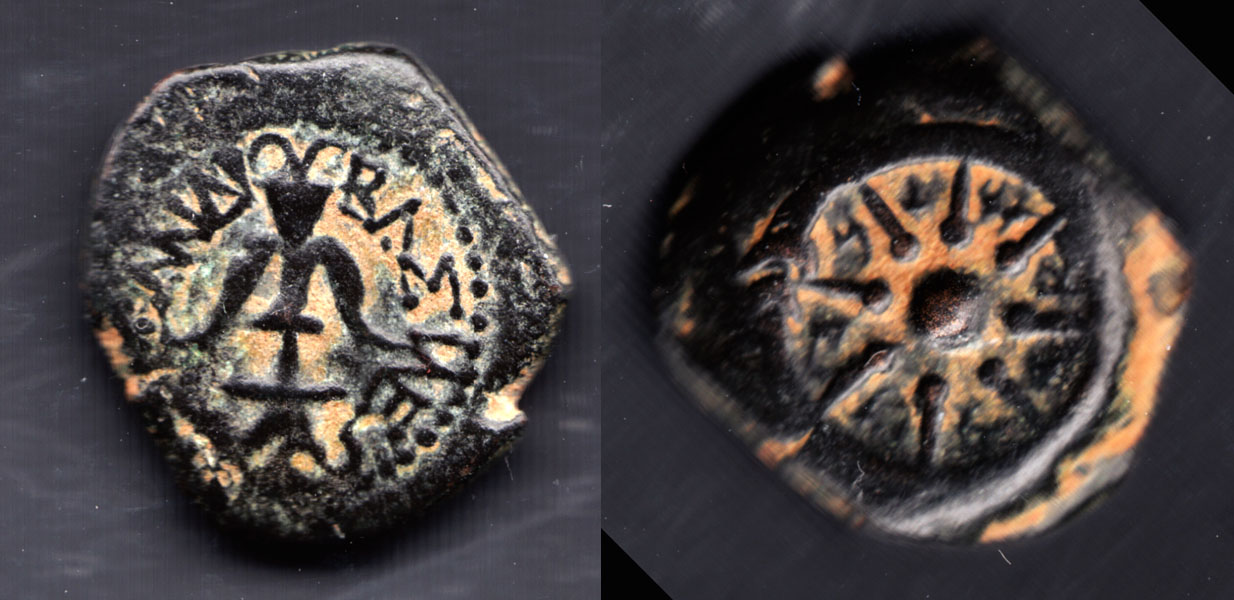 The upper 4 sections starting on the right and reading retrograde: yodh - he/waw nun - taw - nun = yehonatan = (literally: God gave) but also used for "Jonathan" lower 4 sections starting on the left and continuing retrograde: he - mem - lamedh - koph(sofit) = hamelek = the king The script is not authentic Paleo-Hebrew as used earlier in the first millenium BCE, but an approximation of it reconstructed by people more familiar with the later letter forms of Aramaic. The obverse is in Greek and reads (starting upper right and reading normally: basileos [alex]androu = of king Alexander I should add the note that modern Hebrew is a 19th century and later reconstruction of ancient Hebrew, but at the time these inscriptions were placed on the coins, Hebrew was no longer a vernacular language for anyone. Sorry for one more edit, but the scanner image didn't do justice to the detail. Here is a shot of the reverse taken with a camera setup (same orientation as before): 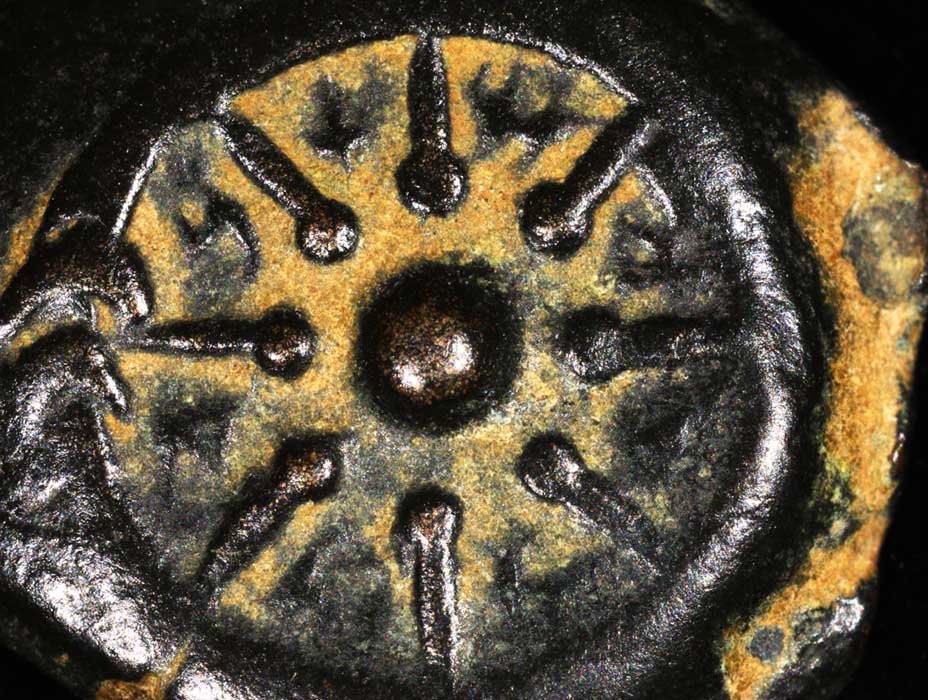 Edited by lrbguy
12/21/2016 12:49 pm
|
|
Pillar of the Community
Russian Federation
5186 Posts |
Old thread on much the same topic (more attention to scripts than languages, and not limited to ancients). Does anyone here have a coin with an Anatolian language, such as Lycian or Carian? Pretty sure that some of those exist but they're really uncommon.
|
|
Valued Member
Poland
392 Posts |
|
|
Pillar of the Community
Belgium
1194 Posts |
For Egypt,I know only one coin , a gold stater of Nectanebo II (360-342) , with a horse on the obverse and the hierogyphs nfr and nb , meaning fine gold . If interested in the coin , it is the moment now .albert http://www.coinarchives.com/a/lotvi...c5ccc9068817 |
|
Pillar of the Community
United States
6130 Posts |
I am aware of the Nectanebo stater, but after doing a bit of research, a disturbing number of experts believe it to be an extremely well executed 19th century fake. Either way, that is a coin WAY out of my price range!
And DagonX, that is really cool! I knew that Runes were the writing system of choice for rock inscriptions, but I have simply never seen them on a coin; all the Viking coins I have ever seen used Latin.
|
|
Moderator
 United States
23731 Posts |
Indo- Greek Bactrian Ruler Hermaeus 90 - 70 BC AR Drachm Greek Legend: BASILEOS SOTEROS HERMAOIU Kharosthi Legend: MAHARAJASA TRATARASA HERAMAYASA 16mm x 2.2g x 6h MIG 415 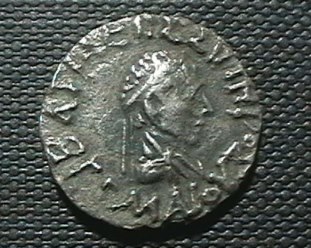 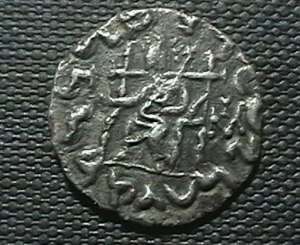 |
|
Pillar of the Community
United States
1315 Posts |
This is a nice thread Finn. Here are a couple for it. Spain, Gadir AE 26mm, 15g. Early 2nd C. BC Phoenician inscription MP'L above, GDR below. Phoenician letter "aleph" between tails. 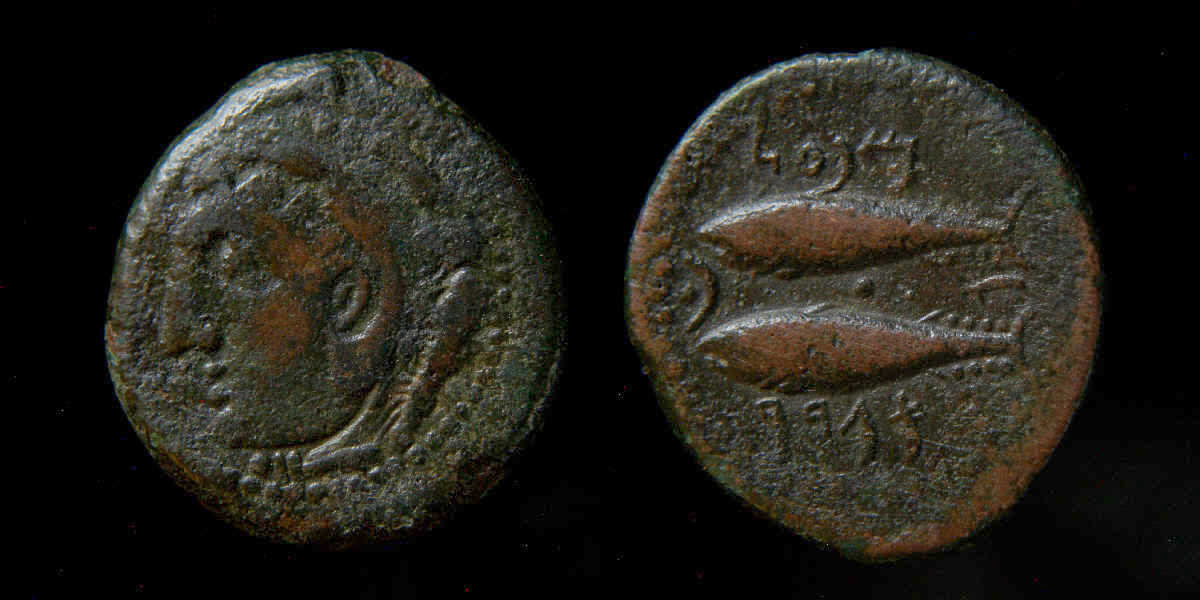 Spain, Turiasu AR Denarius 18mm,3.8g Early 1st C. BC Iberian inscriptions obv. KA, S, TU rev. TURIASU 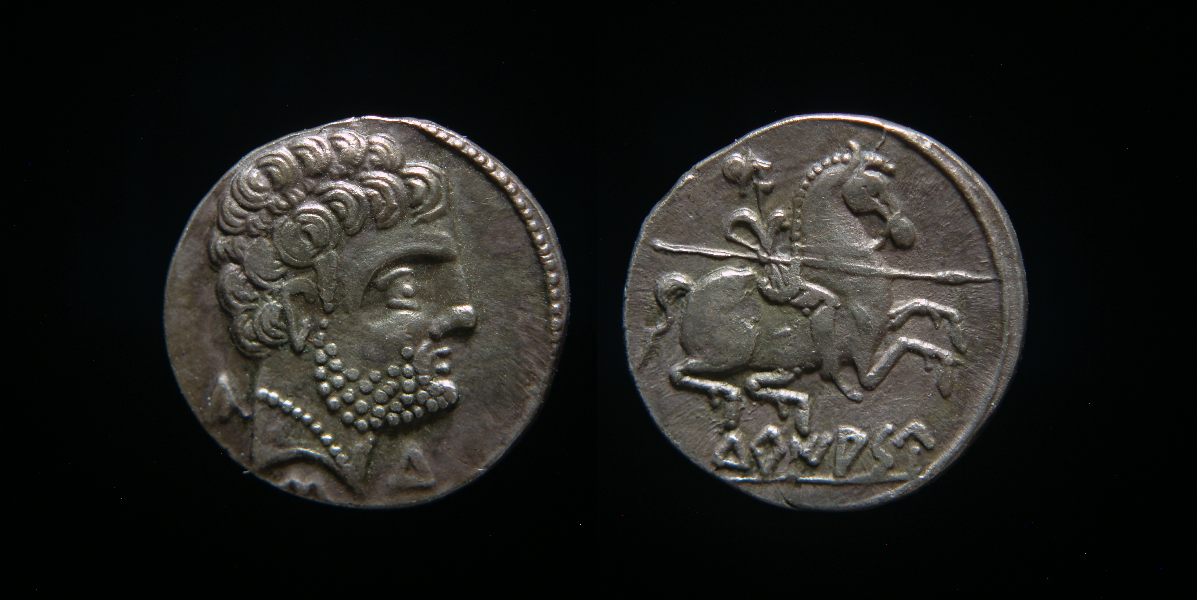 |
|
Pillar of the Community
United States
6130 Posts |
Nice ones Doucet!
I have some Iberian coins, but they all have either Latin inscriptions, or nothing at all. Definitely serves as a reminder that the first "civilization" these people had contact with were the Carthaginians.
You're putting bad thoughts into my head... I am scared to ask how much it would cost me to get one of those Turiasu denarii?
|
|
Pillar of the Community
United States
1315 Posts |
Spain, Abdera AE 24mm, 7.4g obv. Tetra style temple rev. Punic inscription 'BDRT between two tunas left 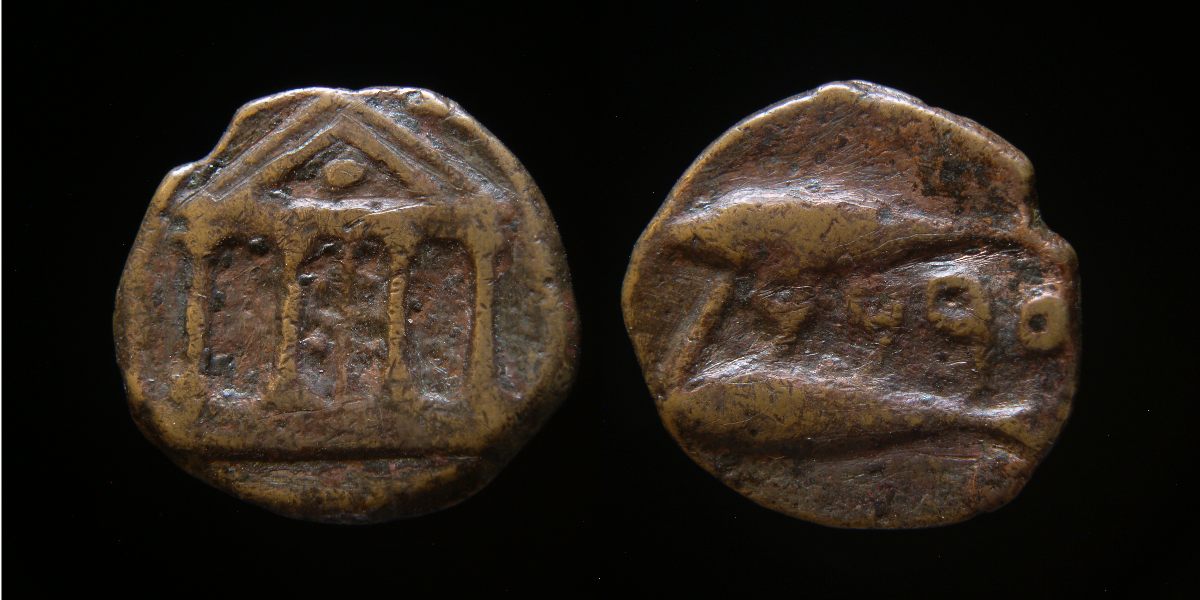 The Punic language is an variety of Phoenician and was used by the Carthagians. Abdera was a Carthagian colony. |
|
Pillar of the Community
United States
6130 Posts |
Going back to the Western Satraps and the degenerated Greek, it actually originated with Nahapana, who had his semi-literate die engravers put (poorly) a transliteration of his name and title so that Greek merchants who were fluent in Prakrit but could not read Brahmi could use and trust his coins. On the better inscribed examples, the obverse legend reads "PANNIOmega; Xi;AHAPATAC NAHAPi;ANAC", "Rajno Kshaharatasa Nahapanasa". He was killed in battle with the Satavahanas, and when the second line of Indo-Scythians recaptured the kingdom, they either couldn't find anyone fluent in Greek, or just didn't care.
|
|
Pillar of the Community
United States
6370 Posts |
Quote:
Early Chinese You mean, stuff like this? Pretty much any Chinese coin prior to 221 BC will fall into the "dead language" category because it wasn't until then that the script was standardized. The characters on these coins bear little to no resemblance to the modern characters. Hollow-Handled Spade (ca 600-400 BC) Obverse: "Wu" (City Name) 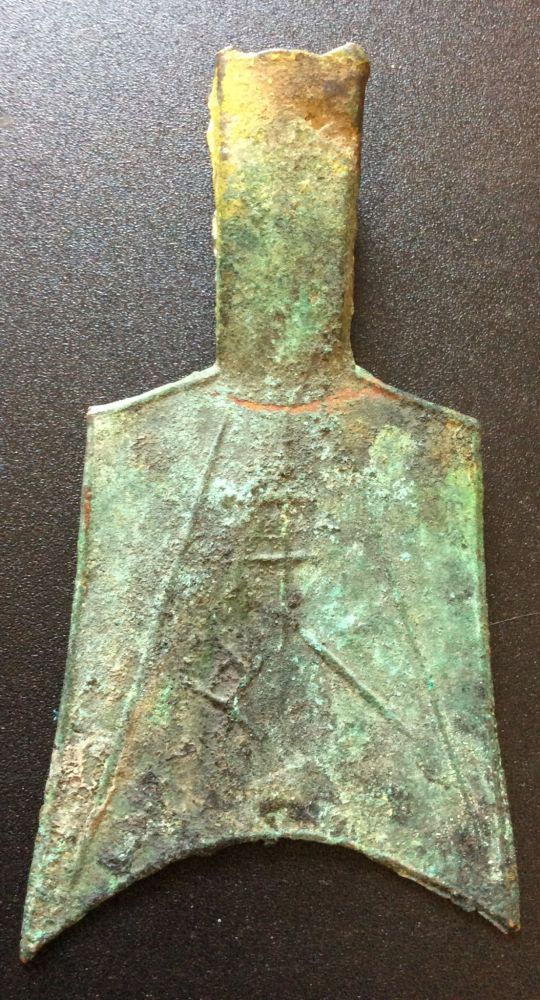 Square-Foot Spade (ca 350-220 BC) Obverse: "Lin" (City Name) On a side note, the city of Lin was named after the powerful Lin family who founded it. If you know anyone with the last name of Lin, they can trace their family back to that which founded the city which produced this coin! 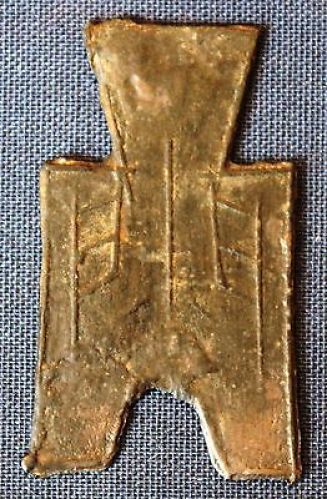 Pointed-Foot Spade (ca 350-220 BC) Obverse: "Da Yin" 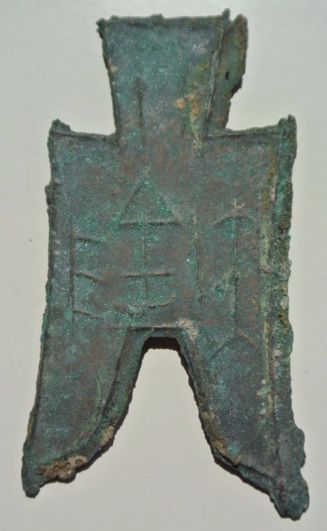 Dang Jin Spade (ca 300-220 BC) Obverse: "Shu Bu Dang Jin" (Special Spade valued at a Jin) Reverse: "Shi Huo" (10 Huo) 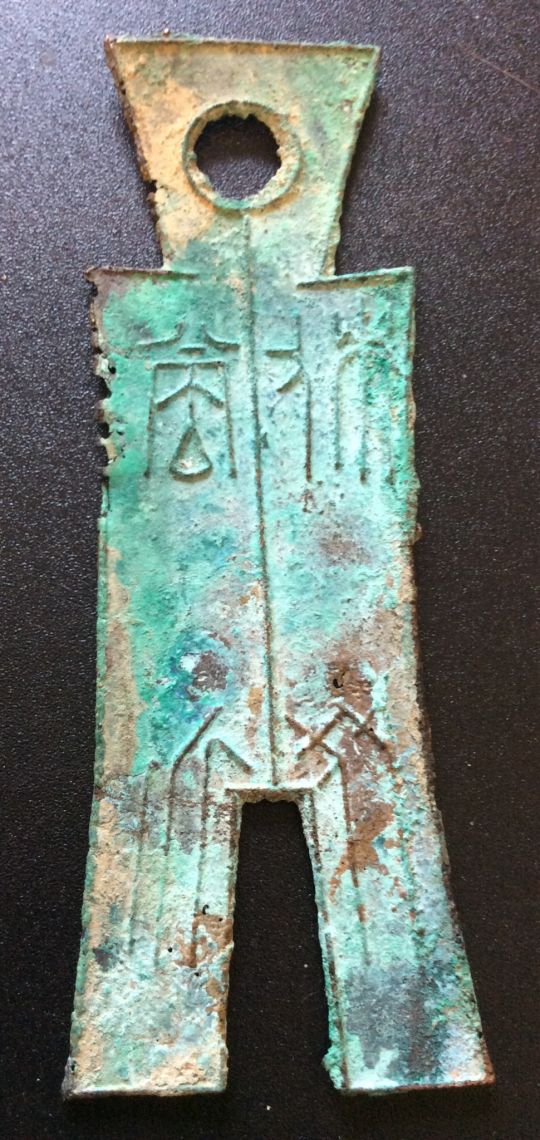 Qi Knife (ca 400-220 BC, or arguably earlier) Obverse: "Qi Fa Hua" (Official Currency of Qi) 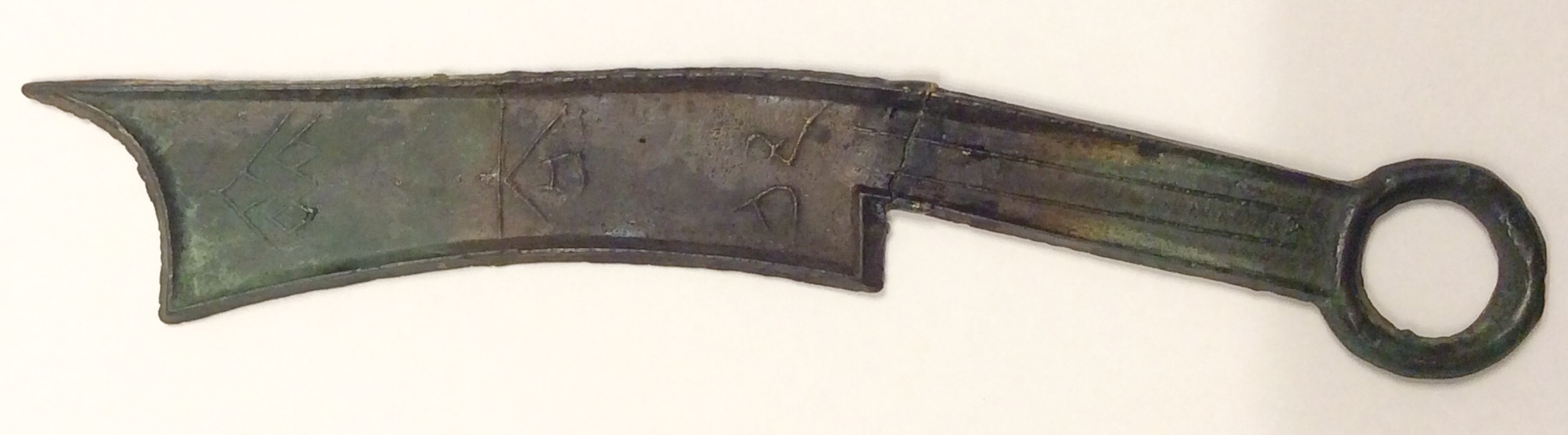 Round coin with Round Hole (ca 350-220 BC) Obverse: "Yuan" (City Name) 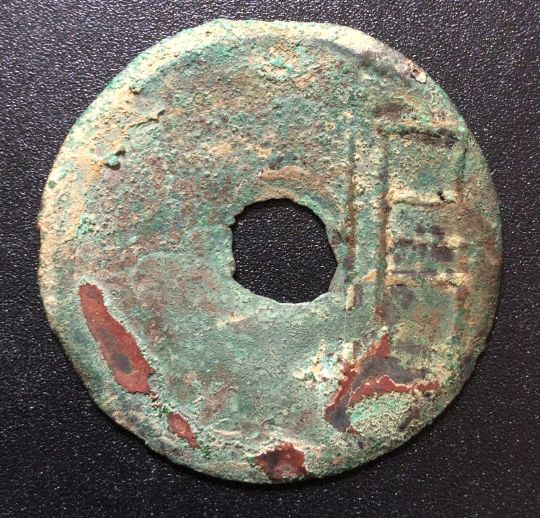 Round Coin with Square Hole (ca 300-220 BC) Obverse: "Ming Hua" 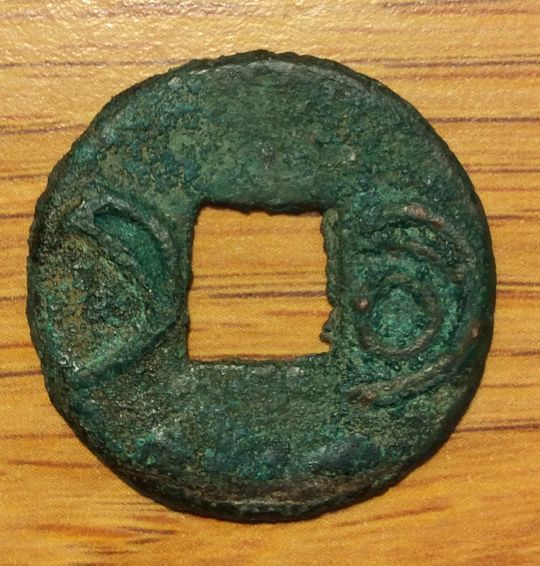 Round Coin with Square Hole (ca 300-220 BC) Obverse: "Yi Liu Hua" (Six Hua of the city of Yi) 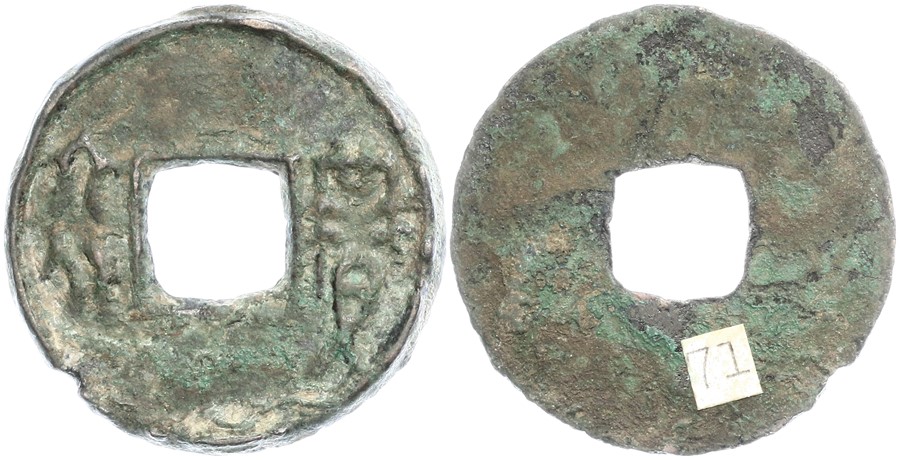 Edited by TypeCoin971793
12/24/2016 8:36 pm
|
|
Pillar of the Community
United States
6130 Posts |
I was hoping you would turn up some nice, archaic Chinese for this thread  Here is a coin whose inscription was one of the main reasons I was drawn to it: Sassanian Empire Ardashir I 224-241 AD AR Drachm Obv: Bust of Ardashir right, Inscriptional Pahlavi mzdysn bgy ' rthstr MLK ' n MLK ' ' yr ' n MNW ctry MN yzd ' n-mazdesn bay Ar-daxsir sahan sah Eran ke cihr az yazdan (Mazda worshipper, the lord (divine) Ardashir, king of kings of Iran, whose origin is from the gods) Reverse: Ornate fire altar, Pahlavi NWR ' ZY ' rthstr-Adur I Ardaxsir (Fire of Ardashir)   As previously mentioned, Pahlavi was a writing system used to write various languages, just like the Latin alphabet today is used to write most Western European languages. It was invented roughly around the time of Mithradates I of Parthia (2nd century BC) as a modified Aramaic. It was used very rarely on Parthian coins, but was replaced by Greek and refined to non-coin inscriptions. Ardashir I fancied himself as a liberator who was restoring Persian (Achaemenid) rule to the Middle East, so his decision to use a Persian script was a highly political one. Over time, Inscriptional Pahlavi fell out of favor and was replaced by Book Pahlavi, which was a simplified script intended for handwriting on paper, rather than carving into clay or stone. Edited by Finn235
12/27/2016 12:02 pm
|
| |
Replies: 15 / Views: 4,376 |
|







 Posted 12/20/2016 4:18 pm





