Coin Community Family of Web Sites
Royal Canadian Mint products, Canadian, Polish, American, and world coins and banknotes. Shop for APMEX Bullion on eBay!300,000 items to help build your collection! Specializing in Modern Numismatics Shop CCF Members on eBay! Vancouvers #1 Coin and Paper Money Dealer Coin, Banknote and Medal Collectors's Online Mall


Username:
Password:
Save Password
Forgot your Password?


This page may contain links that result in small commissions to keep this free site up and running.

Welcome Guest! Registering and/or logging in will remove the anchor (bottom) ads. It's Free!

How A Doubled Die Becomes A Doubled Die...

To participate in the forum you must log in or register.
Author Previous TopicReplies: 17 / Views: 4,720Next Topic
Page: of 2
Pillar of the Community
coppercoins's Avatar
United States
7629 Posts
 Posted 03/27/2008  8:58 pm Show Profile   Bookmark this topic Add coppercoins to your friends list Get a Link to this Message Number of Subscribers
In response to this question posted in another thread...

One thing I was wondering is how a double die becomes a double die?


Good question. Dies start as a bar of steel with a finely cut conical shape to the end. A positive relief (looks like the coins) steel bar called a "hub" presses the design into the die, so it's backwards on the die. This, in turn, punches the coins with the design right side out so everything looks normal.

During the process of making a die, the mint used to partially press the design (called hubbing) into the die, then send the die to an oven to cook it for a while - a day, actually. This process is called 'annealing' - it helps strengthen the steel so the die can punch a lot of coins. Then the die would return for another hubbing. This process was repeated until the die had the entire design impressed into it.

Hub doubling is the term used to describe doubling that occurs on the die during the hubbing process. The die is not fitted properly into the hubbing press for one of its hubbings, and the impression is off. It causes doubling on the die. When these dies pass inspection (none were supposed to), they would be hung on the coining press and would mint coins with doubled designs...doubled dies.

Doubled dies are scarce because the doubling is in the design on the die. The dies are very carefully hand inspected before they are placed on the press to make coins, because that design could potentially be repeated a million times...they want to make sure they get it right. But for one reason or another once in a great while a die gets used that has doubling on it.

So...why doubled dies and not Machine Doubling? Well, Machine Doubling happens any time any die gets loose in the coining press - which happens very frequently - at least daily, if not more often than that. So...machine doubling to some degree or another is VERY common. Doubled dies, as described before, are very scarce and happen infrequently.

How do you tell the difference? Simplest part is that Machine Doubling usually occurs with dies that have normal designs on them - the doubling is caused by the die bouncing and hitting the coin again, slightly off-kilter. This actually flattens part of the edges of some of the letters on the coins, effectively making them thinner than they would have been had the coin been struck normally. So, Machine Doubling is flattened down, and takes up part of the normal thickness of the letters.

Doubled dies, on the other hand, are struck that way because of the design on the die. So, the doubling is acutally thicker than normal letters on a normal coin. The doubling stands out just like the normal letters on the coin, and there are often "notches" at the corners of the letters, where the letters overlap and the two corners of the two sets of letters don't meet. The notch is the space between the corners of the two sets of letters. Now, not all doubled dies have notching in the classic sense, but the letters are usually thicker than normal letters in some direction or another.

Best way to learn the difference...buy a few doubled dies or get a good book that shows a lot of pictures of them. Study, study, study...and do not expect to quickly find a doubled die in your change. I've been doing this for almost 30 years and can tell you from experience...finding doubled dies takes a LOT of patience.

Another way to learn is to go back about a year in the threads here and look at every picture posted. Learn from what others have found. It costs nothing to read the millions of words of posts made here on this board, and there's a lot of visual help right here.

have fun!

Edited by coppercoins
03/28/2008 3:25 pm
Pillar of the Community
CoinHunter53562's Avatar
United States
2049 Posts
 Posted 03/28/2008  12:11 am  Show Profile   Bookmark this reply Add CoinHunter53562 to your friends list Get a Link to this Reply
Thank you for the very thorough and detailed explanation. You made it very easy to understand even for a newer collector like myself, so I do appreciate you taking the time to explain this for everyone.
Pillar of the Community
KurtS's Avatar
United States
5318 Posts
 Posted 03/28/2008  12:36 am  Show Profile   Bookmark this reply Add KurtS to your friends list Get a Link to this Reply
Fascinating! I didn't realize the die hubbing/annealing/hardening process took so long. It sounds like a bit of an "art" as well as engineering. That helps me understand how a number of problems can arise over the life of the die.
Edited by KurtS
03/28/2008 12:37 am
Member
amac44's Avatar
United States
3242 Posts
 Posted 03/28/2008  07:07 am  Show Profile   Bookmark this reply Add amac44 to your friends list Get a Link to this Reply
Coppercoins is a great asset to our forum thank you for posting that!
Bedrock of the Community
United States
20753 Posts
 Posted 03/28/2008  08:31 am  Show Profile   Bookmark this reply Add just carl to your friends list Get a Link to this Reply
Thanks for that explanation in terms I could understand. I had to print this one out. Something worth keeping and rereading.
Pillar of the Community
United States
2600 Posts
 Posted 03/28/2008  10:20 am  Show Profile   Bookmark this reply Add Jim1953 to your friends list Get a Link to this Reply
Great post, Chuck. I will be printing this one out tonight, too.

Jim
Valued Member
United States
63 Posts
 Posted 03/28/2008  11:24 am  Show Profile   Bookmark this reply Add tomchad to your friends list Get a Link to this Reply
Thank you, definitely a reference post for me.
Valued Member
United States
236 Posts
 Posted 03/28/2008  11:35 am  Show Profile   Bookmark this reply Add coffeegod to your friends list Get a Link to this Reply
What's the easiest way to tell HUB doubling from Die Doubling?
Forum Dad
Learn More...
bobby131313's Avatar
United States
24147 Posts
 Posted 03/28/2008  11:39 am  Show Profile   Bookmark this reply Add bobby131313 to your friends list Get a Link to this Reply
Chuck would you mind if I put this in the article section of the site?
Pillar of the Community
coppercoins's Avatar
United States
7629 Posts
 Posted 03/28/2008  3:31 pm  Show Profile   Bookmark this reply Add coppercoins to your friends list Get a Link to this Reply
First, I just edited a number of small grammatical and spelling typos from the post last night. I have been really tired and didn't proofread the post before making it, and wanted to clean it up.

Bobby - You can freely use anything I post on this forum in any way you see fit. I offer my information where I can and when I can without intent to copyright...but thanks for asking. I'd be honored.

Coffeegod - There is no difference. Hub doubling is the correct term, 'die doubling' is actually incorrect terminology. A correct statement would be, "doubled dies are the result of hub doubling." Another clarification for the sake of terminology would be that the coins AND the dies that created them are called doubled dies. Another acceptable yet less-used term would be 'hub doubled dies' - they mean the same thing.

Last but not least, to the member whose question I quoted and replied to: The correct term for what we are discussing here is "doubled die" - not "double die". Make sure you get the 'd' at the end of the first word. We are speaking here of the design on the die, and correct grammar would indicate the design as being 'doubled' - not 'double'. Thus, we call them 'doubled dies.'
Pillar of the Community
Amazon99's Avatar
United States
2443 Posts
 Posted 03/28/2008  4:26 pm  Show Profile   Bookmark this reply Add Amazon99 to your friends list Get a Link to this Reply
Way to go copper coins, very good article!
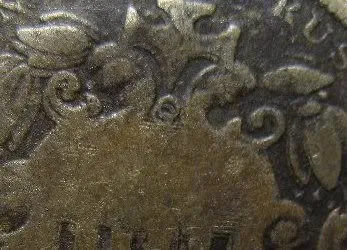
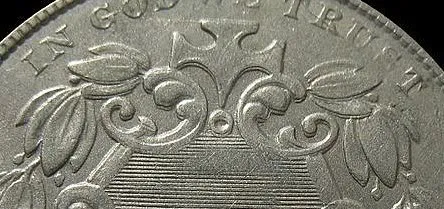
Hope you guys don't mind some photos of some doubled dies.

How-A-Doubled-Die-Becomes-A-Doubled-Die... How-A-Doubled-Die-Becomes-A-Doubled-Die...
Pillar of the Community
coppercoins's Avatar
United States
7629 Posts
 Posted 03/28/2008  5:15 pm  Show Profile   Bookmark this reply Add coppercoins to your friends list Get a Link to this Reply
Yup...both doubled dies, and both are very nice.
Valued Member
adanak44's Avatar
Canada
207 Posts
 Posted 04/19/2008  1:19 pm  Show Profile   Bookmark this reply Add adanak44 to your friends list Get a Link to this Reply
Coppercoins. it is a very detail article. Just wondering when the Doubled Die went back to the production line it should produce thousands of coin with the same doubled images. Is it correct and why they are still scarce?

Thanks.
Ping
Pillar of the Community
foundinrolls's Avatar
United States
3507 Posts
 Posted 04/20/2008  03:10 am  Show Profile   Bookmark this reply Add foundinrolls to your friends list Get a Link to this Reply
Hi Ping,

It (a doubled die) does often produce thousands of coins. The issue is that most often, in the case of major Doubled Dies, the die is caught early in the run due to a worker inspecting the coins that are struck. The die is then pulled out of service.

This would mean that there is an unknown number of coins produced from the doubled die and that usually it is less than would be minted during the normal die life of a die.

Now take for example the 1983 Doubled Die Reverse cent. If even 10,000 were minted before the problem was noticed (that is a high number for the purpose of this post and it is probably less), that would be a drop in the bucket when considered against the 7,752,355,000 cents struck in Philadelphia for that year.

Not all doubled dies are rare, some are actually common and those do not command much of a premium. Others that have proven to be very difficult to find and that have a presumably low mintage are quite valuable.

Rarity also doesn't always play a factor. I have a 1972 S doubled die cent that only two of are known at this point. It should theoretically be worth more that the 1969 S DDO since there are more of them out there than the 1972 S that I have. The demand for the 1969 S DDO and the severity of the doubling makes it a more desirable coin.

Anyway, that's a little bit of a sidetrack but ....

Thanks,
Bill
Edited by foundinrolls
04/20/2008 3:28 pm
Valued Member
adanak44's Avatar
Canada
207 Posts
 Posted 04/20/2008  2:56 pm  Show Profile   Bookmark this reply Add adanak44 to your friends list Get a Link to this Reply
Thank you for your reply. Now I understand why some of the DDO so scarce and some of them don't!!

Thanks.
Ping
Valued Member
ziggy9's Avatar
United States
499 Posts
 Posted 04/22/2008  11:54 am  Show Profile   Bookmark this reply Add ziggy9 to your friends list Get a Link to this Reply
How long it took for the public to find it can have a part in the scarcity as well. The 1982 DDR that I discovered last summer (see my avatar) has a current population of 2 even though coppercoins estimates that, due to the die state of my coin, at least 15.000 were minted. In the 25 years between minting and the discovery many of those were discarded, worn out, rotted, etc.

Richard
  Previous TopicReplies: 17 / Views: 4,720Next Topic
Page: of 2

To participate in the forum you must log in or register.


Disclaimer: While a tremendous amount of effort goes into ensuring the accuracy of the information contained in this site, Coin Community assumes no liability for errors. Copyright 2005 - 2026 Coin Community Family- all rights reserved worldwide. Use of any images or content on this website without prior written permission of Coin Community or the original lender is strictly prohibited.
Contact Us  |  Advertise Here  |  Privacy Policy / Terms of Use

Coin Community Forum © 2005 - 2026 Coin Community Forums
It took 0.34 seconds to rattle this change. Forums