| Author |
 Replies: 19 / Views: 5,453 Replies: 19 / Views: 5,453 |
|
Pillar of the Community
United States
3640 Posts |
Hello all. I was wondering if someone could tell me if the normal business strike rev. die used on the 64-D kenn. half is Die #1 ? I attached some pics. of it. The same rev. as the proof 64 accented hair variety. Thought I may of had a business strike transitional. :) Ruled out the accented hair because it is not a proof and is obv. die #2 as well as a "D" m.m. etc. 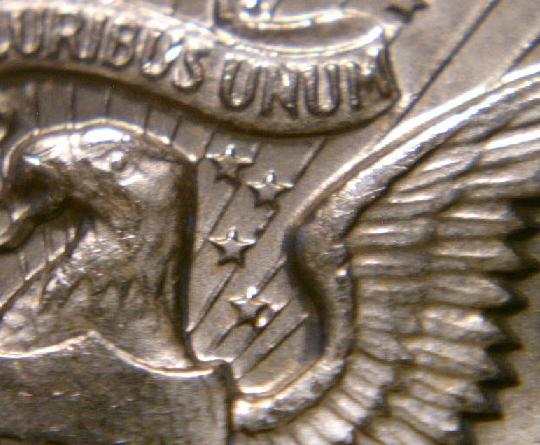 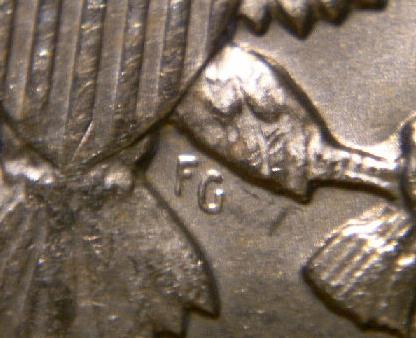 Thank's |
|
|
|
Member
United States
3242 Posts |
From your photo I cant tell post the hole coin obv&rev that may help.
|
|
Pillar of the Community
 United States
3640 Posts |
O.k. I will post some other pics. Don't think that will help but ? The rev pics. you see are it. The two attributes (G and broken rays show it to be the same type rev. as a proof accented hair type. the obverse is die #2 (normal) Thank's 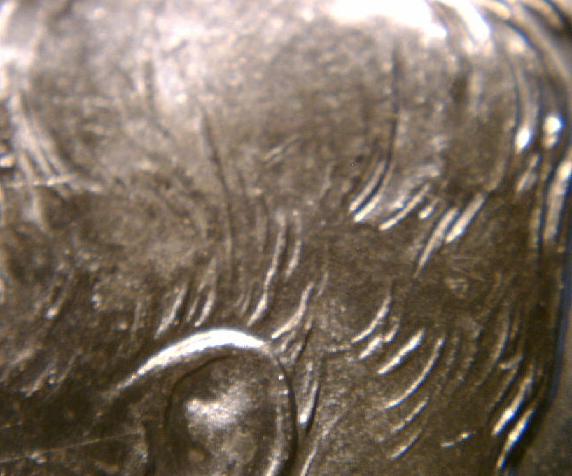 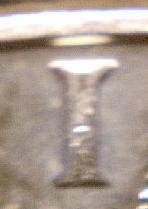 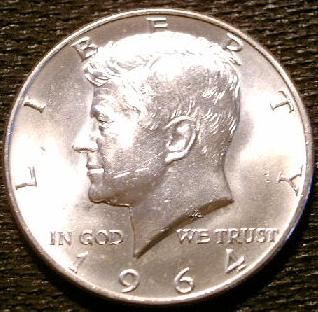 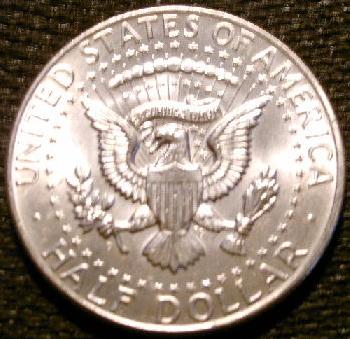 |
|
Bedrock of the Community
United States
62064 Posts |
?
What I see is a normal coin from the images. Not sure what you are thinking it might be? It's not a doubled die/proof so I'm not getting the connection your making.
|
|
Pillar of the Community
United States
3640 Posts |
Hello
I think my question may be somewhat confusing.
I look for the accented hair types on 64 proofs.
I know this coin is not a proof, but noticed is has the same type of reverse of the accented hair type proof. Attributes for this type reverse being the straight G and the broken rays as pictured.
This is known as the type #1 reverse die. The obv. of my coin has the normal type #2 obv. die. I do not have any other 64-D's to compare it with so I wanted to know if the rev. on my coin (type #1) is the normal type rev. for all 64-D kenns. (business strikes)
Maybe someone could please provide some pics. of a normal business strike 64-D reverse. This would answer my question. The reason I am asking in the first place, is to rule out a "possible" rare oddity.
That being, a business strike "Transitional Variety". This variety,
to the best of my knowledge, is only found on proofs. My business strike coin (if it is not just a circulated proof)? has the attributes for a Transitional Variety.
I hope that helps some.
|
|
Pillar of the Community
United States
3640 Posts |
Hello Would someone please post a clear pic or pics. of a business strike 1964-D Kennedy half dollar reverse. Closeups of the FG initials and the area around the stars in the spikes would be nice. Thank You. |
|
Pillar of the Community
United States
3507 Posts |
I'll try to get some up here tomorrow unless someone beats me to it.
Thanks,
Bill
|
|
Pillar of the Community
United States
3507 Posts |
Hi,
These are pictures that you can compare with. Use your mouse to click on the images and they will be magnified. I hope they help.
Bill
*** Edited by Staff - Removed dead images ***
Edited by foundinrolls
06/05/2008 5:55 pm
|
|
Pillar of the Community
United States
3640 Posts |
Thank you very much for the great pics.
Well, seems like I have an oddity here then.
If the pics. you just posted are of a 64-D business strike reverse
then my coin has a different reverse. If you look at the two attributes I am referring to on both reverses you will see what I mean I.E.: The G in FG, one is straight one has a serif. The vertical rays are broken going through the stars on one and not broken on the other (same attributes as a 64 proof accented hair reverse) I have been researching all I can and have a job ahead of me. ?
Multiple reverse die sets used for a 64-D ?
Rare variety ?
Transitional ?
Maybe someone on here who is an expert on kenn. halfs or who knows someone who is, could help me out.
Maybe another post, but have many questions about the kenn. transitional varieties as well. They mention clading when they talk about them. Going from 1964 to 1965. But a 65 through 70 still shows
a silver edge, no clading. ? It's still 40% silver.
My coin shows the attributes (both obv. and rev. for this type variety). What a quandry. How to test for 90% or 40% silver first
without ruining the coin (just in case)then going on from there.
Thank you all for your input so far. Not going to get my hopes up here until all the facts are in. But in researching the transitionals,
the price tag on these start at around 2 grand and go up from there.
|
|
Pillar of the Community
United States
3640 Posts |
I mentioned in my last post that I was not sure how to differentiate
between 90% and 40% silver on kennedy halfs without ruining them.
My mistake, Duh :) Just weigh them. Simple enough. 12.5 grams = 90%
11.5 = 40% (mine is 90%)
Sometimes ya feel like a nut - Sometimes ya don't !!
Still no more info on my coin. Still searching.
|
|
Bedrock of the Community
United States
62064 Posts |
The 1964-D has the mint mark on the reverse, so it wouldn't be a proof die, unless a hub for a proof reverse 1/2 dollar got sent to Denver by mistake. But if that happened, then there would be a lot more examples and we would have heard about it? But new varieties are being found all the time.
|
|
Valued Member
United States
405 Posts |
The 1965 to 70 is copper / silver clad and shows clad edges, though the clad coloring is obviously different from the nickel / copper clad of 71+. Are you saying you don't see the silver / copper color split on those coins evident on clad varieties?
BTW - you definitely do have a different reverse so I'll be curious to know what you find out. This is the first I've heard of 64D's with different reverses.
I believe it's all but impossible for you to have a proof coin with a D mint mark.
Edited by seattleMD
06/06/2008 8:47 pm
|
|
Pillar of the Community
United States
716 Posts |
Indian1:
Thanks for the topic and I applaud for your attention to details.
I checked all my 1964-D (16 total). 9 of them are "broken rays", 7 are "solid rays". So to answer your question, it's not a rarity.
This also happens in 1964-p JFKs. Out of 180 pieces, I found 12 are "broken rays". It may happens in other years but I did not check them.
I love JFK and thank you for studying them. I always wish someone study more of this series. It is a under-studied series.
|
|
Pillar of the Community
United States
3640 Posts |
Nice to hear some good info on this coin. I thought I would never find out what was going on here. It is not a clad so to answer one post. It is a D and not a proof. Thank's Yinzi for verifying others have been found. I just wish there was some more info on the different die varities on Kennedy halves. Curious now on some numbers of this reverse ? Rare, probably not, but collectible ? Maybe Thank's all again. |
|
Pillar of the Community
United States
3640 Posts |
I was reading an article on the 64 PR accented hair kennedy
(i also have one) and the author mentioned he also found the same type rev. in his searches. He was using his find as an example that
the rev. diagnostics for an acct. hair are not always reliable.
He called this a pairing of obv. die #2 with rev. die #1
(this is what I have on the 64-D ) He then referred this pairing as a Transitional Variety. Did not mention anything about clading.
Ken Potter made references to this variety and stated it is listed in Breen's. Maybe someone out there could look up this variety (transitional) in breens, and let me know if it is only on clad halfs
period. I just want to put this issue to sleep if this 64-D is definately not a Trans. variety.
Thank you.
|
|
Pillar of the Community
United States
1807 Posts |
I have two 1964-d's and they have different positions for the stars. Please excuse the pointer in my microscope, I should remove it. I guess the second one is the "Transitional Variety". 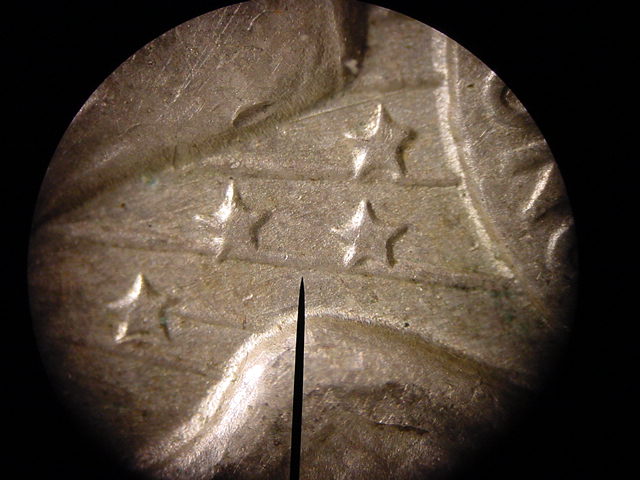 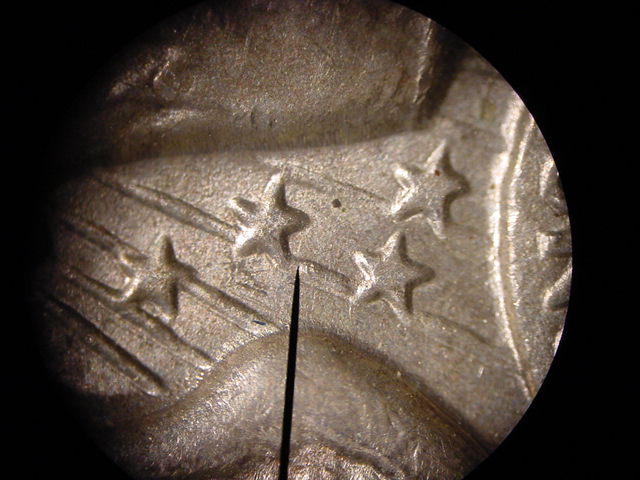 Edited by rockdude
07/03/2008 4:17 pm
|
| |
Replies: 19 / Views: 5,453 |










 Posted 05/31/2008 09:51 am


