| Author |
 Replies: 13 / Views: 3,797 Replies: 13 / Views: 3,797 |
|
|
Pillar of the Community
United States
949 Posts |
I am taking this next entry in our series at the suggestion of EFLargeCents. Most commentators identify Magnia Urbica as the wife of Carinus, however in the present Wikipedia entry for this figure Ras Suarez, of Dirty Old Coins, puts forward the conjecture that she was actually the wife of Carus. However, Michael Grant offers the observation that Magnia Urbica was "identifiable as Carinus' spouse because a coin shows her in his company." Percy Webb in RIC V pt observes that there is a coin in the British Museum with the portrait of Carinus on one side and hers on the other. There is also a gold medallion bearing both their portraits. Although the Historia Augusta, always ready to defame Carinus, reports that through a series of debaucheries Carinus had as many as nine wives, Magnia Urbica is the only one honored with coinage, Which Webb associates with the latest coins of Carinus. Little is known of her life, but it appears that with the death of her husband, at the hands of his eastern army who had elevated Diocles (aka Diocletian), their principal general of the imperial guard, to emperor in 285, her life was forfeit. Diocletian succeeded her unpopular husband, and instituted a damnatio of his memory. For this she is all but lost to history. The coins of Magnia Urbica, the most common of which are still considered scarce, were produced at four imperial mint cities in the center of the empire (Lugdunum, Rome, Ticinum, and Siscia). Of the five obverse inscriptions only the form MAGNIA VRBICA AVG was used at all four mints and is the most common. The VENVS GENETRIX reverse was used for the antoninianus at Lugdunum and Siscia, but the presence of the D in the left field and the absence of anything at her feet ties this example specifically to Lugdunum. 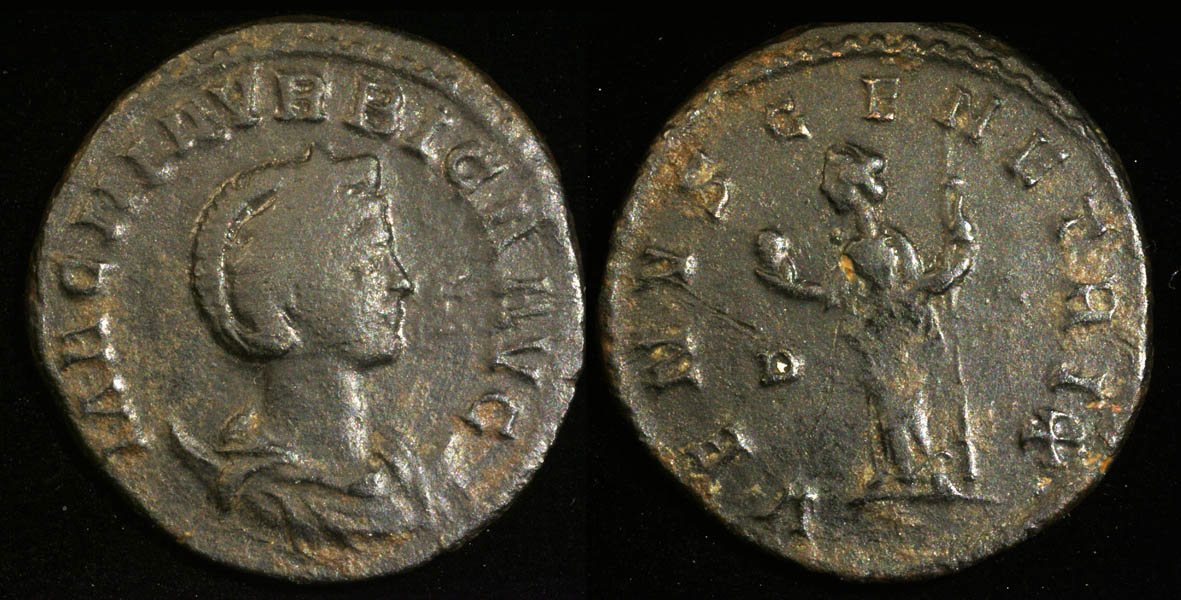 The obverse inscription form MAG (or MAGN) VRBICA AVG was used only at Rome. This form, together with the VENVS VICTRIX reverse with Victory standing left and a shield standing at her feet, was used only at Rome, which operated seven officinae at the time, although Webb in RIC V pt2 states that most of her coins from Rome were produced in officina 6. These are distinguished by the exergual mark; which here reads: K(crescent)A(zeta or final sigma) signifying officina 6. Numerically KA is the Greek equivalent of Roman XXI and is a reference to the denomination of the coin according to the convention introduced by Aurelian. Here we might note that the crescent shifts position within this series of marks, but its significance I do not know. 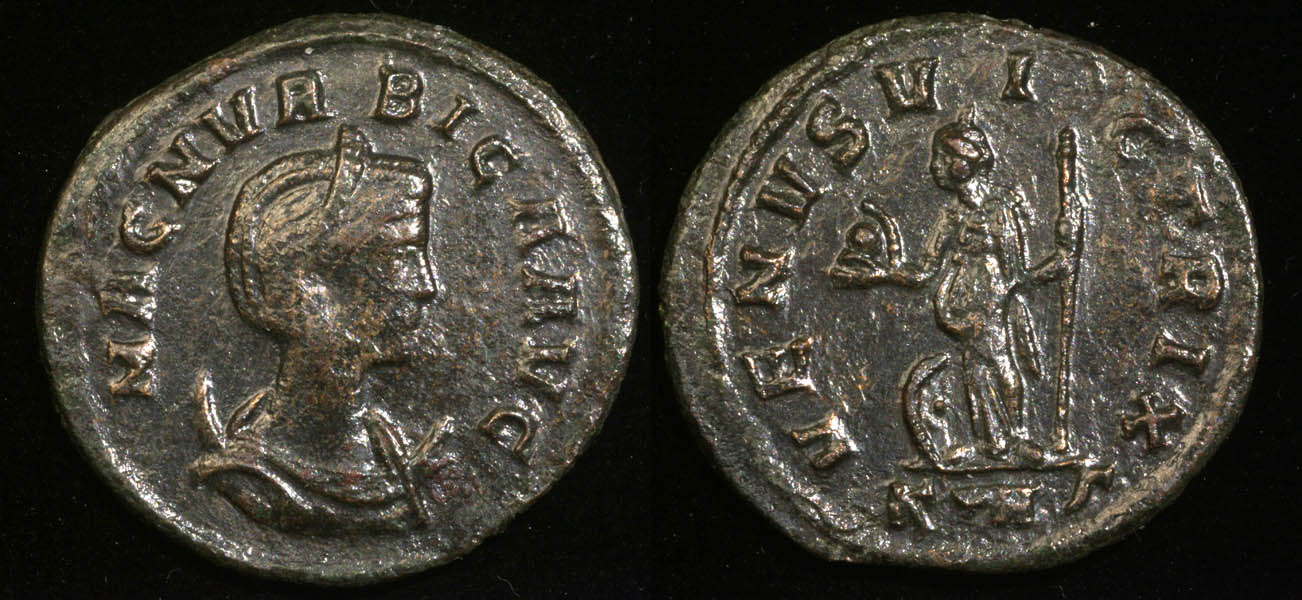 In addition to these the mint at Siscia used a dative (or possibly genitive) form of inscription: MAGNIAE VRBICAE AVG; to or for (or "of") Magnia Urbica Augusta. And the Voetter collection had a single example from Ticinum with the inscription VRBICIA MAGNA AVG which placed her names out of proper sequence and put the letter "I" in the wrong place. Edited by lrbguy
02/08/2017 7:38 pm
|
|
|
|
Moderator
 United States
23731 Posts |
Two very nice examples of a hard to find empress. Eddop is our expert non the Carus dynasty hopefully he will be along to add more information about her.
|
|
Pillar of the Community
United States
1304 Posts |
Very nice coins. Tough empress to find. I do not have an example of her yet. I love all the background information though, fascinating. SO much to learn.
|
|
Moderator
United States
34562 Posts |
Great addition to this series!
"If you climb a good tree, you get a push."
-----Ghanaian proverb
"The danger we all now face is distinguishing between what is authentic and what is performed."
-----King Adz
|
|
Pillar of the Community
United States
6130 Posts |
A very tough empress indeed  I have seen a bit more of her lately, but she does not go cheap; usually in the $100-200 range. I do hope to have her someday! |
|
Valued Member
Netherlands
409 Posts |
MAGNIA VRBICA AVG VENVSVICTRIX from Ticinum SXXIT in exe. 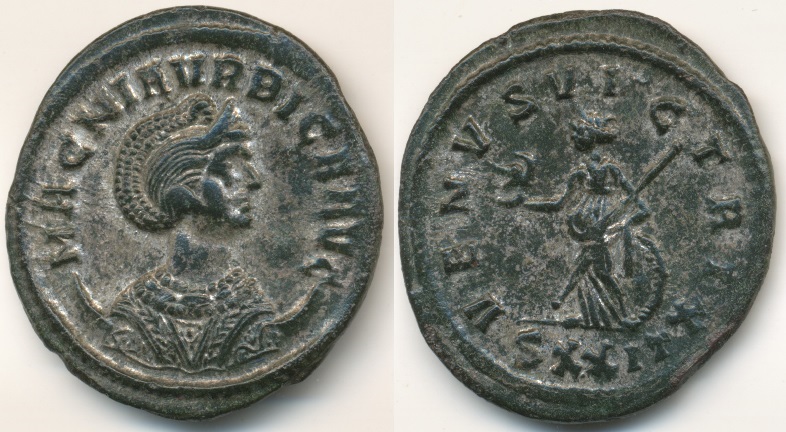 MAGNIAE VRBICAE AVG SALVS PVBLICA from Siscia AMSXXI in exe A in right field 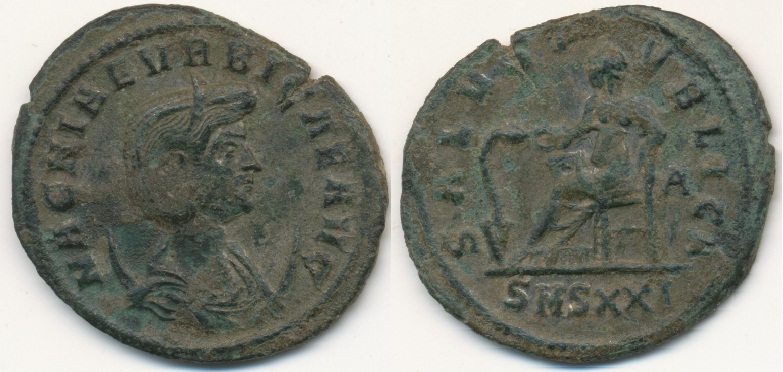 She was, as mentioned by Irbguy, probably the wife of Carinus this coin is the only link to it. 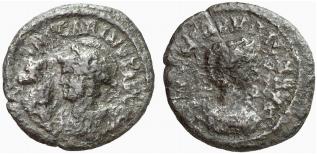 Carinus on the obverse with a horse and Magnia on the reverse, this is a very rare coin. Wedding: According Daniel Gricourt Ticinum minted some special antoniniani for Carinus Carus and Magnia, all struck in the summer of 283 when Carus was fighting the Persian. Note the letter T in the left field, these coins are hardly to find. Magnia Urbica: 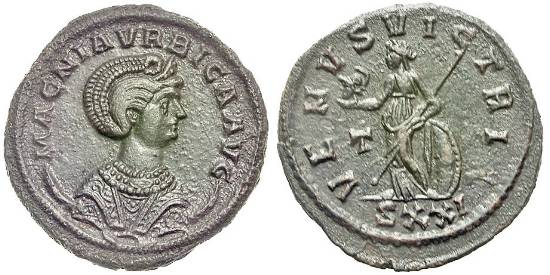 There exist a Medaillion with Carus on the obverse and Magnia Urbica on the reverse, this medaillion is not ancient and does suggest that they where married. 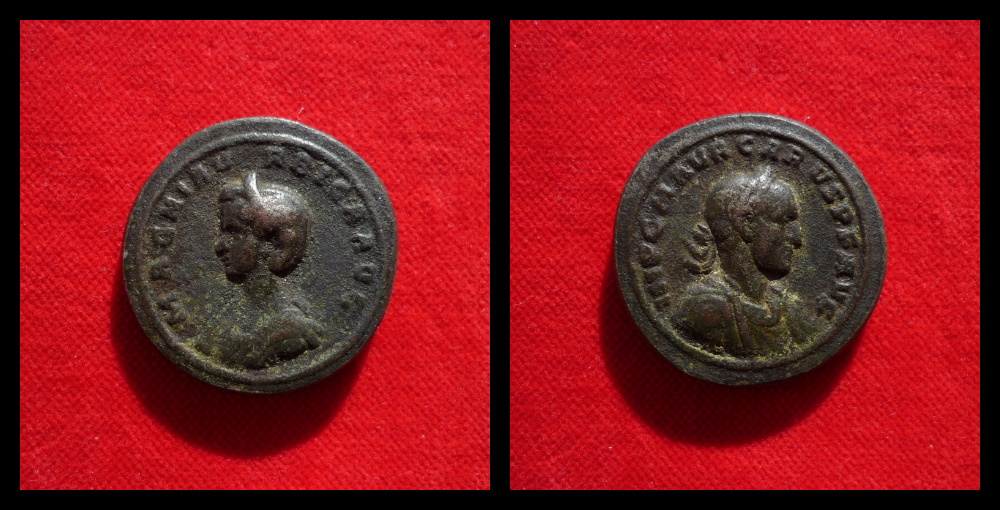 Edited by Eddop
02/09/2017 03:48 am
|
|
Pillar of the Community
United Kingdom
2624 Posts |
I'd never heard of her, thanks for showing me :)
|
|
Pillar of the Community
 United States
949 Posts |
Terrific material Eddop. I would very much like to discuss these with you here, but I will be tied up today. I hope you will permit some questions tomorrow or the next day.
|
|
Pillar of the Community
United Kingdom
2121 Posts |
I have two Lugdunum examples from different officina. Magnia Urbica AE Antoninianus. Obv:- MAGNIA VRBICA AVG, Draped bust right on crescent, hair brushed in straight lines, plait carried up the back to top of head and running under stephane Rev:- VENVS GENETRIX, Venus standing facing, head left, apple upward in right hand, vertical scepter in left Minted in Lugdunum (D in left field). RIC V pt. 2, 337. Bastien 617  and the scarcer Magnia Urbica AE Antoninianus. Obv:- MAGNIA VRBICA AVG, Draped bust right on crescent, hair brushed in straight lines, plait carried up the back to top of head and running under stephane Rev:- VENVS GENETRIX, Venus standing facing, head left, apple upward in right hand, vertical scepter in left Minted in Lugdunum (A in left field). RIC V pt. 2, 337 var (not listed from this officina). Bastien -, Bastien Supplement -, Bastien Supplement II 613alpha; (2 examples cited) 23mm, 3.16g  |
|
Pillar of the Community
United States
949 Posts |
@Eddop
I am delighted that you came in with examples from the other two mints. Now we have representation from all four mints, and a couple more reverses to observe.
In the example from Siscia, I have seen the mint mark parsed and interpreted as: SM S XXI {i.e. S(acra) M(oneta) S(iscia) XXI} With the officina letter in the right field.
Webb says that all the coins for M.U. from Siscia are from officina 1. Have you ever seen an exception?
The special issue from Ticinum in 283, do we/you know which reverse type(s) it used? I assume the second coin from Ticinum you show is an illustration for one of those "specials." Is this a coin from your collection? If so, it is certainly the best preserved example on the list so far. The distinctive "patterned" treatment of the draping on Magnia Urbica at Ticinum is quite stunning on this piece, but is quite noticeable on your other example too. I wish I had one.
The image of the coin with Carinus on one side and M.U. on the other Shows a very rough preservation. Is this the coin in the British Museum, or has another surfaced since RIC was published?
You mentioned that the medallion with Carus and M.U. is not ancient. Is it a modern phantasy or does it have a part in something later than the Roman period? Do you know when it came about?
@maridvnvm
An original find! Congrats. Did the seller know what s/he had?
I do not have access to Pierre Bastien's work on Lyons/Lugdunum. Does his supplement list or illustrate an example like yours from the first officina? The preservation of the obverse portrait on this coin is exceptional, and if the coin shown by Eddop is not in his collection, then this one takes list honors for coins of Magnia Urbica, at least for the obverse.
|
|
Valued Member
Netherlands
409 Posts |
I am not familiar with an exception,all these coins in my database are from this officina A. Martin's coin from Lugdunum is the only exception I have ever seen, all the other mints are consistant in using the same officina. For the special issue from Ticinum in 283 are known: Magnia Urbica : M VRBICA AVG VENVS CELEST MAGNIA VRBICA AVG VENVS VICTRIX Carus: IMP CARVS P F AVG FIDES MILIT Carinus:IMP CARINVS P F AVG FORTVNA REDVX IMP CARINVS P F AVG VICTORIA AVG IMP CARINVS P F AVG ADVENTVS AVG IMP M AVR CARINVS P F AVG ADVENTVS AVG The Magnia a listed before is not mine but I do have for Carus an Carinus this 3 specimen: 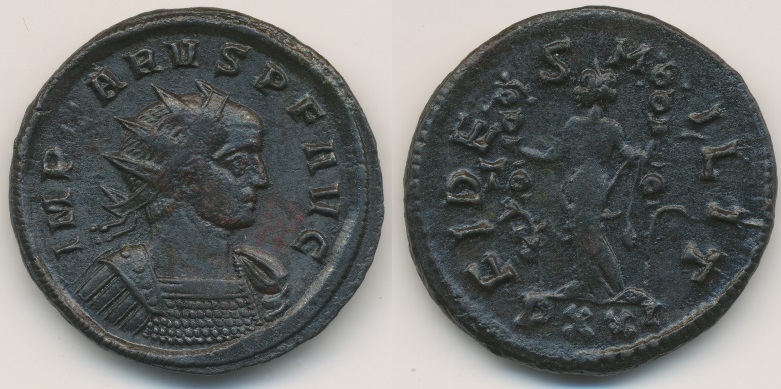 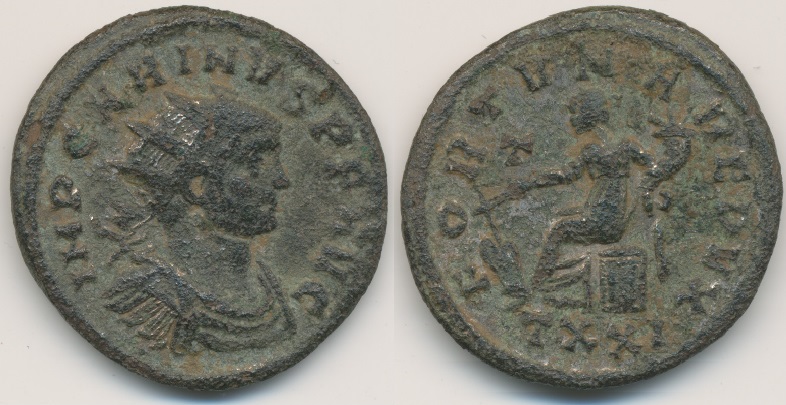 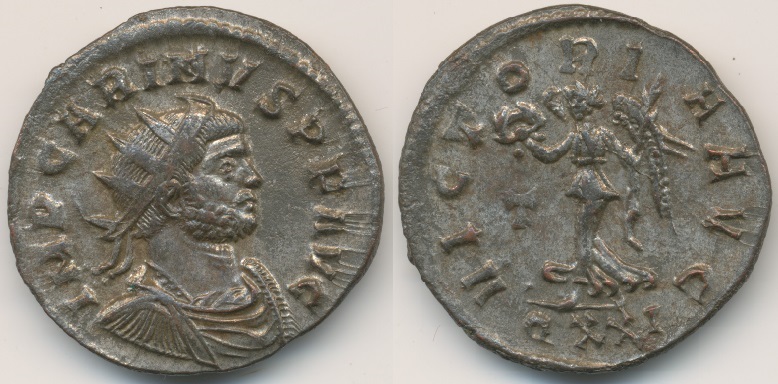 Besides the quinar in BM I do have 2 more from NAC and Paul-Francis Jacquier so at least 3 specimen known. The Carus medaillon was discussed in 2010 on Forum is this topic: http://www.forumancientcoins.com/bo...opic=67505.0Some more Urbica's from my collection: 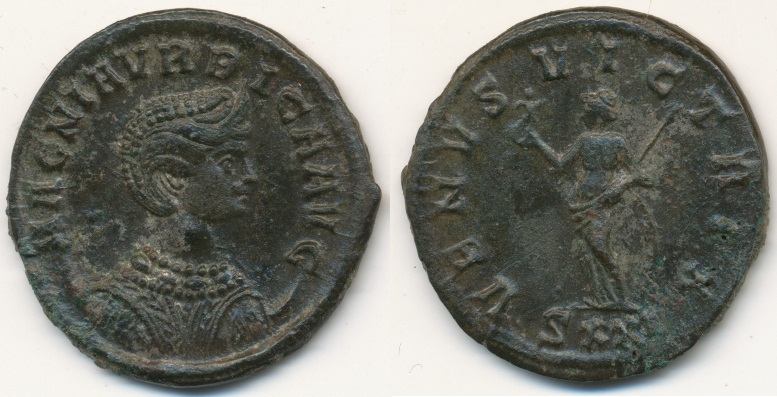 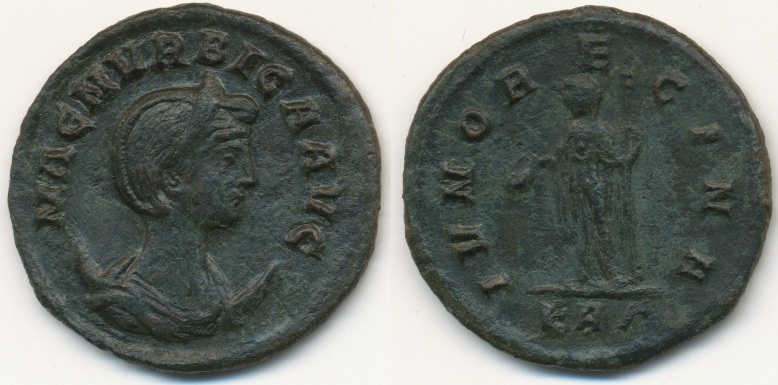 Edited by Eddop
02/12/2017 04:25 am
|
|
Pillar of the Community
United States
1304 Posts |
|
|
Pillar of the Community
United Kingdom
2121 Posts |
My only other Urbica was minted in Rome.  |
|
Pillar of the Community
United States
949 Posts |
I feel obliged to provide a corrective on one of my coin descriptions in the first post of this thread. Of the second coin I had said: Quote:
These are distinguished by the exergual mark; which here reads: K(crescent)A(zeta or final sigma) signifying officina 6. I had forgotten that on coinage there was some usage of the archaic Greek character digamma, which as a numeral resembled a final sigma - a distorted "S" figure. The letter digamma was an archaic Greek equivalent of the Semitic (i.e. Phoenician) waw ("vav" in mod Hebrew) which occurs as the 6th character in the Semitic alphabets. It had occupied the same position in the archaic Greek alphabet, and as such it was a logical siglum for the 6th officina. So the exergual mark on my second coin (first post) is K(crescent)A(digamma). Sorry for introducing a bit of confusion. |
| |
Replies: 13 / Views: 3,797 |
|







 Posted 02/08/2017 6:12 pm





