| Author |
 Replies: 15 / Views: 4,673 Replies: 15 / Views: 4,673 |
|
|
New Member
Germany
3 Posts |
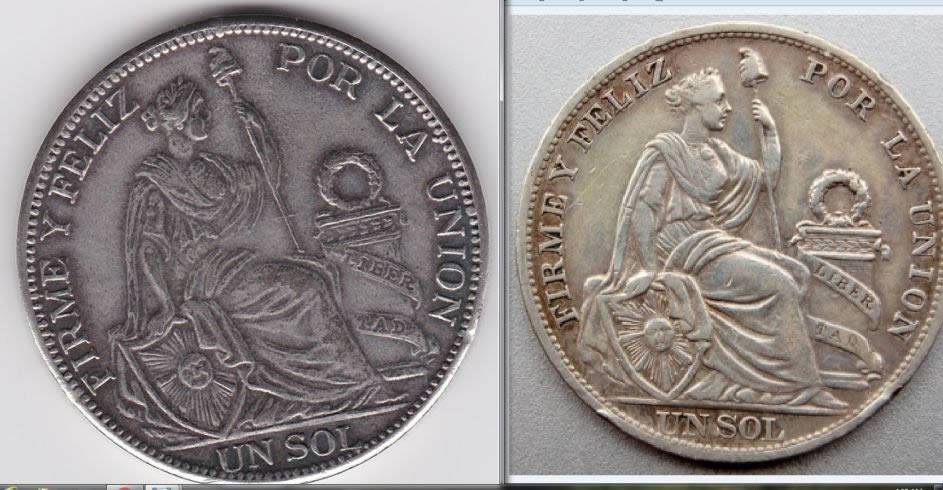
Hi, i bought this coin at a tourist market at Mallorca as I was young (around 15 years ago) and just guessed it was a spanish coin. As I went through my old stuff I found her again and noticed that the inscription says that it is a peruvian coin (apparently my younger self was blind  ). After some fast google searching I found the coin and that it is a silver coin. To proof or disproof this I tried if it's magnetic and it is. So I guess it isn't silver and therefore or a fake or some kind of replica, right? Since I don't actually collect coins and don't really now anything about this topic I would appreciate it if somebody wants to share some knowledge about the coin.  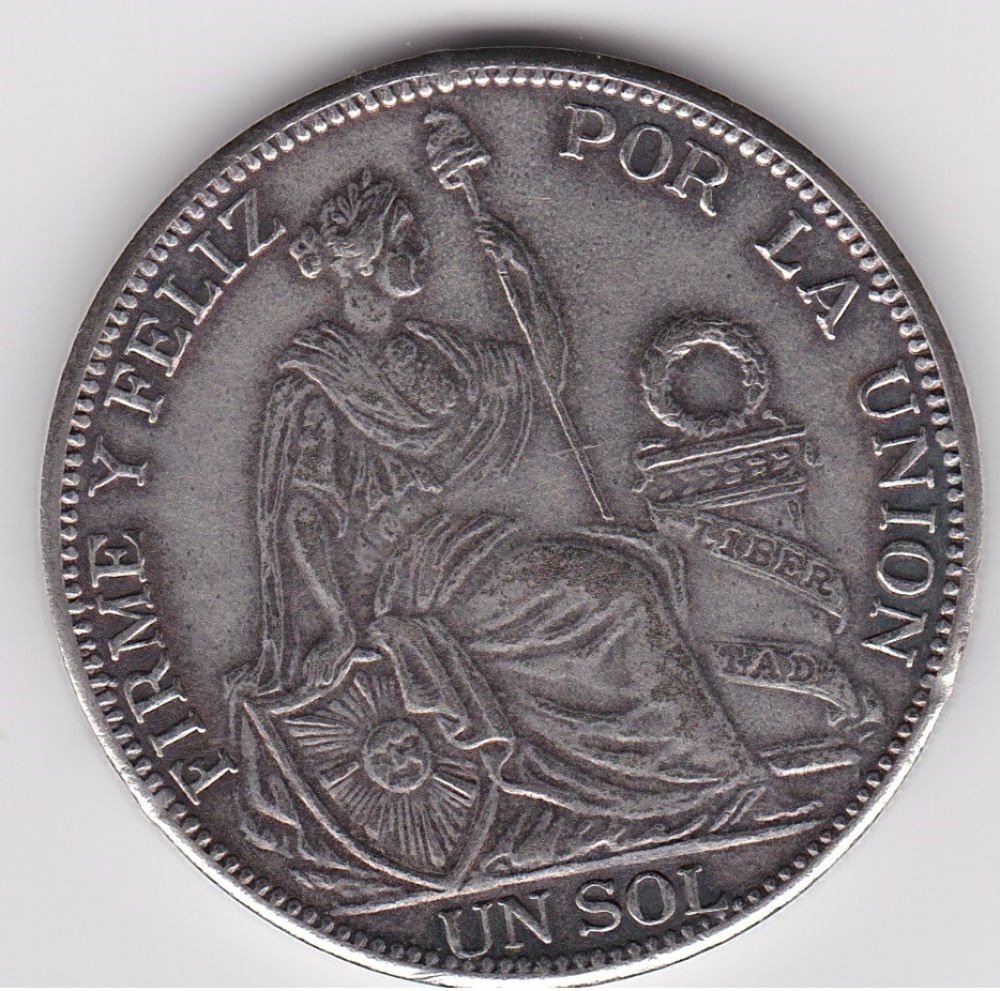 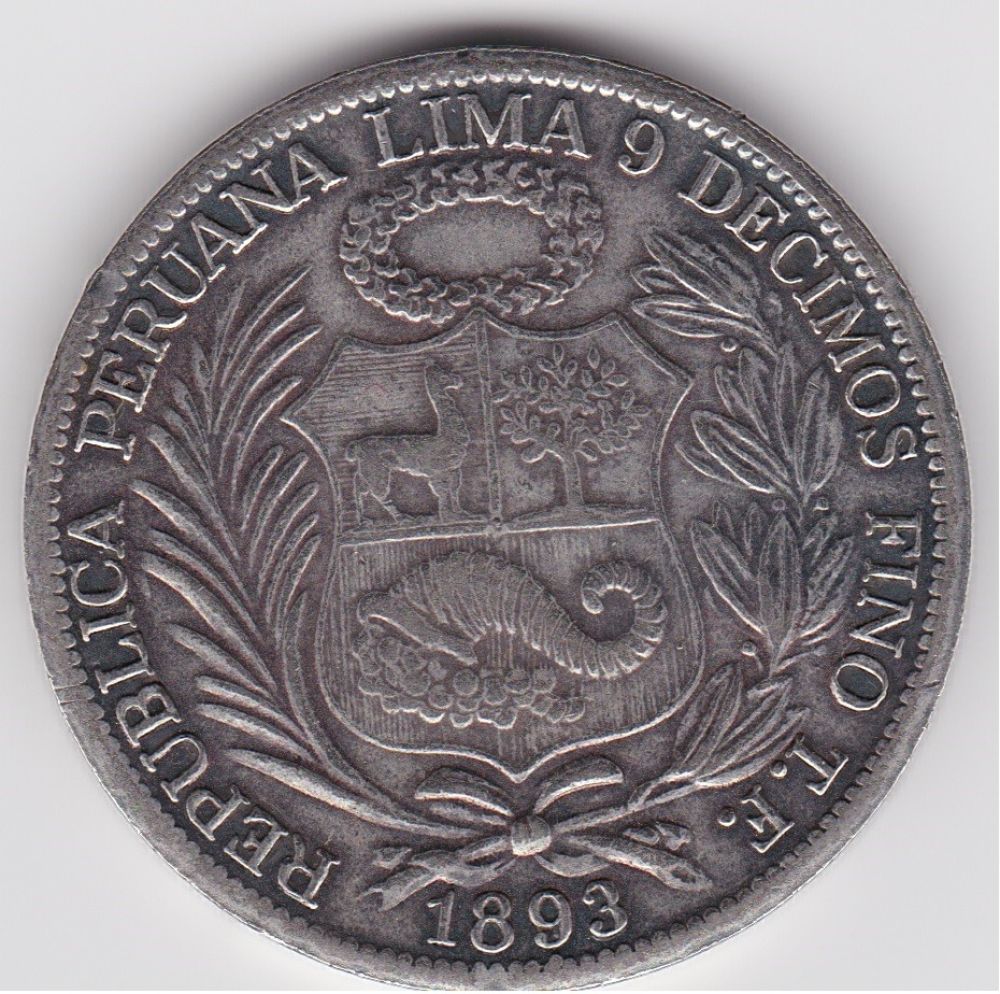 |
|
|
|
Pillar of the Community
Canada
5293 Posts |
There was a thread in the forum some months ago about some sols from the 1920s -30s having a magnetic alloy due to an indifferent quality control of the metal content. Ordinarily I would call yours a fake, but I cannot prove or disprove this claim. Perhaps the person who made the claim can give some insight about these older ones.
|
|
Rest in Peace
10197 Posts |
|
|
Pillar of the Community
Canada
5293 Posts |
http://goccf.com/t/260473#2198222This was the original thread(s) @CrazybO, @Tavomi said that it was magnetic, so why do you think that it is 90% silver? It is supposed to be 90% silver, for sure.
|
|
Bedrock of the Community
Australia
21792 Posts |
If you feel doubtful,
weigh it. Genuine unworn examples check out at 25.00 grams.
Ping sound it against another genuine example.
A dealer may not have another Peruvian silver planchet, but many other dollar silver coins were struck with exactly the same planchet specifications. A dealer should be able to advise.
Take it to someone who has a hand held XRF instrument. Any bullion dealer who worth his salt should have one of these.
I have been lucky enough to see a hand held XRF instrument at a coin show, where collectors were getting their coins tested for free.
These pictures for me, somewhat of an unreliable diagnostic tool.
I have to admit I feel doubtful. It could be high quality centrifugal pressure cast, but I am not sure about that. Design details somewhat mushy, surface of fields seem to be a bit rough. Cast coins are very slightly smaller in diameter than genuine due to shrinkage on cooling, and edge graining a little less distinct. Edge dots are somewhat inconsistent.
Edited by sel_69l
03/11/2017 10:01 pm
|
|
Bedrock of the Community
Canada
24885 Posts |
|
|
Bedrock of the Community
Canada
24885 Posts |
Special attention to the consistency of letters PERUVIAN REPUBLIC (REPUBLICA PERUANA) 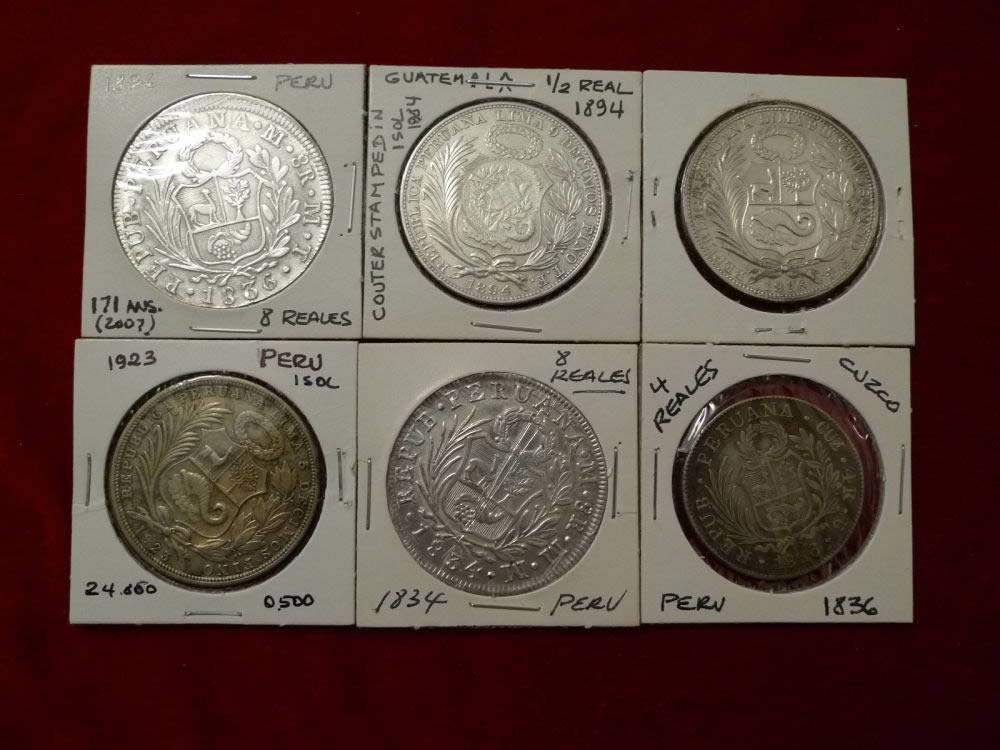 |
|
Pillar of the Community
United States
4883 Posts |
First off, welcome, TavoMi.
A magnetic 1893 may be presumed to be counterfeit. The only question remaining is whether it was intended to be passed unnoticed when such were circulating or if it's a modern forgery meant to fleece today's collectors. The latter is more likely.
Colligo ergo sum
Edited by Lucky Cuss
03/11/2017 11:30 pm
|
|
New Member
 Germany
3 Posts |
Thanks for the answers.
@oriole: This thread actually led me to this forum. It seems strange to me that they seemed to use different alloys for the same kind of coin. Is this a common thing with older silver coins?
@sel_69l: The coin weigh 22g but I only have a kitchen scale so I don't know how precise this is. I don't really know where to find someone with an XRF but we use something similar at the university. I will try to ask my professor if I can do a PIXE and RBS measurement. I will try to find a coin dealer close. Maybe he can check the coin aswell.
@Dorado: The coin looks pretty similar to mine or do I miss some details?
@Lucky Cuss: Is their a way to verify if it's a modern forgery or a old one?
Edited by TavoMi
03/12/2017 06:47 am
|
|
Bedrock of the Community
Canada
24885 Posts |
Quote:
@Dorado: The coin looks pretty similar to mine or do I miss some details? in comparison ** 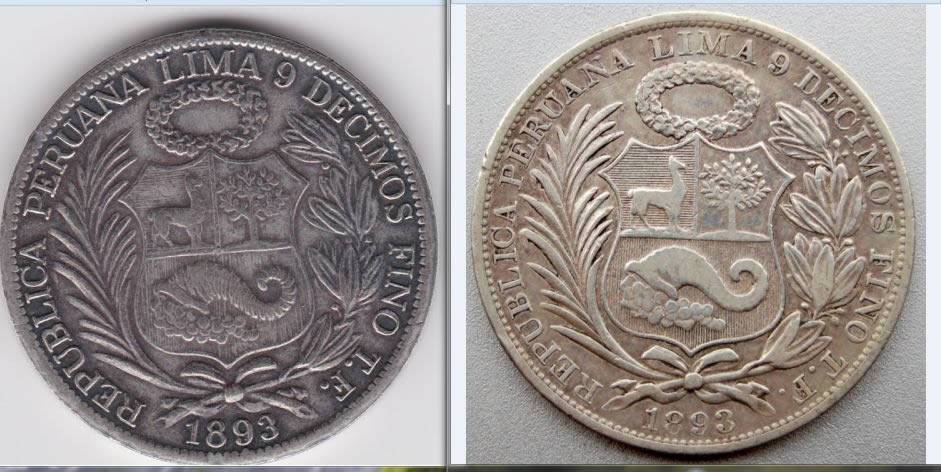 Edited by Dorado
03/12/2017 07:41 am
|
|
Pillar of the Community
Canada
5293 Posts |
@TavoMi, the alloys should have been consistent in the 1890s. Especially odd would be to have iron in the mix.
However, the 22 gram weight plus the magnetism makes it certain to be a fake.
|
|
Bedrock of the Community
Canada
24885 Posts |
|
|
Bedrock of the Community
Canada
24885 Posts |
Just to give you an idea.. there are many more differences. 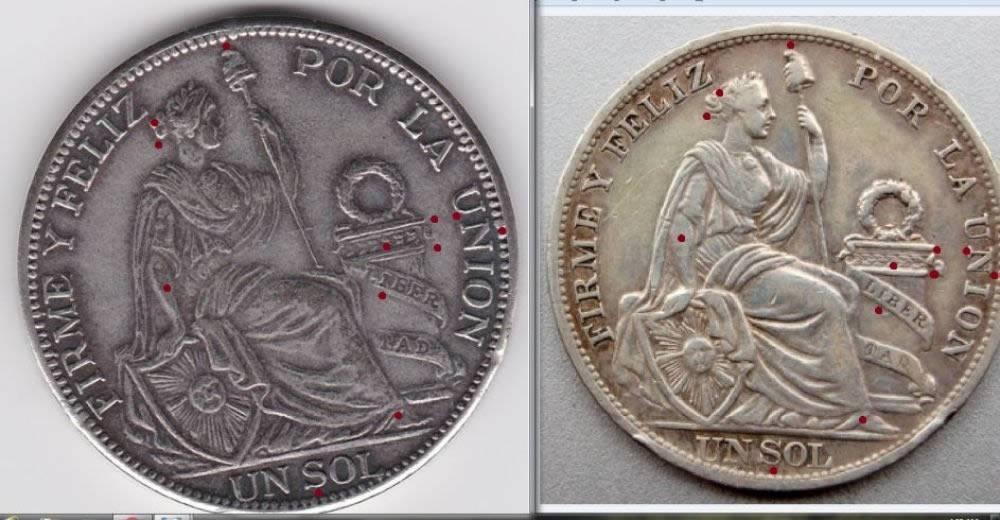 Edited by Dorado
03/12/2017 2:04 pm
|
|
New Member
Germany
3 Posts |
Ok, thanks for the help and informations.
It's a pity that it's a counterfeit but at least it was a cheap coin.
|
|
Pillar of the Community
United States
5362 Posts |
I had been away in Florida and missed this one.
This coin is not an exact march for the hubs used in the 1890s to make working dies for this series. Originals of this coin use slightly different fonts and the designs are much sharper. So it is clearly not genuine. In the 1893 era there is very little chance that a magnetic copy would have been made for circulation. At that date a silver counterfeit would have generated a profit with less likelihood of being discovered. World silver prices were in free fall and the value of the coin in circulation was much higher than silver value (on the order of 2 times.)
In my opinion this coin should be referred to as a Numismatic Forgery. It was made after the coin ceased to be used in circulation and was made to defraud bullion dealers. I classify bullion dealers and coin collectors in one large category. These were apparently made since at least the mid-1960s to sell along with genuine coins as bullion and as forgeries to fool collectors.
I plan to add a reply to my thread covering the Sols and half sols of the 1930s.
|
|
Pillar of the Community
United States
5362 Posts |
oriole it is not necessary for the coin to contain iron to be magnetic. It is more likely that the coin was made with nickel which is also a magnetic metal. Also based on my studies so far, there are more counterfeit examples of the sol than might be expected. The Graders that I spoke with at the ANA show were in agreement that no coin near 90% silver is ever magnetic. Coins using a 50% silver alloy should also not be magnetic but several wanted to study the issue more. So far there is NO PROOF at all that a genuine magnetic 50% sol ever existed.
|
| |
Replies: 15 / Views: 4,673 |
|










 Posted 03/11/2017 7:21 pm