| Author |
 Replies: 12 / Views: 2,665 Replies: 12 / Views: 2,665 |
|
|
New Member
United States
3 Posts |
I am new to posting but have been lurking in the forums for a while now. Just recently got to collecting and would appreciate any thoughts on this quarter I found. It is the back of a dime on the face of Washington. I'm nearly certain someone pressed a dime onto the quarter but I wondered if it were even possible for a coin to be minted this way? Appreciate your thoughts and time. 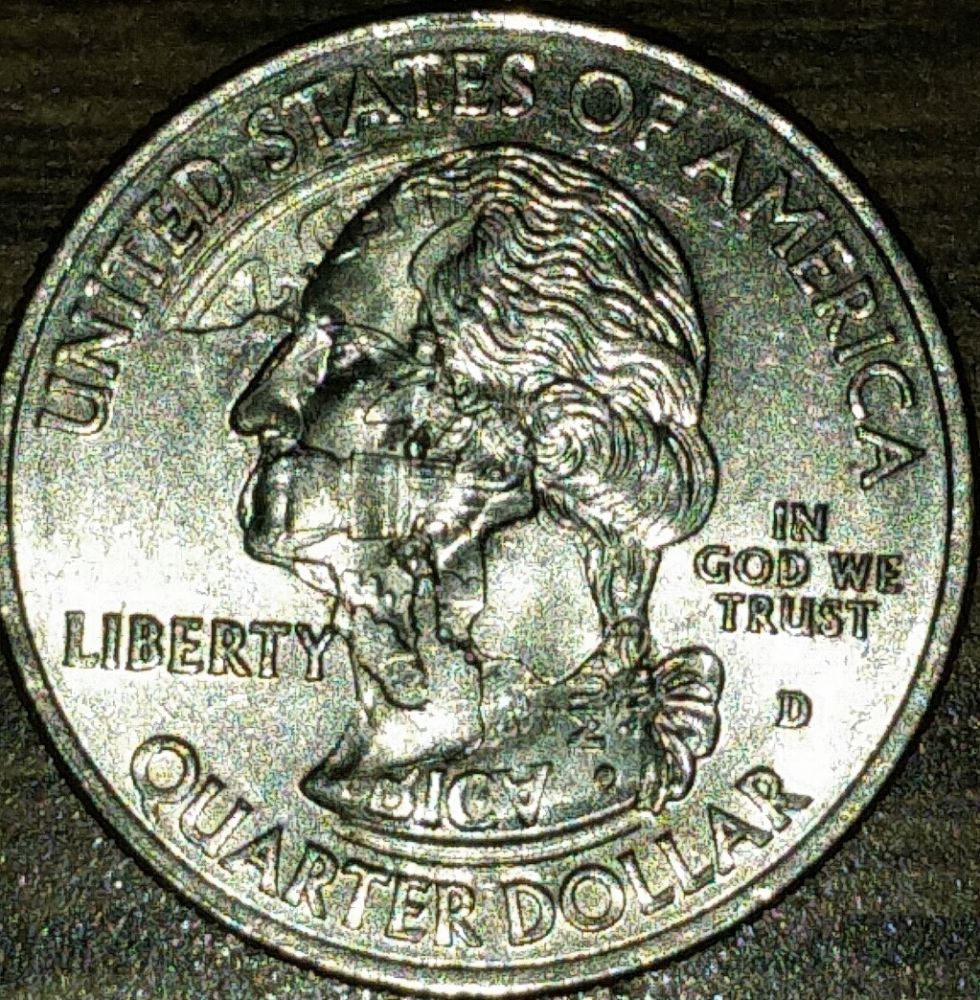 |
|
|
|
Bedrock of the Community
United States
12437 Posts |
 That would be an impression in clear glue from a dime. |
|
Rest in Peace
United States
7075 Posts |
You can remove it by soaking the coin in acetone. |
|
New Member
 United States
3 Posts |
Interesting. Never considered glue on a coin. I take it this is a common enough occurrence to be able to identify it?
|
|
Pillar of the Community
United States
1000 Posts |
Well, because the lettering is reversed, we can tell that it was done by the back of a properly minted coin. If the area is incuse, then a coin was forcibly pressed against your subject coin, either with a vice or a hammer. If the area is raised, then it's the reverse impression of another coin on surface residue, usually glue. Oh, and welcome!
|
|
Pillar of the Community
United States
1970 Posts |
|
|
New Member
United States
3 Posts |
Makes complete sense. Since it was the reverse of a coin I figured it couldn't have been minted that way but I was at a loss of how it could have gotten there. An impression I would have understood could be done with a vice or hammer but the raised surface threw me off. Appreciate the knowledge.
Thanks for the welcomes, hope to post more often!
|
|
Valued Member
United States
62 Posts |
Still interesting, how would that have gotten there like that. And using acetone.. wouldn't that be something you don't want to do on coins?
|
|
Rest in Peace
United States
7075 Posts |
I don't know why people do it but we see it here every once in awhile. I suppose it happens by accident or people are making their own game tokens or something.
Acetone is - as far as I know - the only safe thing to use to remove foreign substances from coins. It must be pure acetone -- not nail polish remover which might contain oils and perfume.
|
|
Bedrock of the Community
United States
12437 Posts |
Quote:
how would that have gotten there like that Pour glue on a quarter, add a dime, let glue dry, remove dime. Quote:
And using acetone.. wouldn't that be something you don't want to do on coins? Acetone is an organic solvent and will not react with coinage metal under normal circumstances. |
|
Pillar of the Community
United States
1000 Posts |
And be careful where you get acetone. I got mine at Walmart in the paint section, under five bucks for a quart that will last me forever. Walgreens has "100% acetone" nail polish remover, but if you read the bottle, it lists denatonium benzoate as a secondary ingredient. I put that one back. It's a bittering agent, and I'm assuming it'll leave a residue on your coins. |
|
Pillar of the Community
Canada
2531 Posts |
Practically any store-bought acetone and many other liquids will contain denatonium benzoate. Its concentration is so low it's negligible.
|
|
Pillar of the Community
United States
1699 Posts |
I agree with the posts above. And by the way, welcome, citation20! It sounds like you have a good understanding of coins already! It would not be impossible for a struck coin to be struck into anotger coin, and there are likely a few that exist. I can't find any photos right now though. Here is a quarter struck through a blank dime planchet: https://coins.ha.com/itm/errors/197...ption-071515 |
| |
Replies: 12 / Views: 2,665 |
|






 Posted 03/14/2017 7:17 pm





