Coin Community Family of Web Sites Join Thousands of Coin, Bullion, & Money Collectors
Royal Canadian Mint products, Canadian, Polish, American, and world coins and banknotes. 300,000 items to help build your collection! Vancouvers #1 Coin and Paper Money Dealer Specializing in Modern Numismatics Coin, Banknote and Medal Collectors's Online Mall Shop for APMEX Bullion on eBay!Join Thousands of Coin, Bullion, & Money Collectors


Username:
Password:
Save Password
Forgot your Password?


This page may contain links that result in small commissions to keep this free site up and running.

Welcome Guest! Registering and/or logging in will remove the anchor (bottom) ads. It's Free!

1972-S D/Die Obverse Look Like Of Proof But Coin A MS Strike

To participate in the forum you must log in or register.
Author Previous TopicReplies: 10 / Views: 1,301Next Topic  
Member
amac44's Avatar
United States
3242 Posts
 Posted 04/12/2008  09:01 am Show Profile   Bookmark this topic Add amac44 to your friends list Get a Link to this Message Number of Subscribers
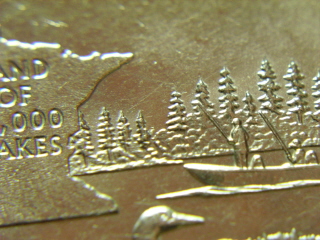
check this 1972-S out has the marker of the 72-S ProoF

1972-S-D/Die-Obverse-Look-Like-Of-Proof-But-Coin-A-MS-Strike

1972-S-D/Die-Obverse-Look-Like-Of-Proof-But-Coin-A-MS-Strike

1972-S-D/Die-Obverse-Look-Like-Of-Proof-But-Coin-A-MS-Strike

1972-S-D/Die-Obverse-Look-Like-Of-Proof-But-Coin-A-MS-Strike

1972-S-D/Die-Obverse-Look-Like-Of-Proof-But-Coin-A-MS-Strike

1972-S-D/Die-Obverse-Look-Like-Of-Proof-But-Coin-A-MS-Strike

1972-S-D/Die-Obverse-Look-Like-Of-Proof-But-Coin-A-MS-Strike

1972-S-D/Die-Obverse-Look-Like-Of-Proof-But-Coin-A-MS-Strike

1972-S-D/Die-Obverse-Look-Like-Of-Proof-But-Coin-A-MS-Strike

1972-S-D/Die-Obverse-Look-Like-Of-Proof-But-Coin-A-MS-Strike

To me it looks like 1972 die #3
thanks for check this out & your opinion's!
Pillar of the Community
foundinrolls's Avatar
United States
3507 Posts
 Posted 04/12/2008  3:56 pm  Show Profile   Bookmark this reply Add foundinrolls to your friends list Get a Link to this Reply
There is a fairly major 1972 S DDO business strike and this one is not it. This one may be a different slight DDO and that would need to be looked at closely to see if it might be something new.

Comparing it to a proof, in this case doesn't help as they didnt use any proof dies to strike circulation coins in 1972 so there are no markers that would correspond to each other on a 1972 S proof and a 1972 S business strike. I'll include pictures of the more major DDO in the next post.

Thanks,
Bill
Edited by foundinrolls
04/12/2008 4:00 pm
Pillar of the Community
foundinrolls's Avatar
United States
3507 Posts
 Posted 04/12/2008  3:59 pm  Show Profile   Bookmark this reply Add foundinrolls to your friends list Get a Link to this Reply
The doubling is more apparent on this one and it doesn't match up with the first coin in the thread so we can at least say that it is not this one.


1972-S-D/Die-Obverse-Look-Like-Of-Proof-But-Coin-A-MS-Strike
Member
amac44's Avatar
United States
3242 Posts
 Posted 04/12/2008  7:24 pm  Show Profile   Bookmark this reply Add amac44 to your friends list Get a Link to this Reply
To me it looks just like 1972-P Die#3
Pillar of the Community
foundinrolls's Avatar
United States
3507 Posts
 Posted 04/12/2008  11:29 pm  Show Profile   Bookmark this reply Add foundinrolls to your friends list Get a Link to this Reply
I agree. There are strong similarities between this 1972 S and the 1972 Die#3.

Bedrock of the Community
coop's Avatar
United States
62064 Posts
 Posted 04/13/2008  11:05 am  Show Profile   Bookmark this reply Add coop to your friends list Get a Link to this Reply
I think a miss conception here is that you find markers on our coins and match them to a die. That is reverse and incorrect thinking. Think about it. Dies are made to do the same job over and over. Some of the same things happen over and over. Die wear, die cracks/chips/breaks/cuds, clashes and some gouges. If were were to assume that a coin is a certain die (A variety)and doesn't have the same hubbing issue or same punching to make an RPM, then were are wasting out time. Fact: Die anomalies happen over and over. Dies wear/crack/clash/cleaned over and over. With thousands of dies being used from each mint for the same year, the occurrences of the same events happen/same cleanings happen/same. It happens every year/every mint because the process is the same. Markers are useful when searching a bag or OBW roll to find certain varieties because all of the coins in that batch were probably made that same run. Just a mixture of the example made then. When we get circulated coins, they are now mixed. So to compare a die break on a coin, let say on a Lincoln Memorial reverse of a die break on column # 12. You would note that a very large percentage of coins from the 1960's have this happen a lot. Will this marker identify a coin as a certain die? Yes and No. Yes if the variety is that die. In other-wards if the doubled die/ RPM is exactly like the die we are matching it to. Then we can confirm die state. Was the coin made before or after the one pictured in a book/reference/image. We can be sure when it was made because of wear/markers/ etc. The answer would be no if no doubled die or RPM was present. the markers are only handy to matching information about die state. To pick a coin at random and find a marker for a certain die number, doesn't make that coin as coming from that die. If a coin is not from that die, the markers are useless to say that it has to be a certain die because it has the markers. It is not the markers that make a coin. It is the dies that make the coin a variety every time. So to search looking for markers and matching them to a die would be a waste of time. Search for the variety first, makers just to confirm die state. Hope this helps.
Member
amac44's Avatar
United States
3242 Posts
 Posted 04/13/2008  1:36 pm  Show Profile   Bookmark this reply Add amac44 to your friends list Get a Link to this Reply
Yes your info helps

*but most of the coin I post in the past were correct.
This just one of many I posted and told I was Wrong.
that I sold raw and buyer e-mailed me what it graded
So in short 50%-80% of the coin I post have graded what I posted.

Image Insert:
1972-S-D/Die-Obverse-Look-Like-Of-Proof-But-Coin-A-MS-Strike

http://i216.photobucket.com/albums/...35b102d1.jpg
Edited by amac44
04/13/2008 4:32 pm
Pillar of the Community
foundinrolls's Avatar
United States
3507 Posts
 Posted 04/13/2008  4:32 pm  Show Profile   Bookmark this reply Add foundinrolls to your friends list Get a Link to this Reply
Coop,

I don't want to misread what you are saying as I am having a tough time following it exactly.

If you are saying that we can't use die markers to identify a specific variety as coming from a specific die or die pair, that is not accurate.

Take for example the 1972 Lincoln Cent Die # 1, every known example has a small fingerlike projection that was the result of a miniscule die gouge. It is seen from the edge going to just above the D of UNITED on the reverse. There are many examples of the use of die markers of this kind to authenticate a die variety and lead right back to a specific die or die pair.

Sticking with 1972 Lincolns for a moment, We can determine which die varieties were the result of doubling on master dies, for example because we see the same die markers and doubling on Philly and Denver coins.

So something like a raised spot or line caused by a die gouge can be used as a marker to authenticate a die variety.

I think there is some confusion as to using small die breaks, which are errors to ascertain whether or not a coin is a specific die variety. You can only determine die state by small die breaks found on a coin. So that part of what you mention is correct.

This time let's use the 1997 Doubled Ear Lincoln as the example. First it is important that people forget about the thought that these are not doubled dies and are the result of the often mentioned, but incorrect "well placed die chip" theory. They are indeed doubled dies.

There are markers and doubling that can be used to identify the obverse die. On the reverse, there are various die stages that can be noted based upon the size of a developing chip on the upper left of the Memorial building on the reverse of the coin. Some have no chip, some have a small chip and some have a larger chip. So the die markers on the obverse tell us the coin is a die variety and the chip on the reverse (or the lack of it) can tell us something about die states.

To recap, you do use die markers that are common to every example of a die variety but you can't depend on minor errors, like die chips to do anything but give us an idea about the stages of the die or dies used.

So, if that is what you meant, We are on the same page, so to speak.

Thanks,
Bill

Edited by foundinrolls
04/13/2008 4:39 pm
Bedrock of the Community
coop's Avatar
United States
62064 Posts
 Posted 04/13/2008  7:22 pm  Show Profile   Bookmark this reply Add coop to your friends list Get a Link to this Reply
Bill we are on the same page. There has been a tendency to find a marker on a coin and try to say that it from that die. Most markers happen over and over and don't mean they are from a certain die. What I was commenting on was the searching for markers first and assume they came from that die. So we are on the same page. It was something I've been noticing on the forum and wanted to correct that so all could move on with correct thinking. But I appreciate your comment as it is good to touch bases from time to time.
Pillar of the Community
coppercoins's Avatar
United States
7629 Posts
 Posted 04/13/2008  10:33 pm  Show Profile   Bookmark this reply Add coppercoins to your friends list Get a Link to this Reply
First things first...the initial post to this thread shows a completely normal coin - no doubling at all.

Second, I believe there could be an important statement that I have tried to make here and in other places before. For some reason a number of people have begun to look for markers on coins to match the markers for die varieties so they could call normal coins die varieties...this is not correct.

Just because a normal 1983 cent has a die crack on the reverse doesn't make it a doubled die obverse because one of the doubled die obverse cents has a marker of a die crack on the reverse. You cannot find markers and call them die varieties, that's completely backwards.

You find the die variety and USE markers to identify which one it is...that's the only correct way to go about it.
Member
amac44's Avatar
United States
3242 Posts
 Posted 04/14/2008  11:01 am  Show Profile   Bookmark this reply Add amac44 to your friends list Get a Link to this Reply
ok !
  Previous TopicReplies: 10 / Views: 1,301Next Topic  

To participate in the forum you must log in or register.


Disclaimer: While a tremendous amount of effort goes into ensuring the accuracy of the information contained in this site, Coin Community assumes no liability for errors. Copyright 2005 - 2026 Coin Community Family- all rights reserved worldwide. Use of any images or content on this website without prior written permission of Coin Community or the original lender is strictly prohibited.
Contact Us  |  Advertise Here  |  Privacy Policy / Terms of Use

Coin Community Forum © 2005 - 2026 Coin Community Forums
It took 0.33 seconds to rattle this change. Forums