| Author |
 Replies: 10 / Views: 2,051 Replies: 10 / Views: 2,051 |
|
|
Pillar of the Community
United States
1314 Posts |
I got a bunch of oriental cash coins, and the few I picked out were worth the bunch. But the question remains, what to do with the "lesser quality" coins. I decided to see what I could do to improve it's appearance. Viet Nam 6 Van Tu Duc Thong Bao (1848-1883) The before picture is easy, but it might be a while before I get the coin ready for an after picture. 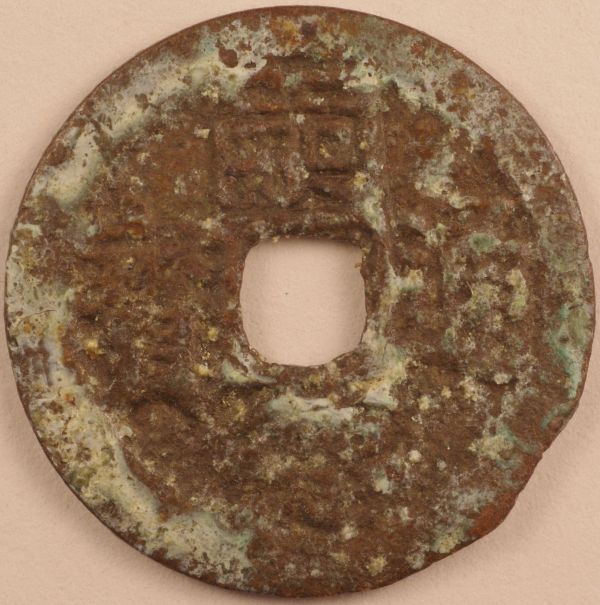 |
|
|
|
Pillar of the Community
 United States
1314 Posts |
Far from a thing of beauty, but a learning experience. The colors are mottled as the coin oxidized unevenly. And there is quite a bit of roughness to the surface. The green oxide was very much like glass. Both smooth and brittle. It had to be scraped off, chemicals weren't much help. Hope you enjoyed. 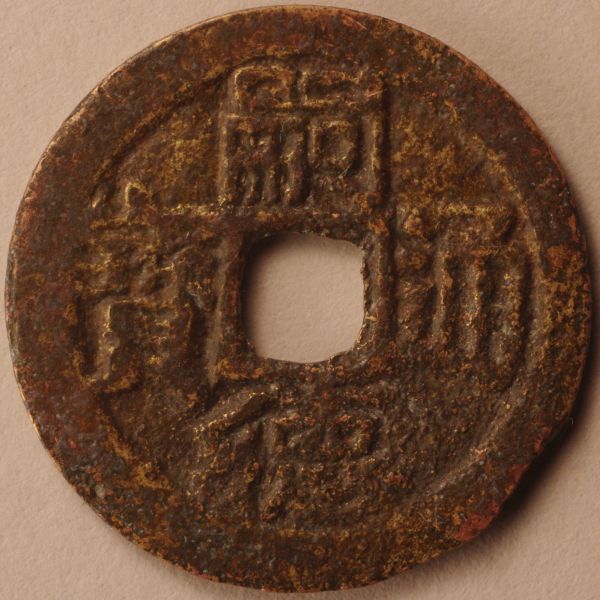 |
|
Rest in Peace
United States
18456 Posts |
Considerable difference , but are you going to tell us what method was used ?  |
|
Formerly coinlover1899
 United States
3058 Posts |
Great difference. Would rather have the coin looking like second picture.
www.InGodWeTrustCoins.com
|
|
Bedrock of the Community
United States
20030 Posts |
Good job!
Lincoln Cent Lover!VERDI-CARE™ INVENTOR https://verdi.care/
|
|
Pillar of the Community
United States
1314 Posts |
I can appreciate what ancient collectors have to deal with. The green stuff was so much like slag, that it had to be chipped off. The remaining bits were scraped like I was cleaning a badly burned frying pan. I made a couple of tools using a pin vice and sewing needles. Some were pointed like an awl, and some ground like a screwdriver. I used common mineral oil, VerdiCare and acetone. Many alternating baths. If I tilted the flat tipped tool (dia. .030") it could be used almost like a paint scraper. The oil helped me keep control of the scraping, and the wet surface helped me see the color difference between the oxide layer and the base metal. As the oxide layer became thinner, I had to rely on "feel." Acetone is always good for flushing off the debris, and frequently dried foreign material so that it looked like a white powder in the coin crevases. Periodic applications of VerdiCare did dissolve pockets of softer oxides. The key ingredient was patience. It took a lot longer than the value of the coin would warrant. Krause's 15th Edition of world coins, printed in 2015 lists a value of $1.24 G4, $2.00 VG8 and $3.50 F12. 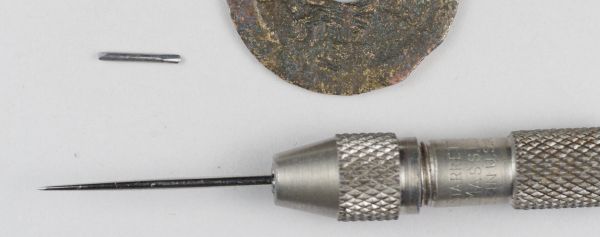 |
|
Moderator
 United States
194816 Posts |
Good work.  |
|
Bedrock of the Community
Canada
24885 Posts |
Quote:
My ultimate coin cleaning/conservation project
Great job work very well done Edited by Dorado
04/27/2017 02:03 am
|
|
Pillar of the Community
United States
1314 Posts |
If any one else would like to try their hand at this, I have some similar coins that are in about the same condition.
PM me with your mailing address. All I ask is that you post a comment on your experience.
|
|
New Member
United States
49 Posts |
You could probably start a business doing that haha. Quote:
I can appreciate what ancient collectors have to deal with.
The green stuff was so much like slag, that it had to be chipped off. The remaining bits were scraped like I was cleaning a badly burned frying pan.
I made a couple of tools using a pin vice and sewing needles. Some were pointed like an awl, and some ground like a screwdriver.
I used common mineral oil, VerdiCare and acetone. Many alternating baths. If I tilted the flat tipped tool (dia. .030") it could be used almost like a paint scraper.
The oil helped me keep control of the scraping, and the wet surface helped me see the color difference between the oxide layer and the base metal. As the oxide layer became thinner, I had to rely on "feel."
Acetone is always good for flushing off the debris, and frequently dried foreign material so that it looked like a white powder in the coin crevases.
Periodic applications of VerdiCare did dissolve pockets of softer oxides.
The key ingredient was patience. It took a lot longer than the value of the coin would warrant.
Krause's 15th Edition of world coins, printed in 2015 lists a value of $1.24 G4, $2.00 VG8 and $3.50 F12. My issue is the same when it comes to coin values. Some of my ancients aren't really worth enough but when it comes to the more valuable ones this process seems pretty smart. It must be kind of stressful having to rely on "feel" to avoid damaging your coin though, yikes! Good job though, it looks good. |
|
Pillar of the Community
United States
1314 Posts |
After all the work, I thought I would share another project. I hate to say how many hours, but you can see that the rim is lightening because of the handling. China - Empire, Chihli (Zhili) Province, Chin mint, Peiyang Arsenal, Tientsin 1906 10 Cash Weight 7.36 g Diameter 28.3 mm Y# 10c Value per Krause $0.50. 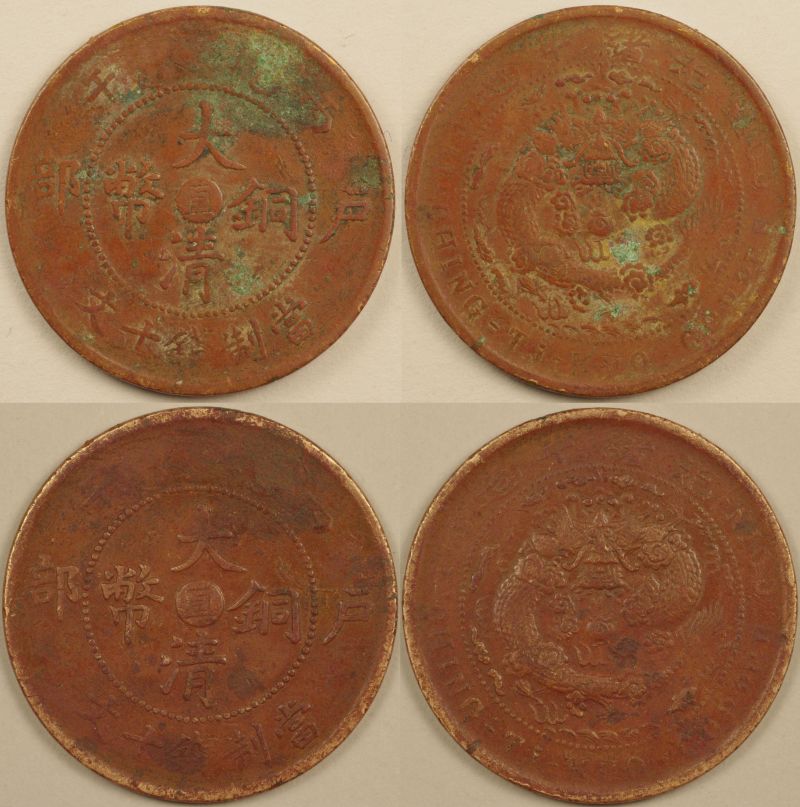 |
| |
Replies: 10 / Views: 2,051 |
|







 Posted 04/23/2017 06:51 am





